
If you’ve ever put metal in a microwave, you know the sound—the harsh crackle, sudden sparks, maybe even a burning smell. Your heart skips a beat as you rush to stop the microwave. You’re not alone; this mistake happens to many people, and it can be scary. But what should you do next? Is your microwave ruined? Can you fix it yourself, or is it time for a new one? This guide will walk you through everything you need to know, in simple language, about how to fix a microwave after putting metal in it.
Many people believe that once a microwave sparks or makes noise from metal, it’s done for. In reality, most microwaves survive these accidents, but only if you act quickly and know the right steps. Understanding what happens inside your microwave and how to check for damage can save you money, stress, and maybe even prevent a fire next time.
Let’s break down what to do, step by step, so you can use your microwave with confidence again.
Why Metal Causes Problems In A Microwave
Microwaves work by using electromagnetic waves to heat food. These waves bounce around inside the metal walls and make water molecules in food vibrate, creating heat. When you put metal, like aluminum foil or a forgotten spoon, in the microwave, it reflects these waves. This can cause arcing—electricity jumps or sparks between the metal and the walls.
Even small pieces of metal can create big sparks. Thin metals, like gold trim on plates or twist ties, are especially dangerous. They heat up fast and can even catch fire. Larger, smooth pieces of metal are less likely to spark but can still cause trouble.
Knowing this helps you understand why the next steps are so important.
What To Do Immediately After The Incident
If you see sparks or hear popping sounds, stop the microwave right away. Here are the key steps:
- Unplug the microwave. This stops any electricity and keeps things safe. Never try to inspect or fix a microwave that’s still plugged in.
- Let it cool down. Wait at least 10 minutes. Even if nothing is burning, parts inside can be very hot.
- Check for smoke or burning. If you smell smoke or see burned plastic, open windows and ventilate the kitchen. Don’t touch the microwave until you’re sure it’s cool.
- Remove the metal object. Once it’s safe, carefully take out the metal. Use oven mitts if it’s still hot.
Many people forget to wait for the microwave to cool. Touching hot parts can burn your hand or damage the microwave more. Also, don’t try to run the microwave again right away. You need to check for damage first.

Credit: www.wikihow.com
Inspecting For Damage: What To Look For
Before you use your microwave again, it’s important to check it carefully. Here’s what to look for:
- Burn marks or discoloration inside the microwave.
- Smell of burned plastic or wires.
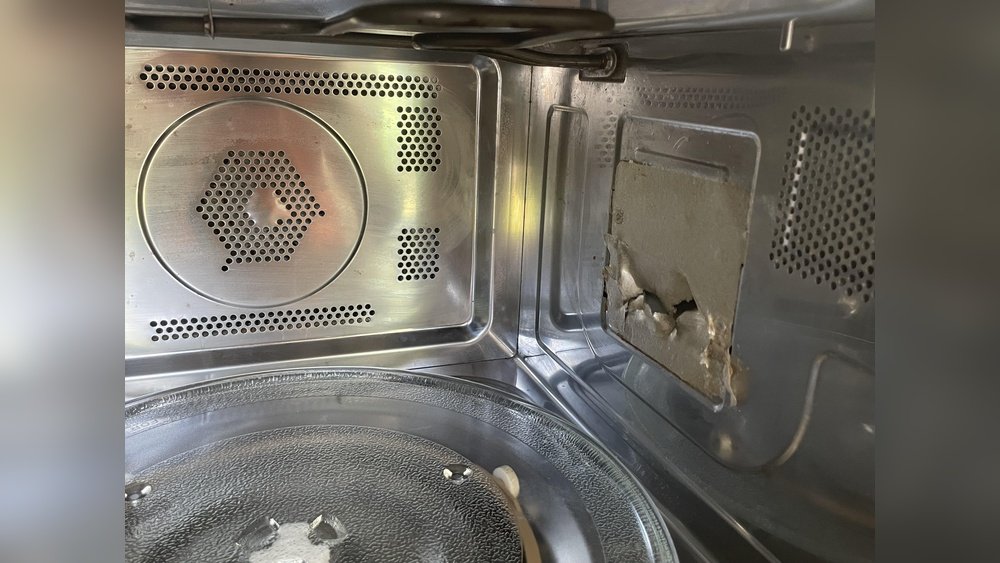
- Damaged waveguide cover (the small panel inside on the side or roof).
- Cracks or holes in the inside walls.
- Unusual noises if you try to run it empty (for a few seconds only).
Let’s look at each part in detail.
The Waveguide Cover
The waveguide cover is a small panel, usually made of mica or plastic, inside your microwave. It protects the magnetron (the part that makes the microwaves) from food splatters and moisture. If sparks hit this cover, it can burn, melt, or even develop holes.
A damaged waveguide cover is one of the most common problems after a metal accident. If it’s burned or has a hole, you must replace it. Using the microwave with a damaged cover can cause more sparks and possibly damage the magnetron.
The Magnetron
The magnetron is the heart of your microwave. It generates the microwaves that cook your food. If sparks reach the magnetron, it can fail. Signs of a damaged magnetron include:
- No heat (the microwave turns on, but food stays cold).
- Loud humming or buzzing sounds.
- Burning smells when running.
Replacing a magnetron is expensive and difficult for most people. In some cases, it’s cheaper to buy a new microwave.
Interior Walls And Paint
Check the inside walls for burn marks, bubbles, or chipped paint. If the paint is damaged, the metal underneath may be exposed. This can lead to more sparks the next time you use the microwave.
You can repair small paint chips with microwave-safe touch-up paint. Never use regular paint, as it can be toxic or flake off.
Door And Seals
Check the microwave door and seals for warping or damage. If the door doesn’t close tightly or you see gaps, microwaves can leak out, which is very dangerous. Damaged doors usually mean it’s time to replace the microwave.
Step-by-step Guide To Fixing The Microwave
If your inspection shows only minor damage (for example, a burned waveguide cover or chipped paint), you may be able to fix your microwave yourself. Here’s how.
1. Replace The Waveguide Cover
Most waveguide covers are easy to replace. Here’s what to do:
- Remove the old cover. It may be held by screws or just clipped in place. Be gentle; don’t break the surrounding area.
- Take the old cover to an appliance store or search for your microwave’s model online. Many covers are universal.
- Install the new cover. Make sure it fits tightly and covers the hole completely.
If you can’t find the right cover, you can buy mica sheets and cut your own. Make sure to copy the shape and size exactly.
2. Repair Chipped Paint
If you find small areas where the paint is damaged:
- Clean the area with soap and water, then dry it.
- Sand lightly with fine sandpaper to remove loose paint.
- Apply microwave-safe touch-up paint. Let it dry completely before using the microwave.
This prevents future arcing and extends the life of your microwave.
3. Remove Burn Marks
For minor burn marks:
- Wipe with a damp cloth and a little baking soda.
- Avoid using strong cleaners or scrubbing pads, which can remove more paint.
If the burn is deep, it may not be repairable.
4. Check Interior Parts
- Make sure the turntable spins freely.
- Check for any loose or melted plastic parts.
- Replace any broken pieces with parts for your microwave’s exact model.
5. Test The Microwave
After repairs:
- Plug in the microwave.
- Place a cup of water inside (never run it empty).
- Run it for 30 seconds.
- Check for sparks, strange noises, or smells.
If everything works normally, your microwave is safe to use.

Credit: www.reddit.com
When To Call A Professional
Some microwave problems are too complex or dangerous for most people to fix. Call a professional if:
- The microwave does not heat food anymore.
- You smell burning plastic or wires, even after cleaning.
- The display panel or buttons stop working.
- The door seal is damaged.
- You hear loud humming or buzzing that wasn’t there before.
Microwaves can hold a high voltage charge even after being unplugged. Never try to repair the magnetron, capacitor, or any internal wiring yourself unless you have proper training.
Common Myths About Metal In Microwaves
Many people have wrong ideas about metal in microwaves. Let’s clear up some common myths.
- Myth 1: All metal causes fires. Not always. Flat, smooth metal (like a spoon) may not spark. But thin, sharp, or crumpled metal (like foil or twist ties) almost always sparks.
- Myth 2: The microwave is ruined after one spark. Most microwaves survive small incidents with little or no damage if you act quickly.
- Myth 3: You can use any paint inside. Only use microwave-safe paint. Other paints can release harmful fumes or cause more sparks.
- Myth 4: You can ignore a small burn mark. Even small burn marks can lead to bigger problems if not cleaned and repaired.
Understanding the real risks helps you avoid them in the future.
How Microwaves Work: A Quick Science Lesson
Knowing how your microwave works can help you understand why metal is a problem. Here’s a simple explanation:
- Microwaves are a type of energy, like radio waves.
- The magnetron sends microwaves into the cooking chamber.
- These waves bounce around and heat water, fat, and sugar in food.
- Metal reflects the waves, which can cause them to focus and spark.
- That’s why most microwave-safe dishes are made of glass, ceramic, or plastic.
Here’s a comparison of what happens when different materials go in the microwave:
| Material | Behavior in Microwave | Safe to Use? |
|---|---|---|
| Glass | Heats evenly, no sparks | Yes |
| Plastic | Heats, may melt if not microwave-safe | Yes, if labeled microwave-safe |
| Ceramic | Heats evenly, no sparks | Yes |
| Metal | Reflects waves, may spark or arc | No |
| Paper | Heats, can burn if overheated | Yes, but monitor closely |
Preventing Future Accidents
Prevention is always better than repair. Here’s how to avoid metal-in-microwave accidents:
- Check dishes and containers before microwaving. Look for hidden metal parts—many takeout containers have metal handles or trim.
- Don’t use foil or twist ties. Even a small piece can cause sparks.
- Teach everyone in your home (especially kids and older adults) what is safe to use.
- Read the manual. Many people don’t know their microwave’s unique features or warnings.
- Use microwave-safe labels. If you’re not sure, look for the symbol on the bottom of dishes.
Many people don’t realize that some travel mugs, plates with gold trim, or even certain packaging have metal parts. Taking a few seconds to check can prevent damage.

Credit: science.howstuffworks.com
What If The Microwave Still Doesn’t Work?
If you’ve checked and fixed everything you can, but your microwave still doesn’t work, it may be time to replace it. Here’s how to decide:
- Age of the microwave: Most last 7-10 years. If yours is older, replacement may be smarter.
- Cost of repairs: If professional repair costs more than half the price of a new one, buying a new microwave is often a better choice.
- Frequency of use: If you use your microwave every day, reliability is important.
- Safety: Never use a microwave with a damaged door, exposed wires, or strong burning smells.
Compare the cost and features of repairing vs. replacing your microwave:
| Option | Average Cost | Pros | Cons |
|---|---|---|---|
| Repair minor damage | $10–$50 (parts & paint) | Cheap, fast, keeps existing microwave | Not possible for major damage |
| Professional repair | $100–$200 | Safe, expert work | May cost more than new microwave |
| Buy new microwave | $80–$300 | New warranty, updated features | Higher upfront cost |
Microwaves have become more affordable, and new models often have better safety features.
Safety Tips For Microwave Use
Microwaves are safe and convenient if you follow a few basic rules:
- Never run empty. Running with nothing inside can damage the magnetron.
- Use only microwave-safe containers. Avoid anything with metal, including some “microwave-safe” plastics with hidden foil.
- Don’t cover vents. Always leave space for steam to escape.
- Clean spills immediately. Old food can burn or spark.
- Check for damage regularly. A quick look can prevent bigger problems.
Many accidents happen because people are in a hurry. Taking a few seconds to check your food and container makes a big difference.
Real-world Examples: What Happens When You Put Metal In A Microwave
Let’s look at two common scenarios and what to do in each case.
Scenario 1: Accidentally Microwaving A Fork
You heat leftovers and forget a fork is in the bowl. You see sparks and stop the microwave quickly.
- Damage: Usually minor, unless the fork touched the side.
- Fix: Remove the fork, check for burn marks, and clean. Replace the waveguide cover if damaged.
- Tip: Always check your dishes before microwaving.
Scenario 2: Microwaving Food Wrapped In Foil
You try to reheat food wrapped in aluminum foil. Sparks fly, and there is a burning smell.
- Damage: Often more serious. Foil can burn holes in the waveguide cover or walls.
- Fix: Remove all foil, replace burned covers, and check for deeper damage. If the magnetron is affected, you may need a new microwave.
- Tip: Never put foil in the microwave, even for a few seconds.
The Hidden Dangers: What Most People Miss
Here are two non-obvious risks people often overlook:
- Residue or crumbs: Even a small piece of foil left behind or crumbs stuck under the turntable can cause sparks later. Always clean thoroughly after an accident.
- Invisible damage: Sometimes, sparks cause small cracks or weaknesses you can’t see. These can get worse over time. If you notice new noises or smells, stop using the microwave and get it checked.
Many people think only big accidents matter. In fact, small, repeated sparks can ruin a microwave over time. Regular checks are essential.
How To Dispose Of A Broken Microwave Safely
If your microwave is beyond repair, don’t just throw it in the trash. Microwaves contain electronic parts and sometimes hazardous materials.
- Check local recycling rules. Many cities have special programs for electronics.
- Remove the door or cut the power cord to make it safe for disposal.
- Don’t try to take apart the magnetron or other high-voltage parts yourself.
For more on safe appliance recycling, see the EPA’s advice at EPA Electronics Donation and Recycling.
Frequently Asked Questions
What Should I Do First If I Put Metal In The Microwave?
Immediately stop the microwave and unplug it. Wait for it to cool before removing the metal object. Then, check for any signs of damage, such as burn marks or a burnt smell.
Is It Safe To Use A Microwave After It Sparks From Metal?
Yes, if there is no visible damage and it works normally after a careful check. However, if you see burn marks, smell burning, or hear strange noises, repair or replacement may be needed.
Can I Fix A Burned Waveguide Cover Myself?
In most cases, yes. You can buy a replacement cover or mica sheet and install it yourself. Be sure to get the right size and shape for your microwave model.
What If My Microwave Still Heats Food But Makes A Noise After The Accident?
A new noise could mean hidden damage, such as to the magnetron. Stop using the microwave and have it checked by a professional to avoid further damage or safety risks.
How Do I Know If My Container Is Microwave-safe?
Look for a microwave-safe label or symbol (wavy lines) on the bottom of the container. If you’re not sure, use glass or ceramic. Avoid containers with any metal parts, trim, or handles.
Microwaves are useful and safe if you use them wisely. By understanding what happens when metal goes inside, checking for damage, and knowing when and how to fix problems, you can keep your microwave working for years to come. Next time, a little caution will keep your kitchen safe and your food hot.