
Using a Thermador dishwasher can make your kitchen routine much easier. Many people buy Thermador because they want a high-end machine that gives great results. But even the best dishwasher can be confusing if you don’t know how to use it correctly.
Maybe you just got a new Thermador, or maybe you’ve had one for a while but want to get better results. Either way, understanding your appliance can save you time, money, and effort. In this guide, you’ll find clear, step-by-step instructions that will help you use every feature, avoid mistakes, and get sparkling clean dishes every time.
Understanding Your Thermador Dishwasher
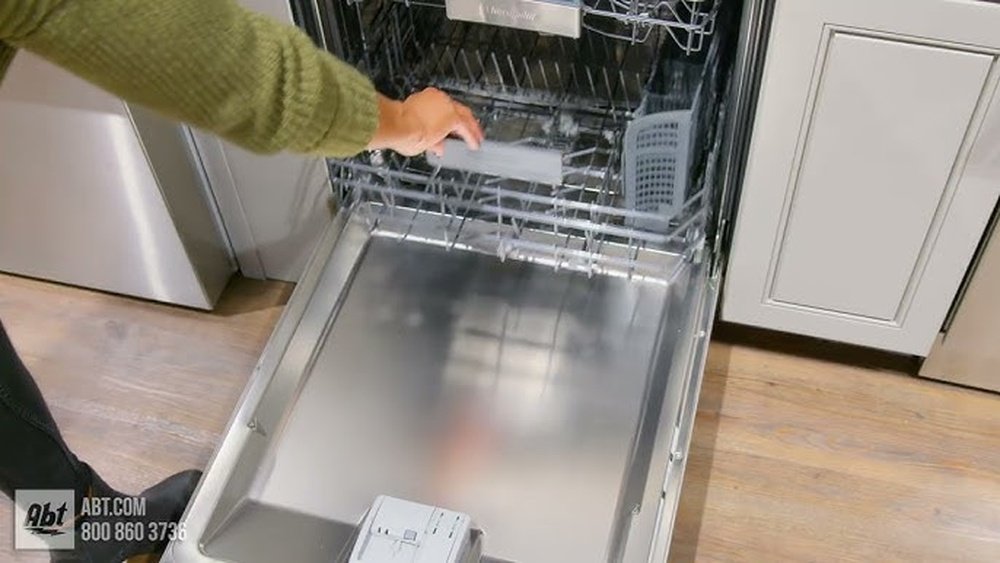
Before you start using your Thermador dishwasher, it’s important to know the main features and design. Thermador dishwashers are known for their flexible racks, quiet operation, and smart wash cycles. Some models come with Home Connect for smart controls, while others focus on energy efficiency. Familiarizing yourself with the parts and controls will help you use your machine with confidence.
Main Parts Of A Thermador Dishwasher
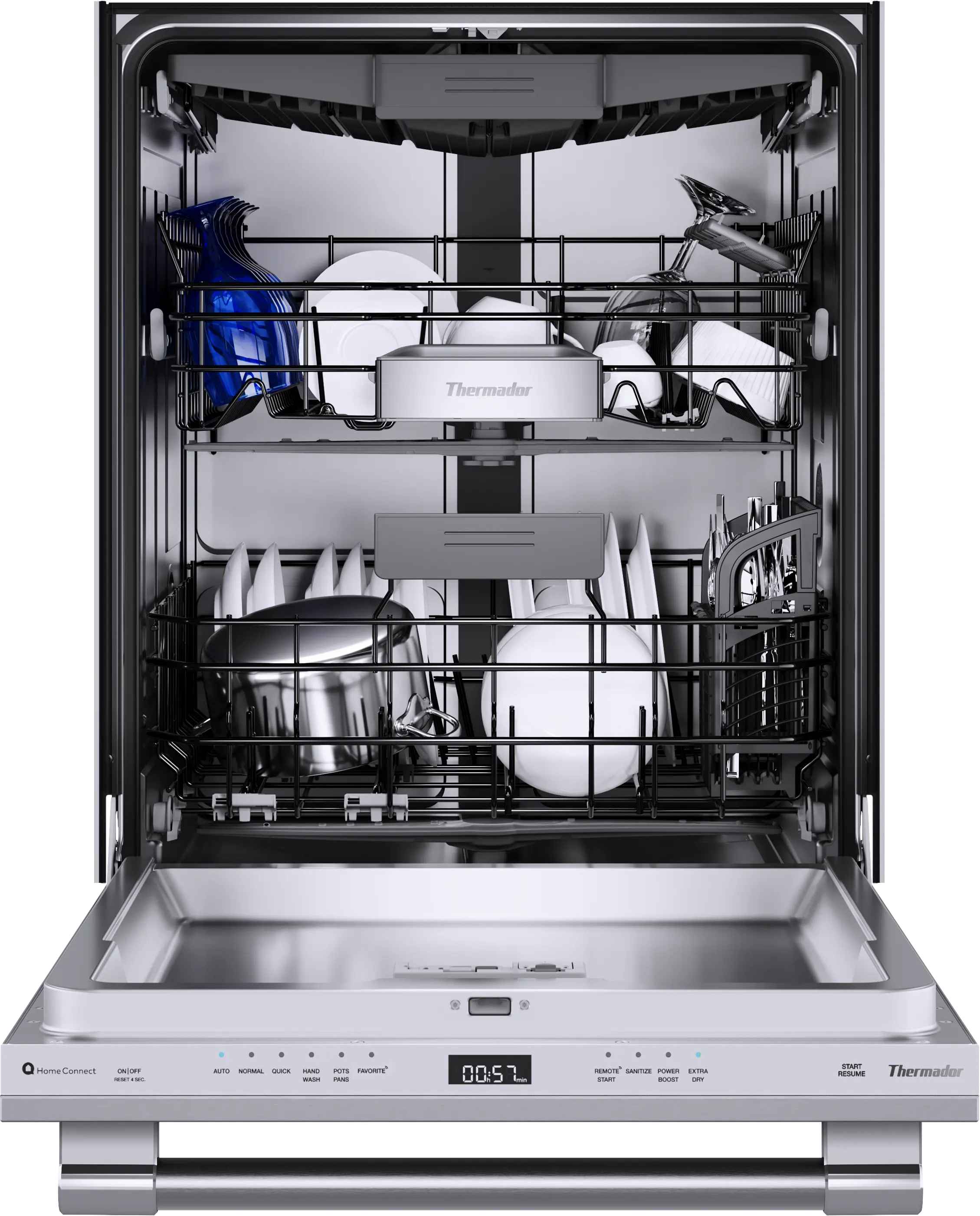
- Control Panel: Located on the top or front of the door, this is where you choose cycles and options.
- Upper and Lower Racks: These hold dishes, glasses, and cookware. The upper rack is usually adjustable.
- Third Rack: Many Thermador models have a third rack for utensils and flat items.
- Spray Arms: Spin and spray water to clean dishes.
- Detergent Dispenser: Holds detergent and rinse aid.
- Filters: Trap food particles to prevent clogs.
- Heating Element: Heats water and dries dishes.
- Water Softener (select models): Reduces hard water spots.
Control Panel Overview
Most Thermador models have a digital control panel with touch buttons or a dial. Here are some common buttons:
- Power/On-Off
- Start/Resume
- Cycle Selection (Auto, Normal, Heavy, Quick, Eco, etc.)
- Delay Start
- Sanitize
- Extra Dry
- Half Load
- Home Connect (for smart models)
Knowing where these are and what they do is the first step to using your dishwasher well.
Preparing Dishes For The Dishwasher
Loading your dishwasher correctly can make a big difference in cleaning results. It also helps your machine last longer.
Scraping Vs. Pre-rinsing
Thermador dishwashers are designed to handle bits of food. You do not need to pre-rinse dishes, but you should scrape off large pieces of food. Hard foods like bones or seeds should always be removed.
Arranging The Racks
- Lower Rack: Place plates, pots, pans, and larger items here. Face the dirty side toward the center.
- Upper Rack: Glasses, cups, and smaller bowls go here. Tilt them so water can drain.
- Third Rack (if available): Use for long utensils, spatulas, or small cups.
Tip: Don’t overcrowd. Water needs space to reach every surface.
Loading Silverware
Mix forks, knives, and spoons in the silverware basket. Put some handles up and some down for better cleaning. Sharp knives should go in with handles up for safety.
Items To Avoid
Some items can be damaged or cause problems:
- Wooden utensils: Can warp or crack
- Nonstick pans: Coating may peel
- Crystal or hand-painted items: May get chipped or faded
- Cast iron: Rusts easily
- Aluminum: May discolor
Always check if items are dishwasher safe before loading.
Credit: www.thermador.com
Choosing The Right Detergent And Rinse Aid
Using the correct detergent and rinse aid is key for spotless dishes and a healthy dishwasher.
Detergent Types
Thermador recommends high-quality dishwasher detergents. You can use:
- Powder
- Gel
- Tablets
Tablets are popular because they are easy to use and measure. Make sure your detergent is made for automatic dishwashers and not regular dish soap.
Rinse Aid
Rinse aid helps water run off dishes and reduces spots or film. Thermador dishwashers have a special dispenser for this. Fill it every few weeks or when the indicator shows it’s empty.
Hard Water Concerns
If you have hard water, you may see spots on your glassware. Using a rinse aid and, if needed, a water softener will help.
Step-by-step Guide: Running Your Thermador Dishwasher
Follow these steps for the best results.
- Load Dishes: Arrange items in the racks as described above.
- Add Detergent: Open the detergent dispenser and add the right amount. Close the lid securely.
- Add Rinse Aid: Check the rinse aid level. Fill if low.
- Choose the Cycle: Use the control panel to pick the right wash cycle for your load.
- Select Options: Add extra features like Sanitize or Extra Dry if needed.
- Close Door: Make sure the door is shut firmly. The dishwasher will not start if it’s open.
- Start the Machine: Press Start/Resume. If you want to run it later, use Delay Start.
- Wait for the Cycle to Finish: Most cycles take 1.5–3 hours, depending on settings.
- Unload Carefully: Open the door slightly to release steam. Unload the lower rack first to avoid water drops from the upper rack.
Pro Tip: If you need a quick load, use the Quick or Express cycle. It uses more water and energy, but finishes faster.
Credit: www.thermador.com
Understanding The Wash Cycles
Thermador dishwashers come with many wash cycles. Choosing the right one will help you get the best cleaning performance.
| Cycle | Best For | Average Time | Water Use |
|---|---|---|---|
| Auto | Mixed, everyday loads | 2–2.5 hours | Medium |
| Normal | Standard dishes | 2 hours | Medium |
| Heavy | Pots, pans, baked-on food | 2.5–3 hours | High |
| Quick/Express | Lightly soiled, small load | 30–60 minutes | High |
| Eco | Energy saving, lightly soiled | 2–2.75 hours | Low |
| Rinse | Pre-rinsing only | 10–15 minutes | Low |
| Sanitize | Hygiene-sensitive items | Varies | High |
Cycle Selection Tips
- Use Auto if you’re unsure. The dishwasher senses how dirty the load is and adjusts.
- For greasy or baked-on messes, choose Heavy.
- Use Eco to save water and energy, but expect a longer cycle.
- The Sanitize option is great for baby bottles or cutting boards.
Using Smart Features (home Connect)
Some Thermador dishwashers come with Home Connect, a smart feature that lets you control your dishwasher from your phone or tablet.
Setting Up Home Connect
- Download the Home Connect app from your app store.
- Connect your dishwasher to Wi-Fi following the instructions in your user manual.
- Register your appliance in the app.
What You Can Do With Home Connect
- Start or stop cycles remotely
- Get cycle status updates
- Receive alerts when detergent or rinse aid is low
- Download new wash programs
- Troubleshoot errors with guided help
Example: If you’re out and realize you forgot to start the dishwasher, you can use your phone to start it.
Beginner Insight: Many users miss out on custom cycles available through the app, which can be perfect for delicate glasses or fast cleaning.
Maintaining And Cleaning Your Thermador Dishwasher
A clean dishwasher works better and lasts longer. Maintenance is simple if you do it regularly.
Cleaning The Filters
Thermador dishwashers have a filter system that should be cleaned every 2–4 weeks.
- Remove the bottom rack.
- Twist and lift out the filter unit (usually in the bottom center).
- Rinse under running water. Use a soft brush for stuck-on debris.
- Replace the filter and lock it in place.
Tip: If you notice food particles or an odor, check the filter.
Wiping The Door And Seals
Use a damp cloth with mild soap to clean the door gasket and edges. This prevents build-up and keeps the seal tight.
Cleaning Spray Arms
If you see poor cleaning or hear odd noises:
- Remove the spray arms (they often snap or twist off).
- Rinse under water. Use a toothpick to clear blocked holes.
- Reinstall after cleaning.
Descaling
If you have hard water, run a descaling cycle every 2–3 months. Use a dishwasher-safe descaler. This prevents mineral build-up and keeps your dishwasher efficient.
Exterior Care
For stainless steel finishes, use a soft cloth and a little vinegar or a stainless steel cleaner to remove fingerprints.
Troubleshooting Common Problems
Even the best machines can have issues. Here’s how to handle the most common ones.
Dishwasher Won’t Start
- Make sure the door is closed tightly.
- Check if the Start/Resume button was pressed.
- Confirm the dishwasher is plugged in and the circuit breaker is on.
- For models with a child lock, make sure it’s off.
Dishes Not Getting Clean
- Check if spray arms can spin freely.
- Don’t overload racks.
- Use enough detergent and the right cycle.
- Clean filters and spray arms.
White Spots Or Cloudy Glasses
- Add more rinse aid.
- Use a water softener if you have hard water.
- Lower detergent dose—too much can cause film.
Dishwasher Smells Bad
- Clean filters and spray arms.
- Run a hot cycle with a dishwasher cleaner or a cup of vinegar.
- Leave the door slightly open after cycles to air out.
Water Not Draining
- Make sure the drain hose isn’t kinked.
- Clean the filter and check for blockages.
- Check the air gap if your kitchen sink has one.
Energy Efficiency And Water Usage
Thermador dishwashers are designed to use less water and energy than handwashing or older machines. Understanding how your choices affect efficiency can save you money.
Water And Energy Stats
- Most Thermador models use 2–4 gallons per cycle (handwashing can use over 20 gallons).
- Energy Star models save up to 3,870 gallons of water over their lifetime.
| Dishwashing Method | Water Use (per load) | Energy Use |
|---|---|---|
| Thermador Dishwasher (Eco Mode) | 2 gallons | Low |
| Thermador Dishwasher (Normal Mode) | 3.5 gallons | Medium |
| Handwashing | 20 gallons | High |
Tips For Maximum Efficiency
- Run full loads, but don’t overload.
- Use Eco cycle for lightly soiled dishes.
- Keep filters clean for best performance.
- Air dry by opening the door after the cycle.
Non-obvious Insight: Running your dishwasher at night or during off-peak hours can save money on electricity if your utility company charges different rates.
Best Practices For Longevity
You want your Thermador dishwasher to last many years. With good habits, you can avoid repairs and keep it running smoothly.
- Clean filters and spray arms regularly.
- Don’t use too much detergent. Extra soap doesn’t mean cleaner dishes and can harm the machine.
- Check racks for damage. Broken tines or wheels can scratch dishes or stop the rack from moving.
- Avoid washing items that can break, melt, or rust.
- Leave the door slightly open after cycles to prevent mold and smells.
- Schedule annual check-ups if you notice leaks, odd noises, or repeated errors.
Beginner Mistake: Many people forget to clean the door seal, which can build up grime and cause odors.
Comparing Thermador With Other Brands
You might wonder how your Thermador stacks up against other dishwashers. Here’s a quick comparison.
| Feature | Thermador | Bosch | KitchenAid |
|---|---|---|---|
| Noise Level | Very quiet (42–48 dBA) | Very quiet (40–50 dBA) | Quiet (44–50 dBA) |
| Racking Flexibility | High (adjustable racks, third rack) | High | Medium |
| Smart Features | Home Connect | Home Connect (select models) | Wi-Fi (select models) |
| Drying System | StarDry™ (crystal protection) | AutoAir™ or CrystalDry™ | ProDry™ |
| Price Range | High | Medium–High | Medium |
Thermador stands out for its ultra-quiet operation, smart tech, and luxury build. If you want a premium experience, it’s a great choice.
Safety Tips
Dishwashers are safe but should be used with care.
- Keep sharp knives and small utensils pointed down.
- Don’t let children play with the door or racks.
- Use only dishwasher-safe items.
- Don’t touch the heating element after a cycle—it’s hot.
- Check for leaks regularly.

Credit: www.youtube.com
Saving Time And Getting Better Results
Here are a few practical strategies to make life easier:
- Use the Delay Start to run the dishwasher when electricity is cheaper or when you’re asleep.
- Sort silverware as you load, so unloading is faster.
- If you entertain often, run a rinse cycle to keep dishes from drying out until you’re ready for a full load.
- Don’t open the door mid-cycle unless necessary. It can make the dishwasher pause and lose heat.
Pro Insight: If you often have trouble with stuck-on food, try soaking baking pans overnight or using the Heavy cycle with extra hot water.
When To Call For Service
Most problems can be handled at home, but call a professional if:
- You see water leaks from under the machine.
- Error codes keep appearing, even after resetting.
- The dishwasher doesn’t heat water or dry dishes at all.
- There’s a burning smell or visible damage to wiring.
Tip: Keep your model number and purchase information handy for faster service.
Frequently Asked Questions
Why Isn’t My Thermador Dishwasher Drying Dishes Well?
Thermador uses an energy-efficient drying system. For best results, use rinse aid and select the Extra Dry option. Some plastics may still be a little wet—this is normal because plastics don’t retain heat like glass or metal. Opening the door after the cycle helps moisture escape.
Can I Wash Pots And Pans In My Thermador Dishwasher?
Yes, you can. Place them on the lower rack and use the Heavy or Auto cycle. Avoid nonstick or cast iron cookware, as these can be damaged or rust. Scrape off heavy food before loading.
How Often Should I Clean The Filter?
You should clean the filter every 2–4 weeks, depending on how often you use the machine and how dirty your dishes are. A clogged filter can cause poor cleaning and bad odors.
What Does The Red Light On The Floor Mean?
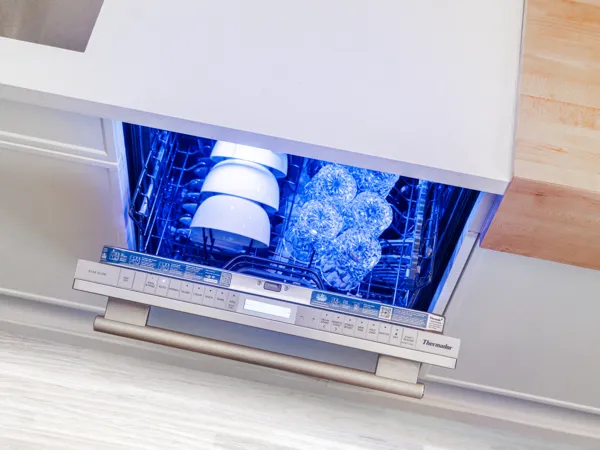
The red light (InfoLight®) means your Thermador dishwasher is running. When the cycle is done, the light turns off. This is helpful because Thermador dishwashers are very quiet.
Where Can I Find More Information Or Help?
For more help, visit the official Thermador support page. You’ll find manuals, troubleshooting guides, and customer service contacts there.
Thermador dishwashers are made to make life simpler, but taking the time to learn their features will pay off for years. With these tips, you’ll get the cleanest dishes with the least hassle—every single time.