
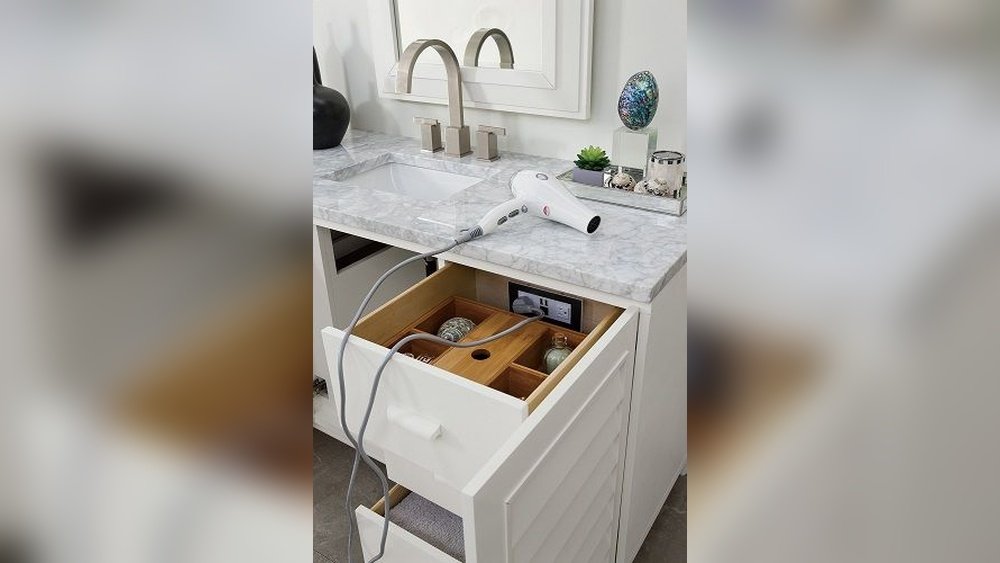
Putting an electrical outlet inside a drawer sounds like a futuristic idea, but it’s becoming very common in modern homes. People want to charge devices like toothbrushes, razors, phones, and even laptops out of sight. Bathrooms, kitchens, and home offices can all benefit from this clever upgrade.
But how do you actually install an outlet inside a drawer—safely, legally, and in a way that works for your needs? This guide walks you through everything you need to know, from planning and tools to safety and installation steps.
Whether you’re a handy DIYer or a careful homeowner, you’ll learn how to add power to your drawers with confidence.
Why Put An Outlet In A Drawer?
People want clean, clutter-free counters. Think about a bathroom crowded with electric toothbrushes, razors, or hairdryers—or a kitchen with phones and tablets charging everywhere. By hiding power outlets inside drawers, you keep everything handy but out of sight.
Convenience is a big reason. You can charge devices right where you use them. For example, a bathroom drawer with an outlet lets you store and charge your toothbrush at the same time.
Safety is another benefit. Outlets inside drawers are less likely to get wet in bathrooms or kitchens, reducing electrical hazards. Also, cords stay tucked away, lowering the risk of tripping or pulling things off the counter.
Aesthetics matter too. Fewer visible wires and gadgets make your space look modern and organized.
There’s also a practical side: Outlets in drawers can increase your home’s value. Many homebuyers look for hidden power sources, especially in high-end homes.
Is This Project Right For You?
Before you start, consider if this project is a good fit. You need:
- Basic electrical knowledge: Are you comfortable with wiring, breakers, and tools?
- The right location: Is there a nearby power source? Does your drawer have enough space?
- Time and patience: This is not a five-minute job. Rushing increases risk.
For most people, this is a medium-difficulty project. If you are not confident working with electricity, hire a licensed electrician. In some places, electrical work must be done by professionals by law.
What You Need To Know About Electrical Codes
Installing an outlet in a drawer is not just about running some wires and screwing in a box. There are important rules—electrical codes—designed for safety. Here’s what matters most:
- GFCI protection is required in kitchens and bathrooms. This means the outlet must shut off if it senses moisture or a short.
- Outlets must be tamper-resistant in many regions, especially where kids are present.
- Flexible wiring is often required, so the drawer can open and close without straining wires.
- All connections must be enclosed in approved boxes—no open wires.
Always check your local building codes. They may have extra requirements about wire types, outlet placement, or permits.
Planning Your Outlet-in-drawer Project
Good planning makes the difference between a smooth project and a dangerous mess. Here’s how to get started:
1. Choose The Right Drawer
Not all drawers are suitable. Look for:
- Drawers near an existing outlet or power source (easier wiring)
- Deep drawers (more room for devices and wiring)
- Solid construction (to handle the modifications)
Avoid drawers with thin backs or delicate hardware, which might not support the added weight or cutting.
2. Decide What You’ll Power
Think about what devices you want to use. This affects how many outlets you need and how much power the wiring must handle.
- Bathroom: Toothbrushes, shavers, hairdryers
- Kitchen: Phone chargers, tablets, small appliances
- Office: Laptops, phones, desk lamps
If you plan to power high-wattage devices (like hairdryers), the wiring must be heavy enough to handle the load.
3. Pick Your Outlet Type
There are several outlet options:
- Standard 120V outlets: For most devices
- USB outlets: Charge phones and tablets directly
- Combo outlets: Both 120V and USB in one
Some products are designed specifically for in-drawer use, with short cords, low profiles, and built-in safety features.
4. Plan The Wiring Path
You need a safe way to get power to the moving drawer. There are three common solutions:
- Flexible cord with a plug: The outlet is wired to a short cord that plugs into a wall outlet through a hole in the cabinet.
- Cord reel or cable management system: Lets the cord extend and retract as the drawer moves.
- Hardwired with a flexible conduit: Used for permanent installations, but requires more skill.
Make sure the wire or cord never pinches, stretches, or gets caught.
5. Gather Your Materials And Tools
Here’s a sample list for most projects:
- In-drawer outlet box (UL-listed)
- Flexible power cord (UL-listed, usually 14-gauge)
- GFCI-protected circuit (if in kitchen or bath)
- Drill and hole saw
- Screwdriver set
- Wire stripper/cutter
- Tape measure and pencil
- Electrical tape and wire nuts
- Safety glasses and gloves
Optional: Cord Management Kit, Usb Charging Module, Outlet Tester
How Safe Is It? Understanding The Risks
Adding an outlet inside a drawer is safe if done correctly. But mistakes can cause fires, shocks, or failed outlets. Here are some risks and how to avoid them:
- Wire pinching: If the cord catches, it can wear through insulation and cause a short.
- Moisture: Bathrooms and kitchens are wet areas. Use GFCI protection and waterproof boxes.
- Overloading: Too many high-wattage devices on one outlet can overheat wires.
- Improper grounding: Always connect the ground wire; missing this step is a common and dangerous mistake.
A good rule: If you’re not 100% sure about a step, stop and ask an electrician.
Step-by-step Guide: Installing An Outlet In A Drawer
Follow these steps to install an outlet in a drawer safely and legally.
1. Turn Off The Power
First, find the circuit breaker that controls the area where you’ll work. Flip it off. Use a voltage tester to make sure the outlet or wiring you’ll touch is dead. Never skip this step.
2. Mark And Drill The Hole
Open the drawer. Decide where you want the outlet—usually at the back or side, out of the way of items. Mark the spot on the inside of the drawer.
Drill a pilot hole, then use a hole saw (usually 1 1/2″ or 2″ diameter) to cut a hole for the outlet box or cord. Sand the edges to prevent splinters.
3. Install The Outlet Box
If using a specialized in-drawer outlet, fit the box through the hole. Secure it with screws or the mounting system provided. The box must be UL-listed and rated for in-drawer use.
If using a cord-and-plug method, install a surface-mount box on the inside of the drawer. Some kits use double-sided tape and screws for extra security.
4. Run The Power Cord
If you’re using a flexible cord, feed it through a hole in the back of the cabinet (not just the drawer). The cord must be free to move as the drawer opens and closes.
If you’re hardwiring, you’ll need flexible conduit (like Liquidtight or Sealtite) to protect the wire.
Make sure the cord path is clear—no sharp bends, pinches, or moving parts that could damage it.
5. Connect The Outlet
Wire the outlet according to the manufacturer’s directions:
- Black (hot) wire to brass screw
- White (neutral) wire to silver screw
- Green or bare (ground) wire to green screw
Double-check all connections. Tug gently on each wire to ensure it’s secure. Wrap the outlet sides with electrical tape for extra safety.
6. Secure And Test
Mount the outlet securely in the box. Use wire nuts and tape for any connections outside the outlet. Tidy up the wiring—no loose or exposed wires.
If you’re plugging the cord into a wall outlet, make sure it’s a GFCI outlet or protected by a GFCI breaker.
Turn the power back on. Use an outlet tester to check for correct wiring and GFCI protection. Test with your devices to make sure everything works.
7. Add Cord Management
Use cable clamps, cord reels, or Velcro straps to keep the cord neat and out of the way. The cord should move freely as you open and close the drawer. Check that it never pinches or snags.
8. Final Safety Check
Before using the outlet regularly:
- Open and close the drawer 20–30 times, watching the cord and outlet.
- Plug in all your devices and run them for a few minutes.
- Check for heat, strange smells, or loose wires.
If you notice anything odd, turn off the power and fix it before using the outlet.

Credit: www.dockingdrawer.com
Common Mistakes And How To Avoid Them
Many beginners make the same errors. Here’s what to watch out for:
- Ignoring code requirements: Always use GFCI protection in wet areas.
- Using the wrong wire type: Flexible cords are safer for moving parts than stiff house wiring.
- Overloading the outlet: Know your devices’ wattage and don’t exceed the outlet’s capacity.
- Poor cord routing: Cords should never be squeezed, bent sharply, or trapped by the drawer.
- Skipping the ground wire: This is a big safety risk—never leave it off.
- Improper outlet boxes: Only use UL-listed boxes rated for in-drawer use.
- Not testing thoroughly: Always use an outlet tester and check for GFCI function before regular use.
Choosing The Best Outlet Kit For Your Drawer
There are many kits on the market. Here’s how to compare the most popular options:
| Kit Name | Outlet Type | GFCI Protection | USB Ports | Max Wattage | Price Range |
|---|---|---|---|---|---|
| Docking Drawer Blade | 15A/20A 120V | Yes (built-in or circuit) | 2-4 | 1800W | $180–$220 |
| Legrand Adorne In-Drawer Outlet | 15A 120V | No (must use GFCI circuit) | 0 | 1500W | $80–$130 |
| Rev-A-Shelf Power Drawer | 15A 120V | No (must use GFCI circuit) | 2 | 1200W | $100–$160 |
Docking Drawer is a leading brand with built-in safety features. Always pick a kit that matches your device needs and local code.
Comparing Power Options: Plug-in Vs. Hardwired
You can power your drawer outlet in two main ways. Each has pros and cons:
| Method | Pros | Cons | Best For |
|---|---|---|---|
| Plug-In Cord | – Simple to install – No electrical permit needed (usually) – Can unplug for repairs |
– Must have nearby outlet – May look messy if cord is visible – Lower power limits |
DIYers, renters, small devices |
| Hardwired (Flexible Conduit) | – Cleaner look – Higher power capacity – Permanent |
– Requires electrical skills – Usually needs a permit – Harder to move or fix |
Homeowners, high-wattage appliances |
Plug-in kits are best for most people. Hardwired systems are for permanent setups or heavy loads.
Real-world Examples: Where And How People Use Drawer Outlets
Drawer outlets are used in many parts of the home. Here are some practical examples:
Bathroom Vanity Drawers
People install outlets in bathroom drawers for electric toothbrushes, shavers, and hair tools. This keeps counters neat and cords away from water. Many use GFCI-protected kits for safety.
Kitchen Appliance Drawers
Some homeowners add outlets to deep kitchen drawers for blenders, mixers, or even hidden coffee stations. Others use them for charging phones and tablets while keeping them out of sight.
Home Office Desk Drawers
A drawer outlet in a desk lets you charge laptops, phones, and wireless headphones with no mess. USB outlets are especially popular for office use.
Nightstands And Bedside Tables
People add outlets to nightstand drawers for phone charging and powering sleep devices. This keeps cords hidden and devices close at hand.
Custom Closets And Mudrooms
In some homes, outlets are added to drawers in closets or mudrooms for charging flashlights, power tools, or even heated shoe inserts.

Credit: the-diy-life.com
Extra Tips For A Professional Result
- Use cord bushings or rubber grommets where wires pass through wood to prevent abrasion.
- Label the inside of the drawer: “Do not use with wet hands” or “Max 10A.”
- If you have kids, pick tamper-resistant outlets for added safety.
- Add an outlet cover to prevent dust and small objects from entering the outlet.
- For very deep drawers, use a longer flexible cord or a cord reel to prevent stretching.
Maintenance And Troubleshooting
Drawer outlets are low-maintenance, but check them every few months:
- Inspect the cord for wear or pinching.
- Test the GFCI function (if present) by pressing the “Test” button.
- Use an outlet tester to check for correct wiring and grounding.
- Listen for buzzing or feel for heat—these are signs of trouble.
If the outlet stops working, first check the breaker or GFCI reset. If you smell burning, see sparks, or have repeated problems, call a licensed electrician.

Credit: www.amazon.com
Costs And Value
What does it cost to add an outlet to a drawer? Here’s a breakdown:
- DIY kit: $80–$220, depending on features
- Basic tools and wire: $20–$50 (if you don’t already have them)
- Electrician labor: $100–$300 for a simple install, more for complex wiring
If you do it yourself and already have tools, the total can be under $150. A professional install may cost $250–$500.
The value comes in convenience and home appeal. Homes with hidden outlets are seen as more modern and organized—a small investment for a big impact.
When To Call A Professional
While many handy people can do this project, call a licensed electrician if:
- You’re unsure about wiring or code requirements.
- The drawer is far from any outlet or needs a new circuit.
- You have aluminum wiring or an old electrical panel.
- You need a permit or inspection.
Professionals know the codes and can spot risks you might miss. It’s better to pay for safety than to risk fire or injury.
How This Upgrade Affects Home Value
Hidden outlets are a popular feature in new and remodeled homes. Real estate agents say they add perceived value, especially in kitchens and bathrooms. While they may not add thousands to your sale price, they can make your home stand out and sell faster.
Environmental And Efficiency Considerations
Drawer outlets use very little extra power, but you can save energy by:
- Using USB outlets (they draw less standby power)
- Unplugging chargers when not in use
- Choosing smart outlets with auto shut-off features
If you’re eco-minded, look for products with Energy Star ratings or low standby consumption.
Legal And Insurance Considerations
Always check with your local building department. In some cities, adding any outlet requires a permit. Homeowner insurance may not cover damage from unpermitted electrical work. Save receipts and take photos of your work for your records.
For more about US electrical codes, see the National Electrical Code (NFPA).
Frequently Asked Questions
How Safe Are Outlets Inside Drawers?
Outlets inside drawers are very safe when installed correctly and according to code. Use GFCI protection in bathrooms and kitchens, flexible cords, and UL-listed outlet boxes. Always check that the cord moves freely and test the outlet regularly.
Can I Install An Outlet In A Drawer Myself, Or Do I Need An Electrician?
If you are comfortable with basic wiring and follow all safety rules, you can install a plug-in kit yourself. Hardwired outlets or new circuits should be installed by a licensed electrician. Always check your local laws—permits may be required.
What Type Of Outlets Are Best For Drawers?
Choose outlets made for in-drawer use, with flexible cords and low profiles. Look for GFCI or tamper-resistant models if required. USB and combo outlets are useful for charging devices. Always match the outlet to your device needs.
Will Adding An Outlet In A Drawer Increase My Home’s Value?
While it may not add a large dollar amount, hidden outlets make your home more modern and appealing, especially in kitchens and bathrooms. They can help your home sell faster and attract buyers who value convenience and smart design.
What’s The Biggest Mistake To Avoid When Installing A Drawer Outlet?
The most common mistake is ignoring safety codes—especially GFCI requirements in wet areas. Other big mistakes are using the wrong wiring, skipping the ground wire, or letting cords pinch when the drawer moves. Take your time, test carefully, and when in doubt, hire a pro.
Adding an outlet inside a drawer is a smart upgrade that improves convenience and organization. With the right tools, knowledge, and safety steps, you can enjoy hidden power right where you need it—without mess or risk.