
Organizing glass Tupperware can feel like a puzzle, especially in small kitchens or busy homes. You open your cabinet to find a stack of containers, mismatched lids, and maybe even a rogue glass bowl rolling around. It’s easy to feel frustrated.
But with a smart system, your kitchen can look tidy, and you’ll save time every day. Let’s explore simple, practical ways to organize glass Tupperware that work for any household.
Why Organizing Glass Tupperware Matters
Many people buy glass Tupperware for storing food because it’s durable, eco-friendly, and safe for reheating. However, the benefits disappear if you spend five minutes searching for a lid every time you need a container. An organized storage system can:
- Save time during food prep and cleanup
- Prevent breakage by keeping items secure
- Increase kitchen space by reducing clutter
- Extend the life of your glassware
A surprising fact: The average American spends over 2.5 days per year looking for lost items in their home, including kitchenware. Imagine using that time for something enjoyable instead.
Understanding Your Glass Tupperware Collection
Before you organize, take a good look at what you own. Glass Tupperware comes in many shapes, sizes, and lid types. Some are round, others rectangular, and some are even special oven-safe dishes. Knowing what you have is the first step to success.
Take everything out of your cabinets. Sort your containers and lids by type and size. You might find duplicates, broken items, or pieces you never use. Set aside anything you want to donate or recycle. This step alone can make your kitchen feel lighter.

Credit: www.youtube.com
Choosing The Best Storage Location
Where you store your glass Tupperware makes a big difference. The most common places are:
- Lower cabinets: Easy to reach, often deep enough for glass containers
- Drawers: Ideal for stacking, but require enough height
- Pantry shelves: Good for overflow or less-used pieces
Choose a spot near your prep area or dishwasher. This reduces steps when putting things away or grabbing them for leftovers. Avoid placing glass containers on very high shelves, as they are heavier and can be dangerous if dropped.
Stacking Strategies For Glass Tupperware
Stacking is the fastest way to save space, but it can also create hazards if done poorly. To stack safely:
- Group by shape: Stack rectangles with rectangles, rounds with rounds. This prevents tipping.
- Heaviest on the bottom: Place larger, heavier pieces below lighter ones.
- Never over-stack: Limit stacks to 3-4 high to avoid accidents.
- Leave space for lids: If you stack containers with lids on, make sure the stack is stable.
A simple trick: Place a paper towel or soft mat between stacked glass containers to prevent scratching.

Credit: justagirlandherblog.com
Lid Organization Made Simple
Lids are often the hardest part. Glass Tupperware lids are usually plastic or silicone and can be easy to misplace. Try these methods:
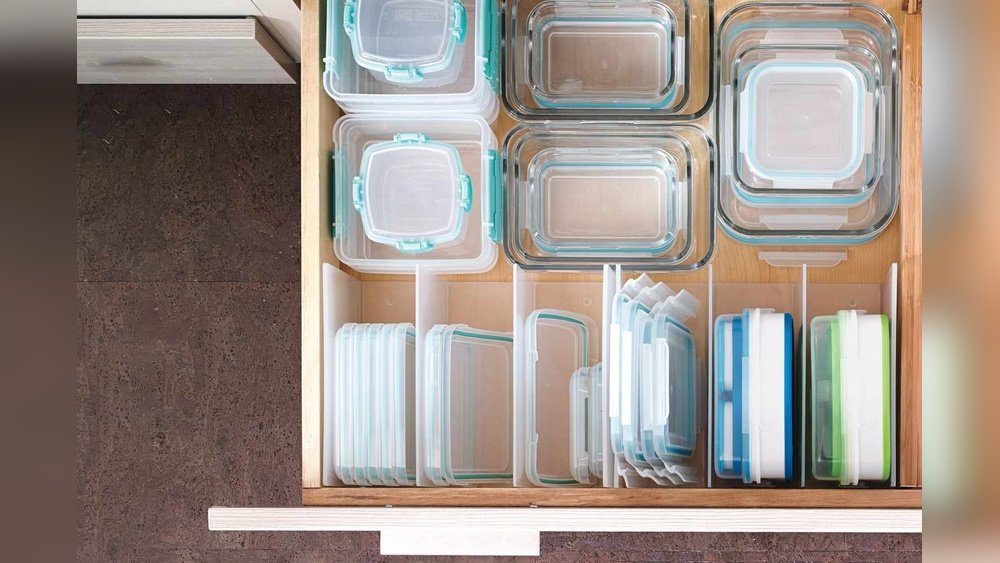
- Vertical file organizers: Place them upright inside a cabinet or drawer.
- Shallow bins: Store lids flat, sorted by size.
- Attachable racks: Some people use adhesive racks inside cabinet doors.
Always store lids near their matching containers. One insight many miss: If you consistently store lids and containers separately, you may lose track of which lid fits which base.
Using Drawer Dividers And Storage Bins
Drawer dividers and storage bins can transform a messy drawer into an organized space. Look for adjustable dividers that fit your kitchen drawers. Place containers on one side and lids on the other, or use bins to separate different sizes.
| Storage Tool | Best For | Notes |
|---|---|---|
| Drawer Divider | Wide, shallow drawers | Keeps containers upright and separated |
| Plastic Bin | Deep cabinets or shelves | Easy to pull out for access |
| File Organizer | Lids of any size | Vertical storage saves space |
A practical tip: Measure your drawers or cabinets before buying organizers to avoid returns.
Labeling For Easy Access
Labeling may sound like extra work, but it can save time and frustration. Use simple, removable labels on shelves, bins, or even directly on containers. For example:
- “Rectangle – Small”
- “Round – Large”
- “Lids: Medium”
If you share your kitchen with family or roommates, labels make it clear where each piece goes. This small step keeps your system working long-term.
Making The Most Of Vertical Space
Many kitchens have unused vertical space in cabinets. Adding wire racks or stacking shelves lets you double your storage without adding clutter.
- Wire racks: Place above existing shelves to add a second layer.
- Stacking shelves: Perfect for separating container stacks or holding lids.
You can find affordable options at home stores or online. But don’t overload these racks; glass is heavy, so check weight limits.
Keeping Sets Together
Glass Tupperware often comes in sets. Keeping each set together makes it easier to find what you need and keeps your kitchen looking neat.
- Nest containers from the same set inside each other.
- Place matching lids directly underneath or beside their containers.
- If you have the original box, consider storing sets inside.
One non-obvious insight: If you mix sets, you risk confusion because not all lids are compatible, even if they look similar.
Dealing With Odd Shapes And Sizes
Some glass Tupperware is designed for special purposes: deep dishes, pie plates, or small ramekins. These don’t always stack well with standard containers.
- Store odd shapes in a separate bin or on a less-used shelf.
- Use shelf risers to give each size its own spot.
- Keep infrequently used pieces farther from your prep area.
If you rarely use a piece, ask yourself if it’s worth keeping in your main kitchen space.
Safe Handling And Preventing Breakage
Unlike plastic, glass can chip or shatter. Organizing your Tupperware safely is critical, especially in homes with kids.
- Avoid stacking too many containers together.
- Never force a lid or container into a tight space.
- Place heavier items lower to prevent falling.
A real-world example: One family avoided several accidents by placing a non-slip mat inside their cabinet. This small change stopped containers from sliding out when the door opened.
Cleaning Before Storing
Clean, dry containers last longer and look better. Before putting glass Tupperware away, make sure it’s completely dry. Moisture can cause lids to smell and even damage silicone seals.
- Wipe down containers and lids with a towel after washing.
- Air-dry pieces before stacking to prevent water spots.
- Check for food residue around seals or in corners.
One overlooked detail: If you stack wet glass containers, they can stick together and become hard to separate.
Managing Limited Kitchen Space
If your kitchen is very small, you need to maximize every inch. Consider these strategies:
- Use the back of cabinet doors with adhesive racks.
- Store less-used glassware in another room (like a pantry or basement).
- Only keep what you use weekly; donate or store extras.
A data point from the National Kitchen and Bath Association: The average kitchen in the US is 161 square feet, but many apartments are much smaller. Creative solutions matter in these spaces.
Frequency Of Use: Front Vs Back Storage
Not all glass Tupperware is used every day. Store your most-used pieces in front, and your less-used items in the back.
- Place everyday containers at eye level.
- Move special-occasion or large pieces to higher shelves.
- Rotate your collection every few months to keep things fresh.
For busy families, this small change can mean grabbing a lunch container in seconds, not minutes.
Organizing Glass Tupperware For Meal Prepping
Many people use glass Tupperware for meal prep. If you prepare weekly meals, you need a clear system.
- Dedicate a section of your cabinet or drawer just for meal prep containers.
- Store matching lids together in a labeled bin.
- Keep all meal prep pieces within easy reach of your fridge.
One practical tip: Buy containers in sets of the same size if you meal prep often. This makes stacking and storing easier.
Cleaning And Maintenance Tips For Longevity
Good organization helps, but so does proper care. Glass Tupperware can last for years if handled correctly.
- Avoid sudden temperature changes to prevent cracking.
- Do not stack containers directly from the dishwasher; let them cool.
- Check lids and seals regularly for wear.
If you see cracks or chips, stop using the container for food storage. Damaged glass can be dangerous.
:strip_icc()/BHG_10_Genius_Solutions_for_Storing_and_Organizing_Food_Storage_Containers_Alicia_Long_V1_01-4e996abc1159410e9202b3e9b73be7eb.jpg)
Credit: www.bhg.com
Handling Stains And Odors
Glass is less likely to stain than plastic, but it’s not immune. Tomato sauce, curry, or certain spices can leave marks.
- Soak stained containers in a mix of baking soda and water.
- For strong odors, use a slice of lemon or white vinegar.
- Avoid harsh scrubbers that could scratch the glass.
If a container holds a strong smell, air it out before storing with other pieces.
Upgrading Your Glass Tupperware: When And Why
Sometimes, organizing is not enough. If your glass Tupperware is old, mismatched, or damaged, consider upgrading.
- Look for sets with universal lids to avoid confusion.
- Choose brands with replacement lids available.
- Consider containers with measurement marks for meal prep.
A recent survey showed that 68% of people feel more motivated to cook at home when their storage containers are in good shape.
Organizing Glass Tupperware In Shared Kitchens
If you share your kitchen with roommates or family, clear systems matter even more.
- Assign each person a shelf or bin for personal containers.
- Use color-coded labels or bins.
- Post a simple guide inside the cabinet door (“Large rounds: Top shelf”).
This reduces arguments and keeps everyone responsible for their own items.
Organizing Glass Tupperware For Kids’ Use
Kids often need containers for school lunches or snacks. Make it easy for them to help.
- Store small, kid-friendly containers on a lower shelf.
- Use plastic lids that are easy for children to open and close.
- Teach kids to match lids and containers when putting dishes away.
One non-obvious insight: Letting kids help with organization can make them more likely to pack their own lunches.
Creating A Maintenance Routine
Even the best system falls apart without regular upkeep. Set a simple routine:
- Once a month, check for missing or damaged pieces.
- Reorganize if stacks get messy.
- Wipe down shelves and bins to keep things clean.
A quick check-in keeps your system running smoothly.
Glass Tupperware Organization: Common Mistakes To Avoid
It’s easy to make mistakes when organizing. Here are some to watch for:
- Storing wet containers – can cause odors and sticking
- Over-stacking – risk of breakage
- Mixing lids and bases – creates confusion
- Ignoring weight limits of racks or shelves
- Forgetting to purge unused items
Fixing these habits leads to a safer, neater kitchen.
Comparing Glass Tupperware Organization Methods
Different methods work for different kitchens. Here’s a comparison of popular strategies:
| Method | Pros | Cons |
|---|---|---|
| Stacking with lids on | Quick access, prevents lid loss | Takes more space, less nesting |
| Nesting containers, separate lids | Saves space, neat stacks | Can lose lids, more searching |
| Bins or baskets | Flexible, portable | May not fit all cabinets |
| Vertical lid storage | Easy to see sizes, fast access | Needs separate organizer |
For most families, a mix of methods works best.
Creative Storage Solutions For Small Spaces
If your kitchen is tiny, think outside the box:
- Use a rolling cart for overflow storage.
- Hang racks under shelves for lightweight lids.
- Store rarely used glass Tupperware in an entryway closet.
Don’t be afraid to try new ideas until you find what works.
When To Let Go: Decluttering Your Glass Tupperware
Holding onto every container leads to clutter. Once a year, review your collection:
- Donate pieces you never use.
- Recycle broken or chipped items.
- Keep only sets you truly need.
Less clutter means easier organization and less stress.
Glass Tupperware Vs. Plastic: Organization Differences
People often ask if organizing glass Tupperware is different from plastic. The answer is yes, in key ways.
- Glass is heavier and less flexible, so it needs sturdier shelves.
- Glass can chip if over-stacked or dropped.
- Glass is usually more uniform in shape, making nesting easier.
A small but important tip: If you switch from plastic to glass, measure your space first. Glass takes up more room.
How Organization Impacts Food Safety
A tidy storage system isn’t just about looks. It can help keep your food safer.
- Clean containers are less likely to harbor bacteria.
- Organized lids and containers mean less touching and searching.
- Proper stacking prevents breakage and contamination.
According to the FDA, keeping food storage containers clean and dry helps prevent many common kitchen illnesses. For more guidance, see the FDA’s food safety tips.
Real-life Example: A Family Kitchen Transformation
Let’s see how these ideas work in practice. The Lee family used to have glass Tupperware falling out of their cabinet every week. They spent 20 minutes searching for lids after dinner and often broke containers. Here’s what changed:
- They sorted containers by size and shape, donating extras.
- Installed an adjustable shelf and a vertical file organizer for lids.
- Labeled bins for “Meal Prep” and “Leftovers.”
- Taught their kids to put containers away in the right spot.
Now, the Lees spend less than a minute finding what they need. They haven’t broken a container in six months, and their kitchen feels bigger.
Sustainability Benefits Of Organized Glass Tupperware
Organizing glass Tupperware isn’t just about convenience. It’s also better for the planet. Glass lasts longer than plastic, meaning less waste. When you keep your containers in good shape, you buy less and throw away less.
- Organized storage prevents accidental breakage.
- You’re less likely to buy duplicates or replacements.
- Clean, accessible containers encourage home-cooked meals, reducing takeout waste.
A study by the Ellen MacArthur Foundation found that switching from single-use to reusable containers could cut packaging waste by up to 80%.
Frequently Asked Questions
How Do I Stop Glass Containers From Sticking Together When Stacked?
Make sure containers are completely dry before stacking. Place a thin cloth or paper towel between each piece. This prevents suction and makes them easier to separate.
What Is The Safest Way To Store Glass Tupperware In A Cabinet With Children?
Store heavier items on lower shelves within easy reach. Use non-slip shelf liners to keep containers from sliding out. Choose containers with easy-open lids if kids will use them.
Can I Store Glass Tupperware With Lids On Or Off?
Both ways work. Storing with lids on saves time but takes more space. Nesting containers with lids off saves room, but you need a system to keep lids organized. Choose what fits your kitchen best.
How Often Should I Check My Glass Tupperware For Damage?
Check containers and lids once a month for chips, cracks, or worn seals. Stop using damaged pieces for food storage to stay safe.
What Should I Do With Extra Or Unused Glass Tupperware?
Donate containers in good shape to friends, family, or local charities. Recycle broken glass according to your city’s rules. Less clutter makes organization easier.
An organized glass Tupperware system brings peace to your kitchen and life. With these steps, your cabinets can go from chaotic to calm. You’ll waste less time, keep your food safer, and enjoy your kitchen more every day. Try a few of these tips, and you’ll see the difference right away.