
Many people believe that vinegar is the best way to clean a dishwasher. But what if you cannot use vinegar? Maybe you do not like the smell, or your dishwasher manufacturer warns against it, or you simply do not have any at home. The good news is, you can clean your dishwasher without vinegar and still get excellent results. In fact, there are several safe, effective methods using common household items. Learning how to clean your dishwasher without vinegar is not just about keeping it looking nice—it also helps your machine last longer, prevents odors, and keeps your dishes spotless.
If you have ever opened your dishwasher and smelled a musty odor, noticed cloudy spots on glasses, or seen food debris inside, you know the importance of regular cleaning. Hard water, soap scum, grease, and tiny food particles can build up over time.
If not removed, these can cause problems like blockages, dirty dishes, and even damage to your machine. Many new dishwashers also have parts sensitive to acids, so alternatives to vinegar are a smart choice.
In this guide, you will learn everything you need to know about cleaning your dishwasher without vinegar. You will discover what causes the grime, how to use other cleaning agents like baking soda, citric acid, and even simple soap, and get step-by-step instructions for deep cleaning.
You will also find practical tips, mistakes to avoid, and answers to common questions. By the end, you will have the confidence to keep your dishwasher fresh, efficient, and smelling clean—all without vinegar.
Why Clean Your Dishwasher Regularly?
Even though your dishwasher handles dirty dishes, it does not clean itself. Over time, grease, limescale, soap residue, and food bits collect in different parts of the machine. This buildup can lead to:
- Bad odors that make your kitchen smell unpleasant
- Reduced washing power as spray arms and filters get clogged
- Spots or film on dishes and glassware
- Unhygienic conditions from mold or bacteria growth
- Mechanical problems like poor drainage or leaks
A well-maintained dishwasher not only cleans better but also saves money on repairs and helps your appliance last longer.
The Problems With Vinegar In Dishwashers
While vinegar is a popular cleaning agent, it is not always the best choice for dishwashers. Some manufacturers, such as Bosch and Whirlpool, warn that vinegar’s acidity can damage rubber seals, gaskets, and even some metal parts over time. If you have a newer or high-end dishwasher, using vinegar may void your warranty. Vinegar can also react with baking soda and neutralize its cleaning power if used together incorrectly.
There are other reasons to avoid vinegar:
- Strong smell that lingers on dishes or inside the machine
- Allergies or sensitivities to acetic acid
- Not effective for certain types of buildup, like grease or heavy limescale
Luckily, there are several safe, effective alternatives.

Credit: www.onegoodthingbyjillee.com
What You Need To Clean A Dishwasher Without Vinegar
Before starting, gather the following items. You do not need everything on the list, but having options makes cleaning easier.
- Baking soda: Neutralizes odors, scrubs gently, and removes stains
- Citric acid powder or lemon juice: Removes limescale, mineral deposits, and hard water stains
- Dishwasher-safe cleaner tablets: Designed for deep cleaning without vinegar
- Mild dish soap: Cuts grease and loosens dirt
- Hydrogen peroxide (3% solution): Kills bacteria, mold, and mildew
- Toothbrush or small cleaning brush: Reaches tight spots
- Soft cloth or sponge: For wiping surfaces
- Paper towels or microfiber cloth: For drying
- Toothpick or straightened paperclip: Unclogs spray arm holes
- Rubber gloves: Protects hands from grime and chemicals
Not all methods require every item, so you can choose the best tools for your needs.
Step-by-step Guide: Cleaning Your Dishwasher Without Vinegar
Cleaning your dishwasher is best done in sections. Start with the basic cleaning, then move to deep cleaning if needed.
1. Remove And Clean The Filter
The filter traps food debris and is usually at the bottom of the dishwasher, under the bottom spray arm. A dirty filter is a common cause of odors and poor cleaning.
- Pull out the bottom rack.
- Unlock the filter by turning it counterclockwise (check your manual for details).
- Rinse the filter under hot running water.
- Scrub with a toothbrush and a drop of dish soap if greasy.
- Rinse thoroughly and let air dry.
Tip: Clean the filter every 2-4 weeks for best performance.
2. Wipe The Door And Gasket
Food and grease often collect around the door seal (gasket) and edges.
- Dampen a soft cloth with warm soapy water.
- Wipe the door edges, gasket, and hinge area.
- For stubborn spots, use a toothbrush with baking soda paste (mix baking soda and water).
- Wipe dry with a paper towel.
Non-obvious insight: The gasket is a common place for mold and mildew—cleaning here prevents bad smells and leaks.
3. Clean Spray Arms
The spray arms have small holes that can get clogged with mineral deposits or food particles.
- Remove the bottom and top spray arms (most snap out or unscrew).
- Rinse under running water.
- Use a toothpick or paperclip to unclog holes gently.
- Soak the arms in warm water with a spoonful of citric acid powder for 10-15 minutes if you see heavy buildup.
- Rinse and replace.
Non-obvious insight: Blocked spray arms can cause water spots and incomplete cleaning, so this step is important.
4. Scrub The Interior
Wipe all inside surfaces, including the sides, ceiling, and bottom.
- Use a damp sponge with mild dish soap or a sprinkle of baking soda.
- Scrub away grime, stains, and residue.
- For tough spots, make a paste of baking soda and water and let it sit for 10 minutes before wiping.
5. Remove Racks And Clean
Pull out the top and bottom racks.
- Rinse in the sink to remove stuck food.
- Scrub with a brush and a little dish soap if needed.
- Check for broken tines or wheels and replace if damaged.
6. Deodorize And Disinfect
To kill odors and germs, you have several options:
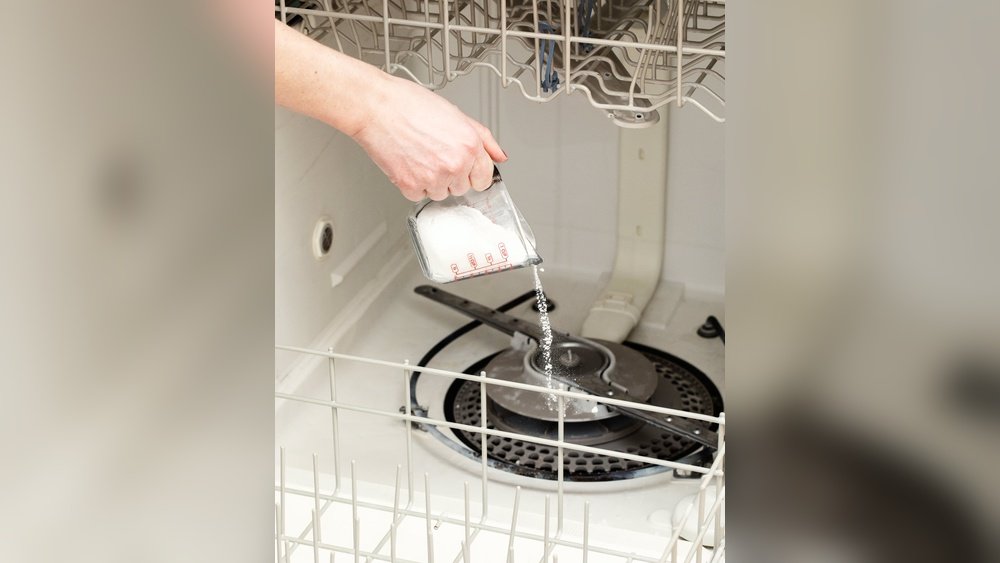
- Baking soda: Sprinkle 1 cup of baking soda on the bottom of the empty dishwasher. Run a hot water cycle.
- Hydrogen peroxide: Fill a spray bottle with 3% hydrogen peroxide and mist the interior. Let sit for 15 minutes, then run a rinse cycle.
- Dishwasher cleaner tablet: Place the tablet in the detergent compartment and run a cleaning cycle (follow package instructions).
7. Tackle Limescale And Hard Water Stains
If you have hard water, limescale can build up and cause white spots.
- Citric acid powder: Add 2-3 tablespoons to the detergent compartment. Run the hottest cycle.
- Lemon juice: Pour 1/2 cup into the bottom and run a hot cycle.
8. Clean The Drain Area
Bits of glass, food, or other debris can collect near the drain.
- Remove the filter (if not done already).
- Check for debris and wipe with a paper towel.
- Be careful of sharp objects.
9. Wipe The Exterior
Use a soft cloth with mild soap and water to clean the outside door, control panel, and handle.
- For stainless steel, wipe in the direction of the grain.
- Dry with a microfiber cloth to prevent streaks.
How Often Should You Clean Your Dishwasher?
Cleaning your dishwasher on a regular schedule prevents buildup and keeps it running well. Here is a recommended cleaning frequency:
| Task | How Often |
|---|---|
| Wipe door & gasket | Weekly |
| Clean filter | Every 2-4 weeks |
| Clean spray arms | Monthly |
| Deep clean (baking soda or citric acid) | Every 1-2 months |
| Clean drain area | As needed |
| Wipe exterior | Weekly |
Best Alternatives To Vinegar For Dishwasher Cleaning
There are several safe, effective cleaning agents you can use instead of vinegar.
Baking Soda
Baking soda is gentle, safe, and neutralizes odors. It is a mild abrasive, perfect for removing stains without scratching.
How to use:
- Sprinkle 1 cup on the bottom.
- Run an empty hot water cycle.
Baking soda is especially good for removing smells and light stains.
Citric Acid
Citric acid powder removes mineral deposits, limescale, and water spots. It is less harsh than vinegar and safe for seals.
How to use:
- Place 2-3 tablespoons in the detergent cup.
- Run the hottest cycle.
Citric acid is ideal if you have hard water.
Lemon Juice
Lemon juice is a natural acid, but less strong than vinegar. It helps with light limescale and leaves a fresh smell.
How to use:
- Pour 1/2 cup in the bottom.
- Run a hot cycle.
Dishwasher Cleaner Tablets
Many brands sell dishwasher cleaning tablets designed for regular maintenance. These often contain enzymes, surfactants, and sometimes citric acid, but not vinegar.
How to use:
- Place in the detergent compartment.
- Run a cleaning cycle (follow instructions).
Hydrogen Peroxide
A 3% hydrogen peroxide solution disinfects and kills mold or mildew without leaving strong odors.
How to use:
- Spray the interior and let sit for 15 minutes.
- Run a rinse cycle.
Note: Do not mix hydrogen peroxide with other chemicals.
Comparison: Popular Dishwasher Cleaners (without Vinegar)
Here’s a quick comparison of the most common cleaning agents.
| Cleaner | Best For | Safe for Seals? | Odor Removal | Removes Limescale? |
|---|---|---|---|---|
| Baking soda | Odors, stains | Yes | Excellent | Weak |
| Citric acid | Limescale, hard water | Yes | Good | Excellent |
| Lemon juice | Light stains, fresh smell | Yes | Good | Moderate |
| Cleaner tablet | Deep cleaning | Yes | Excellent | Good |
| Hydrogen peroxide | Mold, bacteria | Yes | Good | No |
Signs Your Dishwasher Needs Cleaning
Sometimes, it is obvious your dishwasher needs attention. Look for these signs:
- Foul or musty smells when you open the door
- Cloudy glasses or dishes still dirty after a cycle
- Visible food bits in the filter, racks, or spray arms
- Standing water at the bottom
- Soap scum or white mineral deposits inside
If you notice these problems, do a full cleaning as soon as possible.
/how-to-clean-the-dishwasher-1900465_07-6452d6083d11478497770f43bfd83258.jpg)
Credit: www.thespruce.com
Detailed Deep Cleaning Routine (without Vinegar)
For best results, deep clean your dishwasher every 1-2 months, or if you have heavy buildup. Here is a full routine without vinegar:
- Empty the dishwasher completely.
- Remove and clean the filter, racks, and spray arms as explained earlier.
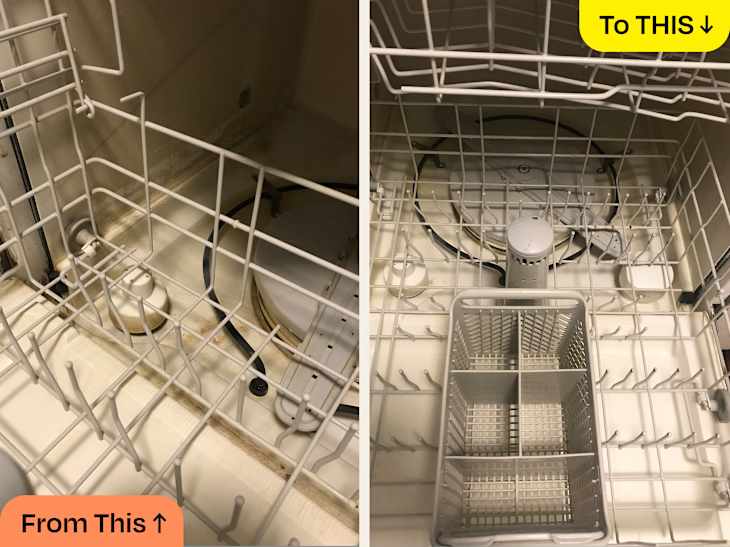
- Scrub the interior with a baking soda paste (mix 2 tablespoons of baking soda with a little water). Focus on corners and the door seal.
- Rinse and wipe all surfaces with a clean damp cloth.
- Sprinkle 1 cup of baking soda on the bottom.
- Run the hottest cycle (no dishes, no soap).
- When finished, add 2 tablespoons of citric acid to the detergent cup, and run another hot cycle.
- Dry the inside with a microfiber cloth, especially the seal and drain area.
Extra Tip: Leave the door open for an hour to air out and prevent mold growth.
Keeping Your Dishwasher Clean: Daily And Weekly Habits
A few simple habits can keep your dishwasher cleaner for longer.
- Scrape dishes well before loading (no need to rinse completely).
- Check for food bits on the filter weekly.
- Leave the door slightly open after a cycle to let moisture escape.
- Do not overload—this blocks spray arms and leaves food behind.
- Use the right detergent for your water type (hard or soft).
- Run hot water in the sink before starting the dishwasher—this ensures the first fill is hot.
Mistakes To Avoid When Cleaning Your Dishwasher
Avoid these common errors for the best results:
- Using bleach or harsh chemicals—these can damage seals and stainless steel.
- Mixing cleaning agents (like hydrogen peroxide with baking soda)—this can cause dangerous reactions.
- Forcing a toothpick or wire into spray arm holes—be gentle to avoid damage.
- Forgetting to clean the filter—it is the most important part to keep clean.
- Ignoring manufacturer’s instructions—always check your user manual.
How Dishwasher Cleaning Affects Performance
A clean dishwasher works better and saves money. Here’s how:
- Faster cleaning cycles—less energy and water wasted on stuck food.
- Lower energy costs—clean parts work more efficiently.
- Longer machine life—less wear on the pump, spray arms, and seals.
- Fewer repairs—clogs and buildup are a common cause of breakdowns.
- Better hygiene—fewer bacteria and mold inside your machine.
Research from the National Sanitation Foundation shows that regular cleaning can reduce bacteria by over 99%, and households that clean their dishwasher regularly report 30% fewer repairs over five years.
Do Dishwasher Cleaning Tablets Work Without Vinegar?
Yes, most dishwasher cleaning tablets are formulated without vinegar. They use a mix of surfactants, enzymes, and sometimes citric acid to break down grease, limescale, and odors. Brands like Finish, Affresh, and Cascade make tablets specifically designed for monthly cleaning.
They are easy to use—just pop one in and run a hot cycle. For best results, use a cleaning tablet once a month, along with regular filter cleaning.
Environmental And Safety Tips
Keeping your cleaning routine eco-friendly and safe is important:
- Use phosphate-free dishwasher detergents and cleaners.
- Avoid using too much product—more is not always better.
- Always rinse or wipe away cleaner residue before running a load of dishes.
- Store cleaning agents out of reach of children and pets.
- Dispose of old food bits and debris in the trash, not down the drain.
Table: Environmental Impact Of Dishwasher Cleaners
Here’s how common cleaners compare in eco-friendliness.
| Cleaner | Biodegradable? | Safe for Septic? | Residue Risk |
|---|---|---|---|
| Baking soda | Yes | Yes | Low |
| Citric acid | Yes | Yes | Low |
| Cleaner tablets | Usually | Check label | Moderate |
| Hydrogen peroxide | Yes | Yes | Low |
| Lemon juice | Yes | Yes | Low |
When To Call A Professional
Most dishwasher cleaning can be done yourself. However, call a professional if you notice:
- Persistent bad odors after deep cleaning
- Standing water or drainage problems
- Strange noises during operation
- Leaks around the door or under the machine
These may signal a bigger issue, like a blocked pump or broken seal.
Credit: www.thekitchn.com
Dishwasher Cleaning Myths (and The Truth)
There are some common myths about dishwasher cleaning:
- Myth: You must use vinegar for best results.
- Truth: Baking soda, citric acid, and cleaning tablets work just as well, and are safer for some machines.
- Myth: Dishwashers clean themselves every cycle.
- Truth: Food, grease, and minerals still build up over time, especially in filters and spray arms.
- Myth: Bleach is the best disinfectant.
- Truth: Bleach can damage parts and is not needed. Hydrogen peroxide or hot water are safer choices.
- Myth: Rinsing dishes before loading is a waste of water.
- Truth: Light scraping is enough. Over-rinsing does waste water, but leaving large bits can clog the filter.
Frequently Asked Questions
How Do I Clean A Smelly Dishwasher Without Vinegar?
Sprinkle baking soda (1 cup) in the bottom of the empty dishwasher and run a hot water cycle. For stubborn odors, spray the interior with hydrogen peroxide and let sit for 15 minutes before rinsing. Make sure the filter and drain are clean.
Can I Use Lemon Juice Instead Of Vinegar To Clean My Dishwasher?
Yes, lemon juice is a good substitute. Pour 1/2 cup of lemon juice into the bottom and run a hot cycle. Lemon juice helps remove light stains and leaves a fresh scent, but may not be as strong as citric acid for heavy limescale.
Is It Safe To Use Baking Soda And Citric Acid Together?
Do not use them at the same time—they can neutralize each other. Use baking soda on one cycle, then citric acid on another for the best results.
How Often Should I Deep Clean My Dishwasher?
Deep clean your dishwasher every 1-2 months. Clean the filter and wipe the gasket at least once a month, or more often if you notice odors or buildup.
What Should I Do If My Dishwasher Still Smells After Cleaning?
Check for trapped food in the filter, drain, or spray arms. Run a cleaning cycle with a dishwasher cleaner tablet or citric acid. If odors continue, look for mold around the door seal. If all else fails, call a professional to check for hidden blockages or mechanical problems.
Regular cleaning without vinegar is safe, effective, and easy with the right methods. Your dishwasher will last longer, run more quietly, and keep your dishes sparkling clean. If you want more details on dishwasher maintenance, check this helpful resource from the Consumer Reports. With these tips, you can say goodbye to vinegar—and hello to a fresher, more efficient dishwasher.