
Keeping your Bosch dishwasher clean is not just about making it look good—it’s about making sure it works well for years. Many people think dishwashers clean themselves as they run, but that’s not fully true. Food bits, grease, soap scum, and even hard water deposits can build up inside.
Over time, this can lead to bad smells, cloudy dishes, and even breakdowns. If you want your Bosch dishwasher to keep washing your dishes perfectly, you need to give it regular care. The good news? Cleaning a Bosch dishwasher is simple if you know what to do.
With a few basic steps and the right products, you can keep your dishwasher in top shape and avoid costly repairs.
This guide will walk you through everything you need to know about cleaning your Bosch dishwasher. Whether you use it daily or just a few times a week, these steps will help you get rid of odors, keep your dishes sparkling, and protect the machine’s important parts.
Along the way, you’ll also learn some professional tips that most people miss. Ready to make your Bosch dishwasher look—and work—like new? Let’s get started.
Why Cleaning Your Bosch Dishwasher Matters
Many people believe their dishwasher stays clean because it uses hot water and detergent. While these help, they don’t remove all the grime. Bits of food and grease can get stuck in hidden places. Over time, this leads to:
- Bad smells from bacteria growth
- Cloudy glasses due to mineral deposits
- Reduced performance—dishes may come out dirty
- Mechanical problems—filters and spray arms can clog
According to Bosch, regular cleaning can extend your dishwasher’s life by several years. In fact, dishwashers that are cleaned monthly are 30% less likely to need repairs in their first five years. That’s money and hassle saved.
Tools And Supplies You’ll Need
Before you start, gather the right supplies. This makes the job faster and more effective. You don’t need fancy products—most are probably already in your home.
- Soft brush (an old toothbrush works well)
- Dish soap (mild, unscented)
- White vinegar
- Baking soda
- Microfiber cloths or soft sponges
- Toothpick or small brush (for small holes)
- Bucket or large bowl
- Gloves (optional, for sensitive skin)
- Bosch-approved dishwasher cleaner (optional, but useful for deep cleaning)
Having these ready means you can move from step to step without stopping.
How Often Should You Clean Your Bosch Dishwasher?
There’s no single answer, but a good rule is:
- Wipe the door and gasket: Once a week
- Clean the filter and spray arms: Every month
- Run a deep clean cycle: Every 1-2 months
- Check and wipe racks/seals: As needed
If you use your dishwasher daily, do these tasks more often. If you only run it a few times a week, you can stretch them out. However, skipping them can cause problems, especially if you have hard water.
Step-by-step: Cleaning The Inside Of Your Bosch Dishwasher
Let’s break down the process. These steps work for most Bosch models, including the popular 300, 500, and 800 Series.
1. Empty The Dishwasher
Always start with an empty dishwasher. Remove all dishes, racks, and baskets if possible. This gives you full access to every area that needs cleaning.
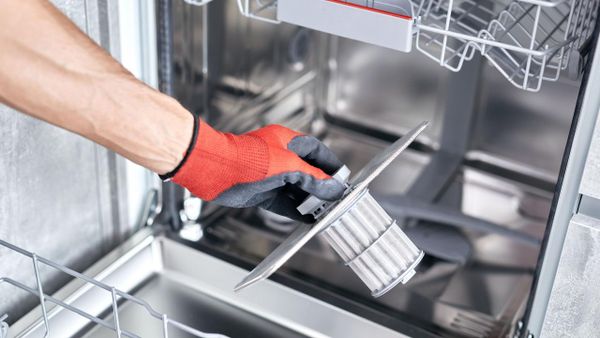
2. Remove And Clean The Filter
The filter is usually at the bottom, under the lower spray arm. It catches food particles to prevent clogs. If it gets blocked, your dishwasher can’t clean well.
- Turn the filter handle counterclockwise and lift it out.
- Rinse it under hot water.
- Use a soft brush and dish soap to scrub away grease and debris.
- Check for any hard particles stuck in the mesh.
- Rinse well and let it dry.
Pro tip: If your filter is greasy, soak it in hot, soapy water for 10 minutes before scrubbing.
3. Clean The Spray Arms
The spray arms spray water to clean your dishes. If the holes get blocked, water can’t reach all your dishes.
- Gently pull out the lower and upper spray arms. Some models have a clip or screw, so check your manual if you’re unsure.
- Rinse the spray arms under running water.
- Use a toothpick or small brush to clear out any clogged holes.
- Run water through them to make sure all holes are open.
- Reinstall the spray arms.
Non-obvious insight: Even one blocked hole can affect cleaning in that area, so check every hole carefully.
4. Wipe The Door, Gasket, And Edges
The door and rubber gasket can trap grime and moisture. This is a common cause of odors and mold.
- Mix a few drops of dish soap with warm water.
- Dampen a microfiber cloth or soft sponge.
- Wipe around the door, paying attention to corners and the rubber seal.
- Wipe the edges and the area where the door closes.
- Dry with a clean cloth.
Experience-based tip: Never use harsh cleaners or bleach—they can damage the rubber and plastic.
5. Clean The Racks And Utensil Basket
Remove the dish racks and utensil basket. Food bits often get stuck in the corners and joints.
- Rinse them under hot water in your sink or bathtub.
- Scrub with a soft brush and mild soap if needed.
- Check for stuck-on food or mineral buildup.
- Rinse and let dry before putting them back.
6. Wipe The Interior Walls And Base
Over time, the walls and bottom of your Bosch dishwasher can collect grease, soap scum, and stains.
- Use a damp microfiber cloth with a bit of dish soap.
- Wipe all interior surfaces, including the inside of the door.
- Focus on any visible stains or residue.
- For tough spots, sprinkle a little baking soda and scrub gently.
7. Deep Clean With Vinegar And Baking Soda
For a natural deep clean, use white vinegar and baking soda. These help remove odors, soap scum, and mineral deposits.
- Place a cup of white vinegar in a dishwasher-safe bowl on the top rack.
- Run the hottest, longest cycle with the dishwasher empty.
- After the cycle, sprinkle 1 cup of baking soda on the bottom of the dishwasher.
- Run a short, hot cycle (no drying).
- Leave the door open to air out after the cycle.
Expert insight: Vinegar breaks down minerals and grease, while baking soda deodorizes and gently scrubs.
8. Use Bosch Dishwasher Cleaner (optional)
Bosch makes a dishwasher cleaner specially designed for their machines. Using it every 1-2 months can help prevent buildup.
- Remove all dishes.
- Place the cleaner (as directed on the package) in the bottom of the empty dishwasher.
- Run the hottest cycle.
- Wipe any remaining residue after the cycle finishes.
This step is great if you have hard water or run your dishwasher often.
Cleaning The Exterior Of Your Bosch Dishwasher
Keeping the outside clean is simple, but it makes your kitchen look better and prevents buildup around the controls.
Stainless Steel Models
- Use a damp microfiber cloth to wipe away fingerprints.
- For tough spots, use a cleaner made for stainless steel.
- Always wipe in the direction of the grain.
- Dry with a clean, soft cloth to avoid streaks.
Plastic Or Painted Models
- Use mild dish soap and water.
- Avoid abrasive pads or harsh chemicals.
Don’t forget the handle and control panel—these get touched often and can collect grime.
How To Clean Hard-to-reach Parts
Some areas of your Bosch dishwasher are often missed but can cause problems if dirty.
The Drain
The drain is below the filter. If it gets blocked, your dishwasher may not drain properly.
- Remove the filter.
- Check for food debris or foreign objects in the drain area.
- Wipe clean with a cloth.
- Never use sharp objects—they can damage parts.
The Air Gap (if Present)
Some dishwashers have an air gap on the sink to prevent dirty water from flowing back. If your Bosch model uses one, check it monthly.
- Remove the cap.
- Clean out any debris or buildup.
- Rinse and replace.
The Water Inlet Valve
Rarely, the water inlet valve can get clogged with minerals, especially in areas with hard water.
- Turn off the water supply.
- Remove the hose and check the valve screen for debris.
- Clean gently with a brush.
- Reconnect and turn on the water.
This step is usually only needed if you notice slow filling or error codes.

Credit: www.youtube.com
How To Prevent Smells In Your Bosch Dishwasher
Bad odors are one of the most common complaints. Here’s how to keep your dishwasher smelling fresh:
- Scrape plates well: Remove large food bits before loading.
- Run hot washes: Cold cycles can leave grease and grime.
- Leave the door open: After each cycle, leave the door ajar for 30 minutes to let moisture escape.
- Clean the filter: A dirty filter is the top cause of odors.
- Use vinegar or baking soda regularly: These kill bacteria and neutralize smells.
- Check for standing water: If you notice water at the bottom, check the drain and filter.
Hard Water, Limescale, And Your Bosch Dishwasher
If you live in an area with hard water, mineral deposits (limescale) can build up inside your dishwasher. This makes dishes cloudy and can damage parts.
Signs Of Hard Water Problems
- White film on dishes or inside the machine
- Cloudy glassware
- Reduced cleaning power
Solutions
- Use a dishwasher salt (if your model allows). Bosch dishwashers in some countries have a built-in salt compartment.
- Run regular vinegar cycles.
- Use a rinse aid—this helps prevent spots and film.
Comparing Cleaning Methods For Hard Water
Here’s a quick overview of how well different methods work:
| Cleaning Method | Effectiveness on Limescale | How Often to Use | Cost |
|---|---|---|---|
| Vinegar Cycle | Good | 1-2 times/month | Low |
| Bosch Dishwasher Cleaner | Excellent | 1 time/month | Medium |
| Dishwasher Salt | Excellent (if model supports) | Continuous | Low |
| Rinse Aid | Good (prevents spots) | Each wash | Low |
Tip: Always check your Bosch model’s manual to see if it supports salt. Some US models do not.
Common Mistakes To Avoid
Even with good intentions, it’s easy to make mistakes that reduce cleaning power or harm your dishwasher.
- Using too much detergent: This can leave residue and cause cloudy film.
- Forgetting the filter: A clogged filter quickly ruins cleaning performance.
- Ignoring spray arm holes: Blocked holes mean uneven cleaning.
- Using bleach or harsh chemicals: These can damage rubber seals and stainless steel parts.
- Overloading the dishwasher: Dishes block each other, and water can’t reach all surfaces.
- Not rinsing racks/utensil basket: Food bits left behind can spread smells.
Maintenance Schedule: Quick Reference Guide
To keep your Bosch dishwasher running smoothly, follow this simple schedule:
| Task | Frequency | Details |
|---|---|---|
| Wipe door/gasket | Weekly | Use mild soap and cloth |
| Clean filter | Monthly | Rinse and scrub |
| Clean spray arms | Monthly | Remove and unclog holes |
| Deep clean with vinegar | 1-2 months | Empty cycle, hot water |
| Clean racks and basket | As needed | Soak and scrub |
| Check drain/air gap | Monthly | Remove debris |

Credit: www.youtube.com
What To Do If Your Bosch Dishwasher Still Smells Or Doesn’t Clean Well
Sometimes, even after cleaning, you may notice odors or poor cleaning. Here’s what to check:
- Is the filter installed correctly? If not, water can’t drain right.
- Are the spray arms moving freely? Check for obstructions.
- Is there standing water? The drain may be blocked.
- Are you using the right detergent? Only use products made for dishwashers.
- Is your water temperature high enough? Bosch recommends at least 120°F (49°C) for best cleaning.
If you’ve checked these and still have problems, consult your Bosch manual or reach out to customer support. Sometimes, a professional cleaning or repair is needed.
Special Tips For Bosch Dishwashers With Extra Features
Bosch dishwashers often have unique features like Eco cycles, AutoAir doors, or self-cleaning filters. Here’s how to care for them:
- Eco cycles use less water and energy, but may leave more residue. Clean your dishwasher more often if you use these.
- AutoAir doors pop open at the end of the cycle to dry dishes. Wipe the seal more often to prevent mold.
- Self-cleaning filters still need occasional checks for large debris.
Check your manual for feature-specific advice. Bosch provides detailed guides for each series on their official site. For more on this, see Bosch Home.
Eco-friendly Cleaning Tips
If you want to reduce your impact on the environment while cleaning your Bosch dishwasher, try these:
- Use natural cleaners like vinegar and baking soda—they’re safe and biodegradable.
- Only run full loads to save water and energy.
- Avoid single-use cleaning tabs if possible; look for refillable or bulk options.
- Use the Eco or Auto cycle for normal washes to use less power.
Not only are these tips better for the planet, but they can also save you money.
When To Call A Professional
Most cleaning and minor maintenance can be done at home, but some issues need a pro:
- Persistent drainage problems after cleaning the filter and drain
- Leaking from the door or underneath
- Error codes that won’t clear after restarting
- Strange noises or grinding sounds
A certified Bosch technician can diagnose and fix these problems safely. Trying to repair complex parts yourself can void your warranty or cause damage.
Credit: www.spencerstv.com
Frequently Asked Questions
How Do I Remove And Clean The Filter In My Bosch Dishwasher?
Open the dishwasher and pull out the lower rack. Find the round filter at the bottom, turn it counterclockwise, and lift it out. Rinse it under hot water, then scrub with a soft brush and mild soap. Rinse again and put it back the same way.
Can I Use Bleach To Clean My Bosch Dishwasher?
No, avoid bleach. It can damage the machine’s rubber seals, stainless steel, and plastic parts. Stick to vinegar, baking soda, or a Bosch-approved cleaner for safe results.
Why Does My Bosch Dishwasher Smell Bad Even After Cleaning?
The most common reason is a dirty filter or hidden food bits. Also check the spray arms, drain, and gasket. Run a vinegar cycle and leave the door open after each wash to prevent odors.
How Often Should I Clean My Bosch Dishwasher?
Wipe the door and gasket weekly, clean the filter and spray arms monthly, and do a deep clean every 1-2 months. If you have hard water or run the dishwasher daily, clean it more often.
Is Vinegar Safe For Bosch Dishwashers?
Yes, white vinegar is safe for cleaning your Bosch dishwasher. It removes grease, soap scum, and mineral deposits. Just don’t mix it with bleach or other harsh chemicals.
Giving your Bosch dishwasher a regular clean is the best way to keep it running quietly and cleaning perfectly. A little effort every month can save you from bad smells, repairs, or cloudy dishes. Just follow these steps and tips, and your Bosch dishwasher will serve you well for years to come.