
Food lasts longer and stays safe because of preservatives. Preservatives are substances added to food to slow down spoilage from bacteria, yeast, molds, and chemical changes like oxidation. If you want to keep your food fresh, especially when storing or selling it, learning how to use preservatives the right way is important.
But many people do not know which preservatives to use, how much is safe, and what rules they need to follow. This guide will help you understand how to use preservatives in food, what types exist, the science behind them, and what mistakes to avoid.
Whether you are a home cook, a small food business owner, or just curious, you will find answers here.
Why Food Needs Preservatives
Food is always breaking down. Air, moisture, and microorganisms like bacteria are always working to spoil it. Preservatives keep food safe to eat for a longer time. Sometimes, they also keep the color, taste, and texture the same as when the food was fresh.
Food without preservatives can spoil in a few hours or days. For example, bread can grow mold in two or three days if left out. Meat can develop harmful bacteria in just a few hours at room temperature. Preservatives help prevent these problems.
There are two main reasons to use preservatives:
- Safety: To stop harmful bacteria and molds from growing.
- Quality: To keep the food’s flavor, color, and texture.
Some foods, like canned vegetables or cured meats, would not be possible without preservatives.
Types Of Food Preservatives
Preservatives are not all the same. Some are natural, and some are synthetic. They work in different ways and are suitable for different foods.
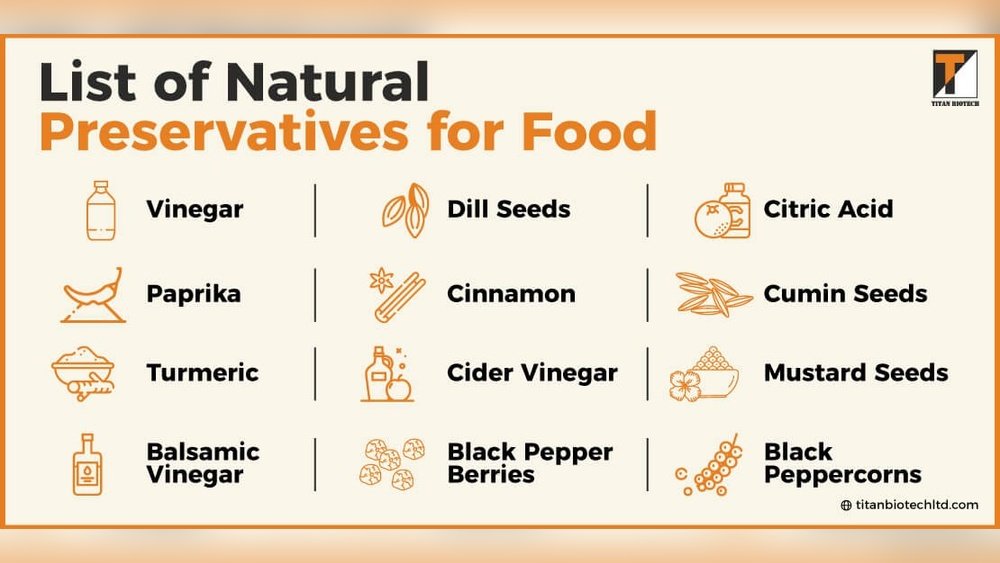
Natural Preservatives
These come from plants, animals, or minerals. Many people prefer natural preservatives because they sound safer or “cleaner.” Some common natural preservatives include:
- Salt: Used in pickles, cheese, and cured meats.
- Sugar: Found in jams and jellies.
- Vinegar: Used in pickling vegetables and sauces.
- Lemon juice or citric acid: Used to preserve fruit and drinks.
- Spices and herbs: Such as cloves, cinnamon, and rosemary oil.
Natural preservatives often work by creating a hostile environment for germs, such as making the food too salty, sweet, or acidic for them to grow.
Chemical Or Synthetic Preservatives
These are made in labs and are carefully tested for safety. They are widely used in the food industry because they are reliable and effective in small amounts.
Some common chemical preservatives are:
- Sodium benzoate: Used in soft drinks and fruit juices.
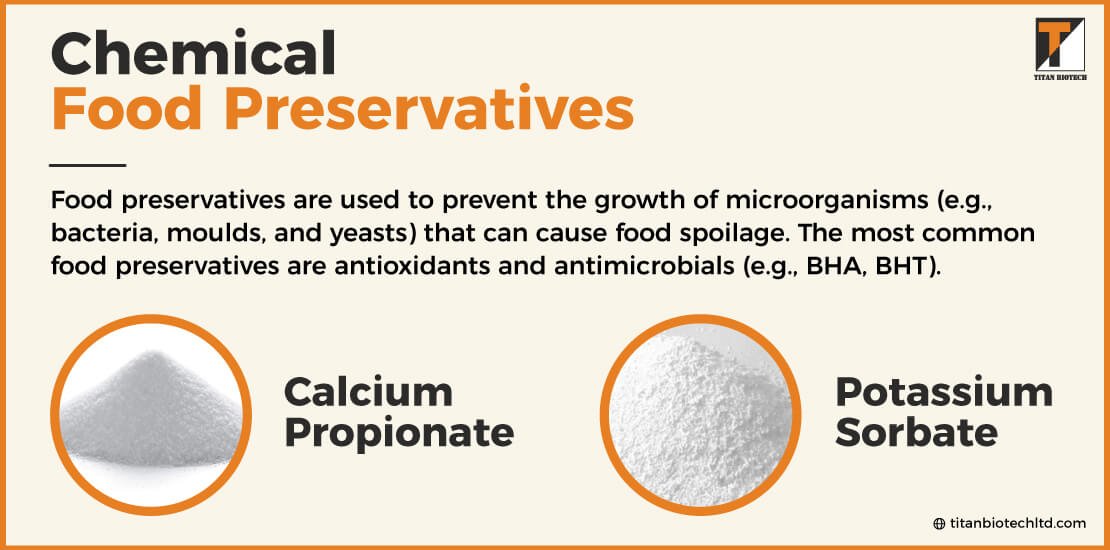
- Potassium sorbate: Found in cheese, baked goods, and wine.
- Sulfites: Used in dried fruits and wine.
- Nitrites and nitrates: Found in cured meats.
- Propionates: Used in bread and cakes.
Chemical preservatives often stop the growth of bacteria, molds, and yeast by interfering with their metabolism or by making the environment less suitable for them.
Antioxidants As Preservatives
Some preservatives work by stopping oxygen from damaging food. Oxygen causes fats and oils to become rancid (off-flavor), and it can change the color of fruits and vegetables.
- Ascorbic acid (Vitamin C): Used in fruit juices to keep color and flavor.
- Tocopherols (Vitamin E): Used in oils and margarine.
- Butylated hydroxyanisole (BHA) and butylated hydroxytoluene (BHT): Used in cereals, snacks, and gum.
Antioxidants are especially important for foods that contain fats or oils.
How Food Preservatives Work
Preservatives use different methods to protect food. Here are the main ways:
- Inhibiting Microorganisms: Most preservatives make it hard for bacteria, yeast, or mold to grow. For example, salt draws water out of cells, killing bacteria by dehydration.
- Changing pH: Some preservatives make food more acidic or alkaline. Many germs cannot survive in very acidic foods, so adding vinegar (acetic acid) or citric acid helps.
- Blocking Oxygen: Antioxidants stop oxygen from reacting with food, slowing down spoilage.
- Inactivating Enzymes: Some preservatives stop enzymes, which are proteins in food that cause browning or texture changes.
It is important to understand that not all preservatives work for all foods. For example, sodium benzoate is effective in acidic foods but not in neutral or alkaline foods.
Choosing The Right Preservative For Your Food
Choosing a preservative is not as simple as picking one from a list. You need to think about:
- Type of food: Is it bread, meat, fruit, or a drink?
- Moisture content: Dry foods spoil less quickly than wet foods.
- PH level: Some preservatives only work in acidic foods.
- Storage conditions: Will the food be kept cold, at room temperature, or in a sealed package?
- Taste and appearance: Some preservatives can change the flavor or look of food.
Here is a simple comparison to help you understand which preservative works best for common foods:
| Food Type | Best Preservative(s) | Main Purpose |
|---|---|---|
| Bread | Calcium propionate | Prevent mold growth |
| Fruit Juices | Sodium benzoate, citric acid | Stop fermentation |
| Dried Fruits | Sulfites | Preserve color & prevent mold |
| Pickles | Vinegar, salt | Stop bacteria and yeasts |
| Processed Meats | Nitrites, salt | Prevent botulism, keep color |
A common mistake is to use the wrong preservative for the food type, which can lead to food spoilage or bad taste.
How To Use Preservatives Safely
Using preservatives safely is critical. Too little, and your food can spoil. Too much, and it can be dangerous or taste bad.
Understanding Dosage
Every preservative has a maximum safe level, usually measured in parts per million (ppm) or as a percentage of the food weight. Food safety authorities like the FDA or EFSA set these limits.
For example:
- Sodium benzoate: Up to 0.1% in most foods
- Potassium sorbate: Up to 0.2% in baked goods
- Sulfites: Up to 2000 ppm in dried fruit
Always measure preservatives accurately with a digital scale, especially for small batches.
Mixing And Applying Preservatives
The way you mix or add preservatives matters:
- Dissolve powders in water before adding to food for even distribution.
- For baked goods, mix with dry ingredients before combining with wet ingredients.
- For pickles or jams, add preservatives to the brine or syrup.
Never add more than the recommended amount, thinking “more is better. ” This can cause health risks and change the taste.
Legal And Labeling Requirements
You cannot just add any preservative to any food. Countries have rules about which preservatives are allowed and how much you can use.
- Always check your local food safety regulations before selling preserved foods.
- You must list preservatives on the food label, often by name and/or E-number (e.g., “Sodium Benzoate (E211)”).
Ignoring these rules can lead to fines or forced recalls of your product.
Common Natural Preservatives And Their Uses
Natural preservatives are popular with consumers who want “clean label” foods. Here are some of the most used natural preservatives:
- Salt: Used for meat, fish, pickles, and cheese. Salt pulls water out of food and germs, slowing spoilage.
- Sugar: Used in jams, jellies, and candied fruit. Sugar binds water, making it unavailable to microbes.
- Vinegar (Acetic Acid): Used for pickling vegetables and sauces. Vinegar lowers the pH, stopping bacteria and yeast.
- Lemon Juice/Citric Acid: Used in canned fruits, drinks, and jams to keep color and flavor.
- Rosemary Extract: Used in oils and snacks. Contains antioxidants that keep fats from going rancid.
- Garlic and Spices: Garlic, cloves, and cinnamon have natural antibacterial properties, but work best with other methods like salt or vinegar.
While natural preservatives are effective, they are not always as strong as synthetic ones. For example, salt can slow mold, but it does not stop all bacteria. Combining methods is common in food preservation.
Credit: titanbiotechltd.com
Synthetic Preservatives: What You Need To Know
Synthetic preservatives are widely used in the food industry. They are effective at low doses and are tightly regulated for safety.
Key Synthetic Preservatives
- Sodium Benzoate: Stops yeast and bacteria in acidic foods like soda, fruit juice, and salad dressings.
- Potassium Sorbate: Used in cheese, yogurt, and baked goods to control molds and yeast.
- Sulfites: Used in dried fruit and wine to keep color and prevent mold.
- Calcium Propionate: Stops mold in bread and baked goods.
- Nitrites/Nitrates: Used in cured meats to stop botulism bacteria and keep a pink color.
- BHA and BHT: Slow rancidity in cereals, chips, and gum.
These preservatives are safe when used at approved levels, but can cause reactions in sensitive people. For example, sulfites may trigger asthma attacks in some individuals.
Comparing Natural And Synthetic Preservatives
Here’s a simple table comparing features of both types:
| Preservative Type | Strengths | Weaknesses | Common Uses |
|---|---|---|---|
| Natural | Consumer friendly, simple ingredients | May need higher amounts, change taste | Artisan foods, pickles, jams |
| Synthetic | Effective at low dose, stable | Some consumer resistance, allergy risk | Packaged snacks, drinks, meats |
Knowing when to use which type, and how to combine them, is a skill that improves with experience.
Steps For Preserving Food At Home
Using preservatives in your own kitchen is possible, but you must follow good practices:
- Start with Clean Food: Wash fruits and vegetables well. Remove bruised or spoiled parts.
- Sterilize Containers: Use glass jars or food-grade plastic. Boil or sanitize containers to kill germs.
- Measure Accurately: Use a digital scale for powders, and measuring spoons for liquids.
- Mix Evenly: Stir preservatives into the food or brine well so every part is protected.
- Seal and Store Properly: Use airtight containers and store in a cool, dry place.
For example, when making jam, add citric acid or lemon juice to the fruit, cook, and pour into sterilized jars. For pickles, add salt and vinegar to the brine, then fill jars with vegetables and seal tightly.
One non-obvious tip: Always leave a little space at the top of jars (called “headspace”). This stops jars from breaking if the contents expand.
Avoiding Common Mistakes
Even experienced cooks can make mistakes with preservatives. Here are some to avoid:
- Overdosing: More preservative does not mean safer food. It can make food taste bitter or cause health problems.
- Using the Wrong Type: Not all preservatives work for all foods. For example, sodium benzoate only works in acidic foods.
- Not Mixing Well: If the preservative does not reach all parts of the food, some areas can spoil.
- Ignoring Storage: Preservatives slow spoilage, but do not stop it forever. Store preserved food in the right way.
- Not Labeling: Always write the date and preservative used on the container. This helps track shelf life and avoid confusion.
Many beginners also forget that preservatives cannot fix spoiled food. Only use fresh, good-quality ingredients.
Food Preservation And Health
Are preservatives safe? This is a common concern. The answer depends on the preservative, the amount, and the person.
Most preservatives are safe at approved levels. However, some people are sensitive to certain preservatives. For example:
- Sulfites can trigger asthma in some people.
- Nitrites can form harmful compounds if used incorrectly.
- High levels of BHA/BHT are not recommended for children.
For this reason, it is important to follow guidelines and not use more than the recommended dose. If you have allergies, check food labels before eating.
Laws And Regulations For Preservatives
Every country has rules about food preservatives. In the US, the Food and Drug Administration (FDA) sets limits for each preservative. In the EU, the European Food Safety Authority (EFSA) does the same.
Key legal points:
- Only approved preservatives can be used.
- Maximum levels are set for each food type.
- All preservatives must be listed on the label.
- Some preservatives are banned in certain foods or for infants.
For example, nitrites are not allowed in baby food in many countries. Some preservatives are banned in organic foods.
If you are selling preserved food, always check local laws. You can find more information on official sources like the FDA Food Additives Overview.
How To Test And Monitor Preservatives
Testing is important, especially for food businesses:
- Shelf life tests: Store food samples and check for spoilage over time.
- PH tests: Use pH strips to make sure acidic foods stay at safe levels.
- Lab analysis: Large companies use labs to measure preservative levels.
Home cooks can do simple tests. For example, if jam develops mold or off-flavors, it may need more preservative or better storage.
One practical insight: Always test your recipe with a small batch first before making large amounts. Adjust as needed.

Credit: www.corpseed.com
Combining Preservatives With Other Methods
Preservatives work best when combined with other methods. This is called hurdle technology. For example, using salt, vinegar, and refrigeration together is more effective than any one method alone.
Other methods include:
- Canning: Heating food in sealed jars to kill germs.
- Drying: Removing water by sun, oven, or dehydrator.
- Freezing: Slows all microbe growth.
- Vacuum sealing: Removes air, slowing spoilage.
For example, dried fruit with sulfites lasts much longer than dried fruit without them. Pickles with both salt and vinegar are safer than with just one.
Real-life Examples Of Preservative Use
Let’s look at some practical examples:
- Jam Making: Add 1 tablespoon lemon juice per cup of fruit. Boil, then pour into jars. Sugar and acid work together to prevent spoilage.
- Bread: Commercial bakeries add calcium propionate at 0.2% of flour weight to stop mold.
- Wine Making: Winemakers add potassium metabisulfite (sulfite) at 50-100 ppm to control yeast and bacteria.
- Cured Meats: Use 120 ppm sodium nitrite, with salt and cold storage, to prevent botulism.
Another tip: If you want to avoid chemical preservatives, increase salt, acid, or sugar, or use refrigeration and canning to keep food safe.

Credit: www.sciencedirect.com
Preservatives And Food Flavor
Some preservatives can change the taste of food. For example, too much sodium benzoate can taste bitter. Nitrites give cured meat its unique flavor, but too much can taste metallic. Natural preservatives like rosemary extract can add a herbal note.
It’s important to balance safety and taste. Always test your recipe and adjust amounts if needed.
Trends And Consumer Preferences
More people now prefer foods with natural preservatives or “no added preservatives.” This has led companies to develop new methods, like:
- Using plant extracts (rosemary, green tea, grape seed)
- High-pressure processing (HPP) to kill germs without chemicals
- Fermentation (using good bacteria to preserve food)
Still, chemical preservatives remain important for safety in many foods.
Comparing Shelf Life: With And Without Preservatives
Here is an example of how preservatives extend shelf life:
| Food | Without Preservative | With Preservative |
|---|---|---|
| Bread | 3-5 days | 7-10 days (with calcium propionate) |
| Fruit Juice | 2-3 days (opened) | 7-14 days (with sodium benzoate) |
| Dried Fruit | 1-2 months | 6-12 months (with sulfites) |
| Pickles | 1-2 weeks (refrigerated) | 6-12 months (with salt and vinegar) |
This shows why preservatives are so important for keeping food available and safe.
Frequently Asked Questions
What Is The Difference Between A Preservative And A Food Additive?
A preservative is a type of food additive whose main job is to stop food from spoiling due to microbes or chemical changes. Not all food additives are preservatives—some are used for color, flavor, or texture.
Are Natural Preservatives Always Safer Than Synthetic Preservatives?
Not always. While natural preservatives are seen as safer, some can cause reactions in sensitive people, and they may need to be used in higher amounts. Safety depends on the type, the dose, and the person.
Can I Use More Than One Preservative In The Same Food?
Yes, using more than one preservative (such as salt and vinegar in pickles) is common and often more effective. This is called “hurdle technology” and helps keep food safe.
How Do I Know How Much Preservative To Use?
Always follow official guidelines for each preservative and food type. These are set by food safety agencies. Using a digital scale helps you add the right amount.
Can Preservatives Change The Taste Of Food?
Some preservatives can change taste if used in high amounts. For example, too much sodium benzoate is bitter. Always test your recipe and use the lowest effective amount.
Preservatives are a powerful tool for keeping food fresh and safe. By choosing the right type, using the correct amount, and following good practices, you can protect your food and your health. If you want to learn more, explore official resources like the FDA’s website for the latest rules and safety information.