
Using a good kitchen knife makes cooking faster, safer, and more enjoyable. But even the best knives, like those from Cutco, can lose their edge over time. Dull knives are not only frustrating—they can also be dangerous because they slip easily. Luckily, you don’t need to be a professional chef to keep your knives sharp at home. The Cutco Knife Sharpener is designed so anyone can use it, even if you have little experience.
In this guide, you’ll learn how to use the Cutco Knife Sharpener step by step. We’ll cover how the sharpener works, the best way to hold your knife, how often to sharpen, and what mistakes to avoid. You’ll find practical tips, real examples, and advice that goes beyond the basics.
Whether you’re a new Cutco owner or want to get more from your kitchen tools, this article will give you everything you need to keep your knives in top shape.
Understanding The Cutco Knife Sharpener
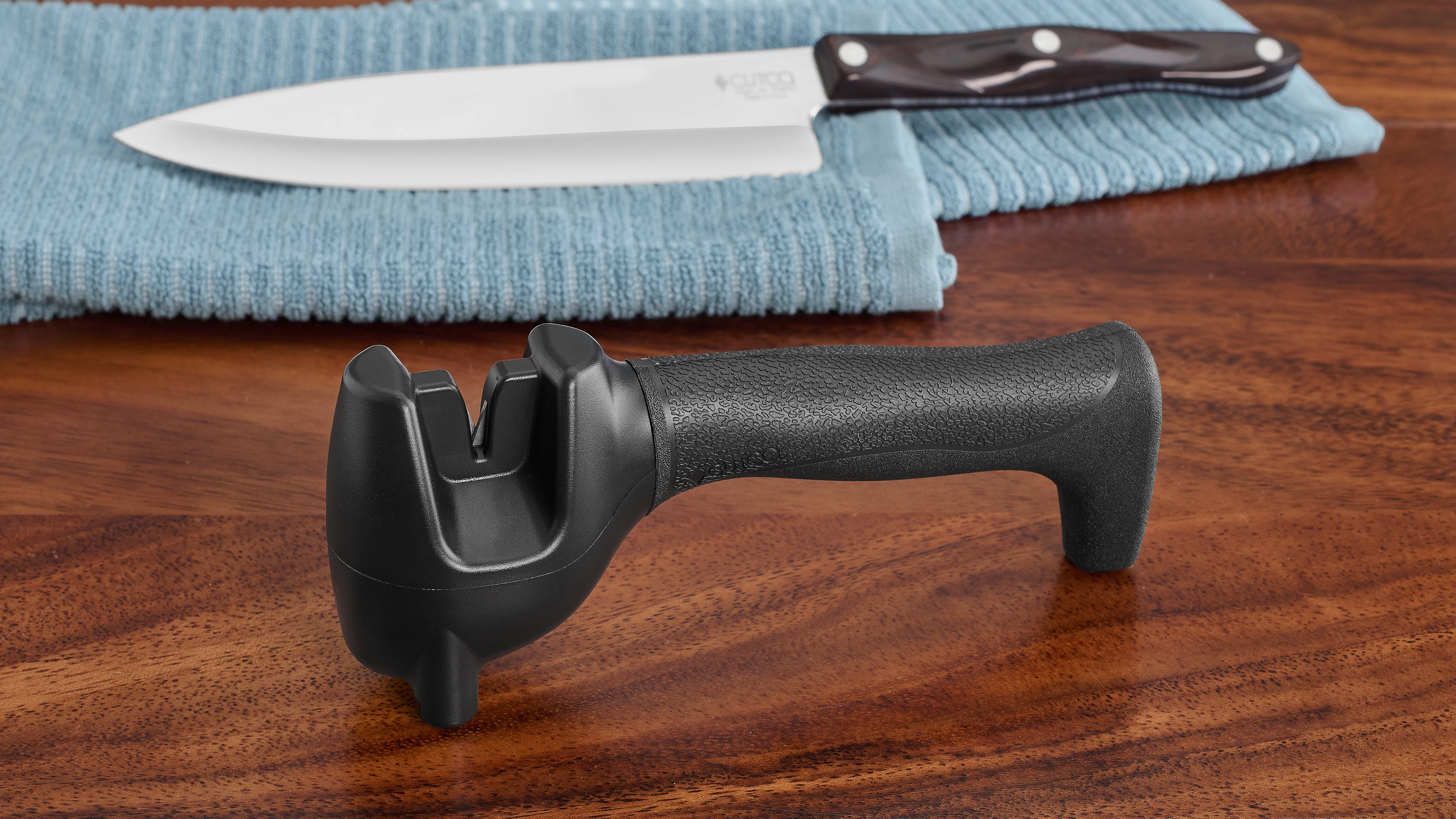
Before sharpening, it’s important to know what the Cutco Knife Sharpener is and how it works. Cutco’s sharpener is a handheld device designed specifically for their straight-edge knives. It uses two small, hardened steel wheels set at the right angle to restore the knife’s edge.
Unlike some other sharpeners that grind a lot of metal away, the Cutco sharpener is gentle and easy to control. This means your knives last longer, and you don’t risk damaging them with rough sharpening stones or electric sharpeners.
Key Features
- Safe handle grip: Gives you control while protecting your hand.
- Non-slip base: Keeps the sharpener stable during use.
- Preset angle: The wheels are set to the best angle for Cutco knives, so you don’t need to guess.
- Compact design: Easy to store in a kitchen drawer.
How It Works
When you pull your knife through the sharpener, the wheels gently shave off a small amount of metal from each side of the blade. This creates a new, sharp edge. The process is simple and quick, usually taking less than a minute per knife.
Types Of Knives
The Cutco Knife Sharpener is made for straight-edge knives only. You should not use it with Cutco’s Double-D® or serrated blades. Attempting to sharpen serrated knives with this tool can damage the teeth and reduce their cutting ability.
Preparing To Sharpen
A good sharpening session starts with preparation. Having everything ready makes the process smoother and safer.
What You Need
- Cutco Knife Sharpener
- Cutco straight-edge knife (not serrated)
- Clean, stable surface (like a countertop or table)
- Damp cloth or paper towel (to wipe the blade after sharpening)
Safety Checks
Before you begin, look over your knife and sharpener:
- Make sure the knife is clean and free of food debris.
- Check for any major nicks or damage on the blade. The Cutco sharpener is not for repairing badly damaged knives—only for regular sharpening.
- Wipe your hands and the handle so nothing is slippery.
- Place the sharpener on a surface that won’t move.
Tip: Sharpening a dirty knife can push food or grit into the sharpening wheels. This can scratch your blade or wear out the sharpener.
Step-by-step: How To Use The Cutco Knife Sharpener
Now, let’s go through the sharpening process in detail. These steps apply to all Cutco straight-edge knives, including chef’s knives, paring knives, and utility knives.
1. Position The Sharpener
Set the Cutco sharpener on a flat, solid surface. The non-slip base should keep it from moving. Place it near the edge of your counter, but not so close that it could fall.
2. Grip The Sharpener Properly
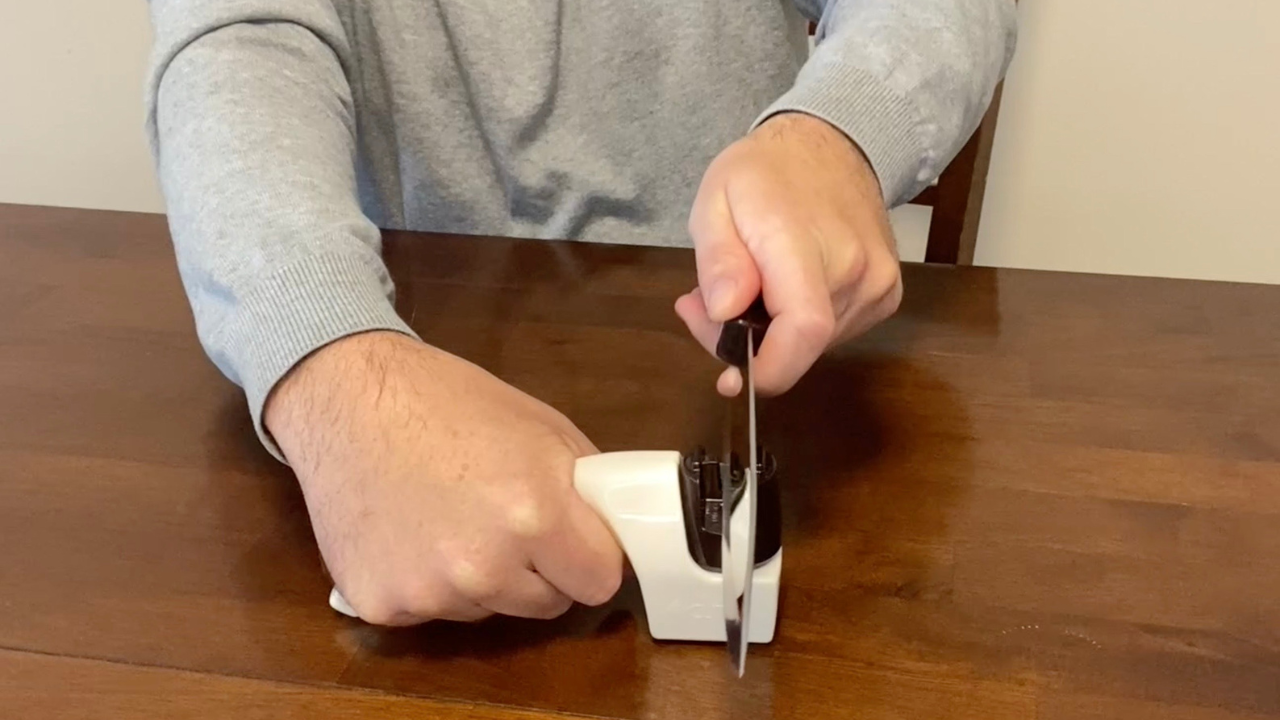
Hold the handle of the sharpener with your non-dominant hand. Your fingers should wrap securely around the handle, and your knuckles should be behind the safety guard.
Non-obvious insight: Many people grip the sharpener loosely, but a firm hold prevents slipping and gives you more control.
3. Hold The Knife Correctly
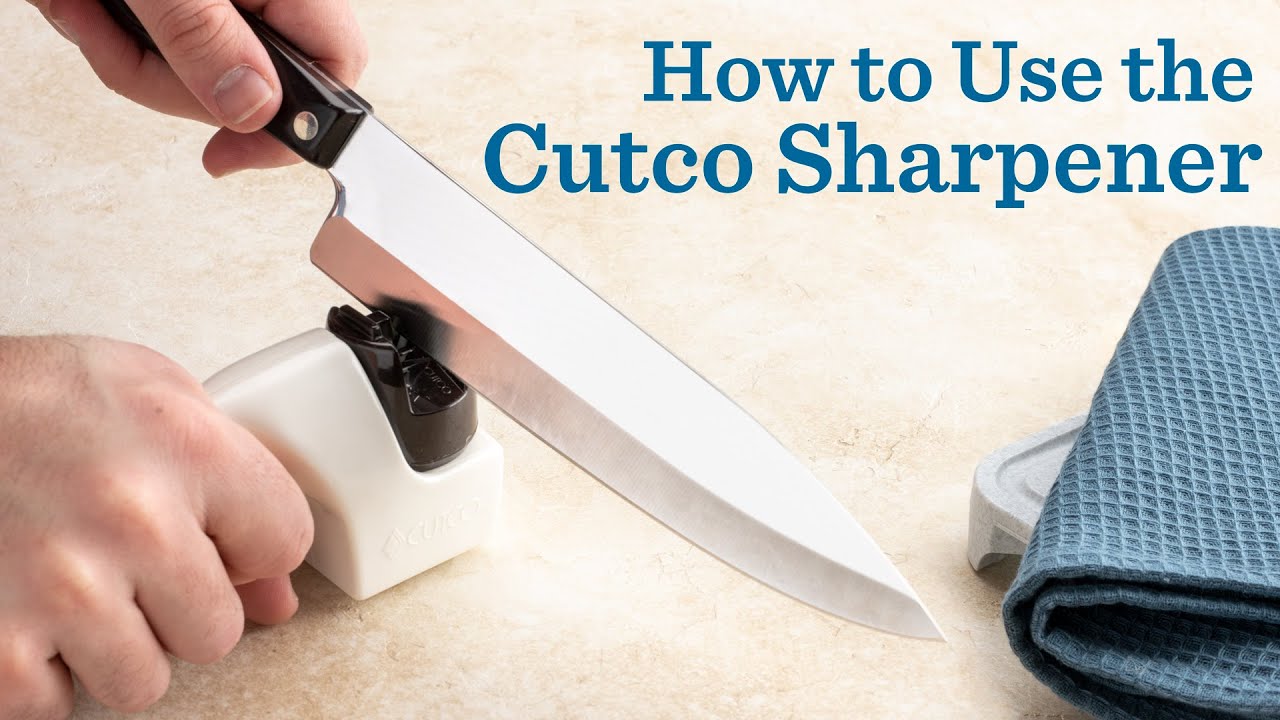
With your dominant hand, hold the knife by the handle. Point the blade away from your body. The heel (the end of the blade closest to the handle) should rest in the slot between the two sharpening wheels.
Tip: Keep your wrist straight. Bending your wrist can cause uneven sharpening.
4. Insert The Blade
Place the blade’s heel in the slot, making sure the edge is touching both wheels. Hold the knife vertically—don’t angle it left or right. The preset wheels will guide the blade at the best sharpening angle.
5. Draw The Knife Through
Pull the knife smoothly through the sharpener, from heel to tip. Use light, even pressure. You don’t need to press down hard—the wheels will do the work.
- For long knives: You may need to pull in two motions, starting with the heel and finishing with the tip.
- For short knives: One continuous pull is enough.
Repeat this motion 3-6 times. For most knives, three passes are enough. If the knife is very dull, you can do more.
Non-obvious insight: Using too much pressure can grind away too much metal and shorten your knife’s life. Gentle, steady pulls are best.
6. Check The Edge
After three passes, carefully test the sharpness. Wipe the blade with a damp cloth to remove any metal shavings. Then, try slicing a piece of paper or a tomato. If the knife cuts smoothly, you’re done. If not, repeat the sharpening motion 2-3 more times.
7. Clean Up
After sharpening:
- Wipe the blade clean to remove any residue.
- Rinse the sharpener’s wheels with water if you see visible metal dust. Dry thoroughly before storing.
- Store your knife safely.
How Often Should You Sharpen?
Many people wonder, “How often do I need to sharpen my Cutco knives? ” The answer depends on how much you use them.
- Home cooks: Sharpen every 2-4 weeks.
- Frequent cooks: Sharpen once a week.
- After heavy use: If you notice the knife dragging or tearing food, sharpen right away.
Pro tip: Don’t wait until your knife is totally dull. Sharpening regularly keeps the edge in good condition and makes the process faster each time.
Credit: cutco.com
Common Mistakes To Avoid
Even with a user-friendly tool like the Cutco sharpener, there are mistakes that can cause problems. Here’s what to watch out for:
Using On The Wrong Knives
Cutco’s sharpener is for straight-edge blades only. Never use it on serrated or Double-D® edges. For those, contact Cutco for professional sharpening services.
Pressing Too Hard
Applying extra force does not make your knife sharper. In fact, it can remove too much metal and shorten the life of your blade. Always use gentle pressure.
Incorrect Blade Angle
The sharpener sets the angle for you. If you tilt the knife left or right, the edge won’t be even. Hold the blade vertically for best results.
Not Cleaning The Blade
Metal shavings can stick to your knife after sharpening. Always wipe the blade clean before using it to cut food.
Skipping Regular Maintenance
If you wait too long between sharpening sessions, it’s harder to restore a sharp edge. Make sharpening part of your regular kitchen routine.
The Science Of Knife Sharpening
Understanding how sharpening works can help you get better results. When you use a knife, the edge bends and dulls over time. Sharpening removes a thin layer of metal to create a new, straight edge.
What Makes A Knife Sharp?
A sharp knife has a thin, straight edge that easily slices through food. When the edge becomes rounded or chipped, cutting gets harder. The Cutco sharpener restores the correct angle quickly, so you don’t need special skills or guesswork.
Why Not Use Other Sharpeners?
Some sharpeners use rough stones or electric wheels that can take off too much metal. They may also use the wrong angle for Cutco knives, leading to a weaker edge. The Cutco sharpener is designed for their blades, so it’s a safer, more reliable choice.
Credit: www.youtube.com
Comparing Cutco Knife Sharpener With Other Sharpeners
Choosing the right sharpener can be confusing. Here’s how the Cutco Knife Sharpener compares to other common types:
| Sharpener Type | Best For | Skill Level Needed | Risk of Damage | Maintenance |
|---|---|---|---|---|
| Cutco Knife Sharpener | Cutco straight-edge knives | Beginner | Low | Minimal |
| Sharpening Stone | All knives | Intermediate/Expert | Medium | Regular cleaning |
| Electric Sharpener | Many kitchen knives | Beginner | High (if wrong angle) | Varies |
| Pull-Through (generic) | Most straight-edge knives | Beginner | Medium | Minimal |
Key insight: The Cutco sharpener is safest for their knives because it matches the blade’s factory angle. Other sharpeners may work, but the results can vary and may void your Cutco warranty.
Caring For Your Cutco Knives After Sharpening
A sharp knife is only part of the story. To keep your knives working well, you need proper care after sharpening.
Washing
Always wash your knife by hand after sharpening. Use warm, soapy water and dry it immediately. Never put Cutco knives in the dishwasher—this can dull the edge and damage the handle.
Storing
Store knives in a knife block, sheath, or on a magnetic strip. Throwing them in a drawer can dull the edge quickly.
Honing Vs. Sharpening
Honing realigns the edge, while sharpening removes metal. Cutco knives don’t need frequent honing, but if you have a honing steel, you can gently realign the edge between sharpening sessions.
Credit: www.amazon.com
Troubleshooting: When Your Knife Won’t Get Sharp
Sometimes, sharpening does not seem to work. Here’s what might be wrong and how to fix it.
The Knife Is Still Dull
- Make sure you are using gentle, even strokes.
- Try a few more passes through the sharpener.
- Clean the wheels—buildup can reduce their effectiveness.
Blade Has Chips Or Deep Nicks
The Cutco sharpener is not designed for major blade repair. If your knife has chips, send it to Cutco’s professional service for regrinding.
The Edge Feels Rough
If the edge feels “toothy,” you may be using too much pressure. Try lighter strokes and clean the blade after sharpening.
The Sharpener Feels Loose
Check if the non-slip base is clean and dry. If the sharpener moves, it can cause uneven edges or injury. Replace the sharpener if it’s damaged.
Real-life Examples: Using The Cutco Knife Sharpener
Let’s look at how different home cooks use their Cutco sharpener.
Example 1: Busy Parent
Maria cooks dinner for her family every night. She uses her Cutco chef’s knife for chopping vegetables and slicing meat. Every two weeks, she sharpens the knife with 3-4 gentle pulls. It takes her less than a minute. The knife stays sharp and easy to use, and she feels safer in the kitchen.
Example 2: Cooking Enthusiast
James loves making sushi and uses a Cutco utility knife. He sharpens it once a week, and always wipes the blade clean after sharpening. He noticed that using a light touch keeps his knife sharp without removing too much metal.
Example 3: New Homeowner
Ali just bought his first Cutco set. He watched a video, but at first pressed too hard when sharpening. The knife got a rough edge. After switching to lighter strokes, the edge became smooth and cut tomatoes easily.
These stories show that anyone can use the Cutco sharpener successfully with the right technique.
Advanced Tips For Sharpening
If you want to get the most from your Cutco sharpener, try these expert tips:
- Warm up the wheels: Do a few passes with an old knife before sharpening your best blade. This cleans and aligns the wheels.
- Alternate hands: If your dominant hand gets tired, try switching hands for better control.
- Sharpen before big meals: If you’re planning to cook a lot, sharpen your knives the day before.
- Check for burrs: After sharpening, gently run your thumb across (not along) the edge. A rough spot means you should wipe the blade and do one more light pass.
Sharpening Frequency: How Long Does An Edge Last?
How long your knife stays sharp depends on what you cut and how you use it. Here’s a quick comparison:
| Usage | Sharpening Interval | Typical Edge Duration |
|---|---|---|
| Daily (multiple meals) | Weekly | 6-10 days |
| Regular (home cooking) | Every 2-4 weeks | 15-30 days |
| Occasional use | Monthly | 30-60 days |
Note: Cutting hard items like bones or frozen food will dull your knife faster. Always use the right knife for the job.
When To Replace Your Cutco Sharpener
Even the best tools wear out. The Cutco sharpener is durable, but after years of use, the wheels may lose their grit.
Signs You Need A New Sharpener
- The wheels feel smooth, not gritty
- The sharpener does not restore a sharp edge
- Visible cracks or damage to the body
If you notice these signs, it’s time for a replacement. Continuing to use a worn-out sharpener can damage your knives.
Pro tip: Keep your receipt or product registration. Cutco offers excellent customer service and may help with replacement options.
The Cost And Value Of Sharpening At Home
Professional knife sharpening can cost $5–$10 per knife. Over a year, this adds up. With the Cutco sharpener, you can sharpen anytime, saving money and time.
Example: Sharpening five knives at home each month instead of at a shop could save you $300–$600 per year.
The Cutco Guarantee
One reason people choose Cutco is their famous Forever Guarantee. If your Cutco knife ever needs sharpening or repair and you can’t do it at home, you can send it to Cutco for service. This gives you confidence that your knives will last a lifetime.
For more details, visit the official Cutco Guarantee page.
Frequently Asked Questions
How Do I Know If My Knife Needs Sharpening?
If your knife struggles to cut through tomatoes, bread, or paper, it’s time to sharpen. Another sign is when you need to use more force than usual.
Can I Use The Cutco Sharpener On Other Brands?
The Cutco sharpener is designed for Cutco straight-edge knives. It may work on similar knives, but results are not guaranteed. Always check your knife’s manufacturer’s recommendations.
Is It Safe To Sharpen A Wet Knife?
No. Always dry your knife before sharpening. Water can make the handle slippery and cause accidents. Sharpen first, then clean the blade after.
What Should I Do If My Sharpener Gets Dirty?
Rinse the sharpening wheels under warm water. Use a soft brush if needed. Dry the sharpener completely before storing.
Can I Sharpen Serrated Cutco Knives With This Tool?
No. The Cutco Knife Sharpener is only for straight-edge blades. For serrated or Double-D® edges, contact Cutco for professional sharpening.
Keeping your knives sharp is one of the best ways to enjoy cooking and stay safe in the kitchen. The Cutco Knife Sharpener makes this easy and quick. By following the steps in this guide and avoiding common mistakes, you’ll always have a reliable, sharp knife ready for your next meal.