
Every modern kitchen relies on the convenience of a dishwasher. It saves time, conserves water, and often cleans better than hand-washing. But sometimes, you face a challenge: the top rack gets stuck, broken, or simply needs to come out for deep cleaning or repair. If you’ve ever stared at your dishwasher, wondering how to take the top rack out without causing damage, you’re not alone. Removing the top rack might look simple, but design differences, hidden latches, and unfamiliar clips can make the process confusing—even for people who use dishwashers every day.
Learning to remove the top rack of your dishwasher is not just about cleaning. It can help you reach stuck utensils, replace worn-out wheels, or fit larger pans for a big family meal. Many people avoid it because they fear breaking something or voiding their warranty. But with the right steps and a little confidence, you can safely remove the top rack of almost any dishwasher model. This guide explains every detail you need, from understanding your dishwasher’s design to troubleshooting if things don’t go as planned. Along the way, you’ll find practical tips and real examples to help you avoid common mistakes and make the job much easier.
Why Remove The Top Rack Of A Dishwasher?
It’s easy to assume that the top rack should stay in the dishwasher forever. But in real life, there are several good reasons to take it out:
- Deep cleaning: Over time, the rack collects food debris, hard water stains, and even mold in hidden corners. Removing it lets you scrub every part and keep your dishwasher smelling fresh.
- Repair and maintenance: If the rack gets stuck, the wheels break, or the spray arm doesn’t turn, removing the rack makes repair possible.
- Loading flexibility: Sometimes you need extra space for a large pot, baking tray, or awkwardly shaped pan. Taking out the top rack creates more room on the bottom.
- Access to stuck items: Small utensils, bottle caps, or even jewelry can fall into hard-to-reach places. Taking out the rack helps you retrieve these without calling a technician.
- Upgrading or replacing parts: Replacement racks or accessories are available for many models. Swapping them is only possible if you know how to remove the old one.
Most dishwasher owners don’t think about these reasons until there’s a problem. But knowing how to take out the top rack can save you money, time, and frustration. It can also help keep your dishwasher running smoothly for years.
Understanding Dishwasher Rack Designs
Dishwashers look similar on the outside, but their internal designs vary. The way the top rack attaches and comes out depends on the brand and model. Here’s what you need to know before starting:
| Brand | Typical Rack Removal Mechanism | Common Challenges |
|---|---|---|
| Bosch | Side clips or levers | Tight space, hidden tabs |
| GE | End caps that twist or pull | Fragile plastic tabs |
| KitchenAid | Snap-on stops or release latches | Stops can break if forced |
| LG | Push-in or squeeze release tabs | Tabs may stick with age |
| Samsung | Spring-loaded end caps | Springs can pop off unexpectedly |
Non-obvious insight: Even two dishwashers from the same brand can have different rack removal systems. Always check your specific model.
Some dishwashers have third racks (a narrow rack at the very top for utensils), while others have only two. Always identify which rack you want to remove.
Practical tip: Take a picture of your dishwasher’s rack and rails before you begin. This will help you remember how everything fits when you put it back together.
Tools And Preparation
Most of the time, you can remove the top rack without any tools. However, some situations may require basic household items. Here’s what you should have nearby:
- Flathead screwdriver: For prying off stubborn end caps or tabs.
- Needle-nose pliers: Helpful for pinching or pulling small clips.
- Flashlight: Dishwashers are dark inside; a small light helps you see hidden parts.
- Soft cloth or towel: To protect your kitchen floor from drips or scratches.
- Small bowl: To hold screws, clips, or small parts.
Pro tip: Check your dishwasher’s manual if you have it. Most manufacturers include diagrams for removing racks. If you don’t have the manual, look up your dishwasher’s model number on the manufacturer’s website.
Step-by-step: How To Remove The Top Rack
Now, let’s walk through each stage of removing a dishwasher top rack. These steps cover most popular models, but you may need to adjust slightly for your specific dishwasher.
1. Empty The Dishwasher
Before you start, make sure the dishwasher is empty. Remove all dishes, utensils, and anything else from both racks. This makes the rack lighter and easier to handle. It also prevents accidental damage to your plates or glassware.
2. Pull Out The Top Rack
Gently slide the top rack out as far as it will go. Most racks glide smoothly on wheels or rollers. Don’t force it—if it stops moving, that’s where the rail stops or end caps are.
Common mistake: Pulling too hard can break the plastic wheels or bend the rails.
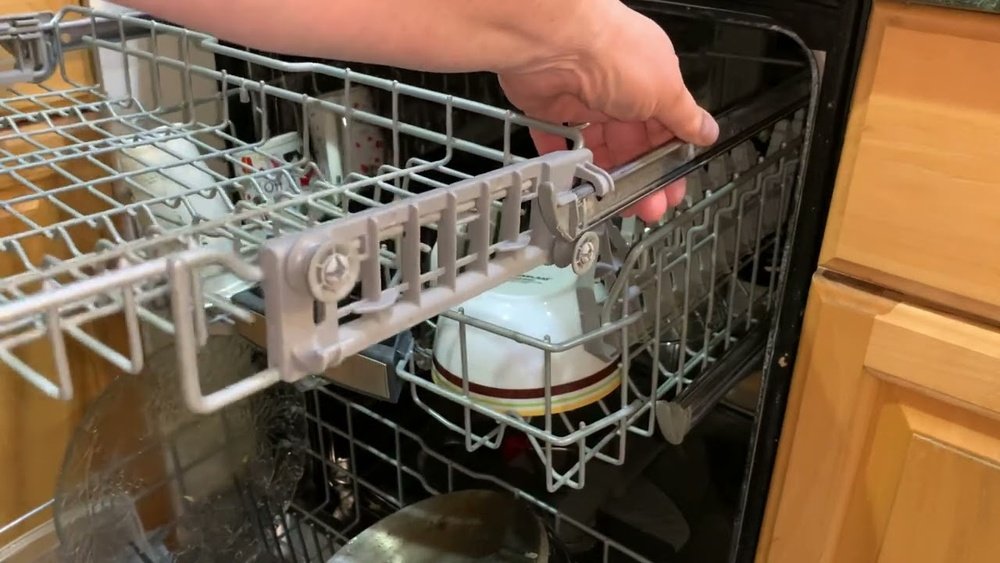
3. Locate The Rack Stops Or End Caps
At the end of each rail, there is usually a stopper (also called an end cap or rail stop). This small piece prevents the rack from sliding all the way out during regular use.
Here’s how to find them:
- Look for a small plastic tab or lever at the very front of each rail.
- Some caps are brightly colored; others match the rail color.
- End caps may be on the side or bottom of the rail, depending on the brand.
Non-obvious insight: On some dishwashers, the end caps are hidden underneath the rack or behind a small plastic flap.
4. Remove Or Release The End Caps
This step varies by brand and model:
- Twist-off caps: Hold the cap and turn it 90 degrees counterclockwise. It should pop off.
- Snap-off caps: Gently pry the cap outward with your fingers or a screwdriver. It may click out of place.
- Push tabs: Squeeze or push a tab while gently pulling the cap off.
- Spring-loaded caps: Press the cap inward to release the spring, then slide the cap out.
Be gentle. These parts are often made of thin plastic and can break easily. If the cap feels stuck, check for hidden clips or consult your manual.
Practical tip: Set the end caps aside in your small bowl so you don’t lose them.
5. Slide Out The Top Rack
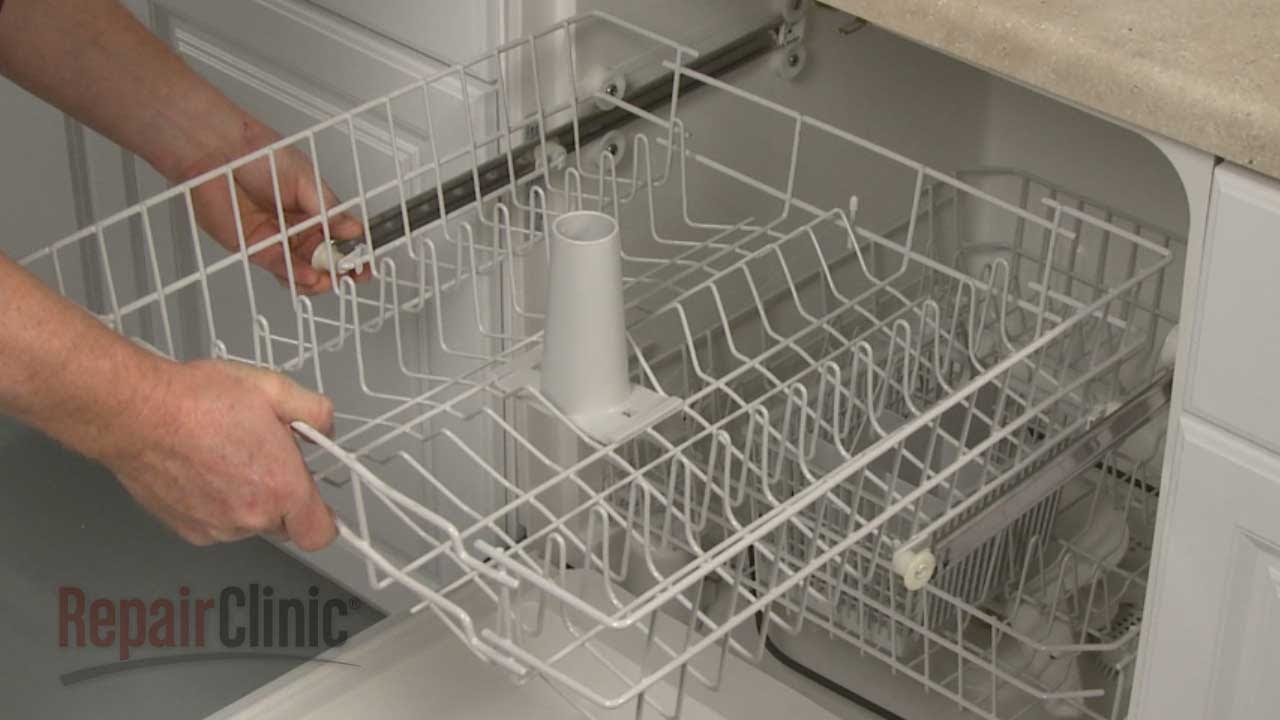
Once the end caps are removed, carefully pull the top rack straight out. Support it with both hands so it doesn’t drop or tilt suddenly. If the rack catches or feels stuck, wiggle it slightly from side to side.
Important: If your dishwasher has a spray arm attached to the rack, you may need to disconnect it first. Look for a quick-release coupling or a twist-off connector.
6. Disconnect The Spray Arm (if Needed)
Some dishwashers have a spray arm attached to the top rack. If this is the case:
- Locate the connector where the spray arm meets the water supply tube (usually at the back of the rack).
- Press the release tab or twist the connector counterclockwise.
- Gently pull the spray arm away from the rack.
Pro tip: If your spray arm won’t budge, check if there is a locking pin or additional screw.
7. Remove The Rack From The Dishwasher
With everything disconnected, lift the top rack out of the dishwasher. Place it on a towel or soft surface to avoid scratching your floor or countertop.
Extra tip: If you have a third rack above the top rack, you may need to remove that first. Most third racks use similar end caps or stops.
8. Inspect The Rails And Wheels
Take a moment to look at the rails and wheels. Check for any signs of damage, stuck debris, or worn-out parts. Clean the rails with a damp cloth to remove built-up grime.
9. Clean Or Repair As Needed
Now you can deep clean the rack, replace any broken wheels, or fix other problems. If you’re replacing the rack or spray arm, follow the instructions that came with your replacement parts.
Practical insight: Don’t forget to clean the area under the rack. You might find food bits or hard water deposits that affect dishwasher performance.
10. Reinstall The Rack (reverse Steps)
To put the top rack back, simply reverse the above steps:
- Slide the rack back onto the rails.
- Reconnect the spray arm if needed.
- Replace the end caps or stops.
- Gently test the rack by sliding it in and out a few times.
If anything feels wrong, double-check your photos or consult your manual.

Credit: www.domex-uk.co.uk
Special Cases: Different Brands And Rack Types
While most dishwashers follow the steps above, some brands have unique rack designs. Here are a few examples and what to do:
Bosch Dishwashers
Bosch often uses side levers for their top racks. To remove:
- Pull the rack out.
- Locate the gray levers on the sides of the rails.
- Press or lift the levers while pulling the rack out.
Some Bosch models have a clip that must be depressed with a screwdriver.
Ge Dishwashers
GE uses twist-off end caps:
- Rotate the end cap 90 degrees to unlock.
- Pull the cap off and slide out the rack.
Older GE models may have brittle plastic—be extra gentle.
Kitchenaid And Whirlpool
These brands use snap-on stops:
- Squeeze the sides of the stop and pull gently.
- If stuck, use a flathead screwdriver to pry carefully.
Third Racks
If you have a third rack, it usually has its own set of end caps or stops. Remove the third rack first, then the top rack.
Pro tip: Some third racks slide out completely with no stops, but others use twist or push tabs.
Common Problems And How To Fix Them
Even with good instructions, things can go wrong. Here are some common challenges and solutions:
End Cap Won’t Come Off
- Try wiggling the cap gently while pressing any visible tab.
- Use a flathead screwdriver to pry, but don’t force it.
- If it’s stuck due to grime, spray a little warm water and let it soak.
Rack Feels Jammed
- Check for a stuck utensil or debris in the rail.
- Inspect the wheels—one might be off its track.
- Wiggle the rack gently side to side to free it.
Spray Arm Is Hard To Remove
- Look for a locking pin or screw—sometimes these are hidden.
- Rotate the spray arm connector left and right to loosen.
- Don’t use excessive force; if it doesn’t come off, consult your manual.
Plastic Tabs Break
- Replacement end caps are available online or from the manufacturer.
- Don’t run the dishwasher without the end caps—racks can fall out and cause damage.
Can’t Reinstall The Rack
- Check that the wheels are aligned with the rails.
- Make sure you’re not installing the rack upside down.
- Review your photos for the correct orientation.
Non-obvious insight: On some models, the rails can shift out of alignment while the rack is out. Realign them before reinstalling.
How Long Does It Take?
For most people, removing the top rack takes about 5–10 minutes. If you encounter stuck parts or need to clean, allow an extra 10–15 minutes. A little patience goes a long way—rushing increases the risk of breaking something.
Cleaning And Maintenance Tips
Removing the top rack is a great time to do some extra cleaning and keep your dishwasher in top shape.
- Soak the rack: Place it in a bathtub or large sink with warm, soapy water. Use a brush to scrub away grime.
- Clean wheels and rails: Wipe with a damp cloth and a little vinegar for hard water stains.
- Check spray holes: Use a toothpick to clear any blocked holes in the spray arm.
- Inspect for rust: If you see rust on the rack, touch it up with dishwasher-safe rack coating paint.
- Lubricate rails: A drop of food-safe silicone spray can help wheels roll smoothly (never use oil-based lubricants).
Comparison: Top Rack Removal Across Brands
To help you see the differences at a glance, here’s a handy comparison.
| Brand | Tool Needed? | Spray Arm Attachment | End Cap Type |
|---|---|---|---|
| Bosch | No (sometimes screwdriver) | Quick-release | Side lever |
| GE | No | Fixed or quick-release | Twist-off |
| KitchenAid | No | Twist-off | Snap-on |
| LG | No | Quick-release | Push tab |
| Samsung | No | Quick-release | Spring-loaded |
Mistakes To Avoid
People often make avoidable errors when removing the top rack. Here are some key things to watch out for:
- Using too much force: Most parts are plastic and can break easily. If something won’t move, double-check for hidden tabs or connectors.
- Losing small parts: Always keep end caps, screws, or clips in a bowl.
- Forgetting spray arm connections: Forcibly pulling the rack can break the spray arm or water tube.
- Not taking pictures: A photo before you start can be a lifesaver during reassembly.
- Skipping cleaning: If you’ve gone to the trouble of removing the rack, take time to clean hard-to-reach areas.
Credit: www.youtube.com
When To Call A Professional
Most top rack removals are DIY-friendly. However, contact a professional if:
- The rack is severely jammed and won’t budge.
- You see loose wires or broken metal parts.
- The rails are bent or off-track.
- You hear grinding or scraping when moving the rack.
Attempting repairs on electrical or complex parts can void your warranty or cause injury.
Where To Find Help And Replacement Parts
If you need more guidance, official resources are available:
- Manufacturer’s manual: Find your model number (usually inside the door) and search the official website.
- Video tutorials: Many brands post step-by-step videos.
- Replacement parts: Get end caps, wheels, or racks from your manufacturer or reputable parts suppliers.
Non-obvious insight: Avoid generic replacement parts from unknown sources—they may not fit correctly and can cause further problems.
For more technical advice, check out resources like Consumer Reports.
:strip_icc()/bhg-top-rack-dishwasher-hero_8faResZ1qVh9oYjfODHb9i-b4674a9776174d3985a76507b82b2da4.jpg)
Credit: www.bhg.com
Real-world Example: Removing A Bosch Top Rack
Let’s look at a real scenario. Maria owns a Bosch dishwasher. She noticed the top rack wasn’t rolling smoothly, and her cups weren’t getting clean.
- She checked her manual and found instructions for removing the rack.
- She emptied the dishwasher and pulled the rack out.
- She located the gray side levers, pressed them, and gently slid the rack out.
- She found a broken wheel and ordered a replacement.
- After cleaning the rails and installing the new wheel, she reattached the rack and tested it.
- Her dishwasher now runs smoothly, and her dishes come out spotless.
Lesson: With the right information, even beginners can handle dishwasher rack removal and basic repairs.
Advanced Tips And Extra Features
Modern dishwashers sometimes have extra features that affect rack removal:
- Adjustable racks: Some models let you raise or lower the top rack. Always reset the rack to its lowest position before removal.
- Fold-down tines: Fold them flat so they don’t catch on the rails.
- Child locks: Some dishwashers have safety locks that prevent rack removal. Check for a release switch near the rails.
If you’re unsure about a feature, consult your manual or the manufacturer’s website.
Safety First
Dishwashers are electrical appliances. Even though you’re working with the racks, it’s smart to:
- Turn off the dishwasher at the control panel.
- Avoid touching wires or water lines inside.
- Be careful with sharp edges on old or rusty racks.
If you see water in the bottom of the dishwasher, soak it up with a towel before working.
Quick Reference: Top Rack Removal Steps
Here’s a summary you can use for a quick reminder:
- Empty the dishwasher.
- Pull out the top rack.
- Locate and remove end caps or stops.
- Disconnect the spray arm if attached.
- Slide out the rack.
- Clean or repair as needed.
- Reinstall by reversing steps.
Frequently Asked Questions
How Do I Know If My Dishwasher’s Top Rack Is Removable?
Most modern dishwashers have removable top racks. Check for end caps or stops at the end of the rails. If you see these, your rack is likely designed to come out. If unsure, consult your manual or look for your model’s features online.
What If My End Caps Are Broken Or Missing?
If your end caps are broken or missing, don’t use your dishwasher until you replace them. Without end caps, the rack can fall out and damage your dishes or the machine. Order replacements from the manufacturer or an approved parts supplier.
Can I Run The Dishwasher Without The Top Rack?
Yes, you can usually run the dishwasher without the top rack if you need more space for large items. However, make sure the spray arm and water supply tubes are not left hanging or exposed, as this could cause leaks or poor cleaning.
Are There Dishwasher Models Where The Top Rack Cannot Be Removed?
Some older or compact dishwashers may have fixed racks. Also, certain commercial or drawer-style dishwashers have non-removable racks. Most home models from major brands allow removal, but always check your specific manual.
Will Removing The Rack Void My Dishwasher’s Warranty?
No, removing the top rack for cleaning or repair will not void your warranty—if you follow the instructions and don’t damage any parts. However, forcing parts, breaking tabs, or modifying rails could affect your warranty. When in doubt, contact your manufacturer.
Removing the top rack of your dishwasher is a simple process that can make cleaning, maintenance, and repairs much easier. With a little preparation and the right steps, you can do it yourself confidently and safely. As you become comfortable with these tasks, you’ll extend the life of your dishwasher and avoid expensive service calls. If you ever feel unsure, reach out to your manufacturer or a qualified technician for help.