
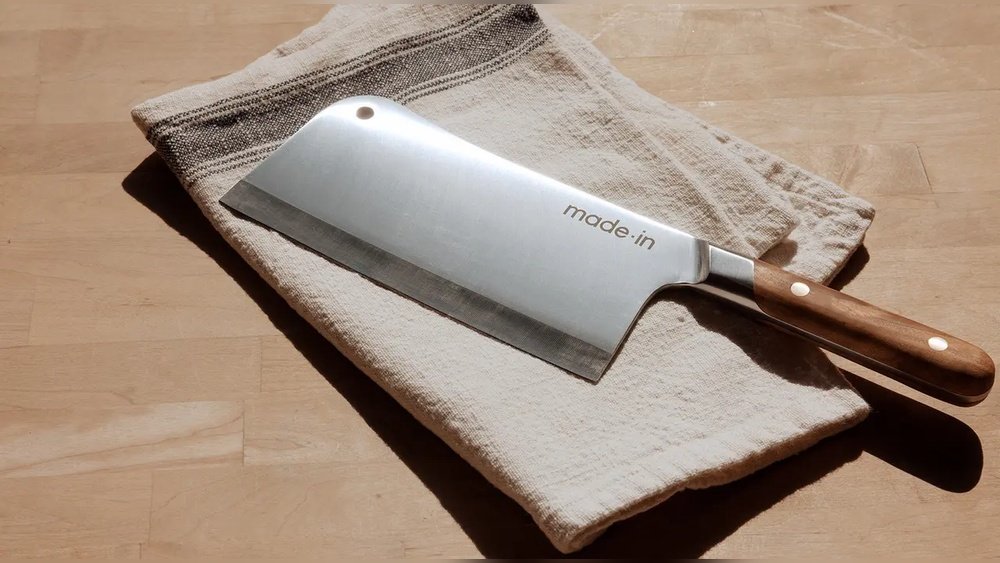
Many people see a cleaver knife and think it’s only for butchers or professionals. The truth is, this large, rectangular blade can be an amazing tool in any kitchen. Whether you cook often or just want to learn a new skill, understanding how to use a cleaver knife can transform the way you prepare food.
It can help you work faster, safer, and with much more confidence.
A cleaver is not just for chopping meat. You can use it to cut vegetables, smash garlic, split bones, and even transfer food from the cutting board to your pot. But using a cleaver correctly is not always obvious. Many beginners feel nervous about its size or shape.
Some even avoid buying one because they worry it’s too dangerous or difficult to use.
This guide will show you everything you need to know about using a cleaver knife. You’ll learn how to hold it, what to cut, the best techniques, how to stay safe, and even how to care for your cleaver. By the end, you’ll understand why chefs and home cooks love this tool—and you’ll be ready to use it confidently in your own kitchen.
What Is A Cleaver Knife?
A cleaver knife is easy to recognize. It has a large, rectangular blade—usually heavy and thick. The blade is much wider from top to bottom than most knives. Handles are strong and designed to give good grip, even with wet hands.
There are two main types of cleavers:
- Meat cleaver: Thick, heavy, strong. Used for chopping through bones and tough cuts of meat.
- Vegetable cleaver (Chinese cleaver): Lighter, thinner, but still wide. Used for slicing, chopping, and even delicate cuts of vegetables and herbs.
Some people call the vegetable cleaver a “Chinese chef’s knife” because it’s common in Asian cooking. Both types share the same basic shape, but their uses can be very different.
Why Use A Cleaver Knife?
Many knives can cut. But a cleaver has special advantages:
- Powerful cuts: The weight helps you cut through tough ingredients with less effort. You use gravity and the knife’s own mass.
- Versatile: Not just for meat. You can slice, dice, crush, and even scoop food.
- Safety: The wide blade can protect your fingers (if you use it correctly).
- Efficient: Large blade lets you move quickly, cutting more food in less time.
One insight many beginners miss: A cleaver’s flat side is perfect for crushing garlic, ginger, or nuts. You don’t need a special tool—just press down with the side of the blade.
Another thing most people don’t realize: The blade can act as a “spatula” to transfer chopped food. Just scoop and lift.
Parts Of A Cleaver Knife
Understanding the parts helps you use the knife better:
- Blade: The flat, wide cutting part. Usually 6–8 inches long.
- Edge: The sharp part that does the cutting. Meat cleavers are less sharp but stronger; vegetable cleavers are sharper.
- Spine: The top edge, opposite the sharp side. Often thick for strength.
- Handle: Where you grip. Should fit your hand comfortably.
- Heel: The part of the blade closest to the handle. Good for tough or thick cuts.
- Tip: The far end of the blade. Cleavers have a blunt or slightly rounded tip, not a sharp point.
How To Hold A Cleaver Knife
If you hold a cleaver wrong, you risk injury or poor results. Here’s how to grip it safely and efficiently:
The Basic Grip
- Place your thumb and index finger on either side of the blade, just above the handle (“pinch grip”).
- Curl your other fingers around the handle.
- Keep your wrist straight and relaxed.
This grip gives you control and helps you guide the heavy blade.
The Handle Grip
For heavy chopping (like cutting bones):
- Grip the handle with all your fingers.
- Keep your hand close to the blade for balance.
This grip lets you swing the cleaver with more force, but you lose some control for fine work.
The “guiding Hand”
Your other hand should hold the food steady, with fingers curled under. The blade will move up and down, but your knuckles act as a guide and shield.
Pro tip: Practice the grip with the knife off the cutting board first. Get comfortable before you start chopping.

Credit: imarku.net
How To Use A Cleaver Knife: Basic Techniques
A cleaver can do much more than just chop. Here are the main ways to use it:
1. Chopping
Great for large vegetables (cabbage, squash), meat, or bones.
- Place food on a stable cutting board.
- Hold the cleaver with a firm grip.
- Use a straight, downward motion, letting the weight of the knife do most of the work.
- For tough cuts, you can lift the knife high and bring it down firmly.
Safety tip: Make sure your board doesn’t slip. Place a damp towel underneath if needed.
2. Slicing
For thin, even slices of meat or vegetables:
- Hold the knife at a slight angle.
- Use a gentle, forward and downward motion.
- Move your guiding hand back after each cut.
A vegetable cleaver is better for slicing because it’s thinner and sharper.
3. Mincing
Mince garlic, herbs, or onions easily:
- Rock the blade back and forth over the food, keeping the tip on the board.
- Use your free hand on top of the blade (not the edge!) To steady it.
4. Crushing
To crush garlic or ginger:
- Place the ingredient under the flat side of the blade.
- Press down with the heel of your hand.
- The skin will loosen, and the food is ready to chop.
5. Splitting Bones
Meat cleavers are made for this.
- Place the bone where you want to cut.
- Lift the cleaver and bring it down with force.
- For very tough bones, use a two-handed grip.
Never use a vegetable cleaver for bones—it can bend or break.
6. Scooping And Transferring
Use the flat blade to scoop up chopped food and move it to the pot or pan.
Tip: Wipe the blade clean before scooping to avoid mixing flavors.
When To Use A Cleaver Knife (and When Not To)
A cleaver is perfect for:
- Cutting through bones (meat cleaver only)
- Chopping large, hard vegetables
- Preparing stir fry ingredients fast
- Crushing aromatics (garlic, ginger)
- Slicing cooked or raw meat for stews
But it’s not always the right tool:
- Don’t use a cleaver for fine, delicate work (like peeling or paring).
- Don’t use a meat cleaver for fish fillets—it’s too thick.
- Don’t use a cleaver on glass or stone boards—it will dull or chip.
If you need super-thin slices, a chef’s knife or santoku may work better.
Cleaver Knife Vs. Other Kitchen Knives
How does a cleaver compare to the knives you already own? Here’s a side-by-side look:
| Knife Type | Best For | Blade Shape | Typical Size |
|---|---|---|---|
| Cleaver | Chopping, bones, large veg | Rectangular, wide | 6–8 inches |
| Chef’s Knife | All-purpose slicing, dicing | Curved, pointed | 8–10 inches |
| Santoku | Fine slicing, mincing | Flat, slightly rounded | 5–7 inches |
| Paring Knife | Peeling, small cuts | Small, pointed | 3–4 inches |
Key difference: The cleaver’s weight and shape make it ideal for tough jobs, but not for precise, detailed work.
Choosing The Right Cleaver Knife
Not all cleavers are created equal. When buying, consider these factors:
1. Type
- Meat cleaver: Heavy, thick, for bones and tough meat.
- Vegetable cleaver: Lighter, sharper, for slicing and chopping vegetables.
2. Weight
Heavier cleavers cut bones better, but can be tiring. Lighter ones give more control for slicing.
3. Blade Material
- High-carbon steel: Stays sharp, easy to sharpen, but can rust.
- Stainless steel: Rust-resistant, but may lose sharpness faster.
- Composite: Mix of metals for balance.
4. Handle
Look for a handle that fits your hand and won’t slip when wet. Wood is common, but some prefer plastic or composite.
5. Size
Most home cooks like a 6–7 inch blade. Larger blades can be harder to control.
6. Price
Quality cleavers range from $20 to $200+. Don’t buy the cheapest—quality steel is worth it.
Beginner mistake: Many people buy a cheap cleaver and end up frustrated by dullness or poor balance. Try holding different models in-store if you can.
How To Sharpen And Maintain A Cleaver Knife
A dull cleaver is dangerous and frustrating. Here’s how to keep it sharp and safe:
Sharpening
- For vegetable cleavers, use a whetstone or honing rod. The edge should be sharp like a chef’s knife.
- For meat cleavers, the edge is less sharp but more durable. Use a coarse stone or professional service.
- Sharpen every few months or when you notice difficulty cutting.
Honing
Between sharpenings, use a honing steel to straighten the edge. This helps the knife cut cleanly.
Cleaning
- Wash by hand with warm, soapy water.
- Dry immediately—never leave a cleaver wet, or it may rust.
- Do not put in the dishwasher.
Storage
- Store in a knife block, on a magnetic strip, or with a blade guard.
- Never toss in a drawer—this dulls the blade and is dangerous.
Practical tip: Oil your high-carbon steel cleaver lightly to prevent rust.
Safety Tips When Using A Cleaver Knife
A cleaver is powerful, but that means it’s also risky if used wrong. Stay safe with these tips:
- Use a stable cutting board. A slipping board is one of the main causes of accidents.
- Keep your fingers curled under. Your knuckles should guide the blade, not your fingertips.
- Don’t rush. Take your time, especially when learning.
- Use the right cleaver for the job. Don’t try to cut bones with a vegetable cleaver.
- Keep the blade sharp. Dull knives slip and are more dangerous.
- Store safely. Don’t leave a cleaver loose where someone could grab the blade by accident.
Real-world Examples: When A Cleaver Shines
Let’s look at some everyday kitchen tasks where a cleaver is the best tool:
- Breaking down a chicken: A meat cleaver cuts through joints and bones easily.
- Chopping a head of cabbage: The wide blade makes quick work of large, dense vegetables.
- Preparing pork ribs: The thick spine lets you split ribs without damaging the meat.
- Making stir fry: A vegetable cleaver slices meat and vegetables thinly, then acts as a scoop to transfer them all at once.
Fun fact: In many Asian kitchens, the cleaver is the only knife used for nearly every task!
Cleaver Knife Techniques For Different Foods
Here’s how to approach different ingredients with your cleaver:
Meat And Bones
- Use a meat cleaver.
- Cut at the joint when possible—less force needed.
- For large bones, raise the knife and bring it down with your whole arm.
Fish
- Use a thin cleaver for cutting through small bones, but not for filleting.
- For large fish, cut behind the gills to separate the head.
Vegetables
- Use a vegetable cleaver for clean, straight slices.
- For root vegetables (carrots, potatoes), slice with a firm, steady motion.
- For leafy greens, stack and slice several at once.
Herbs
- Gather herbs into a pile.
- Use the rocking technique to mince quickly and evenly.
Aromatics (garlic, Ginger)
- Place under the flat blade and press to crush.
- Remove skins easily, then chop or mince.
Extra tip: If you need to flatten meat (like chicken breast), use the flat side of the cleaver to gently pound it.

Credit: www.americastestkitchen.com
Common Mistakes Beginners Make
- Using the wrong cleaver for the job: Don’t try to cut bones with a vegetable cleaver—it can chip or bend.
- Holding the knife too tightly: This causes fatigue. Let the weight do the work.
- Cutting too close to fingers: Always keep your guiding hand’s knuckles forward.
- Using a poor-quality cutting board: Hard surfaces like glass or stone can ruin the edge.
- Not keeping the blade sharp: Dull blades are unsafe and frustrating.
- Washing in the dishwasher: This can damage the blade and handle.
Non-obvious insight: Many people forget to dry the cleaver after washing. Even stainless steel can rust or stain if left wet.
How To Practice Cleaver Knife Skills
If you’re new, start with safe, simple tasks:
- Chop cucumbers or zucchini: They’re soft and forgiving.
- Practice slicing cabbage: The size helps you get used to the blade.
- Try crushing garlic: Learn to use the flat side safely.
As you get comfortable, move on to tougher jobs like cutting through chicken joints or dense root vegetables.
Bonus tip: Watch cooking shows or videos of chefs using cleavers. Notice how relaxed their grip is and how they use the blade’s weight.
Cleaver Knife Care: Long-term Tips
A good cleaver can last for years—if you take care of it.
- Sharpen regularly: Don’t wait until it’s very dull.
- Oil the blade: Especially if it’s high-carbon steel. Use food-safe mineral oil.
- Check the handle: Tighten any loose screws or rivets.
- Keep it dry: Rust and stains are easier to prevent than remove.
Cleaning Up: After Using Your Cleaver
- Rinse off any bits of food right away.
- Use a soft sponge—avoid harsh scrubbers that can scratch the blade.
- Dry the knife completely, especially around the handle and where the blade meets the handle.
- Store it safely, edge up if using a block or edge facing the wall on a magnetic strip.
When To Replace Your Cleaver Knife
No knife lasts forever. Here are signs you need a new one:
- The blade has deep chips or cracks.
- The handle is loose and cannot be fixed.
- The knife will not hold a sharp edge, even after sharpening.
- Rust or stains cannot be cleaned.
Tip: Don’t try to repair a severely damaged cleaver at home. It’s safer to replace it.
Comparing Cleaver Knives: Meat Vs. Vegetable
Here’s a quick look at the main differences:
| Feature | Meat Cleaver | Vegetable Cleaver |
|---|---|---|
| Blade Thickness | Thick (3–6 mm) | Thin (1.5–3 mm) |
| Weight | Heavy | Lighter |
| Edge Angle | Less sharp, more durable | Sharper, for slicing |
| Main Use | Cutting bones, tough meat | Vegetables, light meat |
Cleaver Knife Myths And Facts
Myth: Cleavers Are Dangerous For Home Cooks.
Fact: With proper grip and technique, a cleaver is as safe as any kitchen knife. The large blade can actually protect your fingers if you use a proper grip.
Myth: Cleavers Are Only For Meat.
Fact: Vegetable cleavers are designed for all kinds of foods, including fruits, vegetables, and herbs.
Myth: You Need A Lot Of Strength To Use A Cleaver.
Fact: The knife’s own weight does most of the work. You don’t need to force it.
The Cultural Importance Of The Cleaver
In many cultures, the cleaver is more than just a tool. In Chinese kitchens, for example, one knife is used for nearly every task. The cleaver is a symbol of skill and efficiency. Great chefs can slice paper-thin vegetables, chop meat, and crush garlic—all with the same blade.
In Western kitchens, the meat cleaver is often used for butchering, but more home cooks are discovering its all-purpose value.
For more on the cleaver’s history and design, see this Wikipedia article.
Frequently Asked Questions
What Foods Should I Not Cut With A Cleaver?
Avoid using a cleaver on delicate foods like fish fillets, bread, or very small fruits. A chef’s knife or paring knife works better for these. Also, don’t use a vegetable cleaver for bones—this can damage the blade.
How Often Should I Sharpen My Cleaver Knife?
For home cooks, sharpening every 2–3 months is usually enough. If you use it daily, sharpen more often. Honing the edge with a steel every few uses helps keep it sharp between full sharpenings.
Can I Put My Cleaver In The Dishwasher?
No. Dishwashers can damage both the blade and handle. Hand wash with warm, soapy water and dry immediately to keep your cleaver in good shape.
What Is The Difference Between A Cleaver And A Butcher Knife?
A cleaver has a wide, rectangular blade mainly for chopping and splitting bones. A butcher knife has a narrower, curved blade and is used for slicing and trimming meat. The two are often confused, but their main uses are different.
Is A Cleaver Knife Good For Beginners?
Yes, with the right technique and safety habits, beginners can use a cleaver successfully. Start with soft foods to practice your grip and motion before moving on to tougher tasks.
Final Thoughts
A cleaver knife is a powerful, flexible tool that can make your kitchen work faster and easier. It’s not just for butchers—it’s for anyone who wants to chop, slice, mince, and crush with confidence. By learning the right grip, practicing basic techniques, and caring for your blade, you can use a cleaver safely and effectively for many years.
If you want a tool that combines tradition, efficiency, and versatility, the cleaver is an excellent choice for your kitchen.

Credit: en.wikipedia.org