
Testing the sharpness of a knife is an essential skill, whether you are a home cook, professional chef, or someone who values safety and efficiency in the kitchen. A sharp knife makes cooking easier and safer, while a dull blade can lead to frustration and even injuries.
But how do you really know if your knife is sharp? Many people rely on guesswork, but with the right methods, you can accurately test your knife’s sharpness and keep it performing at its best.
Understanding how to test a knife’s sharpness will save you time, protect your fingers, and improve your results in the kitchen. This guide will explain all the reliable ways to test knife sharpness, from simple at-home tests to more advanced techniques used by professionals.
You’ll also learn what affects sharpness, mistakes to avoid, and the right time to sharpen or replace your blade. Let’s dive into the details and help you master the art of knife sharpness testing.
Why Knife Sharpness Matters
A sharp knife is more than just a tool; it’s the heart of every kitchen. When your blade is sharp, you can slice, dice, and chop with precision and confidence. This doesn’t just make food prep faster, but also much safer. Dull knives require more force, which often causes slips and accidental cuts. In fact, studies have shown that kitchen injuries are more likely with dull knives than sharp ones.
Besides safety, knife sharpness impacts the quality of your food. A sharp blade cuts cleanly, preserving the shape and texture of ingredients. For example, slicing tomatoes with a dull knife squashes them, while a sharp knife gives neat, even slices. Also, when cutting herbs, a sharp blade prevents bruising, which can keep flavors fresh.
Lastly, regular sharpness tests help you maintain your knives. Instead of waiting until the knife is obviously dull, you can touch up the edge before it gets too worn, making sharpening easier and extending the life of your knife.
Key Factors Affecting Knife Sharpness
Before testing knife sharpness, it’s important to know what influences how sharp a knife feels and performs:
- Blade Material: High-carbon stainless steel and ceramic hold edges longer than softer metals.
- Edge Angle: A lower angle (15-20 degrees) makes a sharper edge but may require more frequent sharpening.
- Knife Use: Cutting hard foods, bones, or using the knife on a hard surface (like glass) will dull it faster.
- Maintenance: Regular honing and proper storage help keep the edge sharp longer.
Understanding these factors helps you interpret your test results accurately. If your knife dulls quickly, consider if the material, edge angle, or your cutting surface is contributing.
The Most Reliable Knife Sharpness Tests
Testing knife sharpness does not require expensive equipment. Some tests need only a piece of paper or a tomato. Let’s explore the most effective methods, from the simplest to the most advanced.
1. The Paper Test
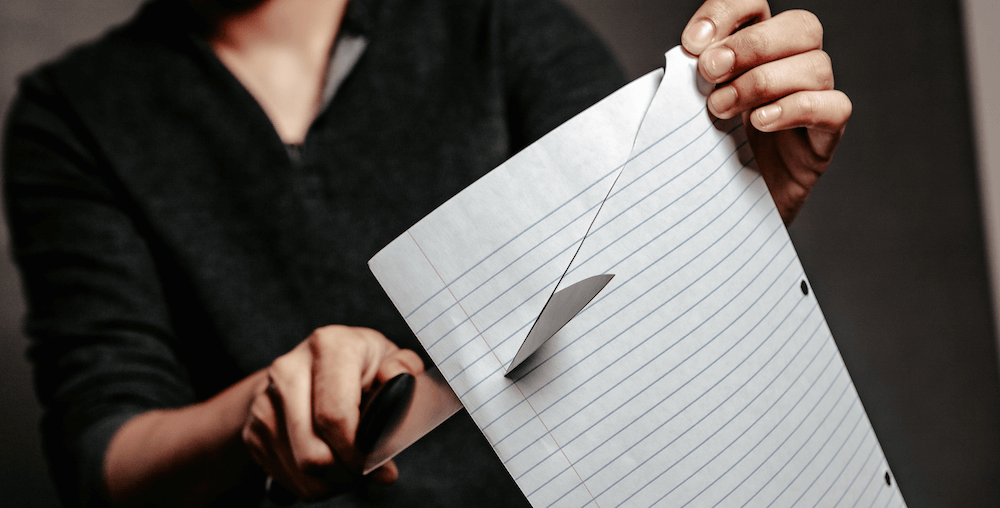
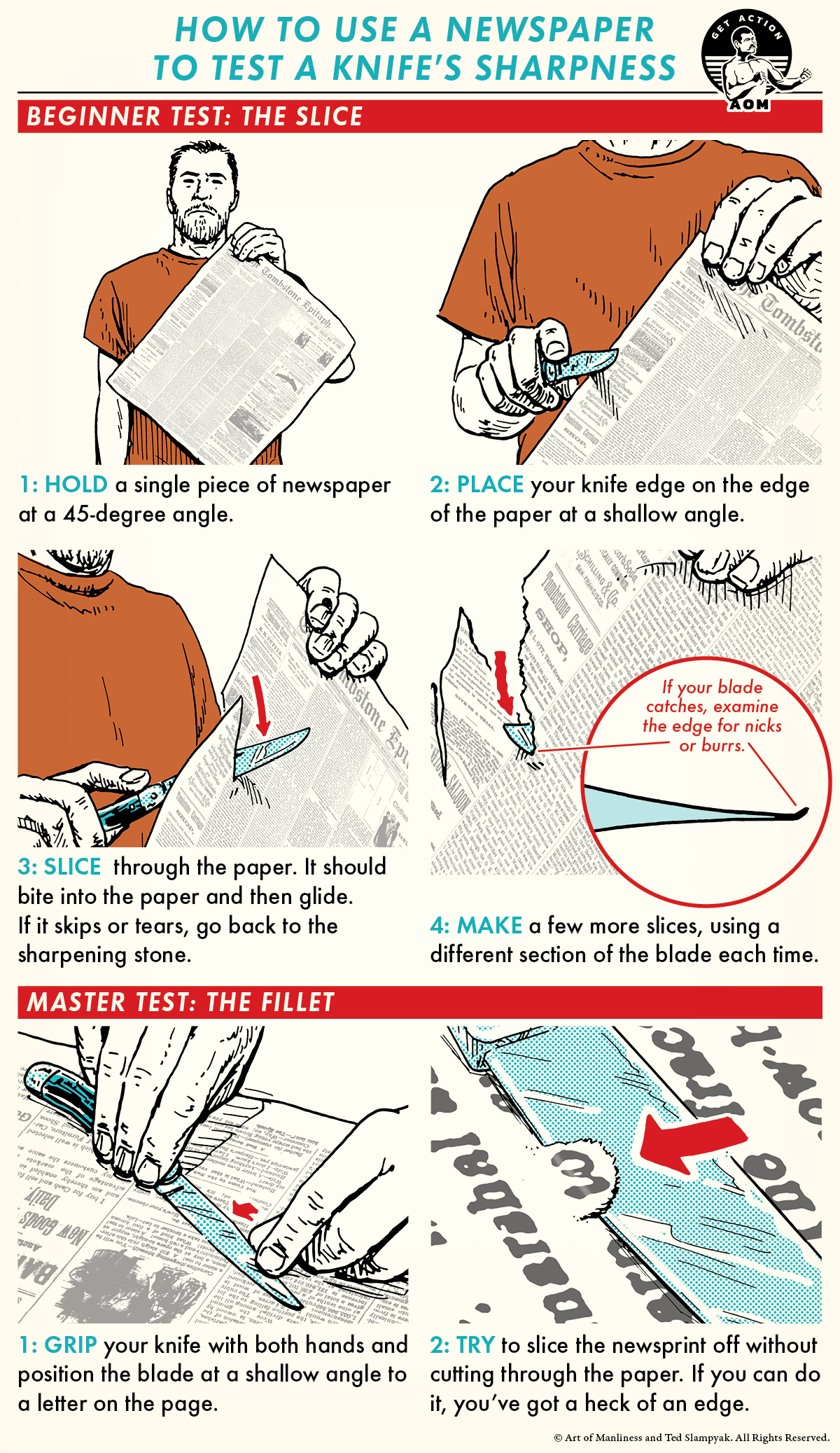
One of the most popular and quick ways to check knife sharpness is the paper test. Here’s how you do it:
- Hold a piece of regular printer paper vertically in one hand.
- Hold the knife in your dominant hand.
- Place the knife’s edge at the top of the paper and slice downward.
A sharp knife will cut cleanly through the paper with little resistance. If the knife snags, tears, or can’t cut, it’s time to sharpen. This test is useful because paper is thin and offers little support, so only a sharp edge can cut smoothly.
Pro Tips:
- Use standard printer paper; thick cardboard or tissue paper can give false results.
- Try this test along different sections of the blade; sometimes, only part of the edge is dull.
2. The Tomato Test
Tomatoes are notorious for revealing dull knives. The skin is thin but tough, and a sharp knife should break the skin easily.
- Place a tomato on a cutting board.
- Without applying pressure, try to slice through the tomato.
- A sharp knife will glide through and make a clean cut.
- If the knife slides off or squashes the tomato before cutting, it’s dull.
The tomato test is practical because it uses a real kitchen scenario. It also shows you how the knife performs with delicate ingredients.
Non-obvious Insight:
Many people push down too hard during this test. Try using only the weight of the knife—if it cuts, your edge is truly sharp.
3. The Arm Hair Test
This test is common among professional sharpeners and knife enthusiasts. It’s simple but requires caution:
- Hold the knife above your forearm.
- Gently try to shave a small patch of arm hair.
A sharp knife should easily shave hairs with minimal pressure. If it skips or pulls, the edge is not razor-sharp.
Safety Note:
Be extremely careful. This method should only be used on clean skin and not by children. Never use this test if your knife skills are not confident.
4. The Fingernail Test
The fingernail test checks the edge at a microscopic level:
- Lightly touch the knife’s edge to your fingernail at a 20-degree angle.
- A sharp edge will bite into the nail and not slide off.
- A dull edge will slide without catching.
This test is fast and gives good feedback, but always use a gentle touch to avoid injury.
5. The Onion Test
Onions have a thin, slippery skin. Try slicing an onion without breaking the layers. A sharp knife will penetrate easily, while a dull one will slip and crush.
6. The Visual Inspection
Sometimes, simply looking closely at the edge can reveal dull spots:
- Hold the knife under a bright light.
- Tilt the blade and look for shiny spots on the edge.
A sharp knife edge will not reflect light. Dull areas appear shiny because they are flat.
7. The Cutting Board Test
Cutting boards made from soft wood or plastic are gentle on knives. Try slicing through a piece of paper towel on your cutting board. If the knife cuts cleanly, it’s sharp. If the paper tears or bunches, the blade needs attention.
8. The Rope Or Twine Test
Try slicing through a piece of kitchen twine or cotton rope. A sharp knife will cut cleanly with little force; a dull knife will struggle and may cause the rope to fray.
9. The Magazine Paper Test
Glossy magazine paper is slicker and thinner than printer paper:
- Hold a magazine page up and slice with your knife.
- If the knife slices smoothly, the edge is very sharp.
This test is more difficult than the regular paper test, so it’s used to check for razor-sharpness.
10. The Food Performance Test
The best way to judge a knife’s sharpness is by using it in your regular cooking:
- Does it dice onions quickly?
- Does it slice meat cleanly?
- Does it chop herbs without bruising?
If you notice more effort or messier cuts, your knife is probably dull.
Comparing Different Knife Sharpness Tests
Different tests suit different needs. Some are best for quick checks, while others are more precise. Here’s a comparison to help you choose the right method:
| Test | Skill Level Needed | Accuracy | Safety | Best For |
|---|---|---|---|---|
| Paper Test | Beginner | High | Very Safe | Everyday checks |
| Tomato Test | Beginner | High | Very Safe | Kitchen use |
| Arm Hair Test | Advanced | Very High | Risky | Professional sharpening |
| Fingernail Test | Intermediate | Medium | Safe if careful | Quick edge check |
| Visual Inspection | Beginner | Low | Very Safe | Quick checks |

Credit: www.sharpeningsupplies.com
Advanced Knife Sharpness Testing Tools
For those who want absolute precision, there are specialized tools to measure sharpness:
Bess Tester (blade Edge Sharpness System)
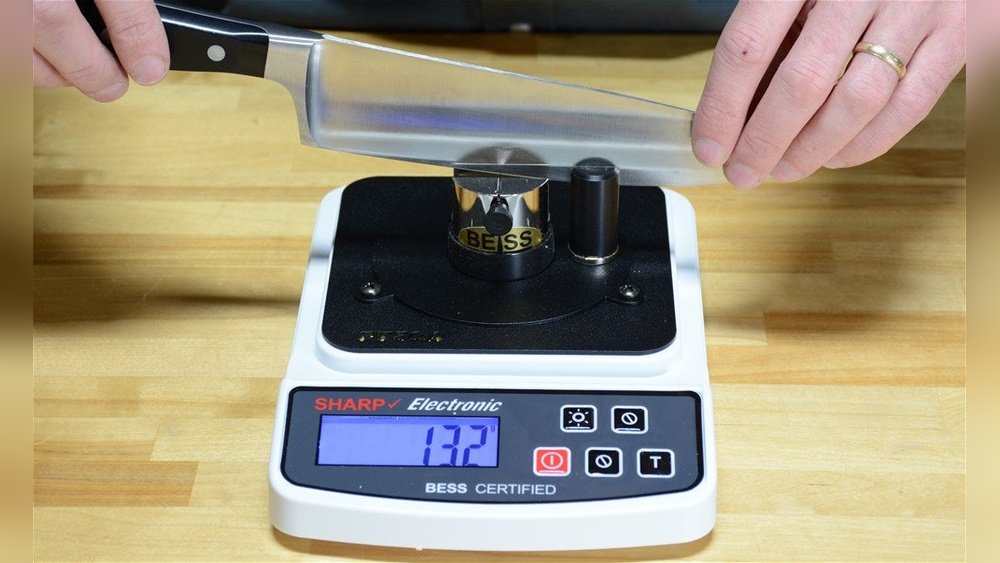
The BESS tester is a device that measures the force needed to cut a standardized filament. The lower the force, the sharper the knife. This device is used by professionals and knife makers to get repeatable, numerical sharpness results.
Edge-on-up Tester
Similar to the BESS, the Edge-On-Up uses a sensor and a test medium. It’s more expensive but gives very accurate data.
Electron Microscope Imaging
Rare outside of laboratories, this method uses powerful microscopes to examine the edge at thousands of times magnification. It’s not practical for home use but is sometimes used in knife research.
Comparison Table: Home Vs. Professional Sharpness Testing
| Method | Cost | Ease of Use | Accuracy | Availability |
|---|---|---|---|---|
| Paper/Tomato Test | Free | Easy | Good | Home |
| BESS Tester | High | Moderate | Excellent | Professional |
| Microscope | Very High | Difficult | Excellent | Lab Only |
Common Mistakes When Testing Knife Sharpness
Even with the right tests, people often make mistakes that lead to false results or even injury. Here’s what to avoid:
- Testing with Wet or Dirty Knives: Water or food residue can make the edge seem sharper or duller than it is. Always clean and dry the blade first.
- Applying Too Much Force: Pressing hard during tests (especially the tomato or paper test) can make a dull knife seem sharp. Use light, even pressure.
- Testing Only One Part of the Blade: The tip, middle, and heel of the knife can wear differently. Test along the whole edge.
- Ignoring Cutting Technique: Sometimes, poor form can make even sharp knives perform badly. Make sure you’re slicing, not chopping straight down.
- Skipping Regular Maintenance: Testing sharpness is not a replacement for regular honing and proper storage.
How Often Should You Test Knife Sharpness?
The right frequency depends on how much you use your knife:
- Daily cooks: Test once a week or after heavy use.
- Home cooks: Test once every few weeks.
- Professional chefs: Test daily or even several times per day.
If you start noticing food tearing, increased effort, or slipping, don’t wait—test and sharpen as needed.
What To Do If Your Knife Is Dull
If your knife fails the sharpness tests, don’t panic. Here’s what to do:
Honing Vs. Sharpening
- Honing re-aligns the edge and should be done regularly with a honing rod.
- Sharpening removes metal to create a new edge. Use a whetstone, pull-through sharpener, or send it to a professional.
When To Hone
If the knife passes some tests but feels less sharp, honing may restore the edge. Run the blade along a ceramic or steel honing rod at the correct angle (usually 15-20 degrees) several times per side.
When To Sharpen
If honing doesn’t help, it’s time to sharpen. Use a whetstone for the best results:
- Soak the stone in water for 10-15 minutes.
- Hold the knife at the correct angle.
- Slide the blade across the stone, keeping even pressure.
- Repeat on both sides.
When To Replace
If sharpening and honing don’t improve the edge, or if the knife is chipped, bent, or severely worn, consider replacing it.
Real-world Examples: Testing And Improving Knife Sharpness
Let’s look at two real-life scenarios:
Example 1: Home Cook
Sarah cooks for her family every night. She notices her chef’s knife is crushing tomatoes instead of slicing. She tries the paper test—her knife tears the paper. She hones the knife, but it still struggles. After sharpening with a whetstone, her knife cuts both paper and tomatoes cleanly again.
Example 2: Professional Chef
Mark is a restaurant chef. He tests his knives daily with the arm hair test and paper test. When a knife starts to drag, he hones it. Once a week, he uses a BESS tester for precision, ensuring top performance during busy dinner service.
Non-obvious Insight:
Many beginners believe you only need to sharpen a knife when it stops cutting. In truth, frequent testing and regular honing prevent deep dullness, making sharpening faster and less aggressive. This extends the life of your knives.
How Sharp Is “sharp Enough”?
Not every knife needs to be razor-sharp all the time. Here’s a guide:
- Chef’s knives: Should easily pass the paper and tomato test.
- Paring knives: Should shave a tomato or apple skin cleanly.
- Bread knives: Don’t need to be razor-sharp but should cut crust without crushing.
- Butcher knives: Should cut meat cleanly with minimal force.
In most home kitchens, passing the paper and tomato test is sharp enough. Only specialty knives (like for sushi) need a true razor edge.
How Sharpness Relates To Knife Safety
A common myth is that sharp knives are dangerous. In reality, dull knives are more likely to slip and cause injury. A sharp knife gives you control and requires less force, reducing accidents. Always test sharpness before heavy kitchen work, and keep knives away from children when not in use.
Maintaining Sharpness After Testing
Testing is only one part of knife care. Here’s how to maintain a sharp edge:
- Use a soft cutting board (wood or plastic, never glass or stone).
- Wash knives by hand and dry immediately.
- Store knives properly, using a knife block, magnetic strip, or blade guard.
- Hone regularly to keep the edge aligned.
- Sharpen as needed but avoid over-sharpening.
Knife Sharpness And Different Knife Types
Some knives are meant to be sharper than others. For example:
- Japanese knives often have a more acute edge (12-15 degrees) and are sharper but more delicate.
- Western knives have a stronger, less sharp edge (20-22 degrees) but are more durable.
Testing methods apply to all, but the expected result may vary. For example, a heavy cleaver may not pass the arm hair test but should still slice paper.
The Role Of Knife Sharpening Angles
Choosing the right angle when sharpening or honing affects how sharp your knife gets and how long it stays sharp.
- 12-15 degrees: Extra sharp, for slicing and fine work (Japanese knives).
- 15-20 degrees: General kitchen use (most chef’s knives).
- 20-25 degrees: Heavy duty, for cleavers and outdoor knives.
Too steep an angle makes the edge fragile. Too wide, and it won’t cut as well. Always match the angle to your knife’s design.
How To Tell If Your Knife Is Too Sharp
Is there such a thing as too sharp? For most kitchen work, no. But if your knife’s edge is so thin that it chips or rolls easily, you may have over-sharpened. If you see tiny chips, or the edge bends after light use, back off and use a wider sharpening angle next time.
When To Seek Professional Sharpening
If you’re not confident sharpening, or if your knife is expensive or a family heirloom, consider professional sharpening. They use advanced tools and can restore the edge safely. Many kitchen stores or specialty shops offer this service.
Credit: knifeaid.com
Safety Tips When Testing Knife Sharpness
- Always test away from your body.
- Do not test sharpness on fingers or skin except for the arm hair test, and only if experienced.
- Keep children and pets away while testing.
- Store your knives safely after testing.
The Science Behind Knife Sharpness
A knife’s sharpness is determined by the thinness and smoothness of the edge. Under a microscope, a sharp knife has a continuous, straight edge with few chips or rolls. Dull knives have flat spots, nicks, or rolled edges. The sharper the edge, the less force you need to cut.
Recent studies in materials science show that high-carbon steel holds a sharper edge longer, but may need more care to prevent rust. Stainless steel is easier to maintain but may dull faster depending on the steel quality.
For more on the science of knife edges, see this Wikipedia article on knives.
Credit: www.artofmanliness.com
Frequently Asked Questions
How Do I Know If My Knife Is Too Dull To Use Safely?
If your knife struggles to slice paper or tomatoes, or you need to use extra force, it’s too dull for safe kitchen use. Dull knives are more likely to slip, increasing the risk of cuts.
What Is The Easiest Way To Test Knife Sharpness At Home?
The paper test is the simplest and safest. Just slice a piece of standard printer paper. If the knife cuts smoothly without tearing, it’s sharp.
How Often Should I Sharpen My Kitchen Knives?
Sharpening depends on use, but most home cooks can sharpen every 2-3 months. Regular honing between sharpening keeps the edge sharp longer.
Is It Better To Hone Or Sharpen My Knife?
Honing maintains the edge and should be done often. Sharpening removes metal and should be done less frequently. If honing doesn’t restore sharpness, then sharpen.
Can I Use A Pull-through Sharpener Instead Of A Whetstone?
Pull-through sharpeners are convenient but can remove too much metal and may not give a perfect edge. Whetstones are better for high-quality knives, but pull-through is fine for inexpensive or utility knives.
A sharp knife is an essential tool in any kitchen, but testing its sharpness is often overlooked. Using the right tests, understanding what affects sharpness, and knowing how to maintain your edge will transform your cooking experience. With these skills, you’ll cut safer, faster, and with better results every time you step into the kitchen.