
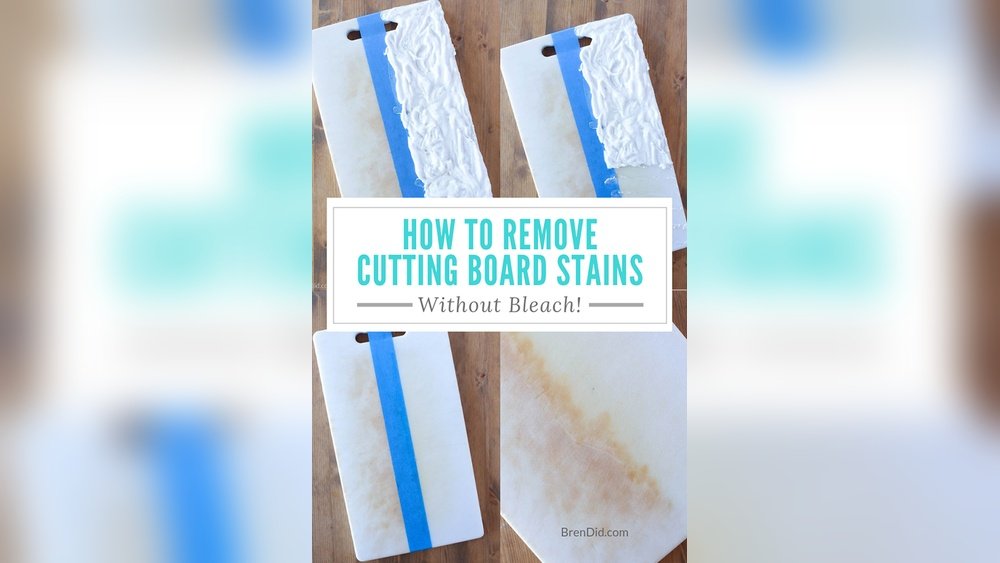
Plastic cutting boards are a kitchen staple for many homes and restaurants. They’re affordable, lightweight, and easy to store. But after a few uses, you may notice stains—from tomatoes, carrots, turmeric, or even raw meat juices—lingering on the surface. These stains not only look unpleasant, but they can also harbor bacteria and odors if not cleaned properly. If you’ve ever wondered how to remove stains from your plastic cutting board and keep it looking fresh, you’re not alone. Many people struggle with stubborn discoloration that doesn’t fade with regular dish soap.
Learning the best methods to clean and maintain your plastic cutting board is essential for both hygiene and appearance. Whether you’re a home cook, a food enthusiast, or someone just starting in the kitchen, knowing how to handle tough stains will save you time and money.
This article will guide you through effective techniques, common mistakes to avoid, and some advanced tips that even experienced cooks sometimes miss. Get ready to discover practical solutions for a cleaner, safer, and longer-lasting cutting board.
Why Stains Stick To Plastic Cutting Boards
Plastic cutting boards are made from materials like polypropylene or polyethylene. These plastics are durable but have tiny pores and scratches that develop over time. When you cut tomatoes, carrots, or raw meat, juices and pigments can seep into these small grooves, leading to stains. Acidic foods, such as tomatoes and citrus, can also react with plastic, making stains even more stubborn.
Some stains, like those from turmeric or beetroot, are especially tough because their pigments are designed to bind strongly to surfaces. Even after washing, their color can remain. Understanding why stains happen helps you choose the right cleaning methods.
Common Types Of Stains On Plastic Cutting Boards
Plastic cutting boards face a variety of stains, each requiring a slightly different approach:
- Food Pigment Stains: Tomatoes, carrots, beets, and berries leave strong colors.
- Grease and Oil Stains: Animal fat, butter, and oils can leave a sticky film.
- Odor Stains: Garlic, onion, and fish can leave both stains and lingering smells.
- Protein-Based Stains: Raw meat juices can cause stains and are a bacterial risk.
- Spices: Turmeric and curry powders are known for deep yellow stains.
Each type needs a different cleaning strategy. For example, a stain from raw meat is a hygiene risk, not just a cosmetic problem. Understanding the stain type helps you pick the best solution.
Basic Cleaning Steps For Everyday Use
Daily cleaning is your first defense against stains. Here’s a simple routine:
- Rinse the board immediately after use with hot water. This removes surface residue before it sets.
- Scrub with dish soap and a brush or sponge. Pay attention to knife grooves.
- Rinse again with hot water.
- Dry with a clean towel or air-dry upright to prevent moisture buildup.
Tip: Never leave your plastic cutting board soaking in dirty water. This encourages bacteria growth and can make stains harder to remove.
Deep Cleaning Methods For Stubborn Stains
When basic cleaning fails, try these proven methods. Each method targets specific types of stains and works best when used soon after the board is stained.
1. Baking Soda Paste
Baking soda is a gentle abrasive and natural deodorizer. It works well for most food stains.
How to use:
- Sprinkle baking soda generously over the stained area.
- Add a few drops of water to create a thick paste.
- Scrub with a sponge or brush in a circular motion.
- Let the paste sit for 10–15 minutes.
- Rinse with hot water and dry.
Tip: For stronger stains, add a few drops of dish soap to the baking soda before scrubbing.
2. Lemon And Salt Scrub
Lemon juice is acidic and helps break down stains, while salt acts as a mild abrasive.
How to use:
- Cut a lemon in half.
- Sprinkle coarse kosher salt over the stain.
- Use the cut side of the lemon to scrub the salt into the stain.
- Let it sit for 5–10 minutes.
- Rinse with warm water and dry.
This method also helps remove odors, especially from garlic and fish.
3. Hydrogen Peroxide Soak
Hydrogen peroxide is a strong oxidizer that removes both stains and bacteria.
How to use:
- Pour 3% hydrogen peroxide directly onto the stained area until it’s covered.
- Let the board sit for 10–15 minutes.
- Scrub gently with a brush.
- Rinse thoroughly with water and dry.
Safety note: Wear gloves if your skin is sensitive, and keep the area well-ventilated.
4. Vinegar Solution
White vinegar is acidic and can dissolve stains and neutralize smells.
How to use:
- Mix equal parts white vinegar and water.
- Soak a cloth or paper towel in the solution.
- Lay it over the stained area for 10–20 minutes.
- Remove and scrub the area with a brush or sponge.
- Rinse and dry.
For extra cleaning, you can also spray the entire board with undiluted vinegar and let it sit before rinsing.
5. Bleach Solution (occasional Use)
Bleach is effective for disinfecting and removing tough stains, but should be used rarely to avoid damaging the plastic.
How to use:
- Mix 1 tablespoon of bleach with 1 gallon of water.
- Submerge the board or apply the solution to the surface.
- Let it sit for 2–3 minutes (not longer).
- Rinse thoroughly with plenty of water.
- Dry completely.
Caution: Never mix bleach with other cleaning agents, especially vinegar, as it can create dangerous fumes.
Comparing Cleaning Methods
To help you choose the right method, here’s a comparison of popular cleaning solutions:
| Method | Best For | Effectiveness | Safety | Odor Removal |
|---|---|---|---|---|
| Baking Soda Paste | Food stains, odors | Good | Very Safe | Good |
| Lemon & Salt | Stains, odors | Good | Safe | Excellent |
| Hydrogen Peroxide | Tough stains, bacteria | Excellent | Safe if rinsed | Good |
| Vinegar Solution | Light stains, smells | Moderate | Very Safe | Excellent |
| Bleach Solution | Disinfection, deep stains | Excellent | Use with care | Good |
Removing Stains From Colored Plastic Cutting Boards
Colored boards can be more challenging because some cleaning agents, like bleach, may fade the color. Use gentle options first:
- Try baking soda or a lemon and salt scrub.
- For strong stains, hydrogen peroxide is usually safe, but test on a small area first.
- Avoid bleach unless you’re prepared for some color loss.
Regular cleaning helps colored boards look better longer.
Removing Turmeric And Curry Stains
Turmeric and curry leave some of the most stubborn stains. Their pigments bind tightly to plastic. Here’s how to fight them:
- Rinse the board with hot water immediately after use.
- Apply a thick paste of baking soda and water to the stain.
- Let it sit for at least 30 minutes.
- Scrub with a brush.
- Rinse and repeat if needed.
If the stain is still visible, try wiping with a cloth soaked in hydrogen peroxide. Let it sit for 10 minutes, then rinse well.
Pro tip: Placing the board in direct sunlight for a few hours after cleaning can help break down turmeric stains, as sunlight naturally bleaches colors.
Getting Rid Of Tomato And Berry Stains
Tomatoes and berries are acidic and colorful, leading to bright pink or red stains.
- Rinse the board with hot water right after use.
- Scrub with a baking soda paste.
- For old stains, soak a paper towel in white vinegar, place it on the stain, and let it rest for 20 minutes before scrubbing.
Sunlight can also help fade these stains if the board is left outside for a few hours.

Credit: www.thekitchn.com
Dealing With Odor Stains (garlic, Onion, Fish)
Odor stains are harder to see but can make your board unpleasant to use.
- Scrub with a baking soda and water paste.
- Rub the surface with a cut lemon.
- Rinse and dry in the sun if possible.
- For very strong smells, soak the board in a vinegar and water solution for 15 minutes.
Do not store the board while it’s still damp, as this can lock in odors.
Grease And Oil Stains
Grease and oil are tricky because they form a thin film that soap alone may not remove.
- Sprinkle baking soda on the greasy area.
- Add a few drops of dish soap.
- Scrub with a brush, focusing on oily spots.
- Rinse with hot water.
For deep grease, wipe the board with a cloth dipped in white vinegar before scrubbing.
Sanitizing Plastic Cutting Boards
Sanitizing goes beyond cleaning. It kills germs and bacteria, reducing the risk of foodborne illness.
Best practices:
- Use a mild bleach solution (1 tablespoon bleach per gallon of water) once per week.
- Rinse thoroughly after sanitizing.
- Dry the board standing up to keep both sides ventilated.
Never sanitize with boiling water, as high heat can warp plastic boards.
How To Remove Stains From Old Or Heavily Used Boards
With age, plastic cutting boards develop deep grooves and stains that are hard to remove. Here’s what you can do:
- Scrub with a baking soda and hydrogen peroxide paste. Let it sit for 30 minutes.
- For very deep stains, sand the surface lightly with fine-grit sandpaper. Wash thoroughly afterward.
- If stains or grooves remain, consider replacing the board. Deep grooves can harbor bacteria even after cleaning.
When To Replace Your Plastic Cutting Board
No matter how well you clean, plastic boards don’t last forever. Replace your board if you notice:
- Deep knife grooves you can’t clean.
- Stains that don’t fade after deep cleaning.
- Warping or bending.
- Persistent odors.
A new board is safer and easier to keep clean.
Advanced Tips And Non-obvious Insights
Even experienced cooks sometimes miss these tricks:
1. Use sunlight as a natural bleach
After cleaning, leave your board in direct sunlight for a few hours. Ultraviolet rays break down stains and kill bacteria.
2. Don’t use abrasive metal scrubbers
They can scratch the plastic, making stains and bacteria harder to remove next time. Stick to nylon brushes or soft sponges.
3. Store boards dry and upright
Moisture trapped under the board promotes bacteria and mildew growth, especially in humid kitchens.
4. Rotate cutting boards
Use one board for meats and another for vegetables. This prevents cross-contamination and helps boards last longer.
5. Avoid putting plastic boards in the dishwasher too often
High heat can warp the board over time. Hand washing is usually best for longevity.
How Plastic Compares To Other Cutting Board Materials
For those considering alternatives, here’s a quick comparison:
| Material | Stain Resistance | Ease of Cleaning | Bacteria Risk | Durability |
|---|---|---|---|---|
| Plastic | Moderate | Easy | Low if maintained | Good |
| Wood | Low | Moderate | Can be higher | Excellent |
| Bamboo | Moderate | Moderate | Low | Good |
| Glass | High | Easy | Very Low | Fragile |
Plastic boards are popular because they’re affordable, easy to clean, and less likely to dull knives. However, they stain more easily than glass or some woods.
Safe Cleaning Products For Plastic Cutting Boards
Not all cleaning products are safe for food surfaces. Stick to these:
- Baking soda
- White vinegar
- Lemon juice
- Hydrogen peroxide (3%)
- Bleach (properly diluted)
- Mild dish soap
Avoid using harsh chemicals, scented cleaners, or abrasive powders not labeled as food-safe. Always rinse boards well before use.
Credit: www.thekitchn.com
Mistakes To Avoid When Cleaning Plastic Cutting Boards
Some common errors can make stains worse or even damage your board:
- Using abrasive metal pads: These scratch the surface, making stains more likely.
- Not drying completely: Moisture encourages bacteria and odors.
- Overusing bleach: Frequent use weakens the plastic, causing it to crack or warp.
- Ignoring deep grooves: These hide bacteria and stains. Sand lightly or replace the board.
- Letting stains set: Clean stains as soon as possible for the best results.
How Often Should You Deep Clean?
Deep clean and sanitize your plastic cutting board at least once a week, or more often if you use it for raw meat or colorful foods. Quick cleaning after each use keeps stains from forming in the first place.
The Environmental Impact Of Plastic Cutting Boards
While plastic cutting boards are convenient, they don’t last forever. Old boards can be recycled in some areas, but many end up in landfills. To minimize waste:
- Buy high-quality boards that last longer.
- Rotate multiple boards to reduce wear.
- Recycle or repurpose old boards when possible (for craft projects or as plant trays).
For more on recycling options, check local guidelines or visit resources like the US EPA Recycling Page.
Frequently Asked Questions
How Do I Remove Yellow Stains From My Plastic Cutting Board?
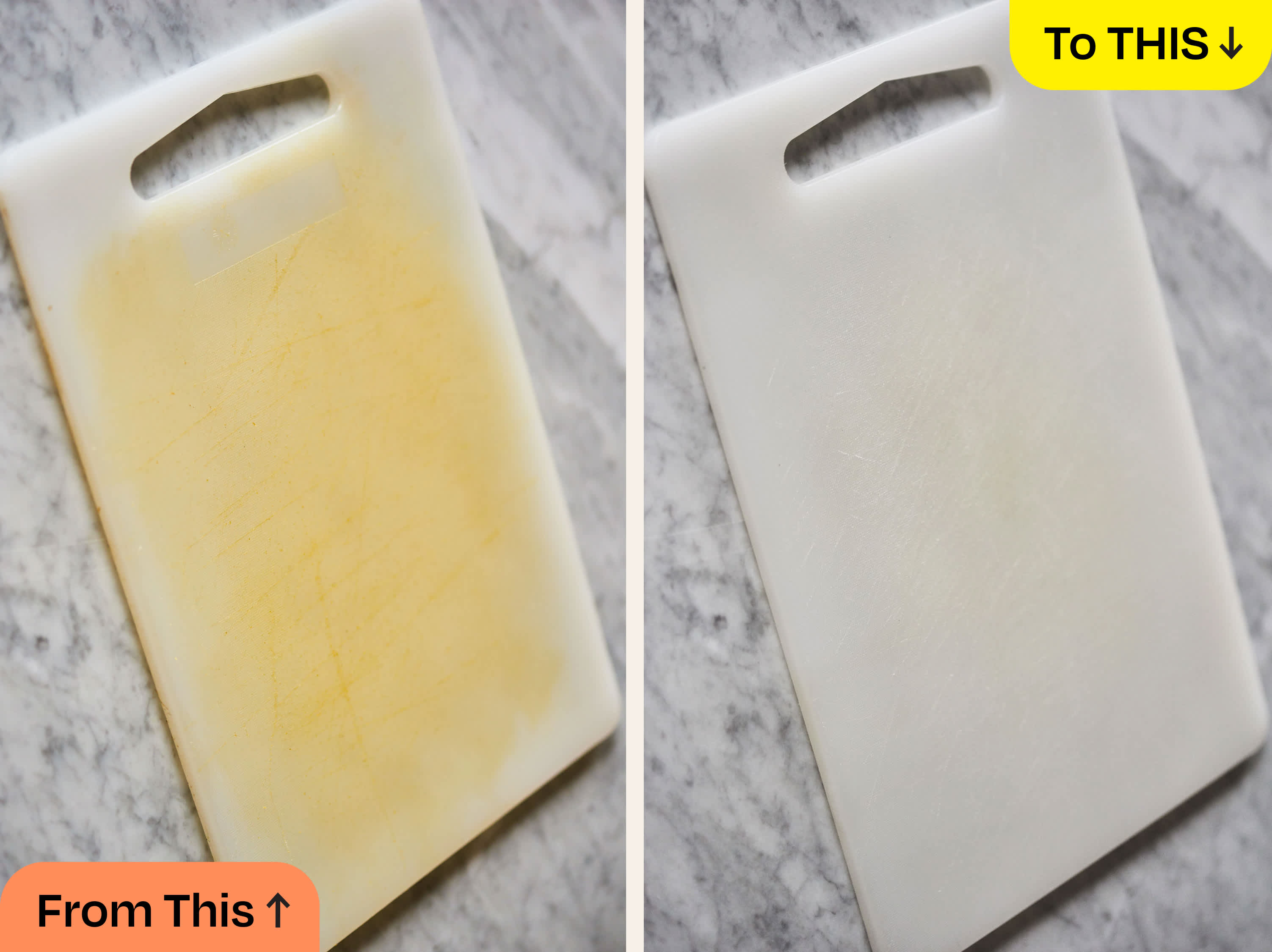
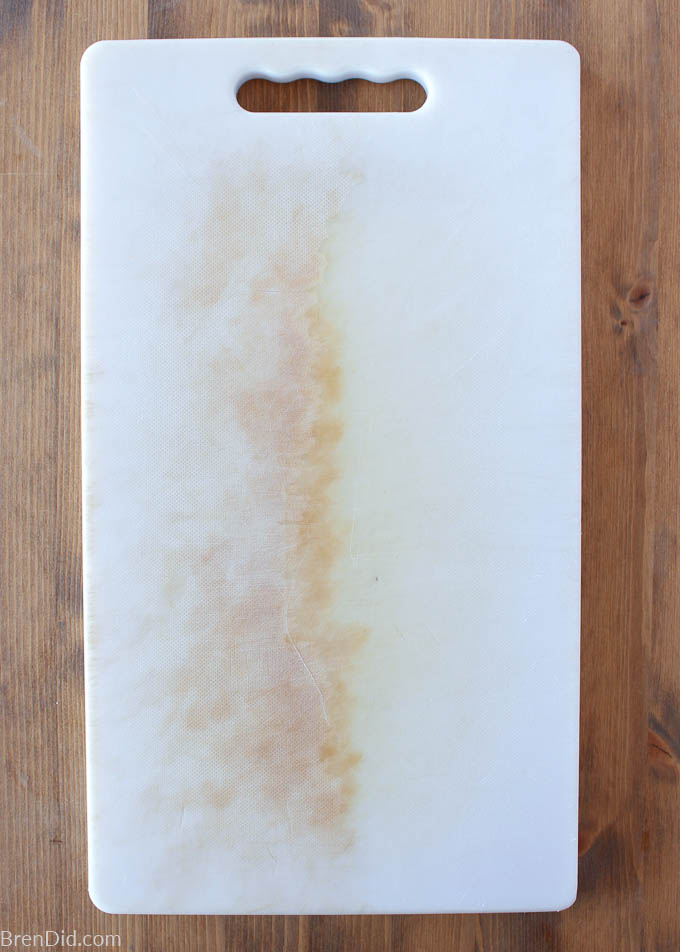
Yellow stains are often caused by turmeric, curry, or carrots. Make a paste of baking soda and water, apply it to the stain, and let it sit for 30 minutes. Scrub with a brush, rinse, and repeat if needed. For very stubborn stains, use hydrogen peroxide and leave the board in sunlight for a few hours.
Is It Safe To Use Bleach On Plastic Cutting Boards?
Yes, but only in diluted form—1 tablespoon of bleach per gallon of water. Rinse thoroughly after use, and do not use bleach more than once a week. Overuse can damage the plastic surface and shorten the board’s life.
Can I Put My Plastic Cutting Board In The Dishwasher?
Most plastic cutting boards are labeled dishwasher-safe. However, repeated high-heat cycles can warp or crack the board over time. Hand washing and air drying are usually safer for the board’s longevity.
What Is The Best Way To Get Rid Of Garlic Or Fish Smell From My Cutting Board?
Scrub the board with a paste of baking soda and water, then rub with a cut lemon. Rinse thoroughly and dry in the sun if possible. For very persistent odors, soak the board in a vinegar and water solution for 15 minutes.
When Should I Replace My Plastic Cutting Board?
Replace your board if you notice deep grooves that can’t be cleaned, stains that don’t fade after deep cleaning, warping, or persistent odors. A damaged board can hide bacteria and is less safe for food preparation.
Keeping your plastic cutting board clean and stain-free doesn’t have to be a struggle. With the right tools, techniques, and some regular care, you can keep your board looking fresh and safe for years. Remember, acting quickly is the key to easy stain removal, and a little sunlight or baking soda goes a long way. By following these steps, you’ll enjoy a cleaner kitchen and healthier meals every day.
Credit: brendid.com