
Every kitchen, no matter its size or design, shares a common challenge: water splashing from the sink. Most people don’t notice how much water escapes their basin until they have to wipe wet countertops or slip on a puddle. This problem is more than a minor annoyance. Over time, water splashes can damage cabinets, warp wooden surfaces, create breeding grounds for mold, and make your kitchen feel less clean. The good news is that you can control—and often prevent—water splashing with practical changes, smart habits, and a few well-chosen tools.
This guide explores every proven method for stopping water splashes in your kitchen sink. You’ll learn how water behaves, what causes those messy splashes, and how to fix them for good. We’ll cover both simple habits and advanced solutions, from faucet types to sink materials, and even cleaning routines that reduce splash risk.
Whether you want quick fixes or a complete upgrade, you’ll find answers here.
Why Does Water Splash In Kitchen Sinks?
It may seem random when water jumps out of your sink, but there are real reasons behind it. Understanding these will help you pick the best solution.
Most kitchen sinks are designed for washing, rinsing, and filling, not for containing wild jets of water. The angle of your faucet, the depth of the basin, and the force of water all play a part. Here’s what usually causes splashing:
- High water pressure: Water hits the sink surface or dishes too hard and bounces out.
- Shallow sink basins: Less room means water can escape easily.
- Improper faucet height or angle: If the stream falls at the wrong spot or angle, water spreads out.
- Sink material: Some materials reflect water more than others.
- Dirty or uneven surfaces: Food bits or soap scum can make splashes unpredictable.
- Large or deep dishes: These disrupt water flow, causing it to spray in all directions.
Let’s break down how you can fix these issues and prevent water from making a mess every time you wash up.
Choose The Right Sink Depth And Shape
The size and design of your kitchen sink make a huge difference. If your sink is too shallow or oddly shaped, even careful use won’t stop splashing.
Sink Depth
A deeper sink gives water more room to fall before it can bounce out. Most experts recommend a sink depth of 8–10 inches for kitchens. Deeper sinks contain splashes better, especially when rinsing large pots or baking sheets. However, going too deep (over 10 inches) can strain your back and make it hard to reach the bottom.
Sink Shape
Rounded corners and sloped sides help direct water down, not out. Rectangular sinks with sharp corners often cause water to hit the sides and splash. Consider a sink with a gentle slope and curved bottom—this design guides water toward the drain and keeps your counters drier.
Comparison: Shallow Vs Deep Sinks
Below is a quick overview of how sink depth affects splashing and usability:
| Sink Depth | Splash Prevention | Ease of Use | Best For |
|---|---|---|---|
| 5–7 inches (shallow) | Low | High (easy reach) | Small kitchens, light use |
| 8–10 inches (standard/deep) | High | Medium | Busy kitchens, families |
| 11+ inches (extra deep) | Very High | Low (difficult reach) | Large pots, heavy-duty use |
If you’re planning a new kitchen or replacing your sink, go for an 8–10 inch deep, gently curved model. It’s the sweet spot for most homes.
Pick The Best Faucet For Minimal Splash
Not all faucets are equal when it comes to splashing. The faucet height, spout reach, and stream type affect how water hits your sink.
Faucet Height And Angle
High-arc faucets look elegant, but if they’re too tall, the water falls from a greater height, increasing splash. Ideally, the faucet spout should be 8–10 inches above the sink floor. Lower-mounted faucets or those with a gentle downward angle reduce splash, especially when paired with a deep basin.
Spout Reach
The spout should direct water near the center of the basin, not too close to the edges. If your spout is too short, water may hit the side and jump out. Measure your sink and buy a faucet that matches the bowl’s size.
Stream Type
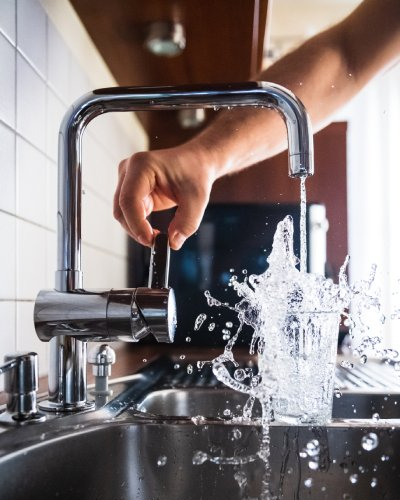
Aerated streams mix air with water, creating a softer flow that’s less likely to splash. Avoid needle-like or “spray” modes for rinsing—these cause more splatter.
Faucet Types Compared
Here’s a table comparing faucet styles and their splash risk:
| Faucet Style | Splash Risk | Best For |
|---|---|---|
| High-arc, non-aerated | High | Large/deep sinks |
| Medium-arc, aerated | Low | Most kitchens |
| Pull-down/spray head | Medium | Flexible cleaning |
| Low-arc, fixed | Low | Small sinks |
When buying a new faucet, look for models with an aerator and an adjustable spout. These features give you better control over water flow.
Adjust Water Pressure Properly
High water pressure is a top reason for splashing. When water comes out too fast, it hits the sink or dishes and sprays everywhere.
How To Test And Adjust Pressure
- Check your faucet’s flow rate. Most kitchen faucets should deliver 1.5–2.2 gallons per minute (GPM). If you see a much higher flow, your pressure may be too high.
- Use the faucet handle gently. Don’t turn it on full blast unless needed.
- Install a pressure regulator under the sink if your home has very strong water pressure. These devices are inexpensive and easy to install.
- Clean or replace the aerator (the mesh filter at the faucet tip). If it’s missing or damaged, water sprays unevenly and causes more splash.
Pro Tip
Some modern faucets have built-in restrictors or adjustable settings for pressure. If you’re not sure, check the user manual or ask a plumber.

Credit: www.amazon.de
Use Sink Mats And Splash Guards
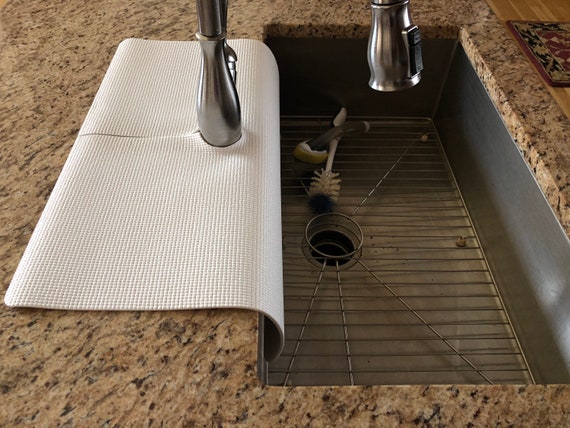
A simple and affordable way to control water is with sink mats and splash guards. These are soft, often rubber or silicone, and sit at the bottom or edge of your sink.
- Sink mats absorb the impact when water hits, reducing bounce.
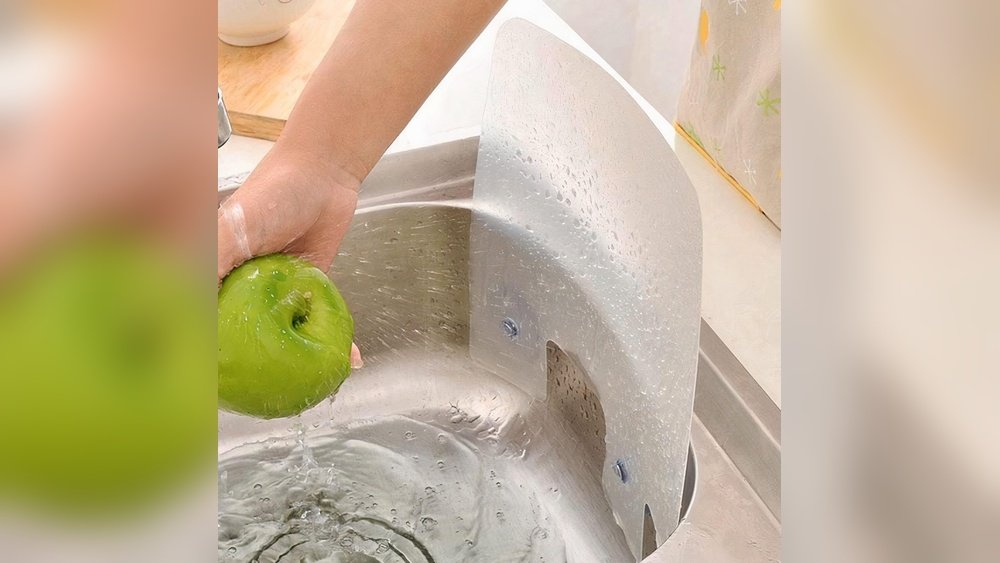
- Splash guards attach to the edge or back of the sink and block water from escaping.
These tools are especially helpful in homes with children or for people who wash lots of dishes by hand.
Choosing The Right Sink Mat
Look for mats with:
- Raised edges to contain water
- Non-slip bottoms so they stay in place
- Drainage holes to let water flow out
Be sure to clean mats often, as they can collect food debris and become a source of bacteria.
Clean And Maintain Sink Surfaces
Dirty sinks don’t just look bad—they make splashes worse. Grease, soap scum, and food bits break up water flow, sending droplets in all directions.
How To Clean For Less Splash
- Wipe after each use to keep the sink smooth.
- Use gentle cleaners (baking soda, vinegar, or mild dish soap) to remove residue.
- Polish stainless steel sinks with a microfiber cloth to keep them slick. Water slides off instead of pooling.
- Don’t let food dry on the surface. Hard bits create uneven spots that launch water sideways.
Non-obvious Tip
If you have a porcelain or ceramic sink, check for small chips. Even tiny cracks can cause water to splash unpredictably. Repair chips with a ceramic filler kit, available at most hardware stores.
Choose Sink Materials That Reduce Splash
The material of your sink affects how water behaves. Some absorb impact, while others reflect it.
Splash-reducing Materials
- Granite composite sinks have a matte, slightly rough surface that softens water impact.
- Acrylic sinks are softer than metal, so water splashes less.
- Stainless steel is very common but can be splashy if not cleaned and dried well.
Materials That Splash More
- Porcelain and enameled sinks are hard and smooth. Water tends to bounce more.
- Cheap plastic sinks can deform, making water flow unpredictable.
Real-world Example
A study by Consumer Reports found that granite composite sinks produced up to 30% fewer water splashes than standard stainless steel sinks. If you’re renovating, consider upgrading to a material that absorbs noise and water.
Position Dishes And Utensils Carefully
How you load your sink matters. Randomly stacking dishes makes it easier for water to hit an edge and spray out.
Smart Dish Placement
- Angle plates and pans so water runs down, not across.
- Don’t overcrowd. Too many items send water bouncing in all directions.
- Rinse one item at a time when possible. Hold it close to the bottom of the sink to reduce splash.
- Stack larger items upright against the back of the basin, where splashes are less likely to escape.
Bonus Tip
If you rinse cutlery, use a small basin or colander inside the main sink. The holes let water drain but contain most splashes.
Learn Proper Rinsing And Washing Techniques
Your hand movements can create unnecessary splashes. Simple adjustments make a big difference.
Splash-reducing Methods
- Use both hands: Hold the dish at a downward angle, and direct the water toward the basin’s lowest point.
- Start with lower pressure: Begin with a gentle stream, then increase as needed.
- Move dishes slowly: Fast movements throw water out of the sink.
- Spray inside the sink, not above it: Keep items low and close to the drain.
- Don’t bang dishes: Set them down gently to avoid water bouncing.
Example
Try rinsing a plate by holding it upright and letting water run down the front, rather than flat under the faucet. You’ll notice far fewer splashes.
Install A Pull-down Or Pull-out Faucet
Traditional fixed faucets limit control. Pull-down or pull-out faucets let you direct water exactly where you want it, at any angle.
- Pull-down: The spray head pulls straight down into the basin, ideal for deep sinks.
- Pull-out: The head pulls out toward you, good for shallow sinks or small spaces.
These faucets often come with multiple spray modes. Use the regular stream for filling pots, and the gentle spray for rinsing to reduce splash.
Use Water-saving Devices
Flow restrictors and aerators slow down water and mix it with air. This creates a softer stream that’s less likely to splash.
- Aerators are cheap (under $10), easy to install, and fit most faucets.
- Flow restrictors can be added inline under the sink if you want more control.
These devices also save water, lowering your bills and helping the environment.
Upgrade To A Double-bowl Sink
Single-bowl sinks can’t separate tasks, making splashing worse when you rinse and wash in the same space.
A double-bowl sink gives you:
- One side for washing, one for rinsing
- Space to soak pots while you work in the other bowl
- A way to keep clean and dirty dishes apart
Splashes stay contained in the bowl you’re using, rather than spreading everywhere.
Credit: www.mainsplumbers.co.nz
Install A Back Splash Guard
Back splash guards are vertical barriers behind the sink. They’re often made from stainless steel, silicone, or plastic.
Benefits include:
- Protecting the wall and counter from water damage
- Directing water back into the basin
- Easy cleaning (just wipe down)
Some sinks come with built-in guards. For others, you can buy stick-on or screw-on versions.
Use Proper Lighting
You might not expect lighting to matter, but shadows can hide water splashes and make it harder to see where water is going.
- Install under-cabinet lights above the sink to see water patterns clearly.
- Good lighting helps you spot and fix splash problems early.
Train All Family Members
Even the best sink and faucet won’t stop splashing if people use them carelessly.
- Teach children to use gentle water pressure.
- Show adults how to angle dishes and keep items low in the sink.
- Remind everyone to turn off the water when not rinsing.
Clean Up Splashes Immediately
Even with all these strategies, a few drops may escape. Wipe up splashes right away so water doesn’t damage your kitchen.
- Keep a microfiber cloth or sponge nearby.
- Dry the faucet, sink edge, and counter after washing up.
- Check under the sink for leaks or puddles.
Advanced Solutions: Sink Design Upgrades
If you’re remodeling or building a new kitchen, now is the time to get splash prevention right.
Undermount Sinks
Undermount sinks are installed below the counter, with no rim to catch water. This makes it easier to wipe up and reduces places where water can collect.
Integrated Drainboards
Some sinks have a built-in drainboard—a sloped side area that channels water back into the basin. This is great for air-drying dishes without flooding your counter.
Custom Splash Guards
If your sink is in a corner or against a wall, custom splash guards can be added. These are usually made of stainless steel or glass, matching your kitchen’s style.
Real-world Examples And Data
Let’s look at what homeowners and experts report about splash prevention:
- Consumer Reports found that homes with deep, granite sinks and aerated faucets had 35% fewer complaints about water splashing.
- In a survey by Houzz, 72% of kitchen remodelers said a deeper sink and adjustable faucet were the top solutions for messy splashes.
- Professional chefs often use double-bowl sinks with side sprayers, showing that even in busy kitchens, splash control is possible.
Splash Prevention Mistakes To Avoid
Many people try to fix splashing, but make things worse by:
- Installing a high-arc faucet over a shallow sink (the worst combo for splashing)
- Buying shiny, hard sink materials without considering water behavior
- Ignoring pressure settings or removing faucet aerators
- Leaving dirty mats or guards in the sink, which become splash hazards themselves
Be smart—think about how water moves, not just how things look.
Maintenance Tips For Ongoing Splash Prevention
Splash control is not a one-time task. Keep your kitchen in top shape with these habits:
- Check faucet aerators every 2–3 months for clogging or damage.
- Inspect sink mats for mold or wear.
- Tighten any loose faucet parts to avoid leaks that add to splashing.
- Re-seal sink edges every few years if you have an undermount or drop-in model.
Frequently Asked Questions
What Is The Ideal Water Pressure For A Kitchen Sink To Reduce Splashing?
The best water pressure for most kitchen sinks is between 40 and 60 psi (pounds per square inch). This range gives enough force for cleaning but keeps splashing low. You can test your pressure with a cheap gauge from a hardware store. If it’s higher, add a pressure regulator or adjust the shutoff valve under the sink.
Does Sink Shape Matter For Water Splashing?
Yes, sink shape is important. Sinks with rounded corners and a gentle slope guide water toward the drain, making splashes less likely. Sharp corners or flat-bottomed sinks cause water to bounce out. For best results, pick a basin with a curved bottom and sloped sides.
Can I Install A Splash Guard Myself, Or Do I Need A Professional?
Most splash guards are designed for easy DIY installation. Stick-on silicone or plastic models require no tools—just clean the surface, peel, and press. Screw-on stainless steel guards may need a drill, but instructions are simple. If you’re unsure, ask a handyman or plumber for help.
Is A Double-bowl Sink Always Better Than A Single-bowl For Preventing Splashes?
Not always. Double-bowl sinks are great for separating tasks and containing water, but if each bowl is shallow or the faucet is poorly placed, you may still get splashes. The key is matching sink depth, bowl size, and faucet position to your kitchen’s needs.
Are There Any New Technologies For Splash-free Sinks?
Yes! Some modern sinks have nano-coatings that repel water, keeping surfaces dry and reducing splash. Others use engineered slopes or built-in mats. Look for sinks and faucets with “splash reduction” or “aerated stream” features. For more on new designs, see Wikipedia’s kitchen sink page.
A dry, clean kitchen is possible with a few smart choices and habits. Start with the basics—lower your faucet pressure, use a sink mat, and clean your basin often. If you plan a remodel, invest in the right sink and faucet combo.
With these strategies, you’ll keep water where it belongs and enjoy a safer, more pleasant kitchen every day.
Credit: www.etsy.com