
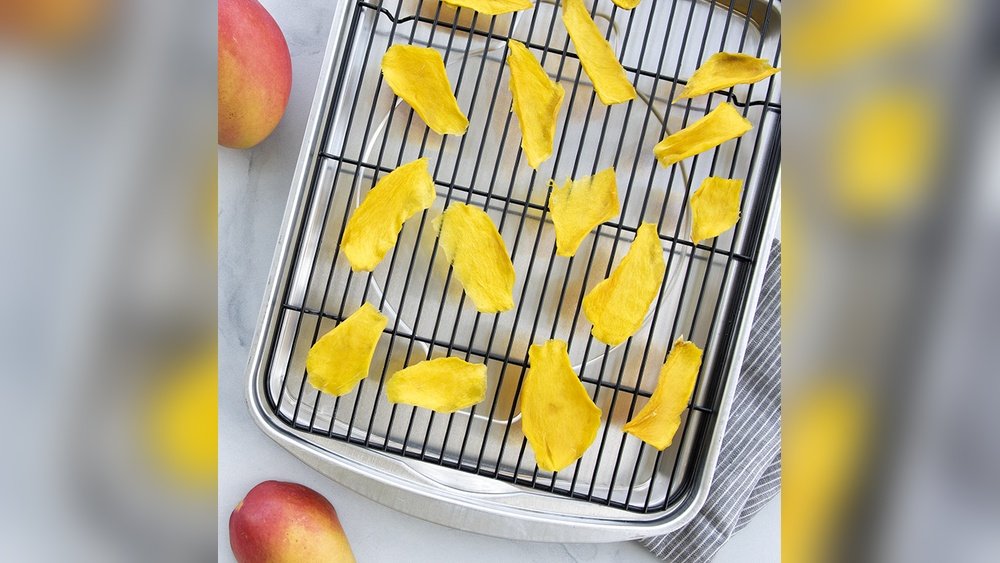
Dehydrating mango in the oven is a simple way to enjoy this tropical fruit all year. Dried mango is sweet, chewy, and packed with vitamins. If you don’t own a food dehydrator, using your oven can work just as well with some care and patience.
Many people are surprised how easy it is to make healthy snacks at home, control sugar and additives, and reduce food waste by preserving extra fruit.
But there’s more to dehydrating mango than just slicing and baking. The texture, flavor, and shelf life all depend on the steps you follow. Even small details, like how thick you cut the slices or how you store the finished product, can make a big difference.
This guide will walk you through every stage, from choosing ripe mangoes to troubleshooting common problems. You’ll also find answers to the most frequent questions about drying mango in the oven.
Why Dehydrate Mango At Home?
Many people wonder if it’s worth the effort. The answer is yes, and for good reasons.
Control Over Ingredients: Store-bought dried mango is often coated with added sugar, preservatives, or even artificial coloring. By drying your own, you know exactly what you’re eating.
Cost Savings: Fresh mangoes, especially in season, are much cheaper than packaged dried mango. A single homemade batch can save you several dollars.
Better Taste: Homemade dried mango retains more of its natural sweetness and tang. It also avoids the hard, tough texture of some commercial brands.
Long Shelf Life: Properly dried and stored mango can last for months, reducing waste.
Health Benefits: Mango is rich in vitamin C, vitamin A, and fiber. Drying preserves most of these nutrients.
Choosing The Best Mangoes For Dehydrating
The final quality depends heavily on the fruit you start with. Not all mangoes are equal for drying.
Ideal Ripeness
Look for mangoes that are ripe but still firm. They should have a strong mango aroma and give slightly when pressed. Overripe mangoes may turn mushy and stick to the tray, while underripe ones can taste sour and lack sweetness.
Best Varieties
Different mango varieties have their own flavors and textures. Some good choices include:
- Ataulfo (Honey or Champagne): Small, sweet, and fiberless. Slices well and dries evenly.
- Kent: Juicy, fewer fibers, and a rich flavor.
- Tommy Atkins: Common in stores, firmer texture, but slightly more fibers.
- Haden: Classic mango flavor, medium firmness.
Try to avoid stringy types, as they can become chewy and tough when dried.
How Many Mangoes To Use
One average mango (about 300 grams) will make around 1/3 to 1/2 cup of dried slices. For a full oven tray, you’ll need 3–4 mangoes.

Credit: thevintagecook.com
Essential Tools And Equipment
You don’t need special equipment, but a few simple tools make the process faster and safer.
- Sharp knife or peeler: For removing skin and slicing.
- Cutting board: Stable and large enough for safe slicing.
- Oven: A standard home oven is enough.
- Baking tray: For placing mango slices.
- Parchment paper or silicone mat: Prevents sticking.
- Cooling rack: Helps air circulation, optional but useful.
- Airtight containers or bags: For storage.
If your oven has a convection fan, it can help with even drying, but it’s not required.
Preparing Mango For Dehydration
Careful preparation is the key to perfect dried mango.
Washing And Peeling
Rinse mangoes under cold water to remove dirt and any pesticide residue. Peel the skin with a sharp vegetable peeler or paring knife. Some people prefer to leave the skin on for extra fiber, but most recipes call for peeling.
Removing The Pit
Slice off both sides of the mango, as close to the pit as possible. You should get two large “cheeks. ” Then, cut off any remaining flesh from the sides.
Slicing For Even Drying
Slice each cheek into strips about 1/4 inch (6 mm) thick. Thicker slices will take much longer to dry; thinner ones can become too crisp or brittle. Try to keep slices uniform so they dry at the same rate.
Non-obvious insight: Angled slices (diagonal to the grain) can help reduce stringiness in some mango varieties.
Optional: Pre-treatment
Some people soak mango slices in lemon juice (1 tablespoon per cup of water) for 5 minutes before drying. This step helps preserve the bright color and adds a hint of tartness, but it’s not essential.
Step-by-step Guide: Dehydrating Mango In The Oven
Let’s break down the process into clear steps.
1. Preheat Your Oven
Set your oven to its lowest setting, usually between 140°F and 170°F (60°C to 77°C). If your oven only goes as low as 170°F, keep the door slightly open with a wooden spoon to release excess moisture and avoid cooking the fruit.
2. Prepare The Baking Tray
Line your tray with parchment paper or a nonstick silicone mat. This prevents the mango from sticking and makes cleanup easy.
3. Arrange Mango Slices
Lay the slices in a single layer. Make sure none of them touch, as this allows heat to circulate and ensures even drying.
4. Place Trays In The Oven
Put the tray on the middle rack. If you’re making a large batch, you can use two trays, but rotate them every hour for even drying.
5. Drying Time
Mango slices usually take 4–8 hours to dry, depending on thickness, oven temperature, and humidity.
Check every hour after the first 3 hours. Flip the slices over using tongs or a spatula to help them dry evenly.
6. Test For Doneness
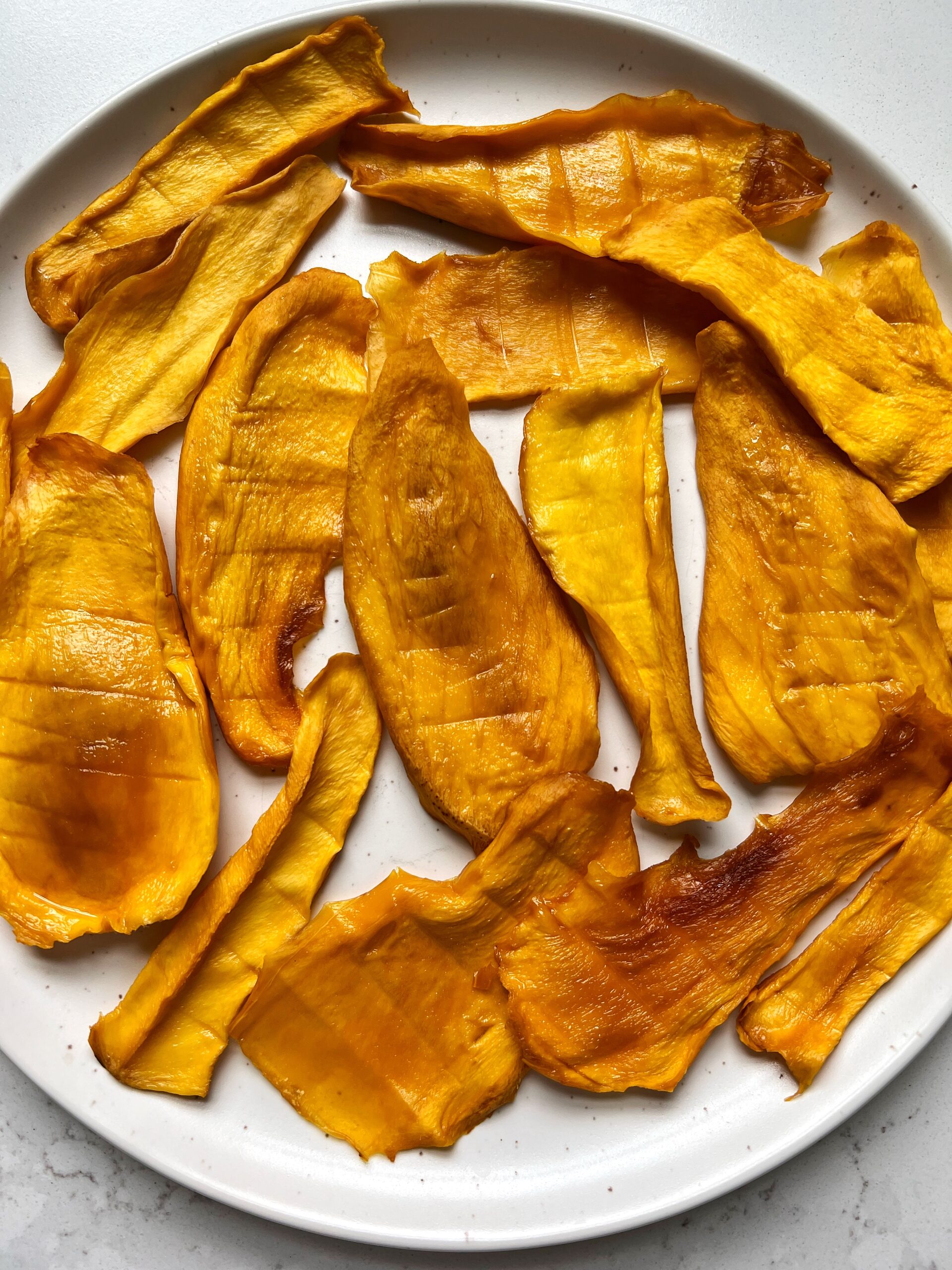
Properly dried mango should be pliable but not sticky. It should not feel wet or juicy. When you tear a slice, it should not release moisture, but it shouldn’t snap like a chip either.
7. Cool Before Storing
Let the mango cool completely at room temperature. This step is important. Warm dried fruit can sweat in containers, leading to mold.
Common Mistakes And How To Avoid Them
Even careful cooks can make mistakes when dehydrating fruit. Here’s how to avoid the most frequent issues.
- Slices Too Thick or Thin: Thicker slices never fully dry and may mold. Too thin, and they become leathery or brittle.
- High Oven Temperature: If the oven is too hot, mango slices can cook or burn instead of dry. Always use the lowest setting.
- Skipping Tray Lining: Mango is high in sugar and can stick firmly to metal trays, making removal difficult and cleanup messy.
- Not Flipping Slices: Uneven drying happens when only one side is exposed. Flip slices halfway through.
- Storing Before Cooling: Warm slices can trap condensation in containers, causing spoilage.
- Inconsistent Slicing: Slices of different thicknesses will dry at different rates, leading to some pieces being over-dried and others under-dried.
Non-obvious insight: If your oven cycles off and on, temperature can swing widely. Consider using an oven thermometer for more control.
How Oven Dehydration Compares To Other Methods
Some people wonder whether it’s worth using the oven instead of a dehydrator or sun drying. The table below compares the three main methods.
| Method | Time Required | Texture | Flavor | Ease of Use |
|---|---|---|---|---|
| Oven | 4–8 hours | Chewy, slightly firm | Sweet, concentrated | Simple, some monitoring needed |
| Dehydrator | 8–12 hours | Very even, customizable | Best flavor retention | Very easy, set and forget |
| Sun Drying | 2–4 days | Varies, can be tough | Can develop tangy notes | Needs hot, dry weather |
As you see, the oven method is a practical choice for most people, especially if you don’t have a dehydrator.
Storage Tips For Homemade Dried Mango
Proper storage is key to keeping your dried mango fresh and safe to eat.
Short-term Storage
For snacks you’ll eat within a week or two, use a zip-top bag or airtight jar kept at room temperature, away from sunlight and heat.
Long-term Storage
For longer storage (up to 6 months):
- Use vacuum-sealed bags or containers with tight-fitting lids.
- Keep in a cool, dark place.
- For extra protection, refrigerate or freeze your dried mango.
Checking For Spoilage
Dried mango should remain dry and flexible. If you see any signs of mold, strange smells, or stickiness, discard the batch.
Reconditioning For Best Results
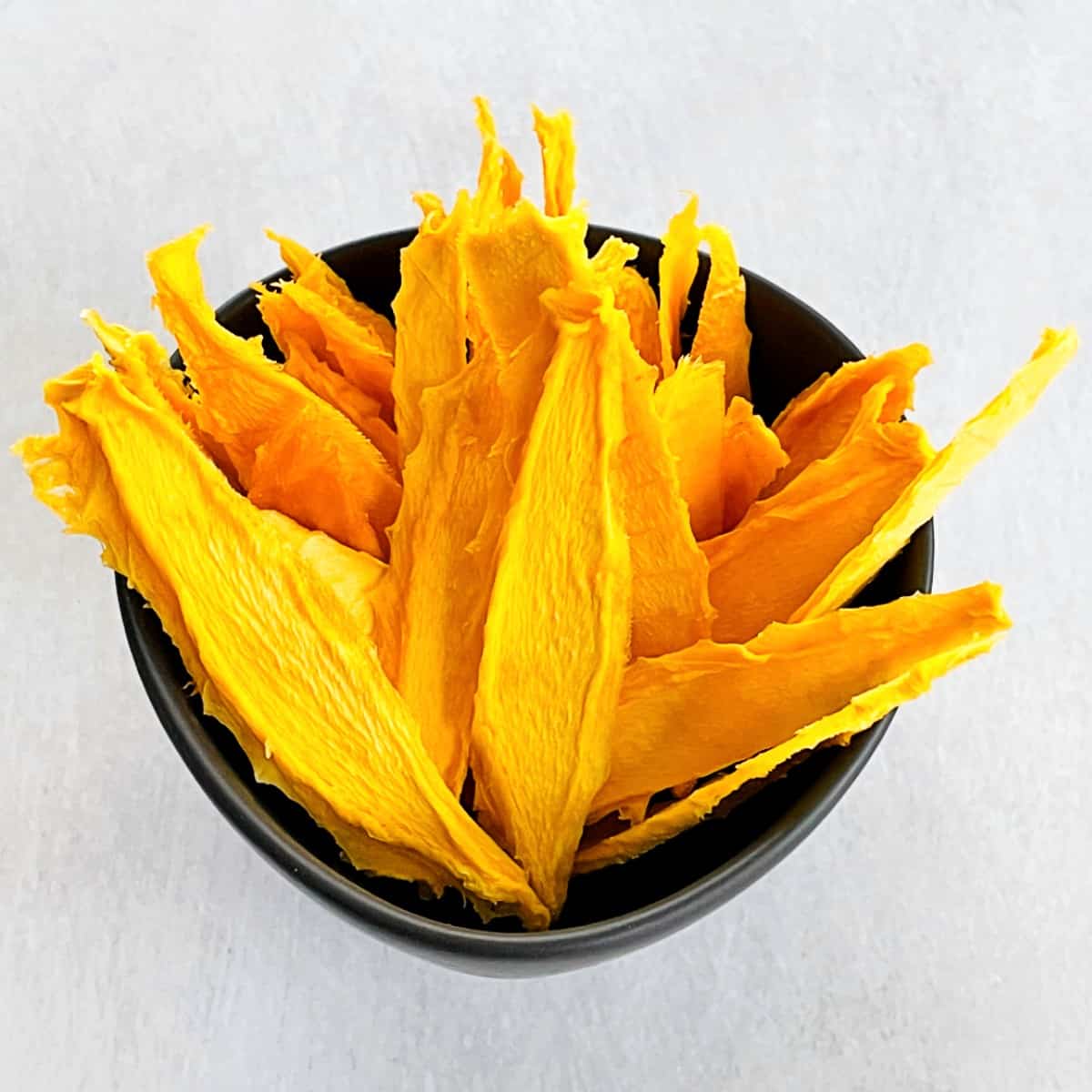
If you plan to store dried mango for more than a month, “recondition” it. Place the cooled, dried slices in a glass jar for 7–10 days, shaking the jar daily. If you see moisture on the glass, slices need more drying.
Credit: emilyfabulous.com
Creative Ways To Use Oven-dried Mango
Dried mango isn’t just a snack. It’s a versatile ingredient for many dishes.
- Trail mix: Add to nuts, seeds, and other dried fruits.
- Breakfast: Chop and mix into oatmeal, yogurt, or smoothies.
- Baking: Use in muffins, granola bars, or cookies.
- Salads: Slice thin and add to salads for sweetness.
- Salsas and sauces: Rehydrate in warm water and blend into spicy mango salsa.
- Garnish: Use as a colorful topping for cakes or desserts.
Nutritional Value Of Oven-dried Mango
Dehydrating mango in the oven keeps most of its nutrients, but some vitamin C is lost during heating. However, dried mango is still a healthy snack. Here’s a quick look at its nutritional content per ounce (28 grams):
| Nutrient | Amount | % Daily Value |
|---|---|---|
| Calories | 90 | 5% |
| Carbohydrates | 22g | 7% |
| Sugar | 18g | — |
| Fiber | 2g | 8% |
| Vitamin A | 25% DV | Excellent |
| Vitamin C | 8% DV | Good |
Note: Dried fruit is calorie-dense. Eat in moderation if you’re watching your sugar intake.
Troubleshooting: Common Problems And Solutions
If your dried mango didn’t turn out as expected, here’s how to fix common issues.
Slices Are Too Tough
Possible causes:
- Slices were too thin.
- Oven temperature too high.
- Slices dried for too long.
Solution: Next time, slice slightly thicker and check earlier. You can try rehydrating tough slices in warm water for a few minutes.
Slices Are Sticky Or Wet
Possible causes:
- Slices too thick.
- Not enough drying time.
- Oven temperature too low.
Solution: Return slices to the oven for another hour. Test again for dryness.
Slices Taste Bland
Possible causes:
- Fruit was underripe or out of season.
- Slices were not pre-treated with lemon juice.
Solution: Use only ripe, fragrant mangoes. Consider adding a light sprinkle of lime juice before drying.
Slices Stuck To Tray
Possible causes:
- No parchment or silicone mat.
- Slices placed too close together.
Solution: Always line your tray, and give slices space.
Making Dried Mango Chews Or Fruit Leather
If you prefer a softer, chewy snack, or want to use up very ripe mangoes, try making mango fruit leather. Here’s how:
- Puree peeled mango flesh in a blender until smooth.
- Pour onto a lined baking sheet. Spread to about 1/8 inch thick.
- Dry at 170°F (77°C) for 4–6 hours, until no longer sticky.
- Cut into strips and roll up with parchment.
This makes a fun, portable snack and is a great way to use mangoes that are too soft for slicing.
Safety Tips When Dehydrating At Home
Food safety is important for all homemade dried fruit.
- Always wash hands, tools, and surfaces before starting.
- Store dried fruit only after it’s fully cool and dry.
- Check dried mango regularly for any signs of spoilage.
- When in doubt, throw it out.
Environmental And Economic Benefits
Dehydrating mango at home is also good for the planet and your wallet.
- Reduces food waste by preserving excess or ripe fruit.
- Saves money compared to buying packaged dried fruit.
- Less packaging waste—reuse jars or bags.
- No need for chemical preservatives.
According to the USDA, Americans throw away around 30–40% of their food supply each year. Learning to preserve fruit at home is a simple way to help reduce this waste.
Tips For Perfect Dried Mango Every Time
- Choose mangoes in peak season for best flavor and sweetness.
- Slice evenly for consistent drying.
- Use an oven thermometer for better temperature control.
- Rotate trays and flip slices for even drying.
- Allow to cool completely before storage.
- Store in small batches to reduce spoilage risk.
- Experiment with a little lemon or lime juice for extra zing.
When To Use Dried Mango Vs. Fresh Mango
Dried mango is great for:
- Travel snacks (no refrigeration needed)
- Baking and cooking where moisture is not wanted
- Emergency food supplies
Fresh mango is better for:
- Juicy salads
- Salsas and chutneys
- Smoothies where texture matters
A quick comparison:
| Use Case | Dried Mango | Fresh Mango |
|---|---|---|
| Snacks | Excellent, portable | Good, but messy |
| Baking | Preferred (chopped) | Can make batter too wet |
| Smoothies | Needs rehydration | Blends easily |
| Salads | Adds chewy sweetness | Juicy, fresh taste |
Experimenting With Flavors
While plain dried mango is delicious, you can try new flavors by lightly tossing slices in different seasonings before drying:
- Chili powder and lime: For a spicy kick.
- Cinnamon: Adds warmth and depth.
- Coconut flakes: Press onto slices for a tropical twist.
Lightly coat slices with lemon or lime juice before seasoning for better stick.
Non-obvious insight: Don’t over-season; a little goes a long way, since flavors concentrate during drying.
Is Homemade Dried Mango Safe For Kids?
Yes, homemade dried mango is a healthy snack for children. It contains no added sugar or chemicals if you make it at home. Just remember that dried fruit is sticky and can be a choking hazard for very young children.
Cut slices into small pieces and always supervise.
Where To Learn More
If you want to explore more about the science of food dehydration, the National Center for Home Food Preservation is an excellent resource. Visit their official site for additional tips: National Center for Home Food Preservation.
Frequently Asked Questions
How Long Does Homemade Dried Mango Last?
If stored in an airtight container in a cool, dark place, homemade dried mango can last up to 6 months. For even longer shelf life, keep it in the refrigerator or freezer.
Can You Dehydrate Mango Without Peeling It?
Yes, you can, but the texture will be different. The skin can become tough and chewy. Most people prefer to peel mango before drying, but leaving it on adds extra fiber.
How Do You Know When Dried Mango Is Done?
Dried mango is ready when it is pliable and leathery, not sticky or wet. Tear a slice in half; if there’s no visible moisture, it’s done.
Can You Dehydrate Frozen Mango?
Yes. Thaw frozen mango completely, drain off excess liquid, and pat dry before slicing and drying. The texture may be slightly softer, but it works well.
Is Dried Mango As Healthy As Fresh Mango?
Dried mango keeps most of its vitamins and fiber, but it is higher in sugar and calories by weight. Eat in moderation, especially if you are watching your sugar intake.
Dehydrating mango in the oven is simple, cost-effective, and rewarding. With a few hours and some careful steps, you’ll have a sweet, healthy snack ready for any occasion. Enjoy experimenting with flavors and making the most of mango season, no matter where you live.
Credit: rachlmansfield.com