
Sharpening a stainless steel knife is more than just a kitchen skill—it’s a way to keep your tools working well and your food preparation safe. Many people find stainless steel knives stay sharp longer than other types, but even the best knife will lose its edge with time.
If you’ve ever struggled to slice a tomato or felt a knife slip while chopping, you know the importance of a sharp blade. Learning to sharpen your knife the right way will save you time, keep your fingers safe, and make cooking more enjoyable.
But stainless steel can be tricky. It’s designed to resist rust and stains, but that also means it’s sometimes harder to sharpen than carbon steel. Different sharpening methods, tools, and techniques can make a big difference. Some beginners think any sharpener will work, but this is not always true.
Using the wrong method or angle can damage your knife or make it dull faster.
In this guide, you’ll learn everything you need to know about sharpening a stainless steel knife—from choosing the right tools, to mastering the steps, to avoiding mistakes that many new cooks make. You’ll also see clear comparisons between different sharpening systems, find answers to common questions, and pick up tips that even some experienced cooks miss.
Whether you’re a home chef or just want to keep your kitchen knives in top shape, you’ll walk away with practical skills you can use right away.
Understanding Stainless Steel Knives
Stainless steel is one of the most popular materials for kitchen knives. It’s chosen for its corrosion resistance and ability to keep a clean, shiny look even after years of use. But not all stainless steel knives are the same. The type of stainless steel, how it’s made, and its hardness all affect how you should sharpen it.
Most kitchen knives use martensitic stainless steel, which contains carbon and chromium. The chromium prevents rust, but it also makes the steel harder. Harder steel holds an edge longer but can be more difficult to sharpen.
Some premium knives use special steels like VG-10 or AUS-8. These contain extra elements for even better edge retention or toughness. Understanding what your knife is made of helps you choose the right sharpening method.
Two non-obvious things beginners miss:
- Angle sensitivity: Stainless steel knives can lose their edge quickly if sharpened at the wrong angle. The factory edge angle is important to maintain.
- Burr formation: Stainless steel tends to form a wire-thin burr during sharpening. If you don’t remove this burr, your knife will feel sharp at first but dull quickly.
Why Sharpening Matters
A sharp knife is safer and more effective. Dull knives require more force, which can lead to slips and cuts. Sharp knives make cleaner cuts, help food stay fresh longer, and reduce strain on your hands.
Some people think stainless steel knives do not need sharpening as often, but this is not true. While they resist dulling from rust or acid, stainless steel blades still lose their edge from regular use—especially when cutting hard or abrasive foods.
Sharpening also extends the life of your knife. Instead of replacing dull knives, you can keep them performing like new for years. Good sharpening habits save money and improve your cooking.
Choosing The Right Sharpening Tools
There are many ways to sharpen a stainless steel knife. The best tool depends on your skill, budget, and how much time you want to spend. Here are the main types of sharpeners:
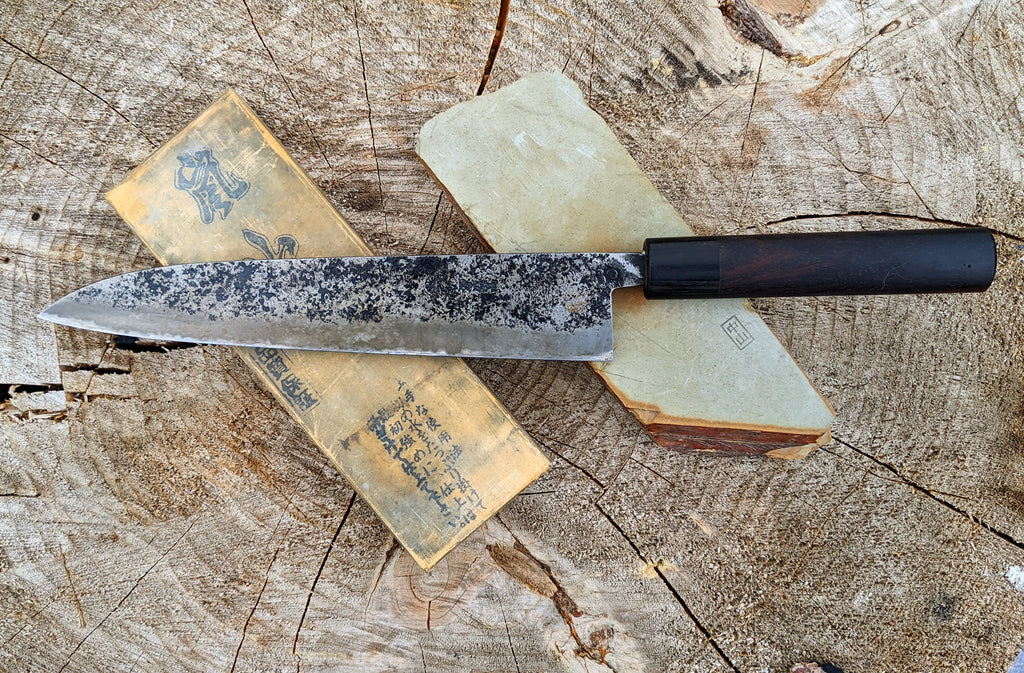
Whetstones (sharpening Stones)
Whetstones are the most traditional tool for sharpening knives. They come in different grits, from coarse to fine. Coarse stones remove metal quickly, while fine stones polish the edge.
Advantages:
- Gives you full control over the sharpening angle
- Works for all knife shapes and sizes
- Best for restoring a very dull edge
Drawbacks:
- Takes practice to master
- Slower than other methods
Pull-through Sharpeners
These are handheld devices with slots containing abrasive wheels or rods. You pull the knife through the slot to sharpen it.
Advantages:
- Fast and easy for beginners
- Compact and affordable
Drawbacks:
- Fixed angle may not match your knife
- Can remove too much metal if used often
Electric Sharpeners
Electric sharpeners use motorized wheels to quickly sharpen the blade.
Advantages:
- Very fast and convenient
- Good for people who sharpen many knives
Drawbacks:
- Expensive
- Can overheat or damage the blade if used incorrectly
Honing Rods (sharpening Steels)
Honing rods don’t really sharpen; they straighten the edge between sharpenings.
Advantages:
- Keeps knife sharp between full sharpenings
- Quick and easy to use
Drawbacks:
- Won’t fix a dull edge
- Only maintains, not restores, sharpness
Guided Sharpening Systems
Guided systems use a frame to hold the knife at a set angle while you move the abrasive.
Advantages:
- Consistent angle every time
- Good for people who want perfect results
Drawbacks:
- More expensive than simple tools
- Takes up more space
Comparing Sharpening Tools
Here’s a quick look at how different tools compare for stainless steel knives:
| Tool | Skill Needed | Speed | Edge Quality | Cost |
|---|---|---|---|---|
| Whetstone | High | Slow | Excellent | Low to Medium |
| Pull-Through | Low | Fast | Good | Low |
| Electric | Low | Very Fast | Fair | Medium to High |
| Honing Rod | Low | Very Fast | Maintenance Only | Low |
| Guided System | Medium | Medium | Excellent | Medium to High |
Preparing To Sharpen Your Knife
Before you begin, get your tools and workspace ready. This will make the process smoother and safer.
- Clean your knife: Wash and dry your knife. Dirt or grease can scratch the blade.
- Secure your work area: Use a non-slip mat or towel under your stone or sharpener.
- Choose your angle: Most stainless steel kitchen knives are sharpened between 15 and 20 degrees. Check your knife’s manual if you’re not sure.
- Check your tools: Make sure your stone is flat and clean, or your sharpener is in good shape.
A beginner’s mistake is skipping the cleaning step. Even small particles on the blade or sharpening stone can cause uneven edges or scratches.
Credit: global.ichimonji.co.jp
Step-by-step: How To Sharpen A Stainless Steel Knife With A Whetstone
Using a whetstone is the best way to get a razor-sharp edge and keep your knife in good shape. Here’s how to do it:
1. Soak Or Lubricate The Stone
Most whetstones need water or oil. Read the manufacturer’s instructions. Soak water stones for 10–15 minutes; oil stones need a few drops of honing oil.
2. Set The Sharpening Angle
Hold your knife at the correct angle—usually 15–20 degrees. If you’re not sure what that looks like, a trick is to stack two coins under the spine of the knife.
3. Start With The Coarse Grit
Place the heel of the blade against the stone. Draw the knife across the stone, moving from heel to tip, in a smooth motion. Use light, even pressure.
Repeat on the other side of the blade. Count your strokes to keep both sides even.
4. Switch To The Fine Grit
After raising a burr (a thin wire edge you can feel with your finger), switch to the finer grit. Repeat the process to polish the edge.
5. Remove The Burr
Gently draw the knife edge across the stone, alternating sides with each stroke. This removes the burr and leaves a clean, sharp edge.
6. Clean And Test The Edge
Wash and dry your knife. Test the sharpness by slicing a piece of paper or a tomato. If the knife slices easily, you’re done.
Practical Tips
- Use the whole length of the stone to keep it flat.
- Don’t rush. Slow, controlled movements give better results.
- Stop if you feel the edge catching or skipping—this means you’re holding the wrong angle.
Using A Pull-through Or Electric Sharpener
If you use a pull-through or electric sharpener, the process is simpler:
- Place the knife in the slot.
- Hold the knife straight and steady.
- Pull the knife through the slot from heel to tip.
- Repeat as needed (usually 3–6 times).
Tip: Do not press down hard. Let the sharpener do the work. Too much pressure can damage the edge.
Credit: knifewear.com
Honing: Keeping Your Knife Sharp Between Sharpenings
Honing is a way to maintain the edge of your knife. It doesn’t remove metal but straightens the tiny bends that form during use.
To hone your knife:
- Hold the honing rod vertically, tip on a towel or cutting board.
- Hold the knife at a 15–20 degree angle.
- Draw the blade down and across the rod, from heel to tip.
- Repeat on the other side, alternating for 6–8 strokes per side.
Hone your knife every few uses. Many professionals do this before each cooking session.
Sharpening Angles: What You Need To Know
The sharpening angle makes a big difference in how your knife performs.
- 15 degrees: Very sharp, but more delicate. Good for slicing, not chopping.
- 20 degrees: Stronger edge, holds up to hard use.
- 25+ degrees: For heavy-duty knives, not kitchen knives.
Some stainless steel knives are factory-sharpened at 17 or 18 degrees. It’s best to keep the same angle to avoid removing too much metal.
Here’s a simple comparison:
| Angle | Sharpness | Edge Durability | Best For |
|---|---|---|---|
| 15° | Very High | Lower | Precision slicing |
| 20° | High | Good | General kitchen use |
| 25° | Medium | Very High | Heavy-duty tasks |
Common Mistakes When Sharpening Stainless Steel Knives
Even experienced cooks make mistakes that can damage their knives. Watch out for these:
- Using the wrong angle: This can make the edge dull or uneven.
- Applying too much pressure: It’s better to use light, controlled strokes.
- Not removing the burr: A burr makes the knife feel sharp but dulls quickly.
- Skipping grits: Jumping from coarse to fine without enough steps leaves a rough edge.
- Sharpening too often: You only need to sharpen when the knife is dull. Too much sharpening shortens the knife’s life.
A non-obvious mistake is using a cheap pull-through sharpener on a high-quality knife. This can grind away too much metal and ruin the blade.
How Often Should You Sharpen A Stainless Steel Knife?
How often you sharpen depends on:
- How much you use the knife
- What you cut (hard foods dull knives faster)
- The type and hardness of the steel
Most home cooks need to sharpen kitchen knives every 2–3 months. Honing should be done more often—every few uses.
If you notice your knife struggling to slice tomatoes or onions, it’s time to sharpen.

Credit: knifewear.com
Sharpening Serrated Stainless Steel Knives
Serrated knives (like bread knives) are different. They have small “teeth” that require special care.
To sharpen a serrated knife:
- Use a tapered rod sharpener or a ceramic sharpening stick.
- Place the rod in each gullet (space between teeth).
- Move the rod back and forth to sharpen each tooth.
- Remove the burr on the flat side with a few light strokes.
You don’t need to sharpen serrated knives as often. Sharpen only when they stop cutting cleanly.
Caring For Your Knife After Sharpening
Proper care helps your knife stay sharp longer:
- Wash by hand: Dishwashers can damage the edge.
- Dry immediately: Prevents water spots or rust (rare, but possible).
- Store safely: Use a knife block, magnetic strip, or blade guard.
- Avoid hard surfaces: Don’t cut on glass, stone, or metal boards.
Two insights beginners miss:
- Never twist the knife as you cut. This bends the edge and dulls the knife.
- Avoid using your knife to pry open cans, jars, or frozen foods.
Advanced Tips For A Razor-sharp Edge
If you want to go beyond basic sharpening, try these advanced techniques:
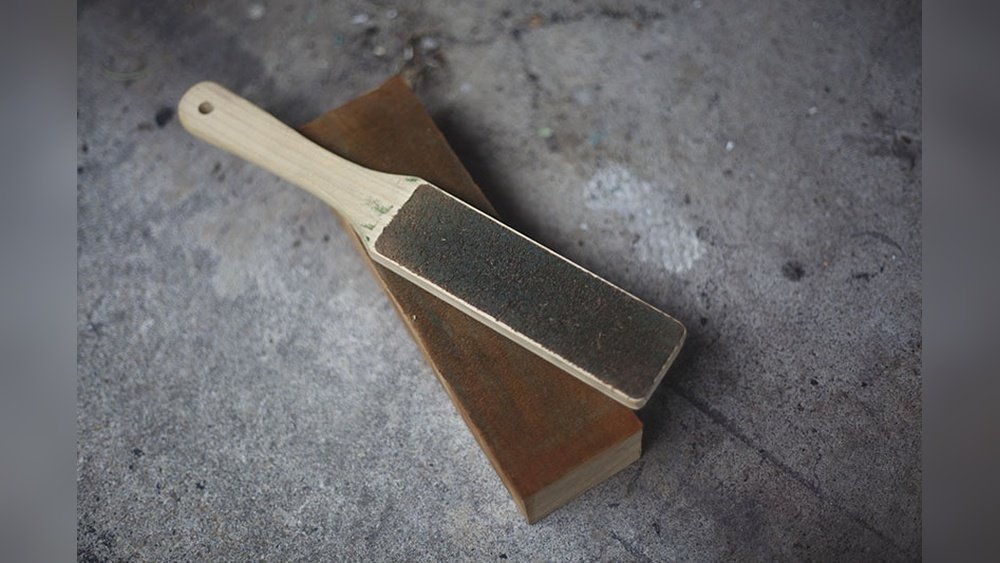
- Strop the blade: Use a leather strop with polishing compound to finish the edge.
- Check for a burr with your fingernail: Gently drag your nail across the edge to feel for a burr.
- Use lapping films or ultra-fine stones: For a mirror-polished, hair-splitting edge.
Some professional chefs finish with a strop for the sharpest possible knife. This removes any last bits of burr and gives a smooth, long-lasting edge.
When To Seek Professional Sharpening
If you have a very expensive knife, or if your blade is damaged (nicks, chips, or bent tips), it’s best to see a professional. Many kitchen stores offer this service.
Professional sharpening uses precise machines or expert hand sharpening. It’s a good choice if you want the best results or need to fix a badly worn knife.
Sharpening Myths And Facts
There are many myths about sharpening knives. Let’s clear up a few:
- Myth: Stainless steel knives don’t need sharpening.
- Fact: All knives dull with use, even stainless steel.
- Myth: You should sharpen every week.
- Fact: Too much sharpening wears out your knife. Hone often, sharpen as needed.
- Myth: Any sharpener is fine.
- Fact: Poor-quality tools can damage the blade.
For more information on knife steel and sharpening techniques, check out this Wikipedia entry on sharpening.
Troubleshooting: If Your Knife Won’t Get Sharp
If your knife stays dull after sharpening, check these things:
- Wrong angle: You may not be matching the factory edge.
- Not enough time on coarse grit: If the edge is very dull, start with a coarse stone.
- Skipping grits: Move from coarse to medium to fine.
- Cheap steel: Some very cheap knives can’t hold an edge.
If you keep having trouble, try a different sharpening method or see a professional.
Comparing Sharpening Systems For Stainless Steel Knives
Sharpening systems can help you get better results. Here’s how they compare for stainless steel knives:
| System | Consistency | Ease of Use | Best For |
|---|---|---|---|
| Manual (Whetstone) | Varies (depends on skill) | Harder | Enthusiasts, pros |
| Guided System | Very High | Medium | Home cooks, perfectionists |
| Pull-Through | Medium | Easy | Beginners, quick fixes |
| Electric | Medium | Very Easy | Busy kitchens |
Guided systems are a good investment if you want professional results without the learning curve of freehand sharpening.
Safety Tips When Sharpening Knives
Sharpening can be dangerous if you’re not careful. Here’s how to stay safe:
- Always cut away from your body.
- Use a non-slip surface under your stone or sharpener.
- Keep fingers clear of the blade edge.
- Work slowly and don’t rush.
- Wear gloves if you’re new or nervous.
A small slip can lead to a deep cut. Pay attention to every stroke.
Maintaining Your Sharpening Tools
Your tools need care, too:
- Flatten stones: Use a lapping plate or flattening stone to keep your whetstone flat.
- Clean stones: Rinse under water and scrub with a brush to remove metal bits.
- Replace rods or wheels: Sharpening rods and wheels wear out over time.
Clean tools give better results and last longer.
Frequently Asked Questions
How Do I Know When My Stainless Steel Knife Is Sharp Enough?
A sharp knife will slice paper cleanly and cut tomatoes without squashing them. You can also gently feel for a burr or test on a piece of onion. If the knife slides easily through with little pressure, it’s sharp enough.
Can I Use The Same Method For Stainless And Carbon Steel Knives?
Most sharpening methods work for both, but stainless steel can be harder and require more time on the stone. Use the correct angle for your knife type, and remember stainless can form a burr that’s harder to remove.
How Often Should I Hone Vs. Sharpen My Knife?
Hone your knife every few uses to keep the edge aligned. Sharpen only when it’s noticeably dull, usually every 2–3 months for home cooks. Over-sharpening wears out your knife faster.
Is It Safe To Use An Electric Sharpener On All Stainless Steel Knives?
Electric sharpeners are safe for most common stainless steel kitchen knives, but not for very thin or high-end Japanese blades. Check your knife’s instructions or ask the maker if you’re unsure.
What’s The Best Sharpening Angle For My Stainless Steel Knife?
Most kitchen knives use a 15–20 degree angle. Western knives often use 20 degrees, while Japanese knives use 15 degrees. If you’re not sure, check the manufacturer’s guide or use 17 degrees as a safe middle ground.
Sharpening your stainless steel knife isn’t just about making it cut better—it’s about respecting the tools you use every day. With the right knowledge, tools, and a bit of practice, you’ll keep your knives sharp and your cooking safe for years to come.