
Choosing the right kitchen cabinet color can feel overwhelming. With so many shades, finishes, and combinations, it’s easy to get lost and worry about making an expensive mistake. But with the right guidance, you can find a cabinet color that makes your kitchen both beautiful and practical.
This guide will walk you through every important factor, from lighting and layout to the latest trends, with real examples and expert tips that most beginners overlook. Let’s make sure your kitchen feels welcoming and looks amazing for years.
Why Kitchen Cabinet Color Matters
Cabinet color is one of the biggest visual elements in any kitchen. Cabinets cover a large area, so their color sets the mood for the entire room. The right color can make your kitchen feel bigger, brighter, and cleaner. The wrong color can make it feel dark, small, or outdated.
Color also affects how you feel in the space. For example, light colors like white or cream often feel open and fresh. Darker shades like navy or black can feel elegant and cozy but may shrink the space visually. Choosing a color that fits your style and your kitchen’s needs is key.
Understanding Your Kitchen Space
Before picking a color, start by looking at your kitchen’s features. Not every color works in every space.
Kitchen Size
Small kitchens usually benefit from lighter cabinet colors. White, cream, or light gray cabinets reflect more light and make the room feel larger. In a big kitchen, you can safely use darker shades without making the space feel closed in.
Natural And Artificial Light
How much light does your kitchen get? If you have lots of natural sunlight, you can use almost any color, including dark hues. If your kitchen is dim or has only a few small windows, light colors are safer. Also, consider your light bulbs—cool white lighting pairs well with cooler cabinet tones, while warm lights look better with warm cabinet colors.
Floor Plan And Layout
An open-plan kitchen that flows into the living or dining area should have cabinet colors that work with the other spaces. If you have a closed kitchen, you have more freedom, but still, think about the colors in nearby rooms.
Existing Elements
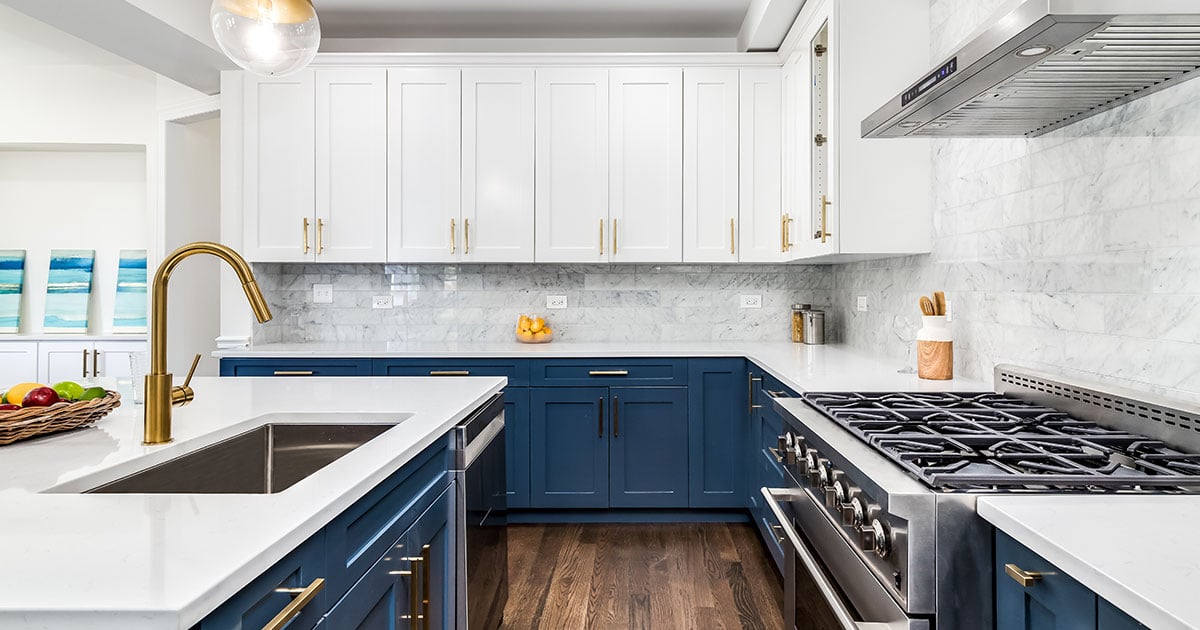
Take note of your countertops, backsplash, floor, and appliances. The cabinet color should complement these elements, not fight them. For example, if you have busy granite countertops, a simple cabinet color works best.
Credit: kitchencabinetkings.com
Popular Kitchen Cabinet Colors (with Pros And Cons)
Certain colors are popular for good reasons. Let’s look at the most common choices and what they bring to your kitchen.
| Color | Pros | Cons |
|---|---|---|
| White | Bright, timeless, matches anything, makes space feel bigger | Shows dirt easily, can feel sterile if overused |
| Gray | Modern, hides dirt, flexible shades (light to dark) | Can feel cold without warm accents |
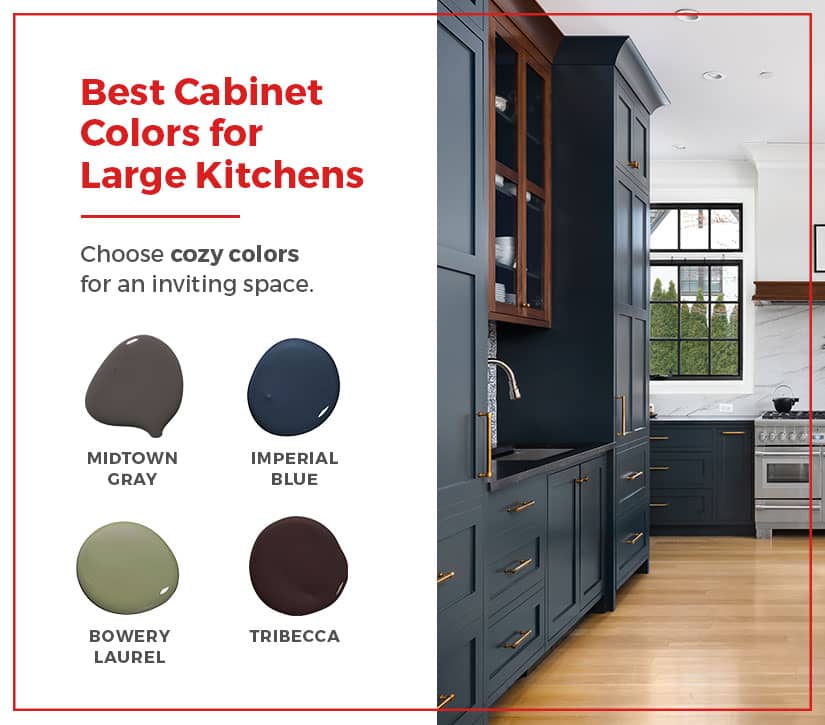
| Navy Blue | Elegant, trendy, adds depth | Can make small kitchens feel smaller, needs good lighting |
| Green | Fresh, calming, works with many styles | Bold shades can date quickly, needs matching decor |
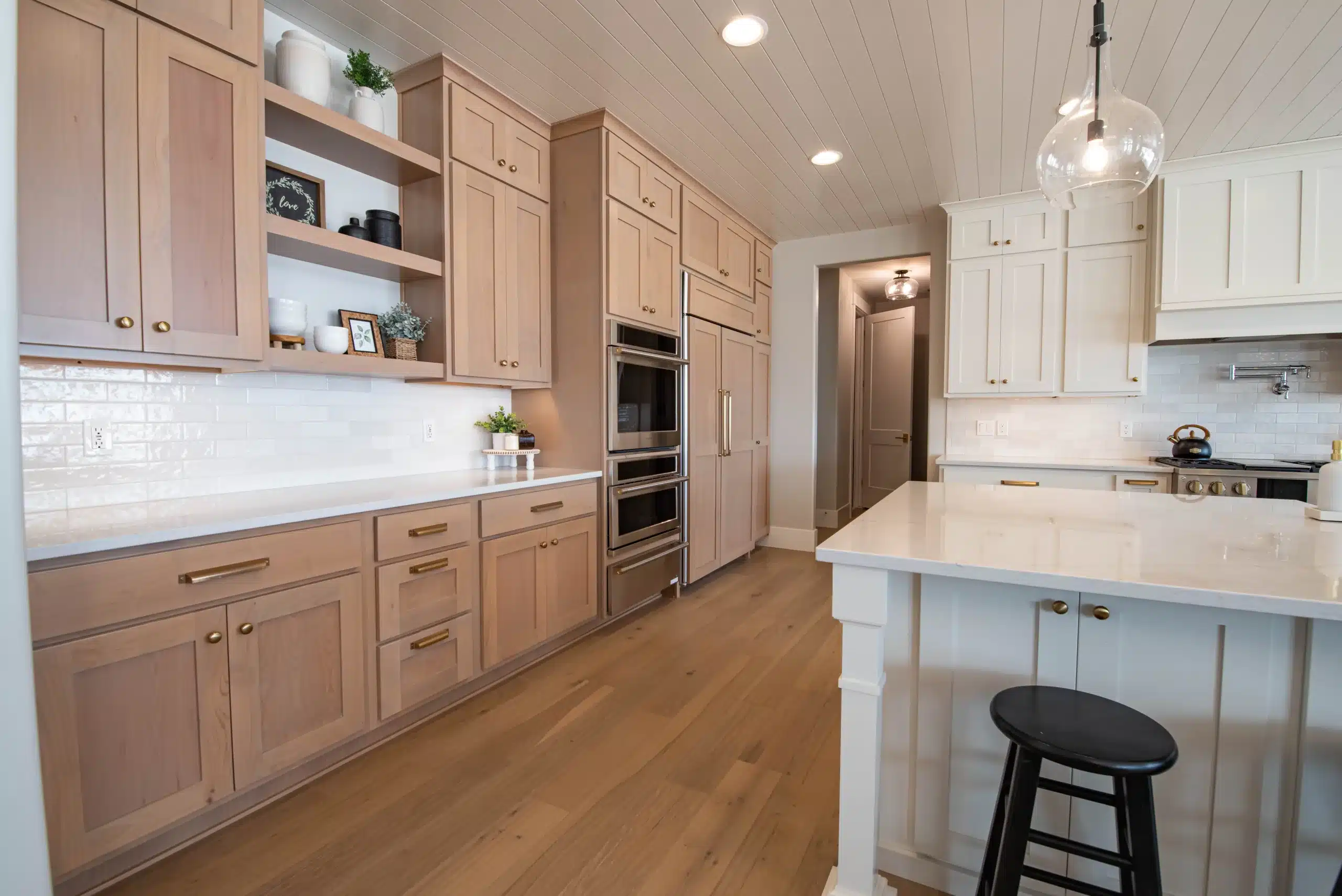
| Natural Wood | Warm, classic, hides wear well | Can darken space, some stains look dated |
| Black | Luxurious, dramatic, hides stains | Shows dust, can shrink space visually |
Assessing Your Style And Lifestyle
Your kitchen should reflect your taste, but it also needs to fit your everyday life.
Personal Style
Are you drawn to modern, classic, or farmhouse styles? Modern kitchens often use sleek colors like white, black, or gray. Farmhouse kitchens love soft greens, blues, and cream. Traditional kitchens may use rich wood tones or warm neutrals.
Family And Lifestyle Needs
Do you have kids, pets, or a busy home? Darker cabinets or those with texture (like wood grain) hide fingerprints and dirt better than solid white or glossy finishes. If you cook often, think about how easy the color is to clean.
Resale Value
If you plan to sell your home in the next few years, neutral colors like white, gray, or light beige have the broadest appeal. Unusual colors may turn off buyers.
Credit: kitchencabinetkings.com
Coordinating With Countertops, Backsplash, And Flooring
The cabinet color should work well with your other kitchen finishes. Here’s how to create a balanced look:
- Countertops: If you have bold or busy countertops, pick a simple cabinet color. For plain countertops, you can try bolder cabinet colors.
- Backsplash: Look for colors in your backsplash and pull a matching or contrasting cabinet shade. For example, white subway tile works with almost any cabinet color.
- Flooring: Warm wood floors look great with cool cabinet colors (like gray or blue), while cool tile floors pair well with warm cabinet colors.
Example Color Combinations
| Countertop | Backsplash | Cabinet Color |
|---|---|---|
| White quartz | Gray subway tile | Navy blue |
| Beige granite | White tile | Natural wood |
| Black marble | White marble | Light gray |
| Warm wood | Patterned ceramic | Soft green |
Considering Kitchen Trends (but Not Chasing Them)
It’s tempting to pick the hottest new color, but trends change fast. What’s popular now might look dated in five years. Still, understanding trends helps you decide if you want a timeless or trendy look.
Current Cabinet Color Trends
- Two-tone kitchens: Upper and lower cabinets in different colors (e.g., white uppers, navy lowers).
- Bold accent colors: Islands painted in a standout color, like green or black.
- Matte finishes: Less shine, more modern.
- Natural stains: Light oak, walnut, or other wood grains.
Classic Choices That Always Work
- All-white cabinets
- Soft gray or greige (gray-beige)
- Light natural wood
Pro tip: If you want to try a bold color but worry about resale or changing tastes, use it for your kitchen island only, or on just a few cabinets.
Testing Cabinet Colors Before Committing
Never pick a color from a small paint chip or a phone screen. Colors look different in real life, especially under your home’s lighting.
How To Test Colors
- Order sample paint pots or cabinet doors.
- Paint large boards or sample doors. At least 2×2 feet is best.
- Move samples around the kitchen. Look at them in different lights (morning, afternoon, evening).
- Hold samples next to countertops, backsplash, and flooring.
- Live with the samples for several days. Notice how you feel about the color over time.
Non-obvious insight: Some colors look great in the store but show unexpected undertones at home. For example, a gray might look blue, green, or even purple depending on light and surroundings.
Understanding Paint Finishes And Sheens
The finish of your cabinet paint affects both the look and the cleaning process.
Common Paint Sheens For Cabinets
- Matte/Flat: Very little shine. Hides imperfections but can be hard to clean.
- Eggshell/Satin: Soft sheen. Good mix of easy cleaning and subtle look.
- Semi-gloss: Popular choice for cabinets. Shiny, easy to wipe down, highlights details.
- High-gloss: Very shiny and modern. Shows fingerprints and scratches more but gives a dramatic look.
Most experts recommend satin or semi-gloss for kitchen cabinets. They’re durable and easy to clean.
The Effect Of Color Psychology In The Kitchen
Colors influence how we feel and behave. Here’s how common kitchen cabinet colors might affect your mood:
- White: Clean, spacious, organized
- Gray: Calm, neutral, balanced
- Blue: Relaxing, peaceful, lowers appetite (good for diets!)
- Green: Natural, refreshing, calming
- Yellow: Energetic, cheerful, stimulating (can be overwhelming in large amounts)
- Black: Sophisticated, dramatic, grounding
Non-obvious insight: If you spend a lot of time in your kitchen, avoid colors you already know make you anxious or tired, even if they’re trendy.
Coordinating With Open Shelving Or Glass Cabinets
If your kitchen has open shelves or glass-front cabinets, remember that the wall or shelf color will show. Pick a cabinet color that looks good with what’s inside or behind the shelves. For example, white cabinets with wood shelves create a stylish contrast.
Mixing Cabinet Colors (two-tone And Beyond)
You don’t have to use just one cabinet color. Two-tone kitchens are popular and practical.
Common Two-tone Approaches
- Darker lower cabinets, lighter uppers: Makes the kitchen feel open up top but grounded below.
- Bold island, neutral main cabinets: Lets you try a fun color without overwhelming the room.
- Wood and painted mix: For example, wood lowers with white uppers.
Tip: Keep at least one color neutral to avoid a busy look.
Using Undertones: The Secret To A Perfect Match
Every paint color has an undertone—a subtle color that appears under certain lights. For example, gray can have blue, green, or purple undertones. The wrong undertone can clash with your countertops and floors.
How To Spot And Use Undertones
- Place your paint sample against a pure white paper. What color do you see peek through?
- Compare your sample to other colors. Does it look warmer (yellow/red) or cooler (blue/green)?
- Match undertones. If your countertop has cool tones, pick a cool-toned cabinet color.
Beginner mistake: Ignoring undertones leads to kitchens that feel “off” even if the colors are technically matched.
Practical Tips For Small, Dark, Or Open Kitchens
Small Kitchens
- Use light colors to make the space feel bigger.
- Glossy finishes reflect more light.
- Glass-front doors add depth.
Dark Kitchens
- Stick to white, cream, or light gray.
- Add under-cabinet lighting to brighten work areas.
- Avoid dark colors unless you add extra lighting.
Open Kitchens
- Pick a color that works with your living or dining room.
- Use accent colors to define the kitchen space.
- Avoid clashing with nearby furniture and decor.
How To Use Neutrals And Bold Colors
Neutrals (white, gray, beige, taupe) are safe, timeless, and versatile. They work with almost any decor and make it easy to change things up with new hardware or paint.
Bold colors (navy, green, black, red) make a statement. They’re best for people who want a unique kitchen. Use them carefully—on islands, lower cabinets, or as accents.
Expert tip: If you love bold color but worry about getting tired of it, paint just the inside of your cabinets or a single wall.
Considering Cabinet Material And Finish
Not all colors look the same on all materials.
- Solid wood takes stains and paints differently than MDF or laminate.
- Laminate cabinets have limited color choices, but are durable.
- Veneer can be stained or painted, but prep is important.
Painted finishes can chip over time, especially in busy kitchens. Stained wood can show scratches less.
Matching Cabinet Color With Hardware
Cabinet hardware—knobs and handles—adds another layer of style.
- Brushed nickel works with almost any color.
- Black hardware pops on white or wood cabinets.
- Brass or gold looks modern on dark blue, green, or black cabinets.
- Chrome gives a clean, modern look.
Pick hardware that matches your cabinet style. For example, classic cup pulls look great in farmhouse kitchens, while sleek bars suit modern designs.
Cost And Maintenance Considerations
Some colors and finishes cost more or need more upkeep.
- Custom colors or paint finishes can be more expensive.
- Glossy finishes may show fingerprints but are easy to wipe.
- Very light colors need more cleaning but make dirt easy to see.
- Dark colors hide stains but show dust and scratches.
Pro tip: Factor in your cleaning habits. If you hate wiping cabinets, avoid high-maintenance finishes.
Sample Process For Choosing Cabinet Color
- Gather inspiration: Look at magazines, Pinterest, or kitchen showrooms.
- Collect samples: Paint chips, wood stains, countertop and backsplash samples.
- Test in your space: Use large samples on-site.
- Check in all lights: Morning, afternoon, night.
- Get opinions: Ask family, friends, or a designer.
- Make your decision: Choose a color you’ll love for years—not just what’s trendy now.
What Most People Overlook When Choosing Cabinet Color
- The effect of indirect light: Wall color, lighting, and even outdoor greenery can change how your cabinets look.
- The long-term: Will you still love a bold color in five years? Neutrals offer more flexibility.
- Color flow: Your kitchen doesn’t exist in isolation. Think about how the color works with nearby rooms.
- Future changes: If you plan to update countertops or floors later, pick a cabinet color that works with multiple options.
Real-life Examples And Case Studies
Example 1: Small City Kitchen
Sarah lives in a small apartment with little natural light. She chose white shaker cabinets with a glossy finish. This made her kitchen feel double its size. She paired them with a gray backsplash and stainless steel appliances for a modern touch. The result: a bright, airy space that’s easy to clean.
Example 2: Family Home With Open Plan
The Tran family has an open kitchen that connects to their living room. They picked soft gray cabinets with a navy island. The two-tone look defines the kitchen without clashing with their light wood floors or neutral living room walls. Brass hardware adds warmth.
Example 3: Bold Statement In A Modern Home
Jorge wanted a dramatic look. He chose matte black lower cabinets and white uppers. Large windows bring in enough light to keep the kitchen from feeling dark. He added a bright green backsplash for a pop of color.
These examples show that the “right” cabinet color depends on your space, lighting, and style—not just trends or personal taste.
Credit: ootwc.com
Expert Tips For A Flawless Cabinet Color Choice
- Start with what you love, not just what’s popular.
- Test before you commit. Paint samples are worth the extra step.
- Think about the future. Pick a color that will still make you happy in five years.
- Don’t forget the undertones. They can make or break your color scheme.
- Mix textures and materials if you want more variety but less color.
Common Mistakes To Avoid
- Choosing a color based only on a sample chip.
- Ignoring lighting changes throughout the day.
- Forgetting to coordinate with countertops, backsplash, or flooring.
- Picking a trendy color without considering your long-term taste.
- Neglecting cabinet hardware until the last minute.
- Overusing bold colors, making the kitchen feel chaotic.
How To Get Professional Help
If you’re stuck, consider hiring a kitchen designer or color consultant. Many paint stores offer free or low-cost consultations. Some online tools let you upload a photo of your kitchen and try out different cabinet colors virtually.
For more in-depth design and color advice, check out resources like Houzz.
Frequently Asked Questions
What Is The Best Kitchen Cabinet Color For Resale Value?
White, light gray, or natural wood are the safest choices for resale. They’re neutral, appeal to most buyers, and make kitchens look clean and spacious.
Should Upper And Lower Cabinets Be The Same Color?
They can be, but two-tone kitchens are popular and practical. Using a darker color on lower cabinets and a lighter one above adds interest and helps ground the space.
How Do I Choose A Color That Works With My Countertops?
Look for undertones in your countertops (warm or cool) and pick a cabinet color with a similar undertone. If your countertops are busy, go for a simpler cabinet color.
Is It Better To Paint Or Stain Kitchen Cabinets?
Painting allows for more color options and a clean look, while staining highlights the wood grain and gives warmth. Painted cabinets can chip but are easy to touch up; stains hide wear better.
What If I Change My Mind After Painting My Cabinets?
You can repaint cabinets, but it takes effort and time. Always test your color first and live with samples for a few days to avoid extra work.
Choosing your kitchen cabinet color is a big decision, but with careful planning and a little testing, you can create a space that feels just right. Take your time, trust your instincts, and remember: the best kitchen is one you’ll love for years to come.