
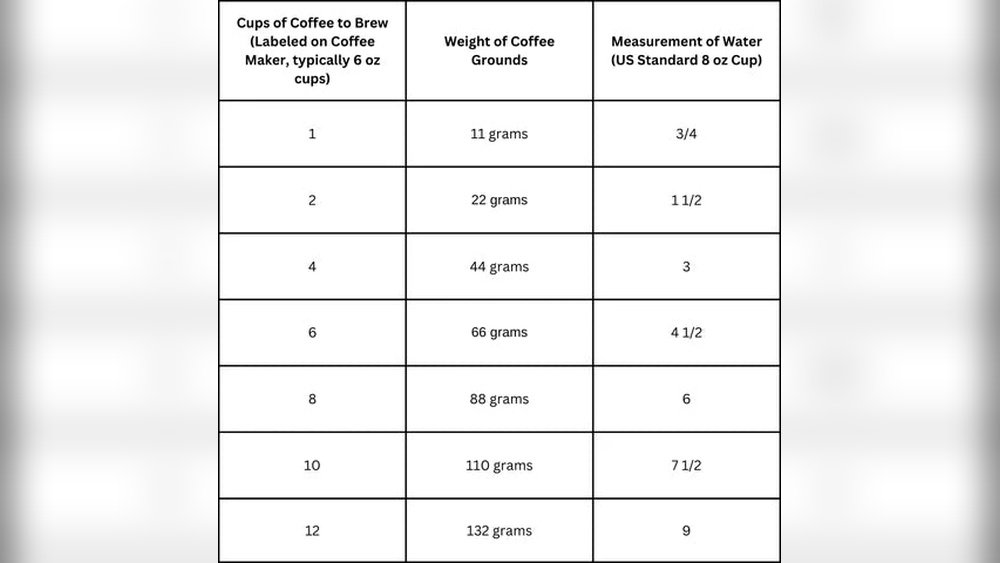
Brewing a great cup of coffee starts with getting the basics right, and one of the most overlooked basics is how to measure coffee in a coffee maker. Many people just scoop coffee grounds into the filter, fill the water reservoir, and hope for the best. But if you want consistent, flavorful coffee every time, you need to understand how much coffee to use, why measurement matters, and which methods are most accurate. This guide will walk you through everything you need to know about measuring coffee for your coffee maker, whether you’re a beginner or a seasoned home barista looking to refine your skills.
The journey to better coffee is more than just buying quality beans or a fancy machine. Measurement is the foundation. The difference between a balanced, aromatic cup and a bitter or weak one often comes down to just a few grams of coffee.
By the end of this article, you’ll know how to measure coffee precisely, avoid common mistakes, and adjust for your taste preferences. Let’s dive into the science and art of getting your coffee measurement just right.
Why Accurate Coffee Measurement Matters
Precision is not just for professional baristas. When you measure coffee accurately, you control the strength, flavor, and aroma of your brew. Here are some key reasons why proper measurement is essential:
- Consistency: Using the same amount of coffee and water every time ensures that your coffee tastes the way you like it—no more guessing or surprises.
- Optimal Extraction: Too little coffee leads to over-extraction (bitter taste), while too much causes under-extraction (sour, weak coffee). Measurement helps you hit the sweet spot.
- Cost Efficiency: Coffee beans are not cheap. Measuring prevents waste and helps you get the most out of your beans.
- Customizable Brews: Accurate measurement makes it easier to adjust recipes, try new beans, and share your method with others.
What many beginners miss is that small changes—sometimes just one gram—can make a noticeable difference in your cup. If your coffee tastes off, measurement is one of the first things to check.
Understanding Coffee-to-water Ratio
The coffee-to-water ratio is the cornerstone of brewing. This ratio tells you how much ground coffee to use for a given amount of water. The right ratio depends on personal taste, brewing method, and even the type of beans.
Standard Ratios
A widely accepted starting point is the Golden Ratio:
- 1 to 2 tablespoons (5 to 10 grams) of ground coffee per 6 ounces (177 ml) of water.
For a more precise approach, many professionals use weight-based ratios:
- 1: 15 (1 gram coffee : 15 grams water) for a balanced cup.
- 1: 16 is slightly lighter; 1:14 is a bit stronger.
Why Weight Is Better Than Volume
Coffee grounds vary in size and density depending on the roast, grind, and bean type. Measuring by weight (grams) is much more accurate than using spoons or cups. For example, a tablespoon of dark roast is lighter than a tablespoon of light roast because dark beans are less dense.
Common Ratios For Different Brew Methods
Here’s a comparison of typical ratios by brewing style:
| Brewing Method | Coffee-to-Water Ratio | Strength |
|---|---|---|
| Drip Coffee Maker | 1:15 to 1:17 | Medium |
| French Press | 1:12 to 1:15 | Strong |
| Pour Over | 1:15 to 1:17 | Medium |
| Espresso | 1:2 | Very Strong |
| Cold Brew | 1:8 to 1:5 (concentrate) | Very Strong |
Tools For Measuring Coffee
You don’t need expensive equipment to measure coffee well, but some tools can make the process easier and more accurate.
1. Kitchen Scale
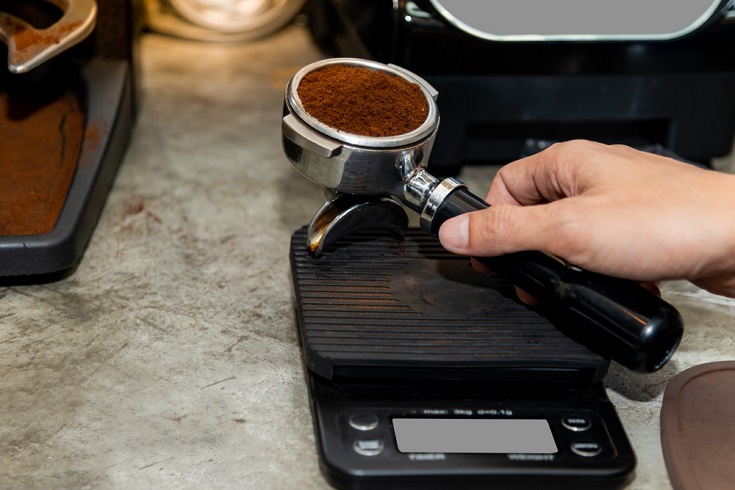
A digital kitchen scale is the gold standard for accuracy. Scales measure coffee by weight, removing all the guesswork. Look for a scale that measures in grams and has a “tare” function to reset the weight to zero with your container on it.
Pro Tip: A scale is especially useful if you change beans or grind size often.
2. Coffee Scoop
The classic coffee scoop usually holds about 1 tablespoon (5 grams) of ground coffee. While not as precise as a scale, it’s handy and better than guessing. Be aware that the actual weight can differ by grind size and bean type.
3. Measuring Spoons
Standard measuring spoons are a step up from regular kitchen spoons. They allow you to be more consistent, but they still don’t account for differences in coffee density.
4. Pre-measured Packets
Some specialty coffees come in pre-measured packets for single servings. These are convenient but less flexible if you want to customize your brew.
5. Automatic Coffee Makers With Built-in Scales
Some high-end machines include built-in scales or dosing systems. These are rare, but they take the guesswork out if you’re willing to invest.
Step-by-step: How To Measure Coffee For A Coffee Maker
Let’s go through the practical steps to measure coffee for a standard drip coffee maker.
Step 1: Decide How Many Cups You Want To Brew
First, know how much coffee you want to make. Coffee makers often use a “cup” size that is less than a standard 8-ounce cup—usually 5-6 ounces. Check your machine’s markings or the manual.
Step 2: Choose Your Ratio
Decide your preferred strength. A good starting point is 1 to 2 tablespoons (5 to 10 grams) per 6 ounces of water. For a typical 12-cup coffee maker:
- 12 “cups” = 60-72 ounces (1770-2130 ml) water
- 12 to 24 tablespoons (60-120 grams) ground coffee
Step 3: Weigh Or Scoop Your Coffee
- If using a scale: Place your filter or container on the scale, tare to zero, then add the desired grams of ground coffee.
- If using a scoop: Count out the number of level scoops needed.
Step 4: Measure Water Accurately
Use the coffee maker’s markings or a measuring cup to pour in the right amount of water. Too much or too little water will throw off your ratio.
Step 5: Brew And Adjust
Brew as usual. Taste your coffee—if it’s too strong, use less coffee next time; if it’s weak, use more. Adjust in small increments for best results.
Measuring Coffee For Different Brew Strengths
People like their coffee in different strengths. Here’s how to adjust:
Mild Coffee
- Use a 1: 17 ratio (e.g., 15 grams coffee to 255 grams water)
- Tastes lighter and less intense
Regular Coffee
- Use a 1: 15 ratio (e.g., 20 grams coffee to 300 grams water)
- Balanced, classic taste
Strong Coffee
- Use a 1: 12 ratio (e.g., 25 grams coffee to 300 grams water)
- Bold, more bitter notes
Here’s a quick reference for common drip coffee strengths:
| Water (oz) | Mild (g) | Regular (g) | Strong (g) |
|---|---|---|---|
| 12 | 20 | 24 | 30 |
| 24 | 40 | 48 | 60 |
| 36 | 60 | 72 | 90 |
| 48 | 80 | 96 | 120 |
Non-obvious insight: Most coffee makers overstate the number of “cups” they brew. Always check the actual ounces or milliliters to match your ratio.
How Grind Size Affects Measurement
The grind size of your coffee beans changes how much ground coffee fits in a scoop or tablespoon. Finer grinds pack more densely, while coarse grinds are fluffier.
- Fine grind: More grams per tablespoon, stronger taste
- Coarse grind: Fewer grams per tablespoon, lighter taste
This is another reason to use a scale for best results. But if you use spoons, be as consistent as possible with grind size.
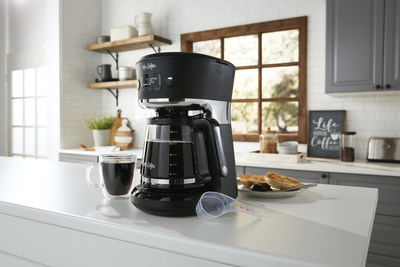
Credit: ir.newellbrands.com
Measuring Coffee For Different Coffee Makers
Not all coffee makers are the same. Here’s how measurement changes for popular types:
Drip Coffee Maker
Use the ratio guidelines and steps above. Most home machines use a flat-bottomed or cone-shaped filter.
Single-serve Pod Machines (e.g., Keurig)
Pods are pre-measured, but you can buy reusable pods. For these, use 8-10 grams of ground coffee per pod.
French Press
French press coffee is usually made stronger. Use a 1:12 to 1:15 ratio. Stir well and steep for 4 minutes.
Espresso Machine
Espresso requires precision: 18-20 grams per double shot (about 2 ounces water). A scale is essential for this method.
Percolator
Percolators brew strong coffee. Start with 1 tablespoon (5 grams) per cup, adjust for taste.
Cold Brew
Cold brew uses much more coffee because it’s brewed as a concentrate. Start with a 1:5 ratio by weight, dilute to taste after brewing.
Common Coffee Measurement Mistakes To Avoid
Even experienced coffee lovers make mistakes. Here are some to watch for:
- Using the wrong “cup” size: Your coffee maker cup is probably not 8 ounces—double-check before measuring.
- Scooping without leveling: A heaping scoop is not the same as a level one. Always level off for accuracy.
- Measuring by eye: Guessing leads to inconsistent coffee. Use a scale or standard scoop.
- Ignoring grind size: Switching from coarse to fine without adjusting your measurement will change your coffee’s taste.
- Forgetting to adjust for freshness: Fresher beans are denser and can taste stronger; adjust your measurements if you switch beans.
Non-obvious tip: Humidity can affect how coffee grounds pack into a scoop. In humid climates, coffee grounds may clump, giving you more coffee per scoop than you expect.
How To Adjust Coffee Measurement For Taste
Everyone’s taste is different. Some like their coffee bold and intense, others prefer it mild. Here’s how to fine-tune your measurement:
- Too strong? Use less coffee or more water next time. Try changing your ratio by 1 gram per cup.
- Too weak? Add more coffee or reduce water. Small adjustments have a big impact.
- Bitter taste? Try a coarser grind or slightly less coffee.
- Sour taste? Use a finer grind or a bit more coffee.
It’s best to keep notes as you experiment. Write down the amount of coffee, water, and the result. Soon you’ll find your perfect cup.
Measuring Coffee For Large Groups
Making coffee for a crowd is tricky because you need to scale up your measurements without losing quality.
Scaling Up
Multiply your standard ratio by the number of cups you need. For example, if your ratio is 1:15 (1 gram coffee per 15 grams water), and you want to brew 60 ounces (about 1770 ml), you need about 118 grams of coffee.
Batch Brewing Tips
- Use a large digital scale for big batches.
- Stir grounds and water together before brewing for even extraction.
- Clean your coffee maker thoroughly between large batches to avoid stale flavors.
Importance Of Freshness In Measurement
Freshness affects both the density and flavor of coffee. Beans lose moisture and become lighter as they age, so older beans might need a little more per cup. For best results:
- Grind coffee just before brewing.
- Store beans in a cool, airtight container.
- Buy smaller amounts more often.
Fresh coffee needs less to deliver good flavor, so always adjust when you switch to a new bag.
Water Quality And Its Effect On Measurement
Water is often overlooked but makes up over 98% of your cup. Hard or soft water, as well as the presence of chlorine, can change how coffee extracts.
- Use filtered water if possible.
- If your tap water tastes bad on its own, it won’t make good coffee.
- Some cities have mineral-rich water, which can enhance flavor; others may dull it.
If you switch water sources, you may need to adjust your coffee measurement for optimal taste.
Measuring Whole Beans Vs Ground Coffee
Some people measure whole beans, then grind them. Others measure after grinding. Both methods work, but for accuracy:
- Weigh whole beans before grinding; you’ll lose little to no mass.
- If you use a scoop, grind first and then measure, because ground coffee packs differently.
Helpful insight: Coffee ground just before brewing tastes fresher and more aromatic, so measuring beans first is slightly better.
Quick Reference: Measuring Coffee For Popular Maker Sizes
Here’s a handy guide for common coffee maker sizes, using a 1:15 ratio (medium strength):
| Coffee Maker Size (Cups) | Water (oz) | Coffee (g) | Coffee (tablespoons) |
|---|---|---|---|
| 4 | 24 | 48 | 8-9 |
| 8 | 48 | 96 | 16-18 |
| 12 | 72 | 144 | 24-27 |
For best results, always use a scale. But if you use tablespoons, level them off for each scoop.
How Different Roasts And Beans Affect Measurement
Not all coffee beans are created equal. Dark roasts are less dense than light roasts, so a scoop of dark roast weighs less than a scoop of light roast. This means you might need a bit more dark roast by volume to achieve the same strength.
- Light roast: Denser, more grams per scoop
- Dark roast: Less dense, fewer grams per scoop
If you switch beans or roasts, keep this in mind and adjust your measurement accordingly.
Troubleshooting: When Your Coffee Doesn’t Taste Right
If you follow all the rules but your coffee still tastes off, here’s a checklist to help you fix it:
- Check your water: Bad-tasting water means bad coffee.
- Clean your coffee maker: Old coffee oils and residue affect taste.
- Check your ratio: Weigh your coffee and water to confirm accuracy.
- Consider bean freshness: Old beans taste flat, no matter the measurement.
- Adjust grind size: Too fine or too coarse affects extraction and flavor.
Remember, measurement is the foundation, but other factors play a role too.
Credit: cornercoffeestore.com
Making Measurement Easy: Tips And Tricks
- Buy a small, accurate digital scale and keep it near your coffee maker.
- Pre-measure your coffee into small containers if you’re short on time in the mornings.
- Mark your favorite ratios on your coffee maker’s water reservoir with a permanent marker.
- Experiment with different ratios and keep a log of what works best for you.
Practical tip: If you’re traveling, measure out single servings of beans into small bags before you go. This saves time and keeps your routine consistent.
When To Break The Rules
While measurement brings consistency, don’t be afraid to adjust for your own taste. If you like your coffee stronger or weaker than standard ratios, that’s perfectly fine. The goal is to enjoy your coffee, not follow rules for their own sake.
Advanced insight: Weather and altitude can affect how coffee extracts. At higher altitudes, water boils at a lower temperature, so you might need to use a slightly finer grind or more coffee to get the same taste.
Learning From The Experts
Many professional baristas use a scale for every cup, especially in competitions or cafes. They also adjust recipes based on the type of beans and customer preferences. For more advanced brewing techniques and the science behind extraction, you can read detailed guides on the Wikipedia Coffee Preparation page.
Frequently Asked Questions

Credit: henryshouseofcoffee.com
What Is The Best Ratio Of Coffee To Water For A Coffee Maker?
The most popular starting ratio is 1 to 2 tablespoons of ground coffee per 6 ounces of water, or about 1:15 by weight. Adjust this ratio based on your taste preference, the type of beans, and the grind size. For stronger coffee, use more grounds; for lighter coffee, use less.
Can I Use A Regular Spoon To Measure Coffee?
You can use a regular spoon in a pinch, but it’s less accurate than a standard coffee scoop or measuring spoon. Coffee density varies by bean and grind size, so a regular spoon can give inconsistent results. For best flavor, use a scale or a dedicated coffee scoop.
How Do I Measure Coffee For A Single Cup?
For a single cup (about 6 ounces), use 1 to 2 tablespoons (5 to 10 grams) of ground coffee. If you want more precision, weigh out 10 grams of coffee and use 150 ml of water for a balanced cup.
Do I Measure Coffee Before Or After Grinding?
It’s best to measure whole beans before grinding if you’re using a scale. This keeps your measurements consistent, since ground coffee can settle and pack differently. If using a scoop, grind first, then measure, but be as consistent as possible with your grind size.
Why Does My Coffee Taste Different Every Day Even Though I Measure It?
Taste can change due to water quality, bean freshness, grind size, or even small changes in how you scoop or weigh coffee. Clean your machine regularly, use filtered water, and keep your grind and measurement methods consistent for the most stable results.
Getting your coffee measurement right in a coffee maker is part science, part art. With the right tools, a bit of practice, and attention to detail, you’ll enjoy better coffee every day. Don’t be afraid to experiment and find the ratio that makes your perfect cup.