
Hiding appliances in the kitchen is not just about aesthetics—it’s about creating a tidy, efficient, and enjoyable space. Many people dream of a kitchen that looks clean and open, but everyday appliances can clutter countertops and break the visual flow.
The good news is, you don’t need a full remodel to achieve a seamless look. Whether you have a small apartment kitchen or a large open-plan space, clever strategies can make appliances disappear into the background. In this guide, you’ll discover practical methods, design choices, and expert tips for hiding kitchen appliances—so your kitchen looks organized and stylish while still being functional.
Why Hide Appliances In Your Kitchen?
Modern kitchens are not only places for cooking—they are social and family hubs. The presence of appliances on countertops can make the area appear messy and crowded. Hiding appliances offers several advantages:
- Sleeker appearance: Concealed appliances create a streamlined look.
- Easier cleaning: Fewer exposed surfaces mean less dust and grease buildup.
- More counter space: You gain room for food prep and entertaining.
- Home value: Thoughtful kitchen design can increase your property’s appeal.
Many homeowners underestimate the impact of visual clutter. In fact, a 2023 Houzz survey found that over 60% of people prefer kitchens with hidden or built-in appliances. This trend is growing as open-plan living becomes more popular.
Besides, a tidy kitchen can make cooking and socializing more pleasant. You might notice that when appliances are hidden, your kitchen feels less chaotic, which can reduce stress and make daily routines smoother. For example, when guests visit, you don’t have to clear counters or worry about the mess—your kitchen always appears ready.
Another overlooked benefit is safety. Fewer cords and exposed gadgets mean less risk of accidents, especially for families with children or pets. When everything is tucked away, there’s less temptation for little hands to reach for dangerous appliances.
Types Of Appliances Commonly Hidden
Before exploring the different ways to conceal appliances, let’s look at what people usually want to hide:
- Microwaves
- Refrigerators
- Dishwashers
- Ovens
- Coffee makers
- Toasters
- Blenders
- Mixers
- Trash compactors
- Washing machines (in some kitchen-laundry layouts)
Not every appliance needs to be hidden, but most homeowners choose to tuck away items they do not use daily.
It’s also common to hide specialty appliances like air fryers, rice cookers, or bread machines if you use them less often. Even small gadgets, such as electric can openers or food sealers, can add to clutter if left out. The main idea is to keep only what you use every day in view and find smart ways to conceal the rest.
Built-in Appliances: The Seamless Solution
Built-in appliances are designed to fit flush with kitchen cabinetry. They often come with custom panels that match your cabinets, making them almost invisible.
How Built-in Appliances Work
Manufacturers create special models with features like:
- Front panel mounting: The appliance door holds a cabinet panel.
- Recessed installation: The body sits behind the cabinet frame.
- Flush handles or touch-to-open doors: Reduces visible hardware.
Some built-in appliances even have hidden displays or controls along the top edge, so you see only a flat surface when the door is closed. This approach is popular in luxury homes but has become more available in mid-range kitchens too.
Common Built-in Appliances
- Refrigerators
- Dishwashers
- Ovens
- Microwaves (drawer or cabinet style)
- Wine coolers
Other options include built-in coffee machines, steam ovens, and warming drawers. These advanced features are perfect for home chefs or anyone who entertains often.
Pros And Cons
| Pros | Cons |
|---|---|
| Clean look | Higher cost |
| Easy to clean | May require custom cabinets |
| Space-saving | Harder to change later |
Practical Example
A built-in refrigerator with a custom wood panel can disappear entirely into a wall of cabinets. At first glance, guests won’t even know a fridge is there.
Built-in dishwashers also blend in, hiding behind a cabinet door so your kitchen looks unified. This is especially useful in open-concept homes, where the kitchen is visible from the living area.
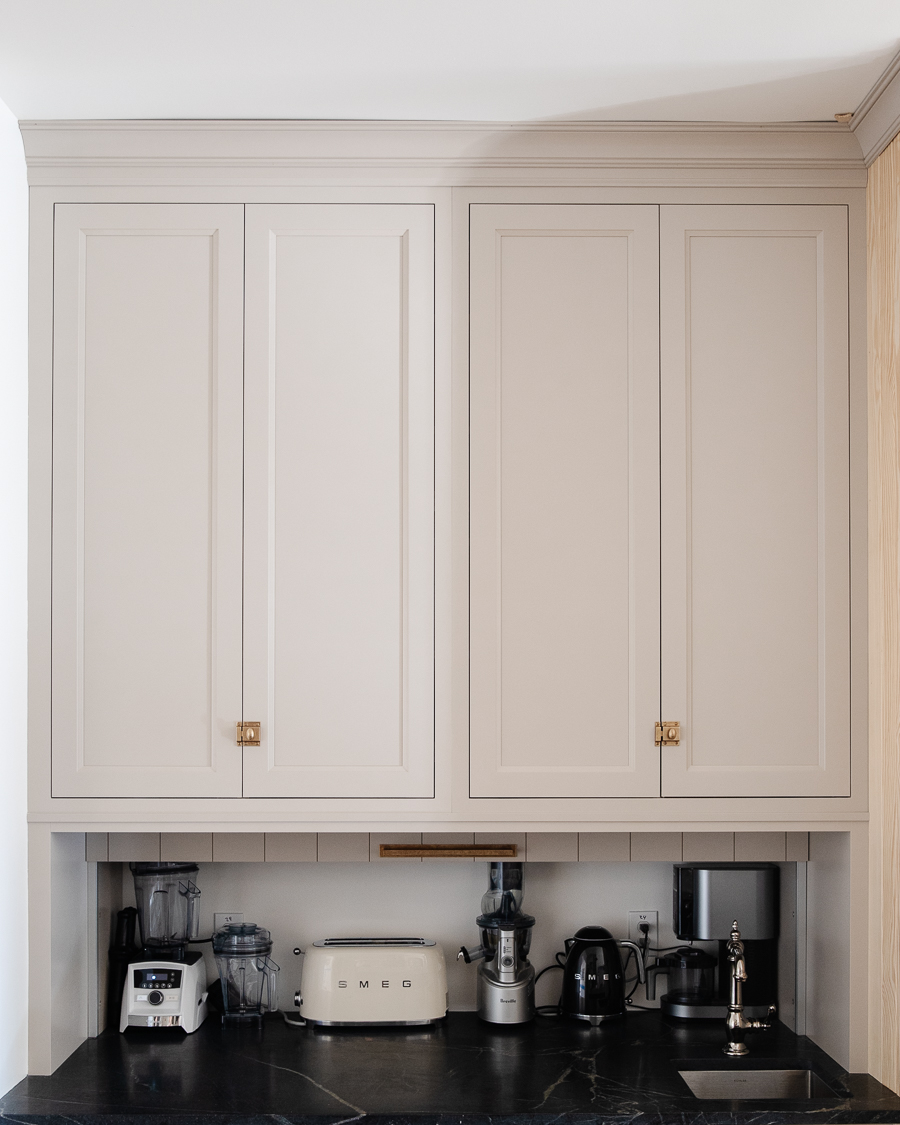
Appliance Garages: Quick Access, Out Of Sight
An appliance garage is a small cabinet or nook that sits on your countertop, often with a roll-up or lift-up door. It’s perfect for storing:
- Coffee makers
- Toasters
- Blenders
You simply open the door to use the appliance, then close it when finished. This keeps your kitchen looking neat without sacrificing convenience.
Design Ideas
- Tambour doors (roll-up style)
- Bi-fold doors
- Lift-up panels
Some garages include outlets inside, so you don’t have to move appliances out to use them.
You can also add under-cabinet lighting inside the garage for better visibility. For families, consider a garage at a lower counter height for kids to access a toaster or blender safely.
Non-obvious Insight
Many beginners forget to measure for door clearance. Always check that the garage door can open fully without hitting upper cabinets or light fixtures.
Also, think about the depth of your garage. Deeper cabinets can store more, but if too deep, smaller appliances may be hard to reach. A pull-out tray inside can make access easier.
Pocket Doors And Sliding Panels
For larger appliances, pocket doors or sliding panels can be a smart solution. These doors slide or fold away, revealing appliances only when needed.
Where To Use Pocket Doors
- Washer/dryer combos in kitchens
- Microwave or oven stations
- Coffee bars
Pocket doors are especially helpful in small homes or open-plan apartments, where you want to keep appliances out of sight but still easily accessible.
Installation Tips
Pocket doors need extra space in the cabinet’s sides to slide back. Plan this with your kitchen designer, as retrofitting is difficult once cabinets are installed.
Sliding panels require sturdy hardware and precise measurements. If not installed correctly, they may stick or wobble. Also, check that your chosen panel material is strong enough for daily use.
Concealed Drawers And Pull-out Shelves
Some small appliances can be hidden in deep drawers or pull-out shelves. This is excellent for:
- Mixers
- Food processors
- Blenders
How It Works
The appliance sits on a shelf inside a lower cabinet. When you need it, you pull the shelf out—some even lift up for easier access. There are even mixer lifts designed for heavy stand mixers, making them simple to raise and store.
Mixer lifts are especially useful for people with back or joint problems, since they reduce lifting. Some pull-out shelves come with built-in outlets, letting you use your appliance without moving it.
Comparison: Appliance Garage Vs. Pull-out Shelf
| Feature | Appliance Garage | Pull-Out Shelf |
|---|---|---|
| Location | On countertop | Inside base cabinet |
| Appliance size | Small to medium | Medium to large |
| Access speed | Very quick | Requires bending/kneeling |
A non-obvious tip: If you bake often, keeping your mixer on a pull-out shelf saves time and keeps your counter free for rolling dough or other tasks.
Panel-ready Appliances
Panel-ready or “integrated” appliances accept custom cabinet panels on their doors. The most common are:
- Refrigerators
- Dishwashers
This creates a uniform look, as the appliance matches other cabinets. Some panel-ready fridges are so well hidden, only the handle gives them away.
Installation Advice
Choose a panel-ready model at the start of your kitchen project. The panels are usually made by your cabinet supplier, so coordination is key.
Don’t forget to match the cabinet style and finish for the most seamless look. Ask your installer to align panel grain and color with nearby drawers, or else the appliance can still stand out.
Panel-ready appliances sometimes require special hinges or hardware. Double-check compatibility before ordering, as retrofitting a standard appliance isn’t possible.
Appliance Cabinets And Larders
Tall cabinets or “larders” are often used to store multiple appliances together. Inside these cabinets, you can set up:
- Coffee stations
- Microwave ovens
- Toasters
- Small refrigerators
Doors can be traditional swing, pocket, or bi-fold style. Some larders include lighting and outlets for a fully functional prep station.
A well-designed larder can transform your morning routine, keeping everything you need (coffee, mugs, toaster, bread) in one spot. Some families even set up snack or breakfast stations for kids.
Non-obvious Insight
Add a pull-out shelf inside the larder to make heavy appliances easier to use. This prevents lifting and reduces strain.
Also, use adjustable shelves to change the layout as your needs change. If you buy a new appliance, you won’t need a major remodel to fit it in.
Under-counter And Drawer Appliances
Some appliances now come in drawer form—for example:
- Microwave drawers
- Dishwasher drawers
- Refrigerated drawers
These fit under your countertop and blend with standard drawers. They are ideal for small kitchens or for creating “zones” (like a kids’ snack drawer).
Advantages
- Easy access (great for children or people with limited mobility)
- Space-efficient
- Minimal visual impact
Drawer appliances are also quieter, as they are lower to the ground and often have better insulation.
A practical example: A microwave drawer next to the fridge lets kids heat up snacks safely without climbing onto a stool. Parents appreciate the reduced mess and improved safety.
Appliance Lifts And Pop-up Solutions
For those who want to keep their countertops totally clear, appliance lifts or pop-up mechanisms are a high-tech option. These devices let you store an appliance in a cabinet and raise it up when needed.
Examples
- Mixer lifts: Spring-loaded platforms that bring stand mixers to counter height.
- Pop-up outlets: Electrical outlets that rise from the counter only when in use.
- Retractable range hoods: Slide down from above or rise from behind the cooktop.
These solutions are often found in luxury kitchens but can be installed in smaller spaces with the right planning.
A non-obvious benefit: Pop-up outlets can make your kitchen safer by keeping cords off wet counters and out of reach of children. They also help keep the space uncluttered when not in use.
Creative Ways To Hide Small Appliances
Not every solution requires custom cabinetry or expensive renovations. There are practical, budget-friendly tricks for hiding small appliances:
- Decorative baskets or bins: Store rarely used appliances in attractive containers on open shelves.
- Curtains or fabric panels: Hang a curtain under an open counter to hide items.
- Repurposed furniture: Use a vintage armoire or sideboard as a hidden appliance station.
- Floating shelves with doors: Add doors to open shelving for quick concealment.
These DIY solutions work especially well in apartments or rentals where you can’t change cabinets.
Another idea is to use rolling carts. Store appliances on a cart that can be tucked into a closet or pantry when not in use. This adds flexibility and keeps appliances mobile for cleaning or rearranging.
Appliance Placement: What To Consider
Hiding appliances is not just about looks—it’s about smart placement. Before you decide how to conceal something, think about:
- How often you use the appliance
- Who needs access (adults, kids, guests)
- Ventilation needs
- Electrical requirements
Appliance placement can affect your kitchen’s workflow. Keeping daily-use appliances near prep areas saves time and effort. For example, putting the blender near the fridge and sink makes smoothies easier.
Practical Example
If you make coffee every morning, hiding the coffee maker in a cabinet with no outlet is inconvenient. Instead, set up a dedicated coffee station with doors that open and slide back, plus a built-in outlet.
Ventilation matters for appliances like microwaves and fridges. Installing a refrigerator too close to a wall or cabinet without space for airflow can shorten its lifespan and reduce energy efficiency.
:strip_icc()/custom-3-level-kitchen-cabinet-appliances-15HSbUg9qMz99qk9bsUp67-63a23ca8f36345c4b1c13eb5fd90c5e6.jpg)
Credit: www.bhg.com
Cost Breakdown: Hiding Appliances
Hiding appliances can range from a low-cost project to a major investment. Here’s a basic cost comparison:
| Solution | Approximate Cost | DIY Friendly? |
|---|---|---|
| Decorative bins/curtains | $20 – $100 | Yes |
| Appliance garage | $200 – $600 | Yes, with basic skills |
| Built-in appliances | $1,500 – $5,000+ | No, usually requires pro |
| Panel-ready appliances | $1,000 – $4,000 | No, pro installation needed |
| Drawer appliances | $900 – $3,500 | Some (microwave drawer), others need pro |
Tip: Always factor in the cost of custom cabinetry and professional installation for seamless solutions.
Another consideration: If you plan to sell your home, investing in built-in or panel-ready appliances can attract buyers and may increase resale value. However, if you plan to move soon, choose less permanent options to avoid losing your investment.
Common Mistakes To Avoid
When trying to hide kitchen appliances, beginners often make these mistakes:
- Ignoring ventilation needs: Some appliances, like microwaves and refrigerators, need airflow to work safely.
- Blocking outlets: Make sure appliances can be plugged in without dragging cords across the kitchen.
- Choosing the wrong cabinet size: Always measure appliances before ordering cabinets.
- Forgetting future needs: If you plan to upgrade appliances, leave enough space for larger models.
- Overcomplicating access: Appliances you use daily should be easy to reach.
Expert advice: Think about how you actually use your kitchen before deciding on a solution. A hidden coffee maker is useless if it takes five steps to set up every morning.
Some people also forget to leave space for opening appliance doors. For example, a fridge or dishwasher door that hits a wall or island can be frustrating and lead to damage over time.
Tips For Small Kitchens
If your kitchen is small, you need every inch to count. Here’s how to maximize space while hiding appliances:
- Choose multi-use appliances: A toaster oven can replace a toaster and a microwave.
- Use vertical space: Add tall cabinets to store less-used appliances.
- Install sliding shelves: Make it easier to reach the back of deep cabinets.
- Keep only essentials: Store rarely used appliances elsewhere (like a pantry or garage).
- Opt for compact models: Many brands offer narrow or mini versions of common appliances.
Try to keep the most-used appliances within arm’s reach. For example, keep the kettle and toaster near the breakfast area but tuck away the slow cooker or rice maker in a higher cabinet.
A fold-out table or wall-mounted shelf can give you extra prep space when needed, then fold away for a clutter-free look.
Blending Appliances With Decor
Sometimes, the best way to “hide” an appliance is to blend it with your kitchen’s style. Choose appliances in colors or finishes that match your cabinets or walls.
Ideas
- Matte black appliances in a dark kitchen
- White appliances in a light, airy space
- Stainless steel with metal cabinet hardware
You can also use wallpaper or peel-and-stick panels to disguise appliance fronts for a unique look.
Using matching handles and knobs on appliances and cabinets helps create a cohesive design. Even small touches like coordinated towels or small plants can draw attention away from appliances.
Credit: chrislovesjulia.com
When To Show Off An Appliance
Not every appliance needs to be hidden. High-end ranges, espresso machines, or retro-style fridges can become a design highlight.
Non-obvious tip: Sometimes, showing off one beautiful appliance makes the rest of your kitchen feel intentional and curated.
If you have a colorful stand mixer or vintage-style fridge, use it as a focal point and hide the rest. This adds personality and makes your kitchen memorable without looking cluttered.
Planning Your Kitchen: Step-by-step
If you’re building or renovating a kitchen, follow these steps to plan appliance concealment:
- List all appliances: Include large and small, plus anything you want to buy later.
- Note frequency of use: Daily, weekly, rarely.
- Measure each appliance: Include cords, vents, and handles.
- Research concealment options: Based on your budget and kitchen size.
- Consult a designer or contractor: Especially for built-in or custom solutions.
- Plan for outlets and ventilation: Don’t forget these essentials.
- Think about resale value: Classic, simple solutions appeal to more buyers.
Take photos or sketches of your space and mark where appliances will go. Share these with your designer or contractor to avoid confusion.
Maintenance And Accessibility
Hidden appliances are easy to ignore, but they still need regular cleaning and maintenance. Make sure you can access:
- Vent grills
- Water connections
- Electrical outlets
- Filters
If you have to move heavy cabinetry to reach these, it defeats the purpose of convenience.
Expert tip: Choose solutions that allow quick access for repairs or cleaning.
For example, leave a removable panel behind your dishwasher or a hinged access point for water lines. This prevents costly repairs and makes life easier if something breaks.
Sustainable And Green Solutions
Consider sustainability when choosing how to hide appliances:
- Use eco-friendly materials for cabinetry and panels.
- Choose energy-efficient appliances to save on power.
- Recycle old appliances instead of storing them out of sight.
Modern panel-ready appliances often use less energy than older models and can help lower utility bills.
If you’re remodeling, look for certified green products (like FSC wood or low-VOC finishes) for your cabinetry. You’ll improve air quality and reduce your kitchen’s environmental impact.

Credit: colorandchic.com
The Future Of Hidden Appliances
Kitchen design trends continue to evolve. The next wave of hidden appliances includes:
- Smart cabinets that open with a touch or voice command
- Pop-up induction cooktops that disappear into the counter
- Integrated charging stations for phones and devices
With advances in technology, hiding appliances will become even easier and more flexible.
For more inspiration and the latest trends, you can check resources like Architectural Digest.
Designers are also experimenting with new materials, like glass or metal panels, that change color or opacity to reveal appliances only when you want them. This blend of technology and style could make kitchens even more adaptable in the future.
Frequently Asked Questions
How Do I Hide My Microwave Without Custom Cabinets?
You can place your microwave in an appliance garage with a roll-up door, use a deep open shelf with a curtain, or buy a microwave cart that slides under the counter. Just be sure the microwave has enough ventilation.
Some microwaves are designed for open-shelf use, with special venting at the top or sides. Check your model’s manual before closing it in.
Are Panel-ready Appliances Worth The Cost?
Panel-ready appliances cost more upfront but offer a seamless look and can increase your home’s value. They’re especially worthwhile in open-plan kitchens or high-end homes.
If you plan to stay in your home for many years, the investment may be worth it for daily enjoyment and future resale.
Can I Hide Appliances In A Rental Kitchen?
Yes, use removable solutions like decorative baskets, curtains, or freestanding cabinets. Avoid any changes that require drilling into cabinets or walls.
A rolling cart with a curtain or a small armoire can hide appliances without upsetting your landlord.
Do Hidden Appliances Need Special Maintenance?
Hidden appliances need regular cleaning and checks for proper airflow. Make sure you can easily pull them out or open panels for service.
Plan for quick access to filters, water lines, or power cords so you don’t need to call a professional for basic tasks.
What’s The Easiest Appliance To Hide?
The toaster is the easiest—store it in a drawer, bin, or appliance garage. It’s lightweight, doesn’t need much ventilation, and is small enough for almost any storage spot.
You can even use a bread box or basket to hide a toaster in plain sight.
Modern kitchens are all about combining style with function. By hiding your appliances wisely, you create a space that’s easier to live and cook in—and that always looks its best. With the right approach, your kitchen can be both a showpiece and a hardworking heart of your home.