
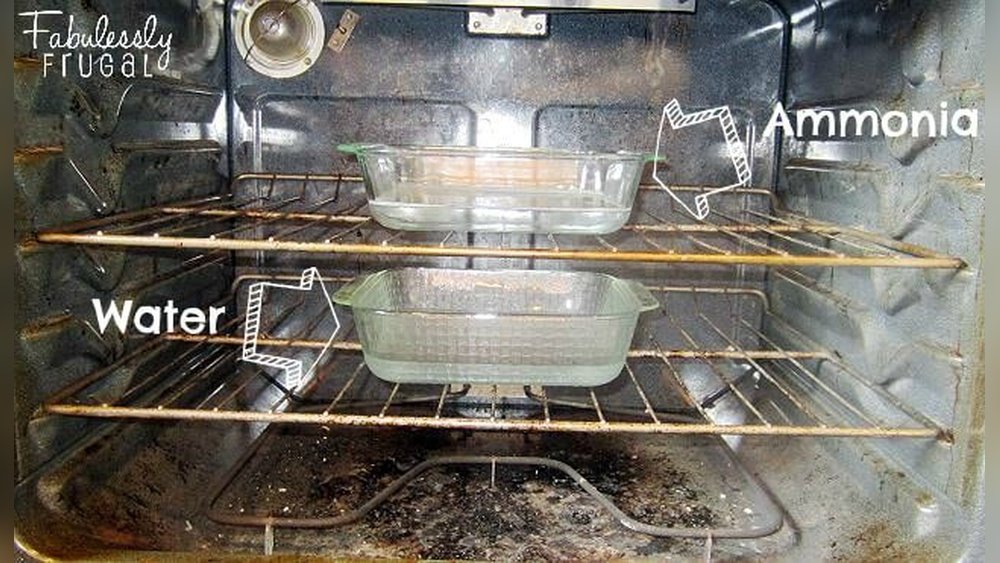
St people can safely clean their oven with ammonia if they follow instructions and safety advice. However, there are a few cases where you should consider another method.
Ammonia Is A Good Choice If:
- You have tough, baked-on grease and stains that regular cleaners can’t remove.
- Your oven is old and doesn’t have a self-cleaning function, or the self-clean cycle is risky because of old seals or wiring.
- You want an affordable, effective alternative to expensive commercial cleaners.
- You are sensitive to the residue that some oven sprays leave behind.
- You don’t mind waiting overnight for a deep clean.
Ammonia Is Not Recommended If:
- You are sensitive to strong smells or have asthma or breathing problems. Ammonia fumes can be irritating even in small amounts.
- You cannot ventilate your kitchen well (for example, windows do not open).
- There are small children, pets, or birds in the house who might be exposed to fumes.
- Your oven is made from special materials that could react with ammonia (check your manual if unsure).
- You need to use your oven the same day—ammonia cleaning takes at least 8-12 hours.
Pro tip: If you have a brand-new oven, check the manual before using ammonia. Some oven interiors have coatings that can be damaged by strong cleaners.
How Often Should You Clean Your Oven With Ammonia?
There’s no single answer, as it depends on how often you use your oven and what you cook. Here’s a good guideline:
- Heavy use (baking, roasting, casseroles several times a week): Every 2-3 months.
- Moderate use: Every 4-6 months.
- Light use (occasional reheating or baking): Once or twice a year.
If you notice smoke, strong smells, or your food tastes odd, it’s probably time for a cleaning. Regular maintenance will keep your oven working efficiently and prevent stubborn buildup.
Signs Your Oven Needs Cleaning
- Smoke comes from the oven when preheating, even if nothing is spilling.
- Food cooks unevenly or develops strange flavors.
- You see dark, sticky patches or flakes inside.
- There’s a burnt smell even when the oven is empty.
Non-obvious insight: Cleaning before holiday seasons (like Thanksgiving or Christmas) ensures your oven is ready for big meals and helps avoid embarrassing smoke or smells when guests visit.
Extra Tips For Easier Oven Maintenance
Keeping your oven clean doesn’t have to be a huge chore every time. Small habits make a big difference:
- Wipe up spills quickly: After the oven cools, wipe up drips and spills with a damp cloth. This prevents hard, burnt-on messes.
- Use oven liners: A non-stick oven liner (available in most kitchen stores) catches drips and is easy to remove and clean.
- Bake on trays: When cooking pies, casseroles, or roasts, place a baking sheet under your dish to catch overflow.
- Avoid aluminum foil on oven floor: While it seems helpful, foil can block heat and damage the oven’s finish. Use a liner made for ovens instead.
- Leave the door open after cleaning: Letting the oven air out for a few hours after cleaning with ammonia helps remove any leftover fumes and moisture.
What About Oven Windows?
Ammonia also works for cleaning oven windows, which often get cloudy or greasy. Here’s how:
- Dip a sponge in the ammonia-water mix (about 1/4 cup ammonia per quart of water).
- Wipe the glass, paying extra attention to corners and edges.
- For stubborn stains, sprinkle a little baking soda, then scrub gently.
- Rinse with clean water and dry with a microfiber cloth for a streak-free finish.
Pro tip: For double-pane oven windows (glass with a sealed air gap), do not try to take them apart to clean inside. If the inner glass is dirty, check your oven manual or call a professional.
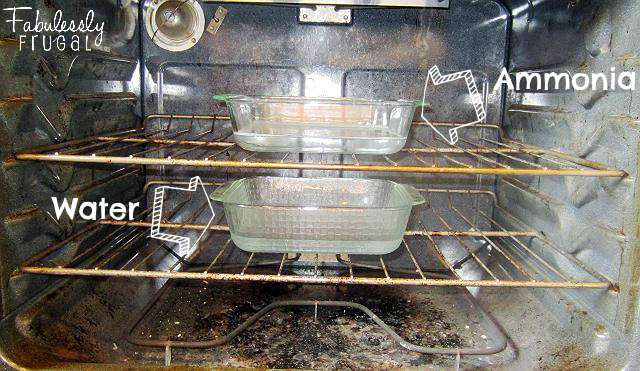
Credit: fabulesslyfrugal.com
What If The Smell Of Ammonia Lingers?
Most of the time, good ventilation will clear the ammonia smell. But if it sticks around, try these steps:
- Leave the oven door open for several hours.
- Place a bowl of baking soda inside to absorb odors.
- Wipe the oven again with a cloth dampened in a mix of vinegar and water (1: 1 ratio). Vinegar helps neutralize ammonia residue and odor.
- Bake a tray of sliced lemons at low heat (200°F/93°C) for 15-20 minutes to freshen the air.
If the smell remains after these steps, repeat the wipe-down and ventilate more thoroughly. The odor should not affect your food if you rinse well and air out the oven.
When To Call A Professional
While ammonia is very effective for most home ovens, there are situations where you should call an expert:
- The oven has electrical problems, broken seals, or visible wiring.
- You see rust, holes, or parts falling off inside.
- Ammonia cleaning did not remove thick carbon layers or mysterious stains.
- There is a persistent, unusual odor even after deep cleaning.
A professional can safely dismantle parts and use commercial-grade tools that go beyond what you can do at home.
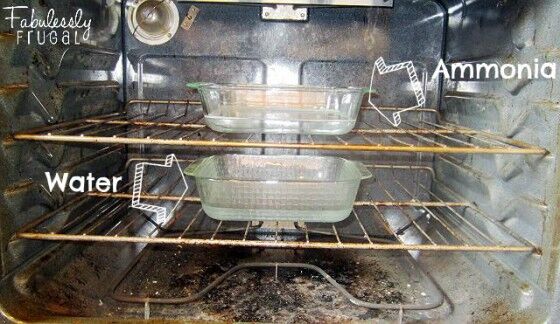
Credit: fabulesslyfrugal.com
Ammonia Oven Cleaning Myths
Many people have heard stories or “hacks” about cleaning ovens with ammonia. Let’s clear up some common myths:
- “More ammonia means a cleaner oven.” False. Using more than the recommended amount only increases fumes and danger, not cleaning power.
- “It’s okay to mix ammonia with other cleaners for extra strength.” Very dangerous. Never mix ammonia with any product, especially bleach or acids.
- “Ammonia damages oven enamel.” Not if used as described—low quantities, not heated above 150°F, and wiped thoroughly after.
- “You can use ammonia in self-cleaning ovens.” Check your manual. Some self-cleaning ovens have special finishes that can react with ammonia.
- “Ammonia is safe for all kitchen cleaning.” Not true. Do not use ammonia on aluminum, painted surfaces, or nonstick coatings.
The Environmental Impact Of Ammonia
Many people are concerned about using strong chemicals in their homes. Ammonia breaks down quickly in water and air, but it’s important to use it responsibly.
- Always dilute ammonia before pouring down the drain.
- Never pour ammonia outside, in the yard, or on plants—it can harm soil and water.
- Use only as much as you need. A half-cup per cleaning is plenty.
- Store ammonia securely, out of reach of children and pets.
If you prefer not to use chemicals, baking soda and vinegar are the safest green alternatives, though they may require more scrubbing.
For more information about ammonia safety and environmental effects, you can visit the [U.S. Environmental Protection Agency’s ammonia facts page](https://www.epa.gov/sites/production/files/2016-09/documents/ammonia.pdf).

Credit: www.youtube.com
Final Thoughts: Is Ammonia The Best Solution For Oven Cleaning?
Cleaning your oven with ammonia overnight is a proven, affordable method that works on even the toughest grime. It’s much less effort than endless scrubbing, and with good safety habits, it’s a practical choice for most homes.
Remember these key points:
- Always use gloves, ventilate well, and keep kids and pets away.
- Don’t use ammonia on hot ovens or mix with other cleaners.
- Clean racks and accessories separately for a thorough job.
- Wipe down all surfaces completely before using the oven again.
- If you have health concerns or special oven materials, consider gentler alternatives.
Oven cleaning doesn’t have to be a dreaded task. With the right method, your oven can be spotless and ready for your next great meal—without hours of hard work.
If you follow the steps above and stay mindful of safety, your oven will stay clean, efficient, and odor-free. Happy cleaning!