
If you walk into your kitchen and see your once-white cabinets looking yellow and dull, you are not alone. Many people notice yellow stains appearing on kitchen cabinets over time. This can make your kitchen look older and less clean, even if you wipe down your cabinets every week.
The good news is that you can remove yellow from kitchen cabinets and restore their fresh look, but you need the right methods and a bit of patience.
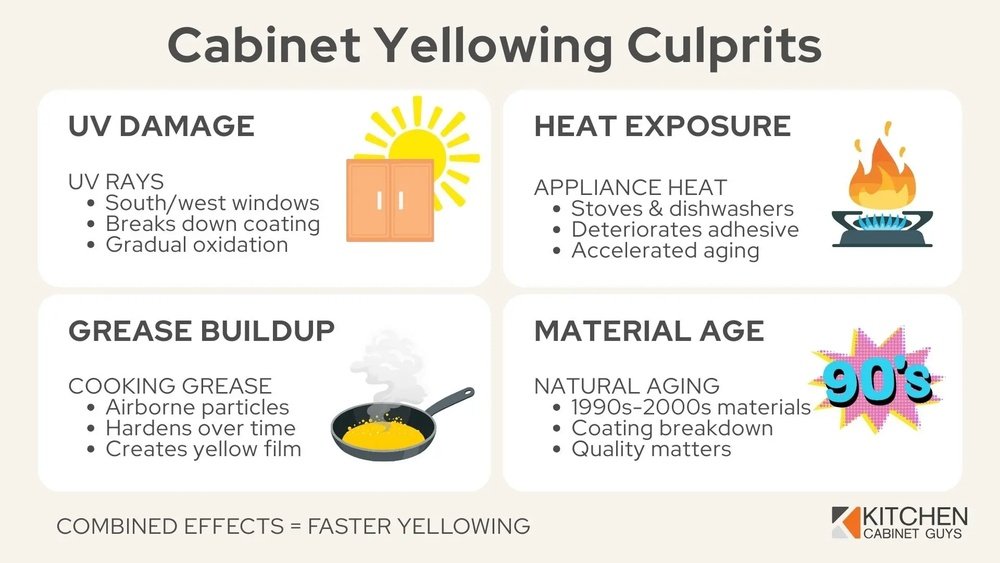
Kitchens are busy places. Cooking oil, steam, smoke, sunlight, and daily touches all leave marks. Over months or years, these build up and turn cabinet surfaces yellow. Some stains are easy to clean, but others take more work. Sometimes the yellowing is on the paint or finish itself, or even deeper, especially if the cabinets are very old or made with certain materials.
This guide explains why yellow stains happen and gives you step-by-step solutions for every kind of cabinet. You’ll learn how to use simple home products as well as professional cleaners. You’ll also discover how to prevent yellowing in the future, so your kitchen stays bright for years.
Let’s break down exactly how you can get yellow out of kitchen cabinets, for good.
Why Do Kitchen Cabinets Turn Yellow?
Before you start cleaning, it helps to know why cabinets turn yellow. Different causes need different solutions, and understanding the source makes your work easier.
Main Causes Of Yellowing
- Cooking grease and oil: Even with a vent, cooking sends small oil droplets into the air. These land on cabinet surfaces and mix with dust. Over time, they form a sticky, yellow film.
- Sunlight (UV exposure): Direct sunlight changes the color of paint and wood. White and light colors turn yellow faster when exposed to sunlight every day.
- Aging paint or finish: Paint and some clear finishes (like certain varnishes or lacquers) naturally yellow as they age, especially if they’re oil-based.
- Smoke and air pollution: Cigarette smoke or heavy air pollution can add a yellow film to everything in your kitchen, including cabinets.
- Improper cleaning: Using harsh cleaners or not rinsing well can leave residues that attract dirt and speed up yellowing.
- Moisture and heat: Kitchens are humid, and frequent temperature changes can break down finishes, letting stains soak in.
How To Identify The Cause
- If yellowing appears mostly near the stove or oven, cooking oil is likely.
- If yellowing is worse on cabinets facing windows, sunlight is the main problem.
- If the yellow is all over, and the cabinets are old, it’s probably aging paint or finish.
- If you smoke indoors, or live in a city, smoke and air pollution are possible causes.
Knowing the cause helps you choose the best cleaning method and prevent future yellowing.
Essential Steps Before You Start Cleaning
Jumping in without a plan can damage your cabinets or waste your time. Always prepare first for the best results.
Check Cabinet Material And Finish
Different cabinets need different treatments. Most common types are:
- Painted wood
- Laminate
- Solid wood with clear finish
- MDF or particle board
- Thermofoil
Check if your cabinets are painted, laminated, or have a special coating. Painted and wood cabinets are more sensitive to strong cleaners. Laminate and thermofoil are more durable but can peel if scrubbed too hard.
Gather Supplies
You do not need expensive products for most yellow stains. Basic supplies include:
- Warm water
- Mild dish soap
- White vinegar
- Baking soda
- Hydrogen peroxide (3%)
- Soft cloths or sponges
- Old toothbrush
- Bucket or bowl
- Rubber gloves
- Microfiber towel
- Magic eraser (optional)
- Gentle multipurpose cleaner (for tough stains)
- Furniture polish or cabinet wax (for after cleaning)
Test A Small Area
Before using any cleaner, test it on a hidden spot. Wait 10 minutes to see if the surface changes color or texture. If not, you can clean the rest of the cabinet.

Credit: www.amazon.com
How To Remove Yellow From Kitchen Cabinets: Methods That Work
Different stains need different treatments. Below are the best methods, from gentle to strong. Start with the mildest method first. If it doesn’t work, move to the next.
1. Basic Soap And Water Cleaning
For light yellowing caused by grease and dirt, start with this method.
- Mix a few drops of dish soap in a bucket of warm water.
- Dip a soft cloth or sponge in the solution. Wring it out so it’s damp, not soaking.
- Wipe the yellowed area, rubbing gently in a circular motion.
- For corners or grooves, use an old toothbrush.
- Rinse with a clean cloth and plain water.
- Dry with a microfiber towel.
This often removes surface grease and light stains.
2. White Vinegar Solution
White vinegar cuts through grease and is safe for most surfaces.
- Mix equal parts white vinegar and warm water.
- Dip a cloth in the mix, wring out, and wipe the yellowed areas.
- For heavy build-up, lay the cloth over the stain for 5-10 minutes, then wipe.
- Rinse with plain water and dry.
Vinegar works well for cooking grease, but avoid using it on unsealed wood, as it can dry out the finish.
3. Baking Soda Paste
For stubborn stains, baking soda is gentle but effective.
- Mix 3 tablespoons of baking soda with 1 tablespoon of water to make a paste.
- Apply the paste to the yellowed area.
- Let sit for 5 minutes.
- Scrub gently with a soft cloth or toothbrush.
- Wipe with a damp cloth to remove residue.
- Dry the surface.
Do not scrub too hard, especially on painted cabinets, as baking soda is slightly abrasive.
4. Hydrogen Peroxide For Deep Yellow Stains
Hydrogen peroxide is a mild bleaching agent. It works well on yellowing from aging or smoke.
- Pour some 3% hydrogen peroxide on a soft cloth.
- Rub the stain gently.
- Let it sit for 5-10 minutes.
- Wipe with a damp cloth and dry.
Hydrogen peroxide is safe for most white painted or laminate cabinets, but always test first.
5. Magic Eraser Or Melamine Sponge
A magic eraser (melamine sponge) can remove tough yellow stains, especially on laminate or glossy surfaces.
- Wet the sponge and squeeze out extra water.
- Gently rub the stain. Do not press too hard, as it can dull shiny finishes.
- Wipe with a clean, damp cloth and dry.
Use sparingly, as these sponges are slightly abrasive.
6. Commercial Cabinet Cleaners
If home products do not work, try a gentle cabinet cleaner. Look for products labeled “safe for kitchen cabinets” or “wood safe. ”
- Follow the instructions on the bottle.
- Always wipe with a damp cloth afterward to remove residue.
Avoid strong bleach or ammonia cleaners, as they can damage finishes and turn yellowing worse.
7. Cleaning Painted Cabinets
Painted cabinets need extra care. Water-based paint is softer than oil-based paint.
- Use only mild soap, water, and gentle sponges.
- Avoid vinegar or abrasive cleaners unless the stain is very stubborn and you have tested it.
- After cleaning, buff with a dry cloth.
If yellowing is deep in the paint, cleaning may not help. You might need to repaint (see later section).
8. Cleaning Laminate And Thermofoil Cabinets
Laminate and thermofoil are tough but can peel with too much moisture.
- Use a damp (not wet) cloth with mild soap.
- For greasy stains, try vinegar-water mix or baking soda paste.
- Dry right away to prevent water from soaking under edges.
These materials usually do not yellow as much as paint, but grease can build up over time.
9. Cleaning Solid Wood Cabinets
Solid wood cabinets often have a clear finish.
- Use mild soap and water.
- Avoid soaking the wood.
- For tough stains, use a small amount of mineral spirits (test first).
- After cleaning, use a furniture polish or wax to protect the wood.
Never use strong chemicals or too much water, as these can warp the wood.
10. Cleaning Old Or Vintage Cabinets
For older cabinets, yellowing is often in the finish or paint.
- Clean gently first.
- If yellowing does not come off, the finish may need to be stripped and replaced (see refinishing section).
- Some old paints contain lead. If your cabinets are very old, check before sanding or stripping.
Advanced Solutions: When Cleaning Isn’t Enough
Sometimes, yellow stains do not come off with cleaning. This is usually because the paint or finish itself has turned yellow with age or sun. Here’s what you can do.
Repainting Cabinets
If the surface is clean but still yellow, repainting is your best option.
Steps To Repaint
- Remove doors and hardware for easier painting.
- Clean surfaces well to remove grease.
- Sand lightly to smooth old paint and help new paint stick.
- Prime with a stain-blocking primer, especially if yellowing is deep.
- Paint with high-quality, non-yellowing paint (water-based acrylic is best).
- Let dry and reattach doors and hardware.
Modern water-based paints do not yellow like old oil-based paints.
Refinishing Wood Cabinets
If the yellow is in the wood finish, refinishing may be needed.
- Remove old finish using a safe wood stripper.
- Sand the wood gently.
- Stain or clear coat with a non-yellowing finish (look for water-based polyurethane).
- Let cure before using cabinets.
This restores the natural wood look and removes yellowed varnish.
Professional Cabinet Cleaning Or Refinishing
If your cabinets are valuable, very old, or you’re not sure what to do, hire a pro. They can clean, strip, and refinish cabinets safely.
Practical Tips To Prevent Yellowing In The Future
After cleaning, you want your cabinets to stay bright. These tips help prevent yellow stains from coming back.
1. Use A Range Hood Or Vent
A strong range hood above your stove traps cooking oil and steam. Turn it on every time you cook, even for small meals.
2. Clean Regularly
- Wipe cabinet doors and handles weekly with mild soap and water.
- For heavy cooking, clean more often.
- Rinse and dry after cleaning.
Regular cleaning prevents grease build-up and stains.
3. Avoid Harsh Cleaners
Strong chemicals can damage finishes and attract dirt. Stick to gentle, non-abrasive cleaners.
4. Block Sunlight
If sunlight hits your cabinets for hours every day, consider:
- Adding curtains or blinds.
- Installing window film that blocks UV rays.
- Moving kitchen items to shade cabinets if possible.
5. Repaint Or Refinish With Non-yellowing Products
Use water-based paints or clear finishes labeled “non-yellowing” or “UV resistant.” These resist color change better than oil-based products.
6. Don’t Smoke Indoors
Cigarette smoke quickly yellows all kitchen surfaces. Avoid smoking in the kitchen to keep cabinets bright.
7. Control Moisture
- Use an exhaust fan when boiling water.
- Wipe up spills right away.
- Keep humidity low to protect wood and finishes.
Comparing Cleaning Methods: Effectiveness And Safety
To help you pick the right method, here’s a comparison of popular cleaning methods for yellow cabinets.
| Method | Effectiveness | Surface Safety | Best For |
|---|---|---|---|
| Soap & Water | Good for light stains | Very safe | All types |
| Vinegar Solution | Good for grease | Safe for most | Painted, laminate |
| Baking Soda Paste | Very good for tough stains | Safe if gentle | Laminate, painted |
| Hydrogen Peroxide | Excellent for deep stains | Safe if tested | White surfaces |
| Magic Eraser | Very good, fast | Can dull gloss | Laminate |
Common Mistakes To Avoid
People often make these errors when trying to remove yellow stains. Avoid them for best results.
- Scrubbing too hard: This can scratch or dull the finish, especially on painted or glossy cabinets.
- Using bleach or ammonia: These strong chemicals can make yellowing worse over time and damage finishes.
- Leaving water on the surface: Water can soak into wood or seams and cause swelling or peeling.
- Skipping regular cleaning: Waiting too long lets grease and stains build up, making them much harder to remove.
- Not testing cleaners: Always test new cleaning products on a hidden spot to avoid surprises.
How Yellowing Affects Different Cabinet Materials
Not all cabinets yellow the same way. Understanding your cabinet material helps you choose the safest cleaning method.
| Material | Yellowing Risk | Best Cleaning Method | Comments |
|---|---|---|---|
| Painted Wood | High (with oil-based paint) | Soap, baking soda, repaint if needed | Water-based paint yellows less |
| Laminate | Medium (from grease) | Soap, vinegar, magic eraser | Do not soak edges |
| Solid Wood | Medium (from finish) | Soap, gentle polish, refinish if needed | Needs gentle care |
| Thermofoil | Low (usually resists yellowing) | Soap, baking soda | Can peel with too much water |
| MDF/Particle Board | Medium (finish only) | Soap, vinegar | Keep dry |
When To Call A Professional
Sometimes, it’s best to hire a cabinet expert:
- If your cabinets are very expensive or historic
- If yellowing is deep in the wood or finish
- If you see peeling, bubbling, or mold
- If you have tried all safe cleaning methods and nothing works
A professional can strip, repaint, or refinish cabinets safely. They also know how to handle old paints that may contain lead.
Real Examples: Removing Yellow Stains
Let’s look at a few real-life situations.
Example 1: Grease Build-up On Painted Cabinets
Samantha cooked every day without a range hood, and her white cabinets turned yellow above the stove. She tried soap and water, but it didn’t work. She switched to baking soda paste, let it sit for five minutes, and gently scrubbed with a cloth.
The yellow came off, and the cabinets looked much brighter.
Example 2: Sunlight Yellowing On Laminate
John’s upper cabinets faced a sunny window. Over three years, the white laminate turned yellow. Cleaning with vinegar helped a bit, but the yellowing stayed. He installed a UV-blocking film on the window and repainted the cabinets with UV-resistant white paint.
The new look has lasted over two years.
Example 3: Vintage Cabinets With Old Finish
Maria bought a house with 1970s wood cabinets. The clear finish had turned amber-yellow, and no cleaning helped. She hired a pro to strip the old finish and apply a modern water-based polyurethane. The cabinets now show the wood’s natural color and look new.
Credit: www.carpetone.com
Non-obvious Insights Beginners Often Miss
- Yellowing is often under the surface: Many people clean only the outside, but yellow stains can soak into old paint or finish. In these cases, only repainting or refinishing works.
- Grease is invisible at first: Grease build-up is hard to see until it turns yellow. Cleaning cabinets regularly, even if they “look” clean, prevents future stains.
- Not all “white” paints are the same: Oil-based white paint yellows much faster than modern water-based acrylics, especially in low-light areas.
- Sunlight can yellow even new finishes: UV rays break down paint and finish chemicals. Window film or curtains can greatly slow this process.
Frequently Asked Questions
What Is The Safest Way To Clean Yellow Stains From Painted Cabinets?
The safest method is to use mild dish soap and warm water with a soft cloth. Gently wipe the surface, rinse with clean water, and dry. If stains remain, try a baking soda paste, but scrub lightly. Avoid harsh chemicals or abrasive sponges on painted surfaces.
Can I Use Bleach To Remove Yellow From My Cabinets?
No, it’s not recommended. Bleach can damage paint, wood, and finishes, and may make yellowing worse over time. It can also leave harmful residues. Stick to gentle cleaners like vinegar, baking soda, or hydrogen peroxide for tough stains.
Credit: www.houzz.com
Why Do My Cabinets Turn Yellow Even Though I Clean Them Often?
Even with regular cleaning, cooking grease, sunlight, and aging paint can cause yellowing. Grease particles float in the air and stick to surfaces, while sunlight and old finishes yellow over time. Regular cleaning helps but may not stop all yellowing.
How Can I Prevent Yellow Stains On New Kitchen Cabinets?
Use a range hood every time you cook, clean cabinets weekly, avoid smoking indoors, and block direct sunlight with curtains or window film. Choose water-based, UV-resistant paints and finishes if repainting.
When Should I Consider Repainting My Cabinets Instead Of Cleaning?
If yellow stains do not come off with cleaning, or if the paint or finish itself is yellowed with age, repainting is the best solution. Use a stain-blocking primer and high-quality, non-yellowing paint for long-lasting results.
For more tips on home cleaning and maintenance, check Good Housekeeping.
Cleaning yellow stains from kitchen cabinets takes patience, the right products, and a little know-how. By following these steps and tips, you can bring back your kitchen’s bright, fresh look—and keep it that way for years to come.