
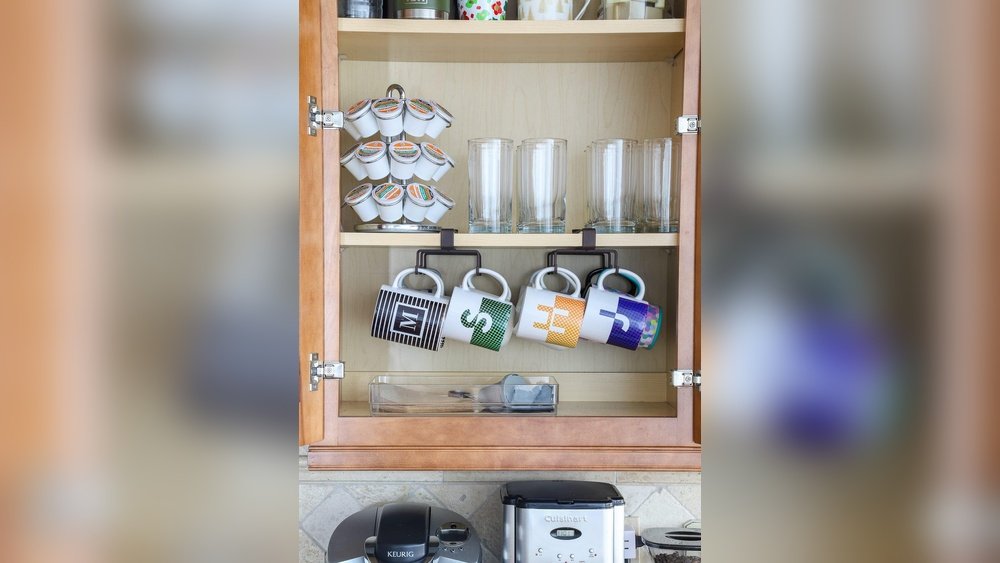
Mugs fill our kitchen cabinets—some are gifts, others come from travels, and a few are just perfect for our favorite morning coffee. But soon, mugs can take over shelves, get stacked dangerously, or become hard to reach. If you have ever opened a cabinet and watched mugs tumble out, you know the struggle.
Organizing mugs in a cabinet is not just about saving space. It also makes your kitchen safer, looks tidier, and helps you find the right mug quickly.
Many people think mug storage is simple, but the right system depends on your cabinet size, mug shapes, and even your daily habits. This article will guide you through every step: how to assess your collection, choose the best organizers, and create a system that lasts. Along the way, you’ll find practical tips, clever storage ideas, and solutions to common mistakes. Whether you have a huge collection or just a few cherished mugs, you’ll discover how to make the most of your cabinet space without stress.
Why Mug Organization Matters
A well-organized mug cabinet has many benefits beyond just looking nice. First, safety is a big reason. Stacking mugs carelessly can cause chips or even broken mugs, which can cut your hands. Proper organization also prevents accidents when you reach for a mug, especially on high shelves.
Second, space optimization is important. Cabinets are often packed with mugs, leaving little room for other dishes. Smart organization helps you fit more mugs without crowding.
Third, good organization saves time and energy. Instead of moving mugs around to find your favorite, you can grab it in seconds. This is especially useful during busy mornings.
Finally, an organized cabinet can make your kitchen feel calmer and more welcoming. It’s a small change, but it can make a big difference in your daily routine.
Assessing Your Mug Collection
Before you start moving mugs around, take a few minutes to assess your collection. This step is often skipped, but it makes the rest of the process easier.
Start by emptying the cabinet. Lay all your mugs on the counter or table. This lets you see exactly how many you have, their shapes, and if any are damaged.
Next, sort mugs into categories. Some common categories include:
- Everyday mugs
- Special occasion mugs
- Travel or souvenir mugs
- Large or extra-small mugs
Look for duplicates. If you have five similar white mugs, do you need them all? Decide which ones you use most.
Check for damaged mugs. Cracks or chips can be unsafe. Consider throwing these away or using them as pen holders or plant pots.
Finally, count how many mugs you have versus how many you actually use. Most people use only a few mugs regularly. If you find mugs you never use, consider donating them or storing them elsewhere.
Understanding Your Cabinet Space
Different cabinets require different organizing methods. The size and shape of your cabinet will affect your choices.
Measure the height, width, and depth of your cabinet shelves. Write these numbers down. Standard kitchen cabinets usually have a depth of 12–14 inches and a height of 10–15 inches per shelf, but sizes vary.
Pay attention to shelf spacing. Adjustable shelves can be moved to fit taller mugs, but fixed shelves limit your options.
Think about your reach. Place everyday mugs on lower, easy-to-reach shelves. Reserve higher shelves for less-used mugs.
If your cabinet has a lip or frame, remember this can block taller or wider mugs. Also, look for any pipes, lights, or hinges that take up space.
Understanding your cabinet space helps you choose the right organizers and avoid frustration later.
Choosing The Right Mug Organization Tools
Many organizing tools can help make the most of your cabinet. Here are some of the best options:
1. Mug Hooks
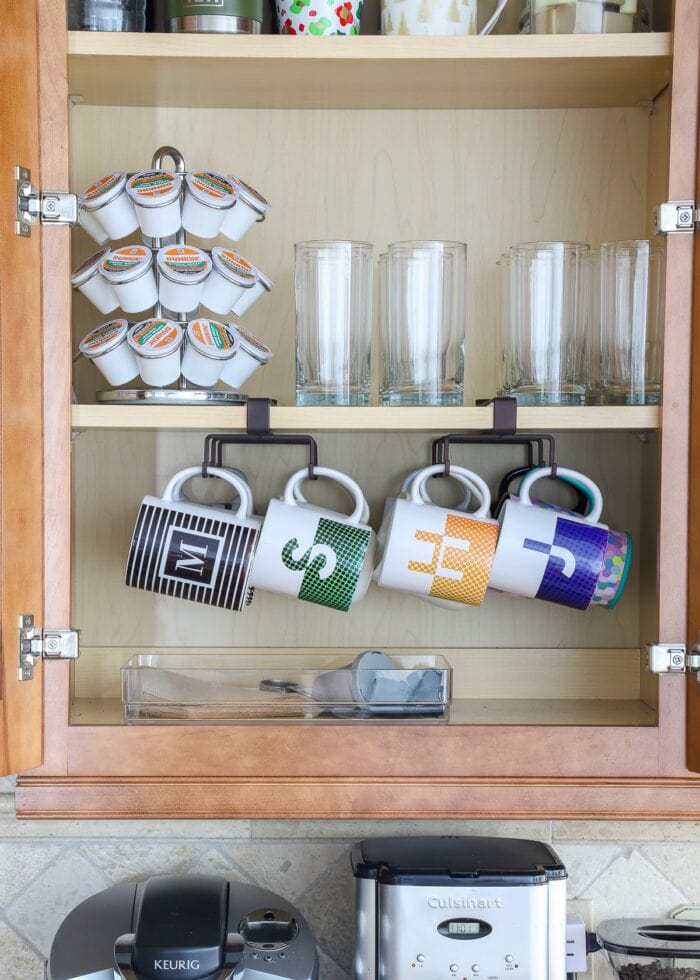
Mug hooks are metal or plastic hooks that hang under shelves. They let you hang mugs by their handles, saving shelf space.
- Great for: Cabinets with tall shelves and sturdy construction
- Pro tip: Make sure your shelf can support the extra weight
2. Stackable Shelves
Stackable shelves create extra layers inside your cabinet, so you can use vertical space without stacking mugs directly on top of each other.
- Great for: Cabinets with tall spaces
- Pro tip: Choose shelves with a non-slip surface to keep mugs steady
3. Mug Trees
A mug tree is a small rack that sits on your cabinet shelf or countertop. It holds several mugs on pegs.
- Great for: People who use the same mugs daily
- Pro tip: Works best with matching mugs for a tidy look
4. Shelf Risers
Shelf risers are like stackable shelves but usually lower and wider. They let you put one row of mugs below and another above.
- Great for: Cabinets with deep shelves
- Pro tip: Make sure risers are sturdy and fit your cabinet size
5. Under-shelf Racks
Under-shelf racks slide onto a shelf and provide hooks below. They are easy to install and remove.
- Great for: Renters or people who don’t want to drill holes
- Pro tip: Check that your cabinet door will still close
6. Drawer Inserts
Some people store mugs in deep drawers using drawer inserts. These keep mugs from sliding around.
- Great for: Kitchens with large, deep drawers
- Pro tip: Use inserts with adjustable sections for different mug sizes
7. Custom Cabinetry
If you’re remodeling, custom shelves made for mugs can maximize space. These often include grooves or pegs to hold mugs securely.
- Great for: People building a new kitchen or making big changes
- Pro tip: Think about your mug collection size before deciding
Here’s a comparison of popular organization tools:
| Tool | Space Saved | Installation | Best For |
|---|---|---|---|
| Mug Hooks | High | Easy | Tall shelves |
| Stackable Shelves | Medium | Easy | Wide cabinets |
| Mug Tree | Low | No install | Frequent use |
| Shelf Risers | Medium | Easy | Deep shelves |
| Under-Shelf Rack | High | Very easy | Rental homes |
| Drawer Insert | Medium | Easy | Deep drawers |
| Custom Shelves | Very high | Pro install | New kitchens |
Not all cabinets need special tools—sometimes a simple rearrangement works best. But for crowded cabinets, these tools make a big difference.
Deciding On The Best Organization Method
Your ideal method depends on your mugs, space, and habits. Here’s how to choose:
- If you use the same few mugs daily, keep these at eye level and easy to grab.
- For large collections, store rarely used mugs on higher shelves or in another location.
- If you have mugs of different sizes, group them by height or shape to prevent accidents.
- If you have a mix of delicate and sturdy mugs, keep fragile ones separate to prevent chips.
You can combine methods—for example, use hooks for daily mugs and shelves for special ones. The key is to make your system easy to maintain. If it’s too complicated, you won’t stick with it.
Step-by-step Mug Organization Process
Now that you have your tools and plan, let’s organize your mugs step by step.
Step 1: Remove Everything
Take all mugs out of the cabinet. Clean the shelves with a damp cloth. This removes dust and helps you start fresh.
Step 2: Sort And Select
Look at your mugs and decide what to keep. Set aside mugs that are chipped, too similar, or never used. Don’t feel guilty about letting go of mugs you don’t love. You’ll appreciate the extra space.
Step 3: Group By Use
Place mugs into groups:
- Daily use
- Occasional (guests, holidays)
- Decorative or sentimental
This helps you decide where each group should go.
Step 4: Plan Your Layout
Think about your cabinet space. If you have adjustable shelves, move them to fit your mugs.
Decide if you’ll use hooks, risers, or other tools. Place these in the cabinet to test the fit before adding mugs.
Step 5: Place Mugs Back
Start with daily mugs at the most convenient spot—usually the lower, front area. Place occasional mugs higher up or at the back.
Use your chosen tools:
- Hang mugs by handles if you’re using hooks or racks.
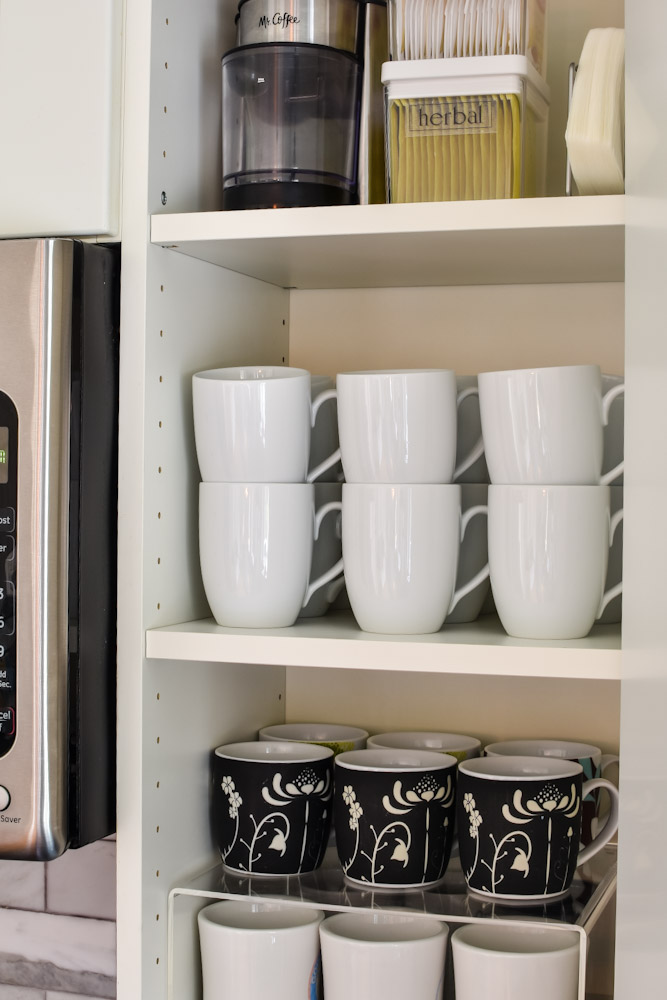
- Place mugs upright, not on their sides, to avoid chipping.
- Don’t stack mugs unless they are designed for stacking.
Step 6: Adjust And Test
Once mugs are in place, open and close the cabinet door. Make sure everything fits and nothing moves. Try taking mugs in and out to check for ease.
Adjust as needed. Sometimes a small shift makes a big difference.
Step 7: Store Extras Elsewhere
If you have too many mugs for the cabinet, store extras in another area, like a pantry or storage box. Rotate mugs seasonally if you like variety.
Tips For Long-term Mug Organization
Keeping your mugs organized is not a one-time job. Here are tips for maintaining order:
- Use a “one in, one out” rule. When you get a new mug, donate or recycle an old one.
- Do a quick check every few months. Remove mugs you don’t use.
- Clean shelves regularly. Dust and coffee stains can build up.
- Teach family members your system. If everyone puts mugs back in the right spot, your cabinet stays neat.
- Store mugs dry. Putting away wet mugs can cause odors or mold.
Creative Mug Storage Ideas
Not every kitchen is the same, and sometimes cabinets just don’t work for your collection. Here are creative ideas if you need alternatives:
- Pegboard wall: Hang a pegboard in your kitchen and use hooks for mugs. This adds color and saves cabinet space.
- Floating shelves: Install open shelves on your wall to display mugs. This looks stylish and keeps mugs accessible.
- Glass-front cabinets: If you have beautiful mugs, use glass cabinets to show them off.
- Hanging rail systems: Install a rail with hooks below cabinets for mugs. This works well in small kitchens.
- Baskets or bins: For rarely used mugs, keep them in labeled bins in a closet or pantry.
Some people use a mix of methods, keeping daily mugs in the cabinet and displaying favorites elsewhere.
Common Mug Organization Mistakes
Organizing mugs is simple, but a few common mistakes can cause trouble:
- Overcrowding: Stuffing too many mugs into a small space leads to chips and frustration.
- Stacking unstable mugs: Not all mugs are made to stack. Stack only if they fit securely.
- Ignoring mug size: Placing large and small mugs together often wastes space. Group by size for a neater look.
- Hiding favorites: If your best mug is at the back, you’ll always reach around and mess up the order.
- Not adjusting shelves: Many people never move their cabinet shelves, but a small adjustment can double your space.
Remember, a system that works for someone else might not work for you. Adjust as needed.
How Organization Tools Impact Space
Choosing the right tool can double or triple your mug storage. Here’s a data comparison of mug capacity with different tools:
| Cabinet Size | No Tools (Mugs) | With Hooks (Mugs) | With Risers (Mugs) |
|---|---|---|---|
| Standard (24” wide) | 8–10 | 14–16 | 12–14 |
| Large (36” wide) | 14–16 | 22–24 | 18–20 |
| Small (18” wide) | 6–8 | 10–12 | 8–10 |
As you can see, using simple tools like hooks or risers can greatly increase how many mugs fit safely.
Credit: thehomesihavemade.com
Cleaning And Maintenance Tips
A clean mug cabinet is healthier and more attractive. Here’s how to keep it that way:
- Wipe down shelves every month with a damp cloth and mild soap. Dry before replacing mugs.
- Check for cracks or chips during cleaning. Remove damaged mugs to avoid accidents.
- Clean mug handles—they often get sticky from drinks or hands.
- Avoid overcrowding so air can circulate, preventing mold.
- Use shelf liners if you want extra protection for delicate mugs.
By making cleaning part of your routine, your mugs and cabinet will stay in good shape.
Special Considerations For Unique Mug Types
Some mugs need extra care when organizing. Here’s what to watch for:
Large Or Tall Mugs
Big mugs take up more space. Place these at the back or on higher shelves. If you use them often, adjust shelf height or use hooks.
Travel Mugs
Travel mugs are usually taller and may not fit standard shelves. Store these upright in a deep area or use a separate bin.
Delicate Or Expensive Mugs
Fine china or collectible mugs can chip easily. Store these apart from everyday mugs, ideally on a padded shelf or with dividers.
Mugs With Irregular Handles
Some mugs have wide or shaped handles that don’t fit well on hooks. Place these upright on the shelf, not hanging.
Children’s Mugs
If you have kids, keep their mugs on a low shelf for easy access. Choose sturdy mugs for children to avoid breaks.
Organizing Mugs For Small Kitchens
Small kitchens demand extra creativity. Here are strategies for tight spaces:
- Use under-shelf hooks to add storage without taking up shelf space.
- Choose stackable mugs that fit neatly together.
- Hang mugs on the inside of cabinet doors using adhesive hooks (only for lightweight mugs).
- Use vertical mug trees that take up minimal footprint.
- Limit your mug collection to what you truly need.
Here’s a quick look at space-saving methods for small kitchens:
| Method | Cabinet Space Needed | Pros | Cons |
|---|---|---|---|
| Hooks Under Shelf | Minimal | Easy to install | Not for heavy mugs |
| Stackable Mugs | Small | Efficient | Must buy matching mugs |
| Vertical Mug Tree | Counter or shelf | Holds many mugs | Needs stable base |
| Cabinet Door Hooks | None | Uses unused space | Only for lightweight mugs |
With the right approach, even a small kitchen can hold a well-organized mug collection.
Making Mug Organization A Family Habit
Organizing mugs is easier if everyone helps. Here’s how to get your family involved:
- Show everyone where each mug type belongs.
- Use labels inside the cabinet for different categories (e.g., “Daily Mugs,” “Special Mugs”).
- Teach children to put their mugs back after washing.
- Set a reminder every three months for a quick cabinet check.
Involving your family keeps your system working longer.
Credit: smallishhome.com
Two Key Insights Most People Miss
- Think vertically, not just horizontally. Many people only use the shelf surface. Adding hooks, racks, or risers unlocks much more storage without needing a bigger cabinet.
- Organize by frequency, not just by type. Instead of grouping only by mug style or color, group mugs by how often you use them. This simple change saves time and keeps your cabinet tidy.
When To Consider Professional Help
If you have a very large mug collection, or your cabinet is unusually shaped, a professional organizer or carpenter can design custom solutions. While this costs more, it ensures every inch is used well—especially helpful in small kitchens or for collectors.

Credit: bellaorganizing.com
Where To Learn More
For more kitchen organization tips and inspiration, check out this Good Housekeeping guide. It offers practical advice and creative ideas for all kitchen sizes.
Frequently Asked Questions
How Many Mugs Should I Keep In My Cabinet?
Most people only need as many mugs as they have family members, plus a few for guests. A good rule is 1–2 mugs per person in your home. Extra mugs can be stored elsewhere or donated.
What’s The Safest Way To Stack Mugs?
Stack mugs only if they are designed for stacking (flat-bottomed, sturdy). Place a soft liner or shelf paper between mugs to prevent chips. Never stack fragile or irregular-shaped mugs.
Can I Hang All Types Of Mugs On Hooks?
No, only mugs with strong handles and a balanced weight should be hung on hooks. Avoid hanging very heavy or delicate mugs—these can break or fall.
Is It Better To Store Mugs Upside Down Or Right Side Up?
Storing mugs right side up is safest. Upside down can trap moisture, leading to odors or mold. Only store upside down if your shelf is very dusty and you use mugs often.
How Often Should I Clean My Mug Cabinet?
Wipe your mug cabinet every 1–2 months. Clean more often if you notice stains, crumbs, or sticky spots. Regular cleaning keeps your mugs hygienic and fresh.
Keeping your mugs organized doesn’t need to be a big project. With a few smart tools, a clear plan, and regular checks, you can enjoy a tidy, safe, and efficient kitchen cabinet—one that makes every cup of coffee or tea just a bit more enjoyable.