
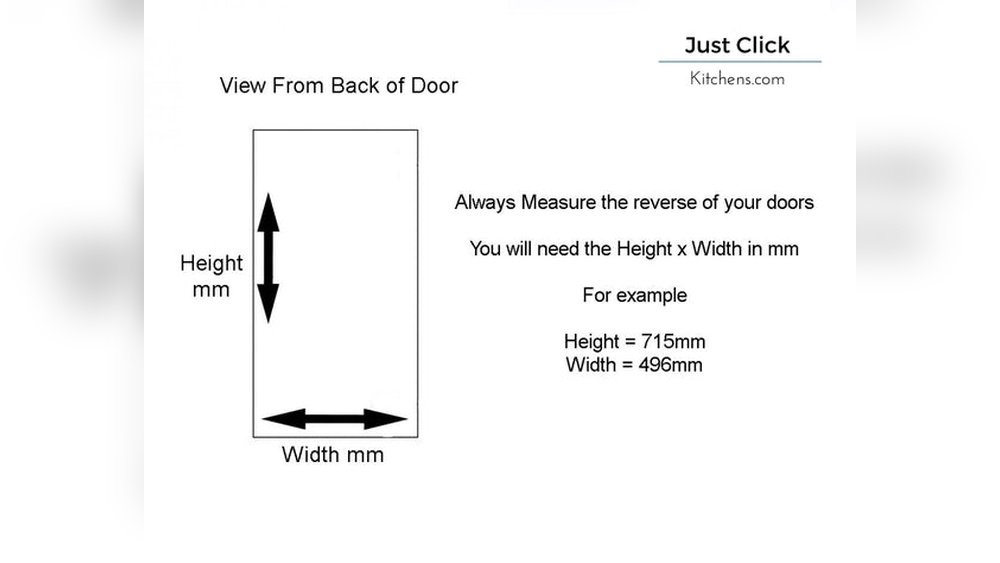
Measuring kitchen cabinet doors may sound simple. But if you get it wrong, your new doors will not fit, and your kitchen will look unfinished. Whether you want to replace cabinet doors, order custom ones, or start a full kitchen remodel, knowing how to measure accurately is key.
Many people make small mistakes that cost time and money. This article will walk you through every step, tool, and detail for measuring kitchen cabinet doors the right way. Even if you have never picked up a measuring tape, you’ll learn how to avoid common errors and get the perfect size every time.
Why Accurate Measurement Matters
Getting the cabinet door measurements right saves you from a lot of trouble. If your doors are too big, they won’t close. If they’re too small, gaps will show and dust will get inside. When you order custom or replacement doors, most companies will not accept returns for wrong sizes. Accurate measurements help you:
- Avoid wasting money on wrong-sized doors
- Ensure proper door function (smooth opening and closing)
- Achieve a neat and professional look
- Speed up installation
Many beginners miss small details, like measuring the overlay or accounting for hinges. These details can change the size you need by half an inch or more.
Understanding Cabinet Door Types
Before you measure, you need to know which type of cabinet door you have or want. There are three main types:
- Overlay Doors – These doors sit on top of the cabinet frame, covering it partly or fully.
- Inset Doors – These doors fit inside the cabinet frame, sitting flush with the front.
- Partial Overlay – These cover only part of the frame, leaving some visible.
Each type requires a slightly different measuring method. If you aren’t sure which one you have, look at the door’s edge when closed. An overlay door will sit over the cabinet edge, while an inset door will be level with the frame.
Here’s a quick visual comparison:
| Door Type | Position | Frame Visibility |
|---|---|---|
| Overlay | On top of frame | Hidden or mostly hidden |
| Inset | Inside frame | Fully visible |
| Partial Overlay | Partially over frame | Some frame visible |
Knowing your door type will guide how you measure and what size to order.
Tools You Need For Accurate Measurement
You don’t need expensive equipment to measure kitchen cabinet doors, but you do need the right basic tools. Here is what you should have:
- Tape measure (preferably metal, at least 12 feet long)
- Pencil
- Paper or a notebook
- Straight edge or ruler
- Calculator (optional, for quick math)
- Camera or smartphone (to take photos for reference)
A laser measure is not required for most home kitchens. The classic tape measure is more than enough. Always double-check your measurements before writing them down.
Key Terms You Must Know
Many people get confused by technical terms. Here are some you’ll see often:
- Width: Distance from left to right of the door (horizontal measurement).
- Height: Distance from top to bottom of the door (vertical measurement).
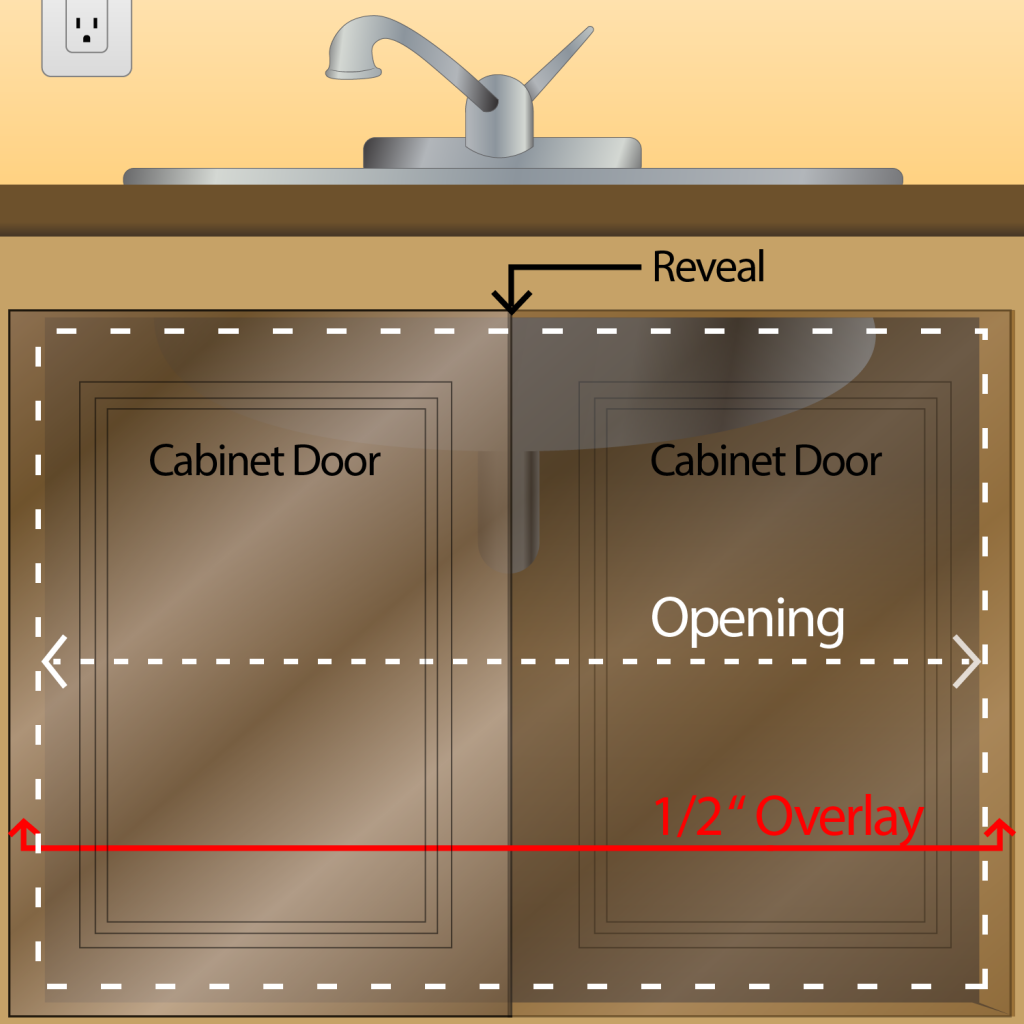
- Overlay: How much the door covers the cabinet frame.
- Reveal: The part of the cabinet frame left visible.
- Opening Size: The exact size of the opening without the door.
- Pair Doors: Two doors that meet in the center of a wide cabinet.
Understanding these terms will help you follow instructions and avoid errors.

Credit: cabinetdoorsnmore.com
Measuring For Overlay Cabinet Doors
Overlay doors are the most common in modern kitchens. The process is straightforward if you follow these steps:
Step 1: Measure The Cabinet Opening
The cabinet opening is the space without any door. To measure:
- Open the cabinet and measure the width of the opening from inside edge to inside edge.
- Measure the height from top inside edge to bottom inside edge.
Write down both numbers. Always measure in inches for the US market. For example: Width = 15”, Height = 30”.
Step 2: Decide On Overlay Size
Most overlay doors have a standard overlay, like 1/2” or 1”. The overlay is how much the door will extend past the opening onto the frame. You need this for each side.
Common overlays:
- 1/2” overlay: Each side of the door covers 1/2” of the frame.
- 1” overlay: Each side covers 1”.
Check your existing doors or hinges to see what overlay is being used. If you are replacing doors only, match the original overlay.
Step 3: Calculate Door Size
Add the overlay to the opening measurements:
- Door width = Opening width + (overlay x 2)
- Door height = Opening height + (overlay x 2) if overlay is on top and bottom
Example:
- Opening width: 15”
- Overlay: 1/2” (per side)
- Door width: 15” + 1” = 16”
Repeat for the height.
Step 4: Special Cases For Double Doors
If your cabinet has two doors that meet in the middle:
- Take the total calculated door width
- Divide by 2
- Subtract 1/16” from each door (to allow them to open and close smoothly)
So, if the total width is 32”, each door should be 15-15/16” wide.
Step 5: Record And Label
Write down all measurements clearly, labeling which door they are for. Take a photo of the cabinet with a sticky note showing the size if possible.
Measuring For Inset Cabinet Doors
Inset doors require more precision. Small mistakes are obvious because the door sits inside the frame.
Step 1: Measure The Opening
For inset doors, measure the opening just like before (width and height). Use a metal tape for the most accuracy.
Step 2: Subtract The Reveal
A reveal or gap is needed so the door can open and close. Standard reveals are 1/16” to 1/8” on all four sides.
- Subtract 1/8” (or your chosen reveal) from the total width and height.
Example:
- Opening width: 15”
- Reveal: 1/8” x 2 = 1/4”
- Door width: 15” – 1/4” = 14-3/4”
Step 3: Double Doors
If you have two doors:
- Divide the total width by 2
- Subtract 1/32” from each door for the center gap
This avoids the doors rubbing against each other.
Step 4: Check For Squareness
Use a carpenter’s square to make sure the cabinet opening is not tilted. If it is, measure at the top, middle, and bottom, and use the smallest measurement.
Measuring For Partial Overlay Doors
Partial overlay doors are found in older kitchens and some budget cabinet lines.
Step 1: Measure The Opening
Use the same process as with overlay doors to get the opening size.
Step 2: Add Partial Overlay
Partial overlays are usually 3/8” to 1/2” per side. Check your current doors or measure the visible frame to confirm.
- Door width = Opening width + (overlay x 2)
- Door height = Opening height + (overlay x 2) if overlay is top and bottom
Step 3: Mark All Measurements
Write each door’s size and its location. Note if any cabinets have slightly different sizes.
Measuring Odd-shaped Or Corner Cabinet Doors
Many kitchens have corner cabinets or odd shapes. These need special attention.
Lazy Susan Or Pie-shaped Doors
- Measure the opening at the widest and narrowest points.
- For pie-shaped doors, trace the opening and measure the longest straight lines.
- Always check with the door supplier, as these doors are often custom-made.
Angled Or Diagonal Doors
- Measure the opening’s height, width, and both diagonals.
- Take clear photos and send drawings to your door supplier.
Measuring For Glass Or Mullion Cabinet Doors
Glass doors and mullion (decorative grid) doors are measured the same as standard overlay or inset doors. But, you should:
- Measure the opening and overlay as usual.
- Double-check frame thickness, as glass adds weight.
- Record if you want the glass to be centered or offset.
Measuring Drawer Fronts
Drawer fronts are just as important as doors. Here’s how to measure:
- Measure the opening width and height.
- Add the same overlay as your doors (if overlay style).
- For inset drawer fronts, subtract the reveal (gap).
- For stacked drawers, leave at least 1/8” gap between each front.
Common Mistakes And How To Avoid Them
Many people make small errors that ruin the fit. Here are mistakes to avoid:
- Measuring only the old door – Always measure the opening, not just the door. Old doors may be warped or the wrong size.
- Ignoring overlay or reveal – This is the most common error.
- Not checking for squareness – Cabinets can be slightly out of square, especially in older homes.
- Measuring only once – Always measure twice for accuracy.
- Not labeling measurements – It’s easy to mix up sizes for similar cabinets.
- Forgetting about hinges – Some hinges need more space for the door to open.
Example: Measuring A Standard Kitchen Base Cabinet
Let’s say you have a base cabinet with one opening 18” wide and 30” high, and you want overlay doors with a 1/2” overlay.
- Opening width: 18”
- Opening height: 30”
- Overlay: 1/2” per side
Calculation:
- Door width: 18” + 1” = 19”
- Door height: 30” + 1” = 31”
If you need two doors:
- Divide 19” by 2 = 9.5”
- Subtract 1/16” from each door: 9-7/16” per door
This ensures both doors close properly without hitting each other.
Recording And Organizing Your Measurements
Staying organized is key, especially if you are measuring multiple cabinets.
- Use a numbering system for each cabinet (e.g., B1 for base cabinet 1, W1 for wall cabinet 1)
- Draw a simple sketch of your kitchen and label each cabinet
- Record all measurements in a notebook or spreadsheet
Here is a simple way to record:
| Cabinet # | Type | Opening Width | Opening Height | Overlay/Reveal | Door Width | Door Height |
|---|---|---|---|---|---|---|
| B1 | Base | 18” | 30” | 1/2” Overlay | 19” | 31” |
| W1 | Wall | 15” | 30” | Inset (1/8” Reveal) | 14-3/4” | 29-3/4” |
Tips For Measuring Like A Pro
- Use a quality tape measure – Cheap tapes can sag and give wrong readings.
- Measure twice, write once – Always double-check.
- Check for obstructions – Hinges, moldings, or appliances may affect door swing.
- Photograph each cabinet – If you are ordering online, photos help suppliers understand your kitchen.
- Ask for samples – Some companies send door samples or templates to check size before final order.
What To Do If Your Cabinets Are Not Square
Older cabinets often have openings that are not perfectly square. This can make doors fit poorly. Here’s how to handle it:
- Measure the opening at three points: Top, middle, and bottom.
- Use the smallest measurement for the door size.
- Use a carpenter’s square to see if the frame is tilted.
- Consider ordering doors slightly smaller and adjusting with hinges or fillers during installation.
Measuring For European-style (frameless) Cabinets
European or frameless cabinets do not have a face frame. The door covers the cabinet box directly.
- Measure the width and height of the opening.
- Decide on the overlay (usually 5/8” or 3/4”).
- Add overlay to both width and height.
- For double doors, subtract 1/16” from each for the center gap.
Frameless cabinets are less forgiving of mistakes, so be very precise.

Credit: moderne.company
Key Differences: Face Frame Vs. Frameless Cabinets
Understanding whether you have face frame or frameless cabinets is essential.
| Feature | Face Frame | Frameless |
|---|---|---|
| Frame around opening | Yes | No |
| Overlay needed | Usually 1/2” or more | 5/8” to 3/4” typical |
| Hinge type | Face frame hinge | European hinge |
| Measuring method | Opening + overlay | Opening + overlay, more precise |
Ordering New Cabinet Doors: What To Provide
When you order new cabinet doors, suppliers will usually ask for:
- Exact door width and height (not just the opening size)
- Door type (overlay, inset, partial overlay)
- Hinge type and overlay size
- Quantity and location of each door
- Finish or color preferences
Never assume the supplier will “figure out” the right size. Give all details and photos if possible.
Advanced Tips For Custom Kitchens
If you have a custom kitchen or unique design:
- Check for hidden appliances or pull-outs
- Note any special shapes (arched, angled, glass inserts)
- Consider thicker doors for high-end finishes
- Ask the supplier for a measuring worksheet
For complex kitchens, professional measurement is a wise investment.
When To Hire A Professional
DIY measuring works for most standard kitchens. But you should hire a pro if:
- Your cabinets are very old or custom-made
- Openings are not square or are irregular
- You want a high-end finish or special door shapes
- You are not confident with a tape measure
A professional will have the tools and experience to get it right the first time.
Credit: www.fastcabinetdoors.com
Why Some Doors Warp Or Don’t Fit
Sometimes, new doors arrive and don’t fit as expected. Causes can include:
- Incorrect measurements
- Not accounting for seasonal wood movement (humidity makes wood expand or shrink)
- Poor-quality doors
- Cabinets that are out of square
To prevent problems, always measure carefully, choose quality materials, and allow for small gaps.
How To Measure Hinges And Hardware Placement
Besides the door size, you may need to provide hinge hole locations. Standard European hinges are placed 3” from the top and bottom. Measure:
- Distance from top of door to center of first hinge hole
- Distance from bottom to center of second hinge hole
- Distance from edge of door to center of hole
If you are reusing existing hinges, measure their exact placement.
Practical Example: Full Measurement Process
Let’s walk through a real example. Suppose you have three cabinets:
- Sink Base Cabinet
- Opening width: 30”
- Opening height: 22”
- Overlay: 1/2”
- Two doors needed
Door width: (30” + 1”) / 2 = 15.5” per door, minus 1/16” = 15-7/16”
Door Height: 22” + 1” = 23”
- Wall Cabinet
- Opening width: 15”
- Opening height: 30”
- Overlay: 1/2”
- One door
Door Width: 15” + 1” = 16”
Door Height: 30” + 1” = 31”
- Corner Cabinet
- Opening width (diagonal): 17”
- Overlay: 1/2”
Door Width: 17” + 1” = 18”
Record these and label each clearly for your order.
Final Checklist Before Ordering
Before you place your order, run through this checklist:
- Measured every opening twice
- Wrote down overlay or reveal for each cabinet
- Labeled each door with cabinet location
- Checked for squareness
- Noted hinge type and overlay
- Photographed each cabinet (optional, but helpful)
- Confirmed special needs (e.g., glass, arches, drawer fronts)
- Double-checked all math
If you follow this process, you will get the right size every time.
Where To Learn More
For more details about overlay types and cabinet door styles, check out this resource from Wikipedia.
Frequently Asked Questions
How Do I Know If I Have Overlay Or Inset Cabinet Doors?
Look at the door when it is closed. If it sits on top of the cabinet frame and covers it, it’s overlay. If it sits level with the frame and the frame is visible all around, it’s inset.
What Is The Standard Gap Between Double Cabinet Doors?
For most doors, leave a 1/16” gap between each door. This prevents rubbing and allows for wood movement.
Can I Just Measure My Old Doors To Order New Ones?
It’s best to measure the opening instead. Old doors might be warped or the wrong size. Always start with the opening, then calculate the new door size.
How Do I Measure For European (frameless) Cabinets?
Measure the opening’s width and height, decide on your overlay (usually 5/8” or 3/4”), and add this to both measurements. Subtract 1/16” for each double door to allow for a gap.
What If My Cabinets Are Not Square?
Measure the opening at the top, middle, and bottom. Use the smallest measurement for your door size, or consult a professional if the difference is large.
Measuring kitchen cabinet doors may take time, but doing it right saves you from headaches later. With careful attention and the steps above, you’ll get perfect cabinet doors that fit and look great for years.