
Many people love the idea of fast, healthy cooking at home. In recent years, the air fry microwave has become a popular kitchen appliance for this reason. It combines the speed and convenience of a microwave with the crispy results of an air fryer. But if you have never used one before, it can feel a bit confusing. What can you cook? How do you use the different functions? Is it really healthier? And what mistakes should you avoid? This guide will give you clear, step-by-step advice to help you get the most from your air fry microwave—whether you are a beginner or just looking to learn more advanced tips.
What Is An Air Fry Microwave?
An air fry microwave is a unique appliance that combines three main cooking functions in one:
- Microwave: Heats food quickly using electromagnetic waves.
- Air Fryer: Uses hot air circulation to make food crispy, similar to deep frying but with little or no oil.
- Convection Oven: Cooks food evenly by blowing hot air around it.
These three functions mean you can use it for almost any type of cooking. For example, you can use the microwave to reheat leftovers, the air fryer to make crispy fries, or the convection mode to bake a cake.
How Does An Air Fry Microwave Work?
Inside, there is a fan and a special heating element. When you choose the air fry or convection mode, the fan blows hot air around your food. This makes the outside crisp, like frying, but without soaking food in oil.
The microwave mode, on the other hand, heats food quickly from the inside out.
This combination is what makes the appliance so versatile. It also saves space, because you do not need to buy three separate machines.
Main Benefits Of Using An Air Fry Microwave
People choose air fry microwaves for many reasons. Here are the most important advantages:
- Healthier Cooking: Air frying uses up to 85% less oil than deep frying. This can help lower calories and fat.
- Faster Meals: You can cook, bake, or fry foods much faster than in a regular oven.
- Crispy Results: Foods like fries, chicken, or vegetables come out crispy, not soggy, which is usually hard to achieve with a standard microwave.
- Multi-Function: One device replaces several kitchen appliances, saving space and money.
- Easy Cleaning: Most air fry microwaves have non-stick interiors and dishwasher-safe parts, making clean-up fast.
- Even Cooking: The convection and air fry functions help cook food evenly on all sides.
Getting To Know Your Air Fry Microwave
Before you start cooking, it is important to understand the basic parts and controls of your device. Most air fry microwaves have similar features, but always check your user manual for any special details.
Key Components
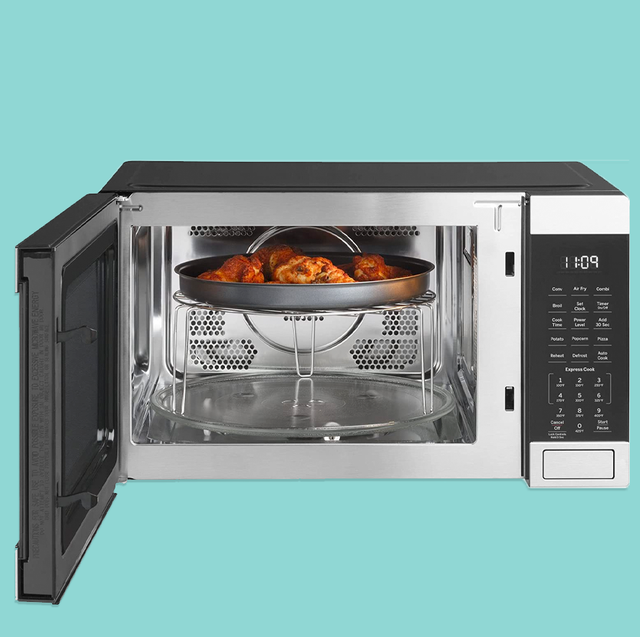
- Control Panel: This is usually a digital display with buttons or a touch screen. You select cooking modes, time, and temperature here.
- Turntable: Spins your food for even microwave heating.
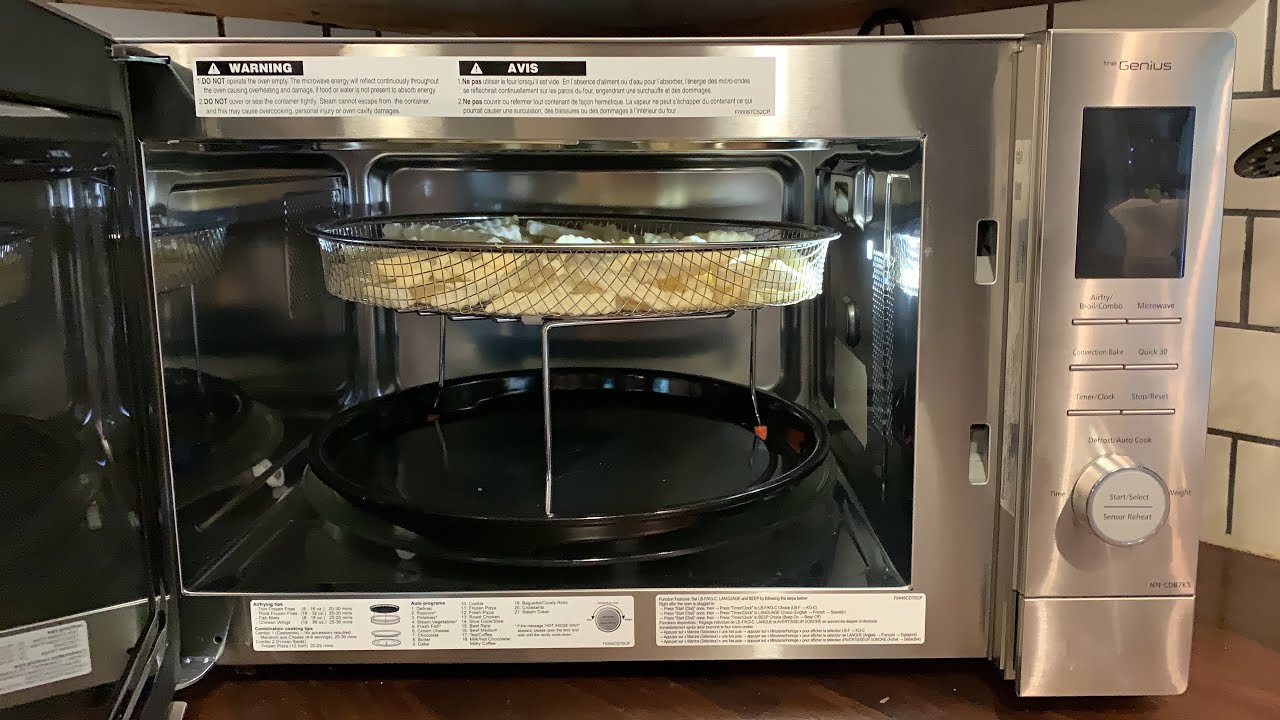
- Air Fry Basket or Tray: Allows hot air to reach all sides of your food during air frying.
- Wire Rack: Used for convection cooking or grilling.
- Crumb Tray/Drip Tray: Collects crumbs or oil drips, making cleaning easier.
Common Preset Functions
Most models have preset buttons for popular foods, like:
- French fries
- Chicken wings
- Pizza
- Vegetables
- Reheat
These presets adjust the time and temperature automatically. However, learning to adjust settings yourself can give you better results for your tastes.
Safety Features
Air fry microwaves include:
- Child Lock: Prevents accidental starts.
- Auto Shutoff: Turns off the appliance after cooking.
- Cool-touch Exterior: Keeps the outside safe to touch.
Always follow safety instructions, especially when using high heat.
How To Use The Microwave Function
The microwave mode works just like a traditional microwave. It is best for heating leftovers, making popcorn, or cooking simple meals quickly.
Steps For Using The Microwave Function
- Place Food Properly: Use microwave-safe containers. Avoid metal or foil.
- Select Microwave Mode: Press the “Microwave” button on the control panel.
- Set Power Level: Some foods need high power, others low. For example, defrosting needs low power.
- Set Cooking Time: Use the keypad or dial to enter the number of minutes.
- Start Cooking: Press “Start.” The turntable will spin to heat food evenly.
- Check and Stir: For best results, pause halfway and stir or rotate the food.
Example: Reheating Leftovers
If you want to reheat pasta, place it in a microwave-safe bowl. Cover with a microwave lid or plastic wrap (leave a small vent). Set to medium power for 1-2 minutes. Stir and check if it is hot enough. If not, heat for 30 seconds more.
Tips For Best Results
- Use round containers for even cooking.
- Add a small cup of water when reheating pizza or rice to prevent drying.
- Cover food loosely to avoid splatters.
How To Use The Air Fry Function
The air fry mode is what sets this appliance apart. It gives food a crispy, golden finish, like fried food, but with little to no oil.
Steps For Using The Air Fry Function
- Preheat (if needed): Some models preheat automatically; others require you to run the air fry function empty for 2-3 minutes.
- Prepare Food: Cut food into even pieces. Lightly coat with oil if desired for extra crispiness.
- Arrange in Basket or Tray: Place food in a single layer in the air fry basket or tray. Do not overcrowd.
- Select Air Fry Mode: Press the “Air Fry” button.
- Set Temperature and Time: Typical temperatures range from 350°F to 400°F (175°C to 205°C). Time depends on the food.
- Start Cooking: The fan will circulate hot air.
- Shake or Flip Food: Halfway through, open the door and shake the basket or flip the food for even browning.
- Check for Doneness: When time is up, check if food is crispy and cooked through. Add more time if needed.
Example: Making French Fries
- Cut potatoes into sticks.
- Toss with 1 tablespoon of oil and a little salt.
- Place fries in the air fry basket, in one layer.
- Set to air fry at 400°F for 18-22 minutes, shaking halfway.
- Enjoy hot, crispy fries.
Tips For Crispy Results
- Dry food before air frying—moisture prevents crispiness.
- Do not overcrowd the basket; air must flow around each piece.
- Use a bit of oil spray for a golden color.
- For breaded foods, use panko breadcrumbs for extra crunch.
Foods You Can Air Fry
- Chicken wings, nuggets, or drumsticks
- Fish fillets
- Frozen foods (fries, onion rings, mozzarella sticks)
- Chopped vegetables (broccoli, cauliflower, zucchini)
- Shrimp or tofu cubes
Some foods, like battered items or those with lots of wet sauce, may not work as well in air fry mode.
Using The Convection Oven Function
The convection oven mode is perfect for baking, roasting, and even grilling. Hot air moves evenly around your food, cooking it faster and more evenly than a regular oven.
Steps For Using The Convection Function
- Preheat Oven: Many recipes work best if the oven is preheated. Set the temperature and wait until the indicator shows it’s ready.
- Prepare Food: Place your food on a baking tray or wire rack.
- Select Convection Mode: Press the “Convection” or “Bake” button.
- Set Temperature and Time: Baking usually uses 325°F to 375°F (160°C to 190°C).
- Monitor Food: Check food near the end of cooking, as convection ovens often cook faster than expected.
Example: Baking Cookies
- Mix cookie dough as usual.
- Drop spoonfuls onto a baking sheet.
- Preheat to 350°F.
- Bake for 10-12 minutes, checking for a golden brown color.
Tips For Baking And Roasting
- Use low-sided pans for better air flow.
- Lower recipe temperature by 25°F compared to a standard oven.
- Rotate pans halfway through for even browning.
Credit: nilds.gov.ng
Comparing Cooking Modes
Understanding when to use each function is key. Here’s a comparison to help you decide:
| Function | Best For | Speed | Texture | Oil Needed |
|---|---|---|---|---|
| Microwave | Reheating, Defrosting, Simple Meals | Very Fast | Soft, Steamed | None |
| Air Fry | Fries, Chicken, Veggies | Fast | Crispy, Crunchy | Very Little |
| Convection | Baking, Roasting | Medium | Even, Golden | Some Recipes |
If you want speed, use the microwave. For crispiness, choose air fry. For baking, roasting, or grilling, use convection.
How To Combine Functions For Better Results
One of the best things about air fry microwaves is that you can use more than one function in a single recipe. For example, you can use the microwave to cook food quickly, then switch to air fry mode to make it crispy.
Example: Quick Chicken Nuggets
- Place frozen chicken nuggets in the microwave for 2-3 minutes to heat the inside.
- Switch to air fry mode at 400°F for 5 minutes to crisp the outside.
- The result: Fast, crispy, and juicy nuggets.
Example: Baked Potato
- Microwave a potato for 5 minutes to cook it through.
- Switch to convection or air fry mode at 400°F for 10 minutes to get a crispy skin.
This combination saves time and gives you the best of both worlds.
Cleaning And Maintenance
Keeping your air fry microwave clean is important for safety and good results.
Cleaning Steps
- Unplug and Cool Down: Always unplug the appliance and let it cool before cleaning.
- Remove Accessories: Take out the turntable, basket, rack, and crumb tray.
- Wash Removable Parts: Clean these with warm soapy water or in the dishwasher if allowed.
- Wipe the Interior: Use a damp cloth to wipe the inside. For tough stains, use a mix of water and baking soda.
- Clean the Exterior: Wipe with a soft, damp cloth.
- Check Vents and Fan: Make sure vents are clear. Wipe the fan area gently to remove crumbs or grease.
Maintenance Tips
- Clean after each use to prevent smells and bacteria.
- Avoid harsh chemicals or abrasive pads.
- Dry all parts before reassembling.
- Check the user manual for specific cleaning advice.
Mistakes To Avoid When Using An Air Fry Microwave
Even experienced cooks make mistakes when using a new appliance. Here are common errors and how to avoid them:
- Overcrowding the Basket: Too much food blocks air flow and results in soggy food. Cook in batches if needed.
- Skipping Preheat: Some recipes require preheating for best results. Check if your model needs it.
- Not Flipping Food: For even crispiness, shake or flip food halfway through.
- Using Too Much Oil: Air frying uses less oil. Too much can make food greasy and cause smoke.
- Wrong Containers: Never use metal in microwave mode. Use only microwave-safe or oven-safe dishes.
- Ignoring Power Settings: High power is not always better. Use the right setting for your food.
- Not Cleaning Regularly: Grease and crumbs can burn, causing smells or even fires.
- Cooking Wet-Battered Foods: Liquid batters can drip and make a mess in air fry mode. Use dry coatings instead.
Recipes For Your Air Fry Microwave
Here are some easy and popular recipes to try. They show the range of foods you can prepare.
1. Air Fried Chicken Wings
- Ingredients: 1 lb chicken wings, 1 tbsp oil, salt, pepper, garlic powder, paprika.
- Instructions:
- Dry wings and toss with oil and spices.
- Place in air fry basket in a single layer.
- Air fry at 400°F for 20 minutes, flipping halfway.
- Serve hot.
2. Roasted Vegetables
- Ingredients: 2 cups mixed vegetables (carrots, broccoli, peppers), 1 tbsp oil, salt, herbs.
- Instructions:
- Cut vegetables into even pieces.
- Toss with oil, salt, and herbs.
- Spread on a baking tray.
- Use convection mode at 375°F for 15-18 minutes, stirring once.
3. Microwave Oatmeal
- Ingredients: ½ cup oats, 1 cup milk or water, pinch of salt.
- Instructions:
- Place oats, milk, and salt in a microwave-safe bowl.
- Microwave on high for 2-3 minutes.
- Stir and let sit for 1 minute before eating.
4. Air Fry French Toast Sticks
- Ingredients: 4 slices bread, 2 eggs, ¼ cup milk, ½ tsp cinnamon, 1 tbsp sugar.
- Instructions:
- Cut bread into sticks.
- Beat eggs, milk, cinnamon, and sugar together.
- Dip bread in mixture and place in air fry basket.
- Air fry at 370°F for 7-8 minutes, flipping once.
5. Baked Salmon
- Ingredients: 2 salmon fillets, 1 tbsp olive oil, lemon, herbs.
- Instructions:
- Place salmon on baking tray, brush with oil, season with herbs and lemon.
- Use convection mode at 375°F for 12-15 minutes.
These recipes show how you can use all three functions for different types of meals.
Choosing The Right Air Fry Microwave For Your Needs
If you are planning to buy an air fry microwave, there are a few important factors to consider. Here’s a comparison of key features you should look at:
| Feature | Why It Matters | What to Look For |
|---|---|---|
| Capacity | Fits your typical meal size | At least 1.0 cu ft for families |
| Power (Watts) | Higher wattage cooks faster | 900–1200W is standard |
| Preset Programs | Makes cooking easier for beginners | Fries, pizza, chicken, veggies |
| Accessories | More trays/racks increase options | Basket, grill rack, baking tray |
| Cleaning | Easy clean means more use | Non-stick, removable parts |
| Size | Fits your kitchen space | Measure countertop before buying |
Common Buyer Mistakes
- Choosing a model that is too small for your needs.
- Ignoring the wattage—lower wattage means slower cooking.
- Not checking if accessories are dishwasher safe.
- Forgetting to measure your kitchen space.
For more tips, you can check the Consumer Reports guide.
Energy Efficiency And Cost Savings
An air fry microwave can help save money in the long run. It uses less energy than a traditional oven. Here’s why:
- Faster Cooking: Less time running means less electricity used.
- No Preheat Needed: Many microwave and air fry functions start instantly.
- Smaller Size: Heats only a small space, unlike a large oven.
According to the US Department of Energy, a microwave uses about 80% less energy than a conventional oven for small meals.
Troubleshooting Common Problems
Even the best appliances have issues sometimes. Here are solutions to common problems:
Food Is Not Crispy
- Overcrowding—use less food per batch.
- Not enough oil—spray a little oil on food.
- Food too wet—pat dry before cooking.
Food Is Unevenly Cooked
- Did not flip or shake food halfway.
- Tray or basket not placed in the center.
- Different sized pieces—cut food evenly.
Smoke Or Burning Smell
- Too much oil or greasy food.
- Crumbs or grease not cleaned from last use.
- Cooking at too high a temperature.
Microwave Not Heating
- Door not closed properly.
- Power setting too low.
- Appliance needs to be reset or unplugged.
If you have technical issues, always check the user manual or contact customer service.
Credit: www.youtube.com
Safety Tips For Using An Air Fry Microwave
Safety is very important when using any kitchen appliance. Follow these rules:
- Never use metal or foil in microwave mode.
- Do not block air vents or cover the fan.
- Only use recommended accessories.
- Unplug before cleaning.
- Keep children away from the appliance during use.
Expert Tips For Better Cooking Results
These extra tips can make a big difference in your results:
- Let food rest: After cooking, wait a few minutes before cutting or serving. This helps juices settle and improves flavor.
- Season before and after: Salt and spices stick better if added before cooking, but some flavors are brighter if sprinkled after.
- Experiment with times: Not all foods need the exact time in the manual. Check early and add more time if needed.
- Use parchment paper: For sticky foods like cheese sticks, parchment can prevent sticking and make cleaning easier.
Credit: www.youtube.com
Comparison: Air Fry Microwave Vs. Separate Appliances
Is it better to buy an air fry microwave, or keep using separate devices? Here’s a quick comparison:
| Feature | Air Fry Microwave | Separate Air Fryer + Microwave |
|---|---|---|
| Space Needed | Less | More |
| Cost | Usually lower | Can be higher |
| Cooking Speed | Similar | Similar |
| Cooking Quality | Very good, but sometimes slightly less crispy than a dedicated air fryer | Best possible for each |
| Convenience | High | Medium |
If you have limited space or want simplicity, the all-in-one is a great choice. If you are a serious cook and want the very best in each category, separate appliances might be worth it.
Frequently Asked Questions
How Do I Know Which Foods Are Safe To Air Fry In A Microwave Combo?
Most dry, solid foods work well in air fry mode—like fries, chicken, or breaded vegetables. Wet or heavily battered foods may not crisp up and can drip or burn. Always avoid using foods with a lot of liquid batter.
Do I Need To Use Oil In Air Fry Mode?
You do not need oil, but using a small amount (just a light spray or brush) helps food brown and crisp. Too much oil can cause smoke or make food greasy.
Can I Use Metal Pans Or Foil In My Air Fry Microwave?
Only in convection or air fry modes—never in microwave mode. Metal in the microwave can cause sparks or fires. Always check the user manual for details on safe accessories.
Why Are My Foods Coming Out Soggy?
This usually happens if you overcrowd the basket, do not preheat (if required), or use foods with high moisture. Spread food out in a single layer and dry it before cooking.
Is Air Frying Really Healthier Than Deep Frying?
Yes, air frying uses up to 85% less oil than traditional deep frying. This means fewer calories and less fat. You still get a crispy texture with much less oil absorbed into the food.
An air fry microwave can transform your kitchen routine. It gives you the speed of a microwave, the crispiness of an air fryer, and the baking power of a convection oven—all in one. With the right techniques and recipes, you’ll find yourself making healthier, tastier meals in less time and with less mess.
Whether you are new to cooking or just want to save space, learning how to use your air fry microwave fully will make your life easier and your meals more delicious.