

Cooking brings family and friends together, but it can also leave a mark on your kitchen cabinets. If you’ve ever noticed sticky spots, yellow stains, or a dull finish, you’re seeing the effects of grease buildup. This problem is common in almost every kitchen, especially above and near the stove. Grease doesn’t just look bad—it can cause lasting damage to the surfaces, attract dust, and even make your kitchen smell unpleasant. Over time, cabinets can lose their shine, and the wood or laminate can warp or discolor.
But you don’t have to live with greasy cabinets. With the right steps, you can keep them looking clean and new. Many homeowners don’t realize that simple habits, protective products, and regular care can make a big difference. Some solutions are easy to start today, while others are long-term changes that protect your investment.
In this guide, you’ll learn practical methods to keep kitchen cabinets safe from grease—whether your cabinets are made of wood, laminate, painted, or even stainless steel.
Let’s explore how to shield your kitchen cabinets from grease, prevent damage, and enjoy a cleaner, brighter kitchen for years to come.
Why Grease Is A Problem For Kitchen Cabinets
Grease is more than just a cosmetic issue. When you cook, especially when frying or sautéing, tiny droplets of oil float into the air. These droplets settle on nearby surfaces—cabinets, handles, and even the ceiling. Over time, grease accumulates, forming a sticky layer that grabs dust and dirt.
If left uncleaned, this buildup can:
- Dull cabinet finishes and make them look old
- Cause discoloration, especially on light-colored surfaces
- Attract more dirt and bacteria
- Lead to bad odors
- Damage the wood, paint, or laminate, shortening the life of your cabinets
Many people clean their countertops often but forget about cabinets. Understanding how grease works helps you see why protection is so important.
Understanding Different Cabinet Materials
Not all kitchen cabinets are the same. The material matters because each type handles grease differently. Here’s a quick comparison to help you know what you’re working with:
| Cabinet Material | Grease Resistance | Cleaning Difficulty | Common Issues |
|---|---|---|---|
| Solid Wood | Low | Medium | Staining, warping |
| Laminate | Medium | Easy | Peeling, discoloration |
| Painted MDF | Low | Medium | Chipping, staining |
| Thermofoil | High | Easy | Melting (if overheated) |
| Stainless Steel | High | Easy | Fingerprints, streaks |
Non-obvious insight: Even “easy-to-clean” materials like laminate or stainless steel can become difficult to clean if you let grease build up for months. Frequent, light cleaning is easier than deep cleaning once a year.
Daily Habits That Prevent Grease Buildup
Your everyday actions can make a big difference in keeping cabinets clean. Here are some simple habits that protect against grease:
- Wipe after cooking: After you finish using the stove, quickly wipe nearby cabinet surfaces with a damp microfiber cloth. This stops grease from sticking and hardening.
- Use lids: Cover pots and pans when frying or boiling. This reduces the amount of oil or steam that escapes and lands on cabinets.
- Ventilate your kitchen: Always turn on the exhaust fan or range hood when cooking. If you don’t have one, open a window.
- Keep handles clean: Grease from your hands can transfer to cabinet knobs and pulls. Wipe them regularly.
- Clean spills immediately: If you splash oil or sauce, clean it right away before it dries.
- Position appliances wisely: Keep deep fryers, toasters, and grills away from cabinets or use a splatter guard.
Pro tip: Place a paper towel or cloth on top of cabinets (if they don’t reach the ceiling). This collects grease you might not see, making cleanup much easier.
How To Clean Cabinets Without Damaging Them
Cleaning is important, but using the wrong products or methods can ruin your cabinets. Here’s how to clean safely:
Best Cleaning Supplies
- Microfiber cloths: They pick up grease and dust without scratching.
- Mild dish soap: A few drops in warm water is enough for most surfaces.
- White vinegar: Useful for tougher grease, but always dilute with water (1:1 ratio).
- Baking soda: Good for stubborn spots, but use gently.
- Soft-bristled brush: For grooves and corners.
Cleaning Steps
- Remove dust with a dry cloth.
- Mix warm water with a small amount of dish soap.
- Dampen the microfiber cloth (not soaking wet).
- Wipe cabinets, following the wood grain or surface pattern.
- For sticky spots, use a little baking soda on a damp cloth.
- Dry immediately with a clean towel to prevent water spots.
Caution: Never use harsh chemicals, abrasive pads, or too much water. These can strip finishes, scratch surfaces, or cause swelling in wood or MDF.
Non-obvious insight: Always test new cleaners on a hidden spot first. Some natural cleaners (like undiluted vinegar) can dull certain finishes over time.
Protective Products For Cabinets
Many people wonder if special products really help. The answer is yes—but only if you use them correctly. Here are some useful options:
Cabinet Waxes And Polishes
These products create a thin, invisible shield on the surface. They help grease and dirt slide off instead of sticking.
- Use a wax or polish made for your cabinet material (wood, laminate, etc.)
- Apply sparingly, following the label instructions (usually every 2–3 months)
- Buff with a clean, dry cloth for best results
Clear Contact Paper Or Shelf Liner
Applying adhesive film to the most exposed cabinet surfaces (like above the stove) can protect the finish from grease.
- Choose a liner that’s heat-resistant and easy to remove
- Measure and cut to fit doors or shelves
- Replace when it looks dirty or worn
Cooking Splatter Guards
These are mesh or silicone screens you place over pans. They block grease from escaping and landing on cabinets.
- Use every time you fry or sauté
- Wash after each use to avoid transferring old grease
Cabinet Door Covers
Reusable, machine-washable fabric covers can be placed on cabinet doors near cooking zones. They’re especially useful for renters who can’t change or refinish cabinets.
Practical example: A family who cooks with a lot of oil found that adding a clear film above their stove cut cleaning time in half.
Kitchen Layout And Ventilation
How your kitchen is set up plays a big role in grease control. Poor ventilation and crowded spaces make it easy for grease to settle on cabinets.
Range Hoods And Exhaust Fans
A good range hood pulls air, steam, and grease away from your cabinets. Here’s a quick look at the types:
| Type | Efficiency | Best For | Maintenance |
|---|---|---|---|
| Ducted Hood | High | Homes with ductwork | Clean filters and ducts regularly |
| Ductless (Recirculating) | Medium | Apartments, no outside vent | Change charcoal filters often |
| Microwave Hood Combo | Medium | Small kitchens | Clean grease filters monthly |
Insider tip: Even the best range hood won’t help if you forget to turn it on. Make it a habit before you start cooking.
Kitchen Layout Tips
- Leave at least 18–24 inches between the stove and upper cabinets to reduce grease splatter.
- Avoid placing open shelves or cabinets too close to fryers or grills.
- Install splashbacks (tiles or metal panels) behind the stove for extra protection.

Credit: www.reddit.com
Best Paints And Finishes For Easy Cleaning
If you’re planning a kitchen remodel or just want to repaint, choose finishes that resist grease:
- Semi-gloss or gloss paint: Easier to wipe clean than flat or eggshell. These finishes are often used in kitchens and bathrooms for this reason.
- Acrylic enamel paint: Very durable and resists staining.
- Factory-applied polyurethane finishes: Found on many ready-made cabinets, these are especially tough against grease.
When refinishing, avoid chalky or matte paints—they look nice but attract and hold grease.
Case study: Kitchens with semi-gloss cabinet finishes showed 40% less visible staining compared to those with flat paint, according to a study by home improvement experts.
How To Deep Clean Greasy Cabinets
Even with good habits, you may need to deep clean cabinets every few months. Here’s how to do it safely:
- Empty the cabinets, removing food, dishes, and shelf liners.
- Dust with a dry microfiber cloth.
- Mix a solution: 2 cups warm water + 2 tablespoons dish soap + 1 tablespoon baking soda.
- Dip a cloth in the solution, wring it out, and wipe all surfaces, focusing on greasy spots.
- For grooves or hardware, use a soft brush.
- Rinse with a clean, damp cloth to remove soap.
- Dry immediately.
- If needed, apply a cabinet-safe polish or wax to restore shine.
Warning: Never use bleach, ammonia, or strong solvents. They can damage cabinet finishes and make future grease stick even worse.
Common Mistakes To Avoid
Many homeowners accidentally make their cabinets worse by trying to clean them the wrong way. Here are mistakes to watch out for:
- Using steel wool or abrasive scrubbers—they scratch and remove protective coatings.
- Spraying cleaner directly onto cabinets—always spray onto a cloth to avoid oversaturation.
- Ignoring the tops of cabinets—grease settles here and can drip down over time.
- Letting water or cleaners sit too long—excess moisture can warp wood or MDF.
- Skipping regular cleaning—waiting months makes grease much harder to remove.
Non-obvious insight: Some “all-purpose” kitchen cleaners contain citrus oils or solvents that can soften paint or cloud plastic finishes. Always check the label.
Diy Natural Grease Removers
Some people prefer natural cleaners for health or environmental reasons. Here are a few that are safe for most cabinets:
- Vinegar and water: Mix equal parts white vinegar and water. Wipe cabinets, then dry. Avoid on waxed or unfinished wood.
- Baking soda paste: Mix baking soda with a little water. Rub gently on greasy spots, then wipe clean.
- Lemon juice: Mix with water for a fresh scent and mild cleaning. Good for light grease only.
- Castile soap: A plant-based soap, diluted in water, is gentle on most surfaces.
Safety tip: Even natural cleaners can damage some finishes. Always do a spot test first.
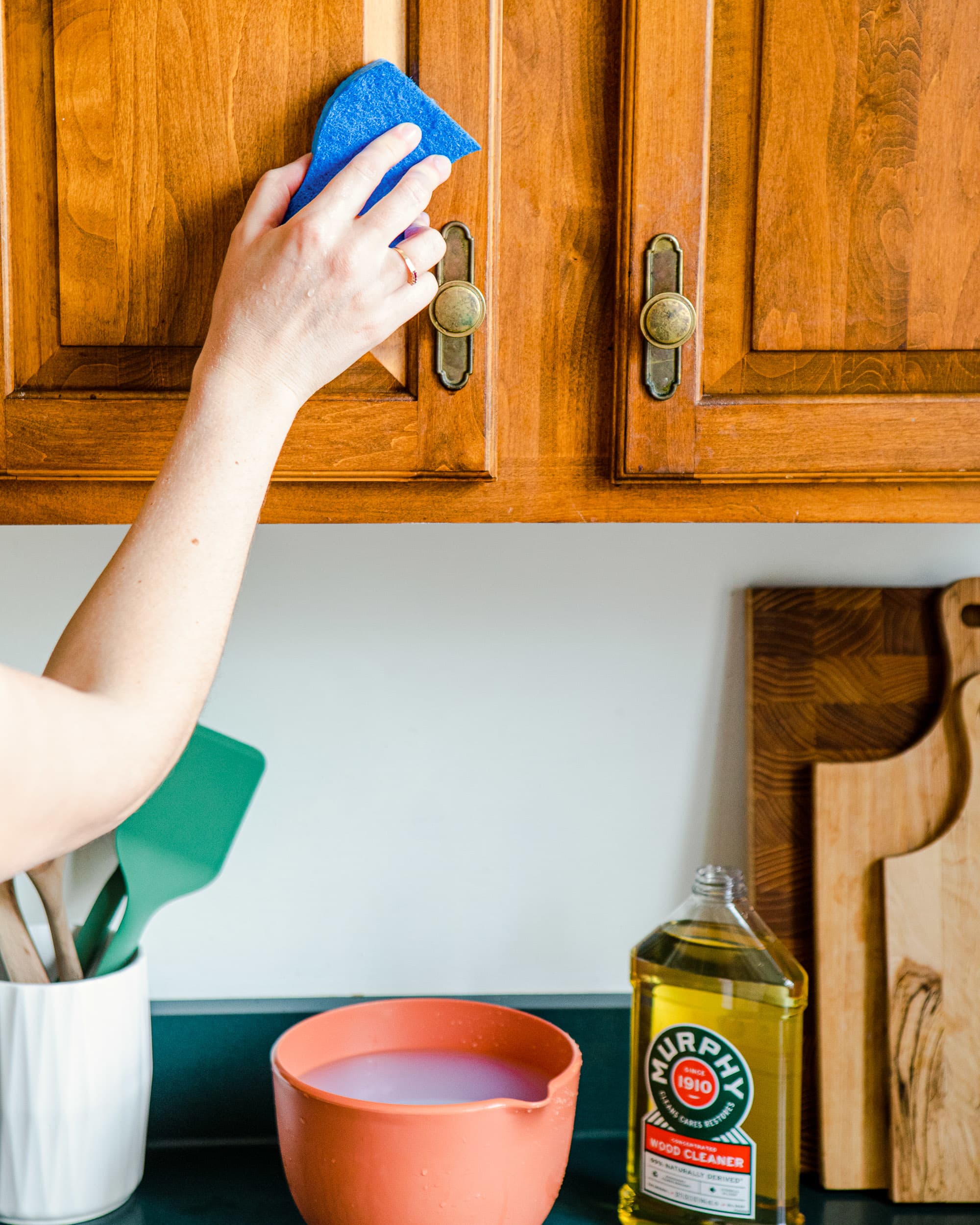
Credit: www.thekitchn.com
When To Call A Professional
Sometimes, cabinets have years of grease or need repairs. If you notice:
- Paint bubbling or peeling
- Wood swelling or warping
- Sticky residue that won’t budge with home cleaning
…it may be time to call a professional. They can refinish, repaint, or even replace damaged panels. This is especially important if you plan to sell your home or want a fresh look.
Choosing Cabinet Hardware That Resists Grease
Handles and knobs get very greasy, but the right hardware can help. Stainless steel, brushed nickel, and matte black finishes are all less likely to show grease than shiny brass or chrome.
Tip: Choose hardware with simple shapes and smooth surfaces. Avoid ornate designs with grooves—they’re harder to clean.
How Often Should You Clean Cabinets?
Regular cleaning is key. Here’s a simple schedule:
- After every cooking session: Wipe nearby cabinets and handles.
- Weekly: Do a quick clean of all cabinet surfaces.
- Monthly: Remove items and clean inside and out.
- Every 3–6 months: Deep clean, polish, and check for any damage.
Following this schedule keeps grease from building up and makes each cleaning session faster.
How To Protect Cabinets During Heavy Cooking
Holidays, parties, or meal-prep days can mean more grease. Here’s how to protect your cabinets during busy times:
- Use splatter guards or covers for all pots and pans.
- Move small appliances (like air fryers) away from cabinets.
- Place temporary plastic wrap or removable liners on the most exposed surfaces.
- Open windows and use fans to improve ventilation.
Non-obvious insight: If you fry food often, consider installing a temporary plastic or stainless steel shield behind and beside the stove. Some can be stuck on and removed easily.
Comparing Protective Methods
With so many options, it’s helpful to see how different methods stack up:
| Protection Method | Effectiveness | Cost | Ease of Use |
|---|---|---|---|
| Daily Wiping | High | Low | Easy |
| Range Hood | High | Medium-High | Easy (if installed) |
| Cabinet Wax/Polish | Medium | Low-Medium | Moderate (apply every few months) |
| Contact Paper/Liners | Medium | Low | Moderate |
| Splatter Guards | High | Low | Easy |
| Repainting with Semi-Gloss | High | High | Challenging (requires painting skills) |
Special Tips For Renters
If you rent your home or apartment, you may not be able to make permanent changes. Here are some renter-friendly tips:
- Use removable contact paper or shelf liners on cabinet doors and shelves.
- Add splatter guards and always use the stove’s fan.
- Clean cabinets regularly to avoid losing your security deposit.
- If your cabinets are already greasy, ask your landlord before using strong cleaners or painting.
Myths About Grease And Cabinets
Some common beliefs about kitchen cabinets and grease are wrong. Let’s clear up a few myths:
- “Grease only affects cabinets near the stove.” False: Airborne grease travels and can settle on any surface.
- “Natural wood doesn’t need protection.” False: Wood is very porous and absorbs grease easily.
- “You can use the same cleaner for every cabinet.” False: Different materials need different care.
- “Glossy finishes never stain.” False: They resist stains better, but grease can still stick if not cleaned.
How To Keep Cabinets Grease-free Long Term
The best way to keep cabinets grease-free is a mix of prevention, protection, and regular cleaning. Here’s a summary of steps you can follow:
- Use your range hood or exhaust fan every time you cook.
- Wipe cabinets and handles after cooking.
- Apply a cabinet-safe polish or wax every few months.
- Use splatter guards and keep lids on pots and pans.
- Choose easy-to-clean finishes if remodeling.
- Add removable liners or covers for extra protection.
- Clean up spills right away.
- Deep clean every few months.
- Choose simple, easy-to-clean hardware.
- Check for and fix minor damage before it gets worse.
Consistent care is easier and less expensive than trying to fix badly damaged cabinets later.

Credit: www.amazon.com
Extra Resources
For more information about cleaning and maintaining kitchen cabinets, you can visit Good Housekeeping for expert cleaning advice and recommended products.
Frequently Asked Questions
How Often Should I Clean My Kitchen Cabinets To Prevent Grease?
Wipe cabinets after each cooking session, do a quick clean weekly, and deep clean every 3–6 months. Frequent cleaning prevents sticky buildup and keeps your kitchen looking fresh.
Can I Use Vinegar On All Cabinet Types?
No, you should not use vinegar on waxed, oiled, or unfinished wood cabinets. Vinegar can damage or dull certain finishes. Always test in a hidden spot first.
What’s The Safest Way To Remove Thick, Old Grease From Cabinets?
Start with warm water and mild dish soap. For thick grease, try a baking soda paste. Avoid harsh chemicals or abrasive pads. If nothing works, consider calling a professional.
Is There A Paint Or Finish That Resists Grease Better?
Yes, semi-gloss or gloss paints and polyurethane finishes are more resistant to grease and easier to clean. Avoid flat or matte paints in kitchens.
Do Range Hoods Really Make A Difference?
Absolutely. A good range hood removes grease, smoke, and moisture from the air, protecting cabinets and improving air quality in your kitchen.
Protecting kitchen cabinets from grease is not just about cleaning—it’s about smart habits, the right products, and a little planning. By following these tips, you can keep your kitchen looking beautiful for years and make cleaning much easier.