
If you love preparing fish, you know that a fillet knife is your best friend. This unique knife helps you slice fish with accuracy, remove bones, and create clean fillets. But even the best fillet knife becomes useless if it’s dull. A blunt edge tears the fish, slips more easily, and makes filleting slow and frustrating. If you want beautiful fillets, you must keep your fillet knife razor-sharp.
Sharpening a fillet knife is not the same as sharpening a chef’s knife or a cleaver. Fillet knives are thin, flexible, and often have a narrow blade. They need a fine edge that’s also strong enough for detail work. Many people make mistakes when sharpening, leaving their knife less effective or even damaging the blade.
This guide will show you how to sharpen a fillet knife at home, whether you’re a beginner or have some experience.
You’ll learn about the tools you need, step-by-step sharpening methods, how to avoid common mistakes, and tips for keeping your knife sharp longer. We’ll also discuss different types of fillet knives, so you know how your own knife might need special care.
By the end, you’ll be able to keep your fillet knife in top condition for every fishing trip or kitchen session.
Why A Sharp Fillet Knife Matters
Using a sharp fillet knife is not only about speed. It’s also about safety, quality, and enjoyment.
- Precision: A sharp edge lets you cut fish cleanly, following the bones and removing skin without waste.
- Safety: Dull knives slip, increasing the risk of cutting your hand or fingers. Sharp knives require less force, so you’re in control.
- Meat Quality: A dull knife tears the fish, making the fillet ragged. A sharp knife keeps the meat firm and intact.
- Efficiency: You spend less time and effort when your knife glides through the fish.
A study by the National Institute for Occupational Safety and Health found that using dull knives can double the risk of injury in food preparation. Keeping your knife sharp is a practical way to stay safe and enjoy better results.
Understanding Fillet Knife Blades
Not all fillet knives are the same. Before sharpening, you should know your knife’s features.
Blade Material
Most fillet knives use stainless steel or high-carbon steel. Stainless steel resists rust but can be harder to sharpen. High-carbon steel gets sharper but may rust if not cared for.
Blade Flexibility
A fillet knife is designed to bend. This flexibility helps you follow the bones and remove skin. Some blades are more flexible than others. Very flexible blades require a gentle touch during sharpening.
Edge Angle
Fillet knives often have a narrow edge angle—typically between 12° and 17° per side. This angle creates a very sharp, thin edge, ideal for delicate cutting. If you sharpen at the wrong angle, you can make the blade too thick or weak.
Blade Length
Fillet knife blades usually range from 6 to 9 inches. Longer blades are better for larger fish, while shorter ones work for smaller fish.
Knowing your blade’s material and angle helps you choose the right sharpening method and tools.
Essential Tools For Sharpening A Fillet Knife
To sharpen a fillet knife well, you need the right equipment. The main tools are:
- Sharpening Stone (Whetstone): This is the most precise tool. It comes in various grits, from coarse to fine.
- Sharpening Rod (Honing Rod): Used to maintain the edge between sharpening sessions. Ceramic rods are best for fillet knives.
- Manual Pull-Through Sharpener: Easy to use, but not as precise as a stone. Make sure it’s suitable for thin, flexible blades.
- Electric Knife Sharpener: Fast and convenient, but can remove too much metal if not used carefully.
- Strop: A piece of leather used to polish the edge for extra sharpness.
Here’s a comparison of common sharpening tools:
| Tool | Precision | Skill Needed | Best For |
|---|---|---|---|
| Whetstone | High | Moderate | All fillet knives |
| Honing Rod | Medium | Low | Edge maintenance |
| Manual Sharpener | Low-Medium | Very Low | Quick touch-ups |
| Electric Sharpener | Medium | Low | Speed, less control |
| Strop | High | Low | Polishing only |
Pro Tip: Avoid using a standard kitchen steel on fillet knives. They are often too rough and can bend or chip the thin blade.
Preparing Your Knife For Sharpening
Before you start sharpening, a few steps help ensure safety and better results.
- Clean the Blade: Wash and dry your fillet knife. Dirt or oil can make sharpening less effective and damage the stone.
- Check for Damage: Look for chips, bends, or rust. Minor rust can be removed with a gentle scrub, but deep chips may need professional repair.
- Secure Your Workspace: Place a damp towel under your sharpening stone or tool to prevent slipping.
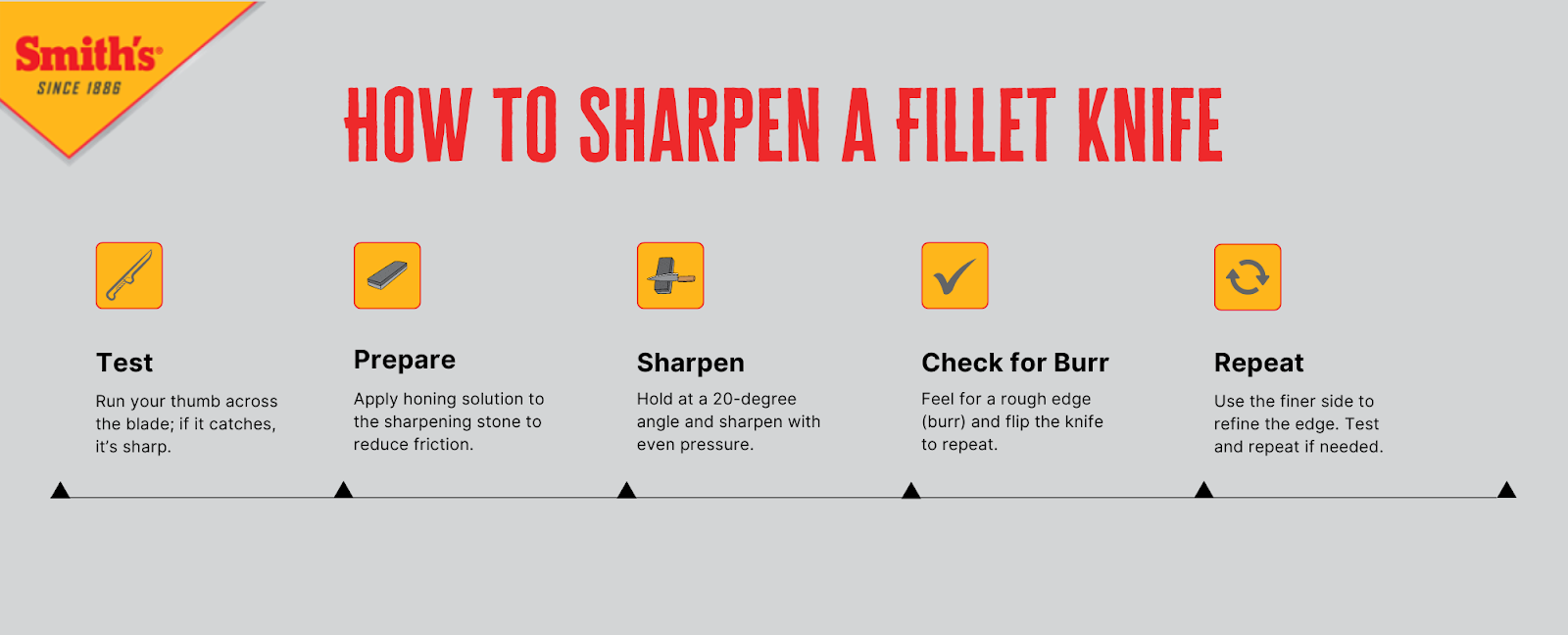
- Understand the Edge: Feel the current sharpness. Carefully (and slowly) run your thumb perpendicular to the edge—you should feel a slight “bite.” If it feels smooth, it’s dull.
How To Sharpen A Fillet Knife With A Whetstone
Using a whetstone is the best way to get a razor-sharp edge. It takes practice but gives you the most control.
Step 1: Soak The Whetstone
Most stones need soaking in water for 10–15 minutes. Some stones are oil-based; check the instructions. A wet stone prevents overheating and helps the knife glide.
Step 2: Choose The Right Grit
- Coarse (200–600 grit): For very dull or damaged blades.
- Medium (800–1000 grit): For regular sharpening.
- Fine (3000+ grit): For polishing and finishing.
Start with medium, then move to fine for the best edge.
Step 3: Find The Correct Angle
Most fillet knives are sharpened at a 15° angle. To estimate, lift the blade so the spine is about 1/4 inch off the stone.
Step 4: Sharpen One Side
Place the blade heel on the stone, angle it correctly, and draw the knife down and across the stone in a sweeping motion. Imagine slicing a thin layer off the stone. Keep light, even pressure.
- Do 8–12 strokes on one side.
Step 5: Repeat On The Other Side
Flip the knife and repeat the same number of strokes on the other side. Always match the angle.
Step 6: Alternate Sides
After initial sharpening, alternate sides with single strokes. This balances the edge.
Step 7: Polish The Edge
Switch to a fine grit stone and repeat the process for a razor-sharp edge.
Step 8: Test The Sharpness
Wipe the blade clean. Gently slice a piece of paper or try cutting a tomato. The knife should glide through easily.
Non-Obvious Insight: Many beginners press too hard. Light pressure is more effective and protects the thin edge.
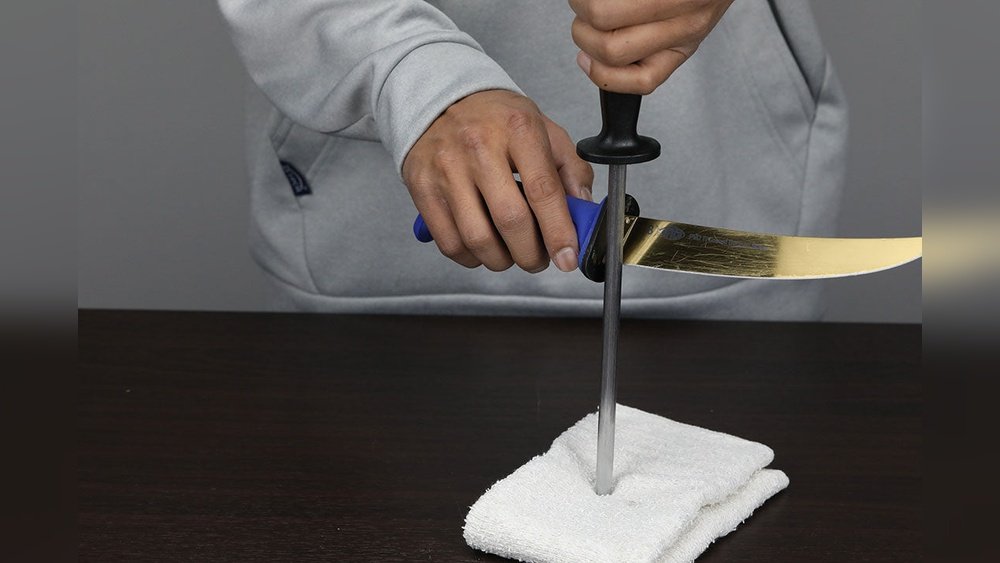
How To Sharpen A Fillet Knife With A Honing Rod
Honing does not replace sharpening. It realigns the edge for regular maintenance.
- Hold the rod vertically on a non-slip surface.
- Hold the knife at a 15° angle against the rod.
- Sweep the blade down and across the rod, starting at the heel and moving to the tip.
- Repeat 5–8 times per side.
Use a ceramic rod for fillet knives, as it’s gentle on flexible blades.
Credit: smithsproducts.com
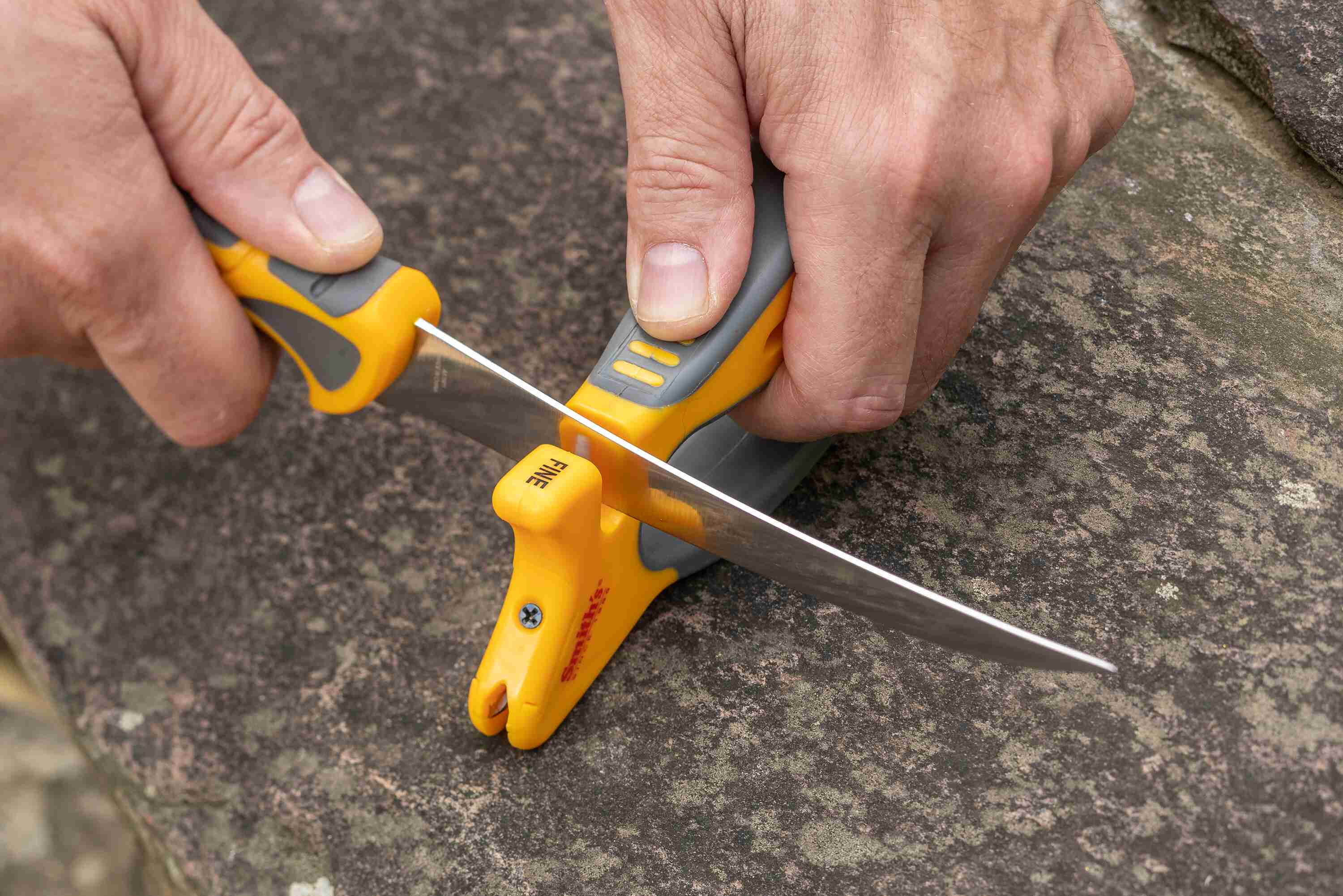
Using A Manual Pull-through Sharpener
Manual sharpeners are simple but less precise.
- Place the knife in the slot at the correct angle.
- Pull the blade through with light pressure.
- Repeat 4–6 times.
Always check if your sharpener is designed for thin, flexible blades. Some can damage delicate fillet knives.
Using An Electric Knife Sharpener
Electric sharpeners are fast but risky for fillet knives. The abrasive wheels can remove too much metal or overheat the edge.
- Select the finest setting.
- Guide the blade slowly and gently.
- Do not force the knife; let the machine do the work.
Non-Obvious Insight: Over-sharpening with an electric tool can shorten the life of your knife. Use them only for quick touch-ups.
Strop For A Razor Finish
After sharpening, use a leather strop to polish the edge.
- Draw the knife backward along the leather, keeping the same sharpening angle.
- Repeat 8–10 times per side.
This step removes micro-burrs and gives a mirror-like finish.
How Often Should You Sharpen Your Fillet Knife?
Frequency depends on use.
- Heavy use (daily fishing/processing): Sharpen every week, hone after each use.
- Home cooking (few times a month): Sharpen every 2–3 months, hone monthly.
- After hitting bone or hard objects: Sharpen immediately.
Remember, regular honing delays the need for full sharpening.

Credit: www.aftco.com
Common Mistakes To Avoid
Many people make the same errors when sharpening their fillet knives:
- Wrong Angle: Sharpening at a wide angle creates a thick, blunt edge.
- Too Much Pressure: Pressing down can damage or warp the thin blade.
- Skipping Grits: Going from coarse to fine too quickly leaves the edge unfinished.
- Not Cleaning the Stone: Metal bits can clog the stone and reduce its effectiveness.
- Forgetting to Strop: Skipping the final polish leaves a rough edge.
By avoiding these mistakes, you’ll maintain your knife’s performance and lifespan.
Caring For Your Fillet Knife After Sharpening
A sharp knife can quickly become dull without proper care.
- Clean after every use: Rinse and dry immediately. Fish residue is acidic and can corrode steel.
- Store safely: Use a blade cover or keep the knife in a knife block. Avoid tossing it in a drawer.
- Oil the blade: For high-carbon steel, apply a thin layer of food-safe oil to prevent rust.
- Avoid hard surfaces: Do not cut on glass, stone, or metal. Use a wooden or plastic cutting board.
Pro Tip: Never put a fillet knife in the dishwasher. The harsh cycle and heat can dull the edge and damage the handle.
Special Considerations For Electric And Curved Fillet Knives
Some fillet knives are electric or have a pronounced curve. They need extra attention.
Electric Fillet Knives
These have a motor and detachable blade. Remove the blade before sharpening. Use a stone or rod, not an electric sharpener, for better control.
Curved Blades
Curved fillet knives are harder to sharpen on a flat stone. Use short, gentle strokes, following the curve of the blade. A flexible stone or rod can help.
Choosing The Right Sharpening Angle For Your Knife
The right angle is critical. Here’s a comparison of common sharpening angles:
| Knife Type | Edge Angle (Per Side) | Edge Type |
|---|---|---|
| Fillet Knife | 12°–17° | Very sharp, thin |
| Chef’s Knife | 15°–20° | Medium sharp, durable |
| Cleaver | 20°–25° | Thick, strong |
Always stick to the manufacturer’s recommendation for your knife.
How To Test If Your Fillet Knife Is Sharp Enough
Testing sharpness is important. Here are a few reliable ways:
- Paper Test: Hold a piece of paper and slice through it. A sharp knife cuts cleanly.
- Tomato Test: Try slicing a tomato. The skin should break easily without squashing the fruit.
- Fish Skin Test: Try to remove fish skin—if the knife glides without tearing, it’s sharp.
- Visual Inspection: Look closely at the edge under bright light. A dull edge reflects light; a sharp edge does not.
If your knife fails these tests, repeat the final honing or stropping steps.
Maintaining Your Fillet Knife Edge
Regular maintenance keeps your knife sharper for longer.
- Hone frequently: A few strokes after each use realign the edge.
- Wash and dry: Moisture dulls the blade over time.
- Use the right cutting board: Avoid glass or stone.
- Resharpen as needed: Do not wait until it’s completely dull.
Non-Obvious Insight: If you fillet a lot of oily fish (like salmon), clean the blade often during use—oil can make the edge slip instead of cut.
When To Replace Your Fillet Knife
Even with perfect care, every knife has a life span. Replace your fillet knife if:
- The blade has deep chips or cracks.
- The edge will not sharpen, even after repeated attempts.
- The handle is loose or broken.
- The blade is too thin from repeated sharpening.
A worn-out knife is dangerous and frustrating. Quality knives can last many years with good care, but they do not last forever.
Sharpening Fillet Knives In The Field
If you’re fishing or camping, you might need to sharpen your knife without all your usual tools. Here’s how:
- Carry a small ceramic rod or pocket-sized whetstone. These are lightweight and effective.
- Use river stones in an emergency. Find a smooth, flat stone, wet it, and use it as a makeshift sharpener. It’s not perfect, but it’s better than nothing.
- Keep a leather belt for stropping. After sharpening, polish the edge on the belt.
Always dry your knife immediately after sharpening in the field to prevent rust.
Sharpening Tips From Professional Chefs And Anglers
Professionals know the value of a sharp fillet knife. Here are some of their best tips:
- Sharpen before it gets dull: Don’t wait until the knife struggles—regular touch-ups are easier.
- Use light, even strokes: Heavy pressure can ruin the edge.
- Angle is everything: Even a few degrees off can change the performance.
- Finish with a strop: This is the secret to a truly razor-sharp edge.
- Practice: Skill improves with experience. Try sharpening old knives before working on your best fillet knife.
Environmental And Safety Considerations
Sharpening knives creates metal shavings and uses water or oil. Dispose of waste responsibly. Always keep your sharpening tools out of reach of children. Wear cut-resistant gloves if you’re new to sharpening.
Credit: smithsproducts.com
Where To Learn More
For more in-depth information, you can visit the Wikipedia page on sharpening stones.
Frequently Asked Questions
How Do I Know If My Fillet Knife Is Sharp Enough For Fish?
A sharp fillet knife should cut cleanly through fish skin and flesh without tearing. Try slicing a piece of paper or a tomato—if the knife glides through, it’s ready for filleting.
Can I Use A Regular Kitchen Sharpener On My Fillet Knife?
Not always. Many kitchen sharpeners are designed for thicker, less flexible blades. Use a sharpener that supports narrow, flexible blades to avoid damaging your fillet knife.
How Often Should I Sharpen My Fillet Knife?
For frequent use, sharpen your knife every week or after every big fish-cleaning session. For home cooks, every 2–3 months is usually enough. Hone the edge after each use.
What Grit Whetstone Is Best For A Fillet Knife?
Start with a medium grit (800–1000) for most sharpening. Finish with a fine grit (3000+) for polishing. Use coarse grit (200–600) only if the blade is very dull or damaged.
Is It Better To Sharpen By Hand Or With An Electric Sharpener?
Sharpening by hand (with a whetstone or ceramic rod) gives you more control and is safer for flexible fillet knives. Electric sharpeners are faster but can remove too much metal if not used carefully.
Keeping your fillet knife sharp will transform your fish preparation from a chore into a pleasure. With the right tools, a little practice, and good habits, you’ll always have the perfect edge for every catch.