
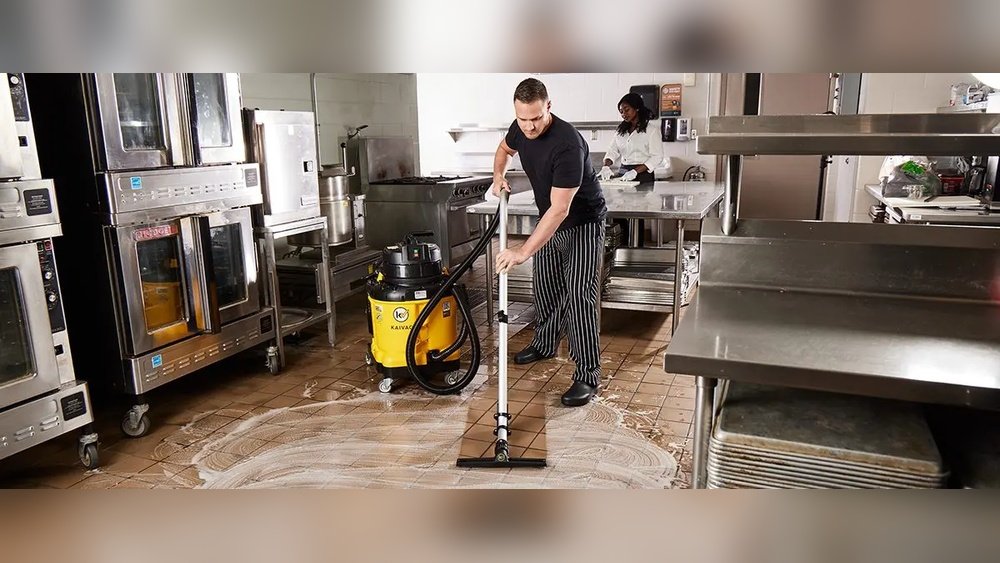
Keeping a commercial kitchen floor clean is not just about appearance—it’s about safety, hygiene, and following food safety regulations. Every spill, stain, or crumb can lead to slips, bacteria growth, or even failed health inspections. Many restaurant owners and kitchen managers know the basics, but often overlook deeper cleaning steps or the right cleaning products.
If you want your kitchen to pass every inspection and provide a safe space for staff, learning how to clean a commercial kitchen floor properly is essential.
This guide will walk you through every step—choosing the right tools, understanding different floor types, daily and deep cleaning methods, and tips for avoiding common mistakes. You’ll find clear instructions, practical advice, and expert-level insights that many beginners miss. Whether you manage a small café or a large restaurant, these steps will help you maintain a spotless, safe kitchen floor.
Why Commercial Kitchen Floors Need Special Cleaning
A commercial kitchen is not like a home kitchen. Floors get heavy foot traffic, hot liquids spill, food debris builds up, and grease accumulates quickly. All of these factors make cleaning more challenging. Unlike residential floors, commercial kitchen floors are often made from materials like quarry tile, sealed concrete, or commercial-grade vinyl.
These surfaces can handle more intense cleaning—but also require it.
According to the US Centers for Disease Control and Prevention (CDC), slips, trips, and falls are a leading cause of workplace injuries in food services. Dirty or greasy floors are a major reason. Regular cleaning doesn’t just keep things looking good—it helps prevent accidents, lowers bacteria counts, and keeps inspectors happy.
Understanding Your Commercial Kitchen Floor Material
Different floor materials need different care. Using the wrong cleaner or tool can damage your floor or make it more slippery. Here’s how to identify and care for common commercial kitchen floor types:
| Floor Type | Main Features | Cleaning Needs |
|---|---|---|
| Quarry Tile | Porous, non-slip, durable | Needs degreasing, avoid acidic cleaners |
| Sealed Concrete | Hard, smooth, can be slippery | Non-acidic cleaner, scrubber use recommended |
| Vinyl Composition Tile (VCT) | Smooth, sealed, wears over time | Gentle cleaning, no harsh scrubbers |
| Epoxy Coated | Non-porous, chemical resistant | Easy to clean, but needs regular degreasing |
Tip: Always check the manufacturer’s instructions for your floor material before choosing chemicals or machines.
Essential Tools And Supplies For Cleaning
A successful cleaning routine depends on using the right tools. Buying cheap mops or using the wrong chemical can make cleaning harder and less effective. Here’s what you need for best results:
- Heavy-duty mop and bucket – Microfiber or looped-end mops trap more dirt and last longer.
- Deck brush or floor scrubber – For scrubbing stuck-on grime.
- Wet/dry vacuum or squeegee – To remove dirty water quickly.
- Degreaser – Removes oily buildup that soap can’t touch.
- Neutral cleaner – For everyday cleaning, safe for most surfaces.
- Personal protective equipment (PPE) – Gloves, slip-resistant shoes, and sometimes goggles.
- Floor signs – Warn staff of wet floors to prevent accidents.
- Color-coded cleaning cloths – Prevent cross-contamination (one color for floor, another for counters).
Non-obvious insight: Many kitchens use only one mop for everything. This spreads grease and bacteria. Always use a dedicated mop just for the kitchen floor.
Daily Commercial Kitchen Floor Cleaning Routine
A daily routine is your first defense against buildup. Here’s how to clean a commercial kitchen floor at the end of every shift:
1. Clear And Prepare
Start by removing all mats, movable equipment, and any food debris. Sweep the floor thoroughly—pay extra attention under prep tables and near fryers, where crumbs and grease collect.
2. Spot Clean Spills Immediately
Don’t wait until the end of a shift. Clean spills as they happen using a mop or disposable towels. This prevents stains and reduces slip hazards.
3. Mix Cleaning Solution
Fill your mop bucket with hot water and a measured amount of neutral cleaner or degreaser (follow the product label for dilution). Hot water helps dissolve grease, but avoid water hotter than 140°F, which can damage some floors.
4. Mop In Sections
Divide the floor into small sections. Mop each area, starting farthest from the exit and working toward the door. This prevents you from stepping on clean, wet areas.
5. Scrub Stubborn Areas
Grease and grime often build up around fryers, grills, and dishwashing stations. Use a deck brush or scrubber on these spots. For corners and grout lines, a handheld brush is best.
6. Rinse And Remove Dirty Water
After mopping, rinse the floor with clean water. Use a wet/dry vacuum or squeegee to remove standing water—never let dirty water dry on the floor, as it leaves a film.
7. Dry The Floor
Allow the floor to air dry, or use fans for faster drying. Place “wet floor” signs until it’s completely dry.
Non-obvious insight: Many staff forget to change mop water often. Dirty water spreads grease, making floors more slippery. Change water at least every 500 square feet or whenever it looks cloudy.
Deep Cleaning A Commercial Kitchen Floor
Deep cleaning should happen at least once a week, or more often for busy kitchens. This process removes built-up grease and gets into corners and grout that daily mopping misses.
Steps For Deep Cleaning
1. Clear The Area
Move all portable equipment, mats, and trash cans. Sweep thoroughly.
2. Apply A Heavy-duty Degreaser
Use a commercial-grade degreaser, spraying it generously on greasy spots and grout lines. Let it sit for 5–10 minutes to break down the grease.
3. Scrub With A Machine Or Deck Brush
For large floors, use a floor scrubber machine with stiff bristles. For small kitchens, a deck brush works well. Scrub in overlapping passes for full coverage.
4. Rinse Thoroughly
Use a hose, clean mop, or buckets of clean water to rinse away all cleaner and grease. Residue can make the floor sticky and unsafe.
5. Wet Vacuum Or Squeegee
Remove rinse water immediately. Wet floors are a safety hazard and can damage some surfaces if water seeps into cracks.
6. Inspect The Floor
Check for any remaining stains, greasy patches, or damage. Re-treat tough spots as needed.
Practical tip: If your kitchen has grout lines, use a grout brush and specialized cleaner every deep clean. Grout holds bacteria and grease that ordinary mops can’t reach.
Addressing Different Types Of Kitchen Floor Contaminants
Not all dirt is the same. Here’s how to handle the most common floor problems:
Grease And Oil
Grease is the number one challenge. It makes floors slippery and is hard to remove with just soap. Use an enzyme-based or alkaline degreaser, which breaks down fats better than regular cleaners. For heavy buildup, scrub with hot water and let the degreaser dwell for several minutes before rinsing.
Food Debris
Fallen bits of vegetables, meat, or flour can attract pests and cause stains. Sweep and mop after each meal service. Don’t let debris sit overnight.
Mold And Mildew
In humid kitchens, mold can grow in corners, under mats, or along baseboards. Use a mild bleach solution or a commercial mold remover. Always wear gloves and ventilate the area.
Sticky Residues
Soda, syrups, and sauces can leave sticky patches that attract dirt. These need extra scrubbing—sometimes with a scrub pad or brush—plus an extra rinse.
Chemical Spills
If cleaners or other chemicals spill, consult the product’s safety data sheet (SDS) for cleanup instructions. Neutralize acids or alkalis as required, and rinse thoroughly.
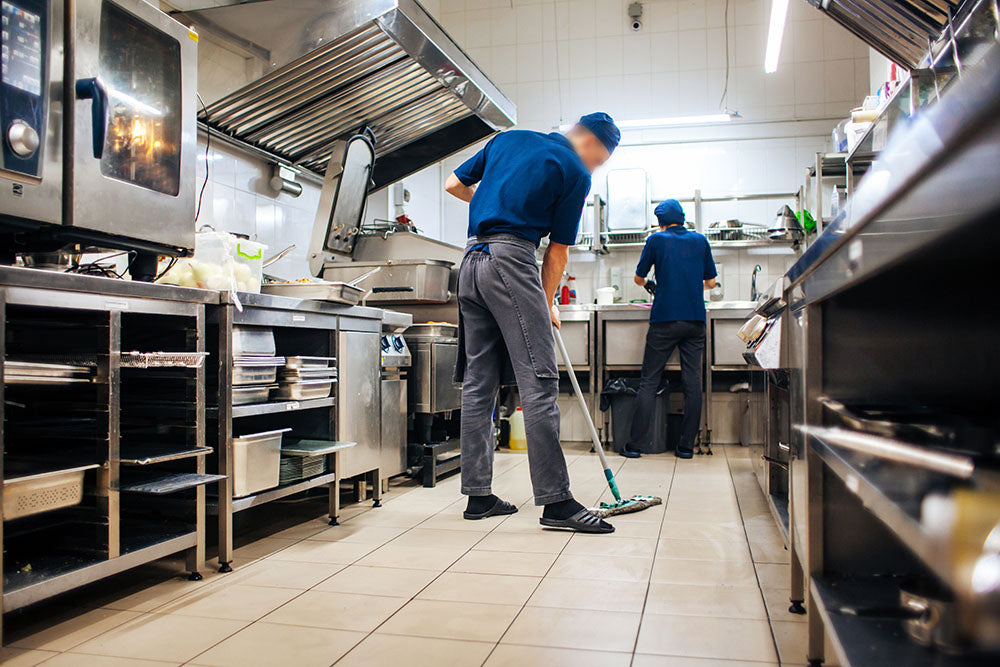
Credit: sheiners.com
How To Clean Under And Around Equipment
One of the most overlooked spots is under kitchen equipment. Grease and food can build up here and lead to odors, pests, or even fires.
- Schedule a monthly “move and clean” session.
- Use casters or sliders to move heavy equipment if possible.
- Clean the floor, wall, and equipment legs.
- For non-movable equipment, use a long-handled brush and vacuum to reach underneath.
Expert insight: Many kitchens only clean visible floor areas. Health inspectors often check under equipment—so make this a regular habit.
Cleaning Grout Lines And Floor Drains
Grout and drains are hidden trouble spots. Grease collects in grout, while drains can get clogged with debris.
Cleaning Grout Lines
- Spray with a grout-specific cleaner or a strong degreaser.
- Scrub with a stiff-bristled brush.
- Rinse and vacuum up dirty water.
- Seal grout every 6–12 months to prevent staining.
Cleaning Floor Drains
- Remove drain covers and scrub them separately.
- Use a drain brush to clear debris inside the drain.
- Flush with hot water and a safe drain cleaner.
- Pour an enzyme solution monthly to prevent odor and buildup.
Choosing The Right Cleaning Chemicals
Not all cleaning products are equal. Using the wrong one can leave a residue, damage your floor, or even make it more slippery. Here’s what to consider:
| Cleaner Type | Best For | What to Avoid |
|---|---|---|
| Neutral pH Cleaner | Daily cleaning, all surfaces | Not effective for heavy grease |
| Degreaser (alkaline) | Grease, oil, heavy buildup | Can dull some vinyl floors |
| Enzyme Cleaner | Organic spills, grout lines | Slow acting |
| Disinfectant | Mold, bacteria control | Not a substitute for degreasing |
Common mistake: Mixing bleach and ammonia-based products can release toxic fumes. Always read labels and never mix cleaners.
How Often Should You Clean A Commercial Kitchen Floor?
Cleaning frequency depends on your kitchen’s size, menu, and traffic. As a rule:
- Spot clean spills: Immediately
- Sweep debris: Every 2–4 hours during service
- Mop and degrease: At the end of every shift
- Deep clean and scrub: Weekly (or more for high-volume kitchens)
- Clean under equipment: Monthly
- Clean drains and grout: Monthly
High-traffic kitchens (over 200 meals/day) may need more frequent deep cleans.
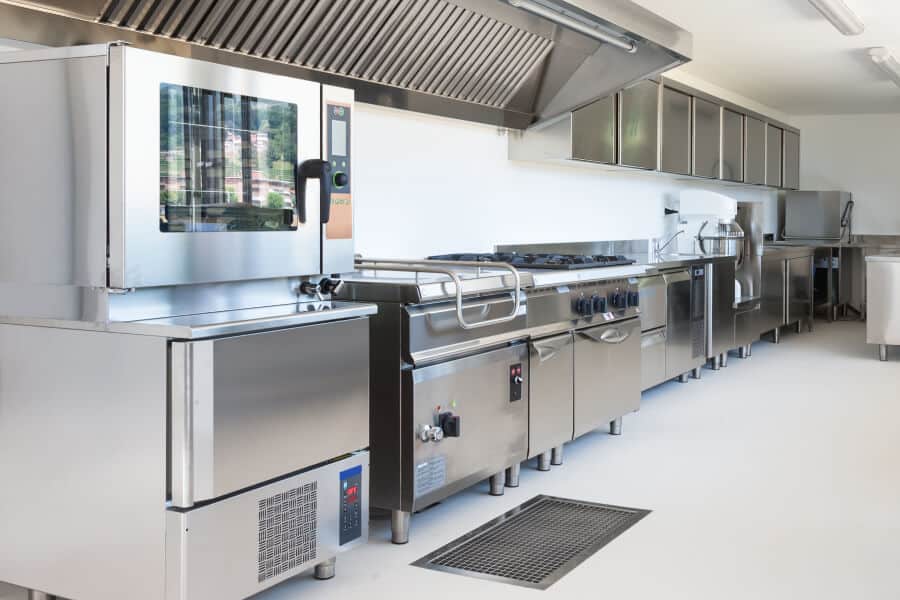
Credit: cleanmethod.com
Safety Measures While Cleaning
Cleaning can create hazards if not done properly. Follow these safety tips:
- Always use “wet floor” signs.
- Wear slip-resistant shoes and gloves.
- Use the right dilution—too much chemical can harm skin or floors.
- Never leave standing water.
- Store chemicals in labeled, secure containers.
Practical tip: If staff work during cleaning, clean one section at a time and block it off.
Eco-friendly And Green Cleaning Options
More kitchens are looking for ways to reduce chemical use. Here’s how to clean effectively and stay green:
- Use enzyme-based cleaners—they break down grease without harsh chemicals.
- Choose microfiber mops that use less water and trap more dirt.
- Install floor mats at entrances to reduce dirt tracked inside.
- Train staff to use the right amount of product—overuse wastes money and harms the environment.
For kitchens seeking green certification, check the EPA’s Safer Choice list for approved cleaners.
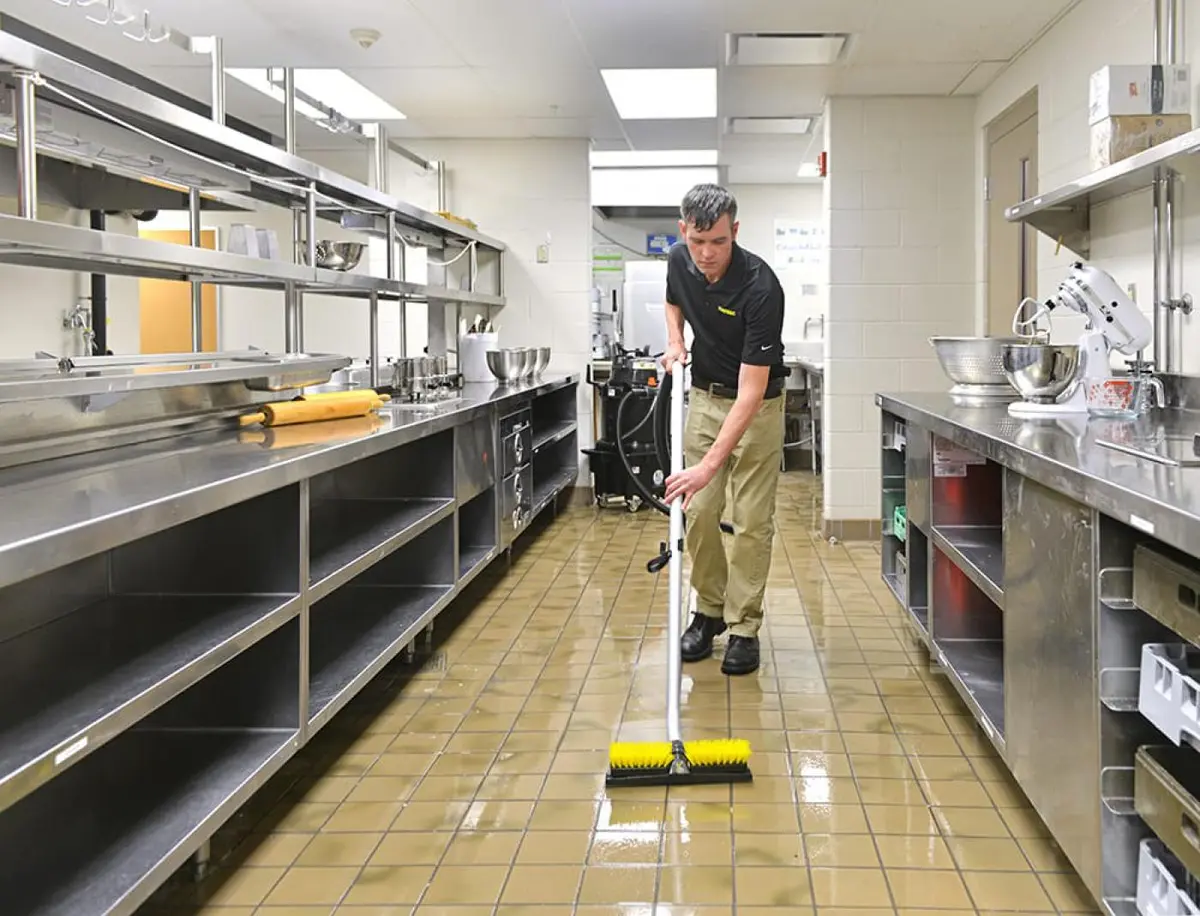
Credit: kaivac.com
Preventing Floor Damage And Keeping Floors Clean Longer
Cleaning is only half the job—prevention makes cleaning easier and extends floor life.
- Place anti-fatigue mats in high-grease areas (like fryers).
- Fix leaks quickly—water under tile can lead to mold and cracks.
- Use furniture glides under heavy equipment to prevent scratches.
- Seal grout and concrete every 6–12 months.
- Train staff to scrape plates and sweep often.
Non-obvious insight: Encourage a “clean as you go” culture. Small, frequent cleaning keeps big messes from building up.
Training Staff On Floor Cleaning Procedures
Even the best plan fails if staff aren’t trained. Make cleaning part of every new employee’s orientation. Show the right way to mop, mix chemicals, and handle spills. Post clear instructions in the supply area. Regularly check that staff follow the routine.
Example: Hold a quarterly “cleaning challenge” with a reward for the cleanest station. This keeps staff motivated and standards high.
Record Keeping And Health Inspections
Keep a cleaning log near the kitchen. Record when and who cleans the floor and notes on any issues (like a broken tile or blocked drain). This helps with staff accountability and proves to inspectors that you take cleanliness seriously.
Health inspectors often swab floors for bacteria, especially near drains. Regular, thorough cleaning helps you pass inspections and avoid fines.
Common Mistakes To Avoid
- Using dirty mop water – Spreads grease instead of removing it.
- Skipping corners and under equipment – Where most grease and debris collect.
- Using wrong chemicals – Can damage floors or leave them slippery.
- Not rinsing properly – Leaves sticky residue.
- Ignoring floor drains – Leads to odors, pests, and backups.
- Cleaning during busy hours – Increases accident risk.
- Not replacing old mops and brushes – Worn tools don’t clean well.
Cost Of Cleaning A Commercial Kitchen Floor
Cleaning has a real cost in time, supplies, and labor. Here’s a basic comparison for a 1,000 sq. ft. kitchen:
| Cleaning Method | Estimated Monthly Cost | Labor Hours/Month |
|---|---|---|
| Manual mopping | $150–$250 | 15–20 |
| Auto scrubber machine | $300–$500 (includes rental/maintenance) | 8–12 |
| Professional service | $400–$800 | 2–4 (supervision only) |
Insight: Investing in a floor scrubber pays off for larger kitchens—it saves time and does a deeper clean than mopping alone.
When To Call A Professional Floor Cleaning Service
Sometimes, you need outside help. Call a professional if:
- There’s heavy buildup you can’t remove.
- The floor is stained or smells persist after cleaning.
- You need stripping, resealing, or repair.
Professional cleaners have stronger chemicals and equipment. They can also reseal floors, which extends their life.
Resource: To learn more about commercial cleaning standards, visit the CDC’s Food Service Safety page.
Frequently Asked Questions
What Is The Best Way To Remove Grease From A Commercial Kitchen Floor?
The best way is to use a commercial-grade alkaline degreaser. Apply it to greasy areas, let it sit for several minutes, then scrub with a brush or machine. Rinse thoroughly and vacuum or squeegee away the dirty water. For heavy buildup, repeat the process or use an enzyme-based cleaner overnight.
How Often Should I Deep Clean My Kitchen Floor?
You should deep clean your kitchen floor at least once a week. Busy kitchens or those with a lot of frying may need deep cleaning more often—sometimes every night. Regular deep cleaning prevents grease buildup and helps pass health inspections.
Can I Use Bleach To Clean Commercial Kitchen Floors?
Bleach is a strong disinfectant but not a good degreaser. It kills bacteria but does not remove grease. Use bleach only when you need to disinfect after cleaning, and always rinse well. Never mix bleach with other cleaners, especially ammonia-based products.
What Should I Do If My Kitchen Floor Is Always Slippery?
If your floor is always slippery, check for leftover grease, use the right degreaser, and rinse thoroughly. Change mop water often and use a non-slip floor treatment if needed. Check with your floor manufacturer before using anti-slip products.
Are There Eco-friendly Ways To Clean A Commercial Kitchen Floor?
Yes! Use enzyme-based cleaners, microfiber mops, and green-certified products. These options reduce chemical use and are safer for staff and the environment. Also, regular maintenance (like sealing grout and using mats) keeps floors cleaner with less effort.
A clean commercial kitchen floor is the foundation of a safe and successful operation. With the right tools, products, and habits, you can keep floors spotless and safe for both staff and customers. Don’t wait for the next inspection—make floor cleaning a daily priority and your kitchen will always be ready for action.