
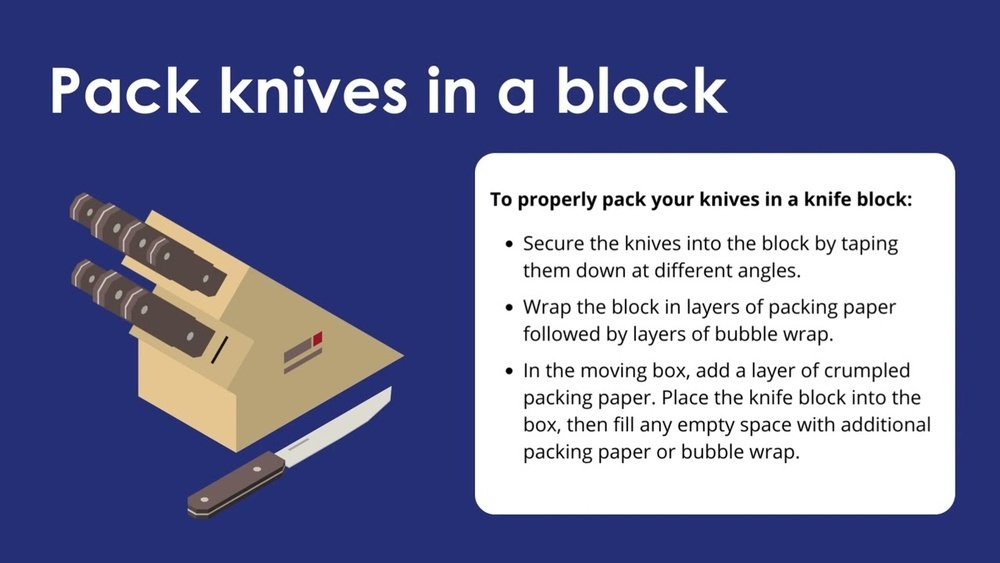
Packing a knife block might sound simple, but doing it well takes more thought and care than most people expect. Whether you’re moving to a new home, sending a kitchen set as a gift, or just storing your knives safely, the right packing method protects both your knives and anyone who handles the box. Many people underestimate the risks: a poorly packed knife block can lead to dull blades, damaged handles, or even dangerous accidents. In this guide, you’ll learn how to pack a knife block for maximum safety and efficiency, with clear steps, smart tips, and real-world examples. Even if you’ve never packed kitchen tools before, you’ll finish with practical knowledge and confidence.
Why Packing A Knife Block Properly Matters
Knives are some of the most important—and expensive—tools in any kitchen. A good chef’s knife can cost over $100, and specialty knives can be even more. When these tools are damaged in transit, it’s not just about money; it’s about safety and function.
A chipped blade can slip during use, increasing the risk of injury. If a knife pokes through the packaging, it can cut movers, family members, or delivery staff. Proper packing also prevents the block itself from cracking or breaking.
Surprisingly, even small movements during shipping or moving can dull knife edges. According to kitchenware experts, blade contact with hard surfaces is the leading cause of knife dullness outside regular use. Careful packing ensures your knives arrive ready to use, not in need of repair.
Assessing Your Knife Block And Knives
Before you start packing, take a close look at your knife block and the knives inside. This first step will help you decide what supplies you need and if any knives should be packed separately.
Count And Inspect Knives
- Remove all knives from the block.
- Count each knife and check for damage, such as loose handles or bent tips.
- Pay attention to any specialty knives (like bread knives, paring knives, or cleavers) that may need extra protection.
Examine The Block Material
Knife blocks are usually made of wood, bamboo, plastic, or sometimes even metal. Wooden and bamboo blocks can crack if dropped, while plastic blocks may be more resistant but are still at risk of scratches.
Clean Everything
- Wash and dry the knives and block.
- Make sure there’s no moisture, as this can cause rust or mold during storage.
Pro Tip: Write down your knife inventory before packing. This helps you check that everything arrives safely.
Gathering The Right Packing Materials
Quality packing materials are essential for protecting your knives and block. Here’s what you’ll need:
- Blade guards or knife sleeves (can use folded cardboard if you don’t have commercial guards)
- Bubble wrap (at least one roll)
- Packing paper or clean dish towels
- Strong packing tape
- Stretch wrap (plastic cling film)
- Sturdy moving box (double-walled is best)
- Marker for labeling
- Small boxes or zip ties for extra knife security
Comparing Packing Materials
Let’s compare some common materials for blade protection:
| Material | Protection Level | Reusable | Cost |
|---|---|---|---|
| Blade Guards | High | Yes | $$ |
| Cardboard Sleeves | Medium | No | $ |
| Bubble Wrap | High | No | $ |
| Kitchen Towels | Medium | Yes | Free* |
*If you already have towels.
Non-obvious insight: Cardboard sleeves are easy to make and work almost as well as store-bought guards for short-term moving. Just fold and tape around the blade.
Preparing Each Knife For Packing
The way you wrap and protect each knife is the most important part of the process.
How To Wrap Knife Blades
- Use blade guards if you have them. Slide the blade in, making sure it fits snugly.
- If you don’t have guards, cut a piece of cardboard slightly longer and wider than the blade. Fold around the blade and tape the edges.
- Wrap each knife in a layer of packing paper or a dish towel. This prevents scratches and keeps the blade from poking through the outer wrap.
- Secure with a small piece of tape.
Extra Tip: Never wrap several knives together without separating the blades. Direct contact can cause serious dulling or chipping.
Handling Large Or Specialty Knives
Some knives—like a meat cleaver or a long bread knife—may not fit standard blade guards or sleeves.
- Use extra layers of cardboard and bubble wrap for these items.
- Consider packing these knives outside the block if they’re too large.
Securing The Knife Block
Now, focus on the block itself. Most blocks are surprisingly fragile, especially at the corners or if they’re made of wood.
How To Wrap The Block
- Wrap the block in two layers of bubble wrap, covering all sides.
- Pay attention to the base and corners. Add extra bubble wrap if they look weak.
- Use stretch wrap to hold the bubble wrap in place.
- If the block is lightweight, you can add a towel layer for added cushion.
Pro Tip: Avoid getting packing tape directly on the block’s surface, as adhesive can damage wood or painted finishes.
Placing Knives Back In The Block (or Not?)
A common question: Should you put the knives back in the block before packing, or pack them separately?
Pros And Cons
| Method | Advantages | Drawbacks |
|---|---|---|
| Knives in Block | Easy to keep set together; less risk of losing knives | Blades can shift; risk if block is dropped; block heavier |
| Knives Packed Separately | Maximum blade protection; less risk of block damage | Need to organize knives; risk of misplacing pieces |
Expert advice: For moves across town, knives can stay in the block if each blade is individually wrapped. For shipping or long-distance moves, pack knives separately for the best safety.
Credit: www.guardianstorage.com
Packing The Knife Block And Knives Into The Box
Now that your knives and block are wrapped, it’s time for the most important packing steps.
Choose The Right Box
- Use a box that fits the block snugly, but allows for at least 2 inches of padding on all sides.
- Double-walled boxes are best for heavy knife blocks.
Prepare The Bottom
- Place a thick layer (2–3 inches) of crumpled packing paper or bubble wrap at the bottom. This acts as a shock absorber.
Placing The Block
- Place the wrapped block upright in the box, with the slots facing sideways (not up or down).
- This orientation reduces pressure on the block and knives.
Inserting Knives
- If knives are packed separately, lay them flat on one side of the block, with plenty of padding between each knife and the block.
- If knives are in the block, make sure the blades are all wrapped and the block is secure before placing.
Fill Empty Spaces
- Use more packing paper, bubble wrap, or towels to fill every gap.
- The block and knives should not be able to move at all when you shake the box gently.
Seal And Label
- Tape the box securely with several strips of packing tape.
- Clearly label the box: “Kitchen – Sharp Knives – Fragile”.
Non-obvious insight: Writing “sharp” or “knives” on the box helps movers know to handle it carefully, but also reduces the chance of accidental injury when unpacking.
Shipping Vs. Moving: What Changes?
Packing for shipping is not the same as packing for a move across town. If you’re sending a knife block by mail, extra precautions are needed.
Key Differences
- Choose an even sturdier box for shipping; consider double-boxing.
- Use more bubble wrap and fill material.
- Insure the shipment, especially if knives are valuable.
- Always check shipping regulations. Some countries restrict sending knives.
Example: If mailing a knife block from the US to Europe, check with your postal service and customs. Some countries may confiscate or return shipments containing sharp objects.

Credit: www.youtube.com
Common Packing Mistakes (and How To Avoid Them)
Many people make the same errors when packing a knife block. Here’s what to watch out for:
- Using only newspaper: Ink can rub off and doesn’t cushion enough. Use clean packing paper or bubble wrap instead.
- Leaving knives unwrapped: Even in the block, blades can move and dull.
- Packing knives with other utensils: Knives should always be packed alone for safety.
- Too much empty space: Gaps let things move and break.
- Forgetting to label: This can lead to accidents when someone opens the box unaware.
Pro Tip: After packing, gently shake the box. If you hear or feel anything move, add more padding.
Storing A Knife Block Long-term
If you’re not just moving but storing your knife block for several months, take a few extra steps:
- Make sure all knives and the block are completely dry.
- Store in a cool, dry place to prevent rust and mold.
- Consider using silica gel packs inside the box to absorb moisture.
- Avoid storing in basements or attics with temperature swings.

Credit: www.amazon.com
Unpacking Your Knife Block Safely
You’ve arrived! Here’s how to unpack your knife block without damage or injury.
- Open the box carefully, keeping hands away from the top edge.
- Remove loose padding first.
- If knives are in the block, grip handles—not blades—when removing.
- If knives are separate, unwrap each one slowly and check for any damage.
- Reassemble the block and knives on a stable surface.
Practical tip: Keep the box and packing materials for future moves, especially if you plan to move again soon.
Special Tips For Different Knife Block Types
Not all knife blocks are alike. Here’s what to do for common variations.
Universal Knife Blocks
These blocks use plastic rods or bristles instead of slots.
- Remove all knives before packing.
- Shake out crumbs or debris before wrapping.
- Wrap the block tightly in bubble wrap; bristles can bend if pressed too hard.
Drawer-style Knife Blocks
- Remove block and knives separately.
- Use extra padding on corners, as drawer blocks often have sharper edges.
Magnetic Knife Blocks
- Remove all knives.
- Wrap the magnetic side with an extra layer of bubble wrap to protect the magnet.
Pro Tip: For expensive blocks, check the manufacturer’s website for any special packing instructions.
How To Pack A Knife Block As A Gift
Gifting a knife block is popular for weddings or housewarmings, but it’s a little different from packing for a move.
- Use new, clean materials for a nice presentation.
- Place knives in blade guards and insert into the block.
- Wrap the block in tissue paper, then bubble wrap.
- Place in a decorative box, then a sturdy outer box for shipping.
Pro Tip: Include a card reminding the recipient that knives are sharp.
Extra Safety Reminders
- Always pack knives blade-first into sleeves, never handle-first.
- Keep children and pets away from the packing area.
- Double check that no blades are exposed before sealing the box.
Comparison: Packing A Knife Block Vs. Other Kitchen Tools
To show why knife blocks need special care, see how they compare to packing other kitchen items.
| Item | Risk Level | Special Steps Needed |
|---|---|---|
| Knife Block | High (sharp blades, heavy block) | Wrap each knife, pad block, label clearly |
| Plates | Medium (breakable) | Wrap in paper, pack vertically |
| Utensils | Low (not sharp, not heavy) | Bundle together, wrap once |
| Glasses | High (fragile, can shatter) | Wrap individually, pad box well |
This chart shows why knife blocks should always get extra attention compared to other kitchen tools.
Real-world Packing Example
Let’s walk through a real move. Anna, a home cook in Chicago, needed to pack her 8-slot knife block with 7 knives and a sharpening steel. Here’s what she did:
- Wrapped each knife in cardboard sleeves and packing paper.
- Placed knives in the block, then wrapped the block twice in bubble wrap.
- Set the wrapped block upright in a double-walled box with 3 inches of crumpled paper on all sides.
- Filled every gap with towels.
- Labeled the box “Kitchen – Sharp Knives – Fragile”.
Her knives arrived in perfect condition, with no chips or dulling, even after a long truck ride.
Frequently Asked Questions
How Do I Make A Homemade Blade Guard For My Knives?
You can make a simple blade guard using sturdy cardboard. Cut a piece slightly longer and wider than your knife blade. Fold it around the blade and tape the edges closed. Make sure the tip is covered well. This is a quick and effective solution if you don’t have commercial guards.
Is It Safe To Leave Knives In The Block While Moving?
It can be safe for short moves if each knife is wrapped well and the block is packed tightly in the box. For longer moves or shipping, it’s better to pack knives separately to avoid damage or injury.
What Should I Do If My Knife Block Is Too Heavy For One Box?
Split the knives and block into two boxes. Pack the block in one and the knives (wrapped) in another. This makes lifting easier and reduces the risk of dropping or damaging the block.
Can I Use Towels Instead Of Bubble Wrap For Packing Knives?
Yes, clean kitchen towels can work as padding, especially for short moves. However, bubble wrap gives better shock absorption, especially for shipping or long-distance moves.
Where Can I Find More Detailed Knife Care And Packing Guides?
You can find additional tips on proper knife care and packing at America’s Test Kitchen.
Packing a knife block well is all about planning, protection, and safety. With these steps, your knives and block will arrive ready for your next meal—no sharpening or repairs required. Remember, a few extra minutes spent packing can save you money, time, and injuries later.
Happy moving!