
Dishwashers are a staple in many kitchens, saving time and effort by cleaning dishes efficiently. But what happens when your dishwasher stops drying dishes or leaves them wet and cold? Often, the heating element is to blame. Checking the heating element is not as hard as it may sound, and learning how to do it can save you both time and money. This guide walks you through everything you need to know to check a heating element in your dishwasher, even if you have little or no technical experience.
Understanding how the heating element works, signs of failure, and how to test it safely are essential skills for any homeowner. This article not only covers the basic steps but also goes deeper, sharing practical tips, troubleshooting advice, and common mistakes to avoid.
Whether you want to confirm a problem before calling a repair technician or you prefer to handle repairs yourself, you’ll find everything you need here. Let’s get started and bring your dishwasher back to its best performance.
What Is A Dishwasher Heating Element?
The heating element is a metal coil, usually located at the bottom of your dishwasher’s tub. Its main job is to heat water during wash cycles and to dry dishes at the end. Without it, your dishwasher can still run, but your dishes may not get clean, and they definitely won’t dry properly.
Most modern dishwashers use an electric heating element. It works like the coils in an electric oven or the element in a water heater. When electricity passes through, the coil gets hot, warming the water and air inside the dishwasher.
Some dishwashers, especially European models, use a flow-through heater located outside the tub. While the testing steps are similar, always check your owner’s manual for your specific model.
Why Checking The Heating Element Matters
A faulty heating element can cause several problems:
- Dishes remain wet after cycle
- Detergent does not dissolve
- Cloudy or dirty dishes
- Water does not get hot
If you ignore these signs, you may waste energy, use more detergent, or even damage other dishwasher parts. Checking the heating element early can help you:
- Avoid costly repairs
- Improve dishwasher performance
- Extend your appliance’s life
Surprisingly, many people blame the dishwasher pump, spray arms, or detergent for poor cleaning, when the real problem is a failed heating element. Testing the element is often the quickest way to pinpoint the issue.
Safety Precautions Before You Begin
Working with electricity and water is risky if you are not careful. Always prioritize safety:
- Unplug the dishwasher or turn off power at the circuit breaker. Never test electrical parts with power connected.
- Shut off water supply if you need to move the dishwasher or work underneath.
- Wear rubber gloves to protect your hands from sharp parts and water.
- Wait for the element to cool if the dishwasher was recently used.
Never skip these steps, even if you’re in a hurry. A small mistake can cause electric shock or water damage.
Tools And Materials You’ll Need
You don’t need expensive tools to check a dishwasher heating element. Here’s what you’ll need:
- Multimeter (or Ohmmeter): For testing electrical resistance.
- Screwdriver set: Usually Phillips and flat-head.
- Needle-nose pliers: For pulling off wires.
- Towel or small bucket: In case of water spills.
- Owner’s manual: For model-specific instructions.
A digital multimeter is best because it gives clear readings and is safer to use. If you don’t own one, they are available at most hardware stores for $10-$30.

Credit: www.youtube.com
Signs Your Dishwasher Heating Element May Be Failing
Before you start testing, look for these common warning signs:
Dishes Not Drying
If your dishes are always wet or steamy after the cycle, the heating element may not be working. Some plastic items may stay wetter than glass or metal, but all items should be at least warm and mostly dry.
Detergent Not Dissolving
Modern dishwashers use a detergent pod or tablet. If the pod does not dissolve completely, it is often because the water is not hot enough.
White Residue Or Cloudy Glasses
Hot water helps remove minerals, grease, and food. If your glasses look cloudy, your heating element may not be heating the water properly.
Dishwasher Error Codes
Some newer dishwashers show an error code if the element fails. Check your manual for codes like “HE,” “E3,” or “F7. ”
No Heat During Cycle
If you open the dishwasher during the cycle and the air feels cold, the heating element may be faulty.
It’s important to note that these symptoms can also be caused by other issues, such as a faulty thermostat or control board. Testing the element helps rule out these possibilities.
How To Locate The Heating Element In Your Dishwasher
Finding the heating element is simple:
- Open the dishwasher and pull out the lower rack.
- Look for a metal coil at the bottom, shaped like a horseshoe or ring.
- The element is usually silver or black, about 1/4 inch thick.
In some models, the heating element is hidden beneath a metal plate. If you can’t see it, check your owner’s manual or the manufacturer’s website.
Common Dishwasher Brands And Heating Element Locations
| Brand | Heating Element Location | Special Notes |
|---|---|---|
| Whirlpool | Bottom, visible coil | Accessible after removing lower rack |
| Bosch | Hidden, side or bottom | Usually covered, check manual |
| GE | Bottom, visible coil | May require lower panel removal |
| Samsung | Flow-through heater | Located beneath tub or at back |
| LG | Bottom, visible coil | Some models use hybrid heating |
Some high-end and European models use flow-through heaters that are not visible from inside. These require access from underneath the unit.
Step-by-step Guide: How To Check A Dishwasher Heating Element
Checking the heating element involves two main methods: a visual inspection and an electrical test with a multimeter. Follow these steps:
1. Visual Inspection
This is the simplest way to catch obvious problems.
- Remove the lower dish rack for clear access.
- Look for burn marks, cracks, or breaks in the coil.
- Check for loose or disconnected wires at each end.
- Inspect for signs of corrosion or metal pitting.
If the element looks damaged or broken, it likely needs to be replaced. However, not all faults are visible, so always follow up with a multimeter test.
2. Access The Terminals
To test with a multimeter, you need to reach the heating element’s electrical terminals.
- Turn off power and water supply.
- In most dishwashers, the terminals are underneath the tub, accessible by removing the lower front panel (kick plate).
- Use a screwdriver to remove the screws and panel.
- You will see two wires attached to the heating element ends.
Some models require you to tip the dishwasher back to access the terminals. Get help if the unit is heavy.
3. Disconnect The Wires
- Gently pull off the wire connectors from both terminals using needle-nose pliers.
- Do not pull on the wires themselves to avoid damage.
- Note the wire colors or take a photo for reassembly.
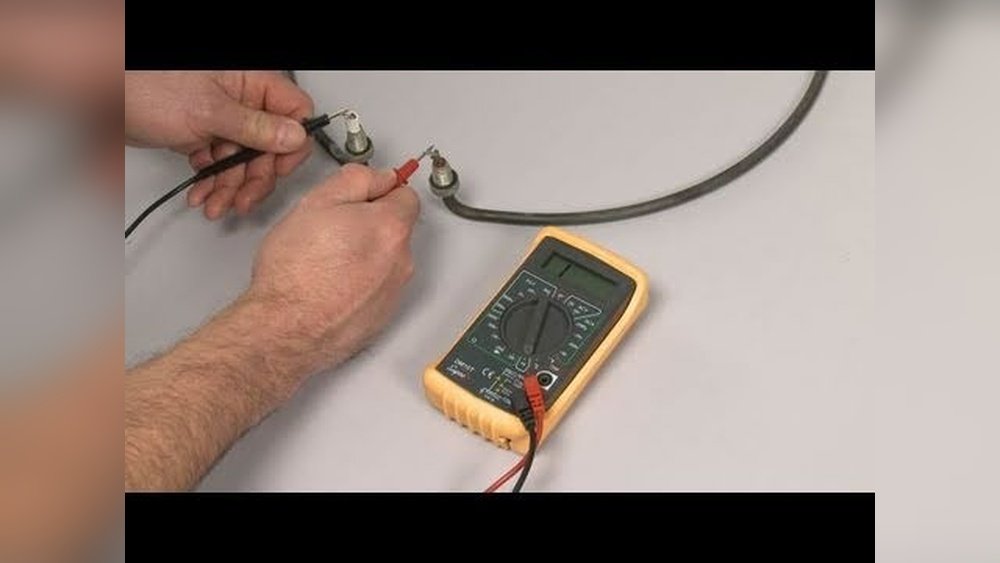
4. Set Up Your Multimeter
- Set the multimeter to the ohms (Ω) or resistance setting.
- If your multimeter has ranges, select the lowest one (usually 200 or 2,000 ohms).
A good heating element typically shows a resistance between 10 and 50 ohms. Check your owner’s manual for the exact value.
5. Test The Heating Element
- Touch one multimeter probe to each terminal at the same time.
- Read the display:
- A reading between 10–50 ohms: Element is good.
- A reading of 0 or close to 0: The element is shorted.
- No movement or “OL” (open loop): The element is broken (open circuit).
Write down the result for your records.
6. Reconnect And Reassemble
- If the heating element is good, reconnect the wires.
- Replace the lower panel and screws.
- Restore power and water supply.
If the element is faulty, you will need to replace it. Many heating elements are affordable and can be installed with basic tools.
Comparing Heating Element Test Results
Here’s a quick comparison to help you interpret your multimeter readings:
| Ohm Reading | Meaning | Action Needed |
|---|---|---|
| 10–50 Ω | Element is functioning | No action |
| 0 Ω | Short circuit | Replace element |
| OL/∞ | Open circuit | Replace element |
| Above 50 Ω | Possible issue | Check manual or replace |
What If The Heating Element Is Good?
If your test shows the heating element is fine, but your dishwasher still isn’t heating, the problem may be with:
- Thermostat or high-limit switch
- Control board or timer
- Wiring connections
- Sensor or relay
It’s wise to test these parts next, or call a professional if you’re not comfortable working with electricity.
Common Mistakes To Avoid
Testing a dishwasher heating element is simple, but there are pitfalls that catch many beginners:
Not Disconnecting Power
Testing with the dishwasher plugged in is dangerous. Always turn off power at the breaker.
Forgetting To Disconnect Wires
Testing the element with wires attached can give false readings. Disconnect both wires first.
Using The Wrong Multimeter Setting
Set your multimeter to ohms, not volts or amps. The wrong setting can damage the tool or give bad results.
Touching Metal Probes Together
Keep probes apart except when measuring, to avoid short circuits.
Ignoring Other Causes
If your element passes the test, don’t assume the problem is fixed. Check other parts or call for help if needed.
How To Replace A Faulty Heating Element
If your test shows the element is faulty, replacement is usually straightforward. Here’s a general overview:
- Order a replacement part using your dishwasher’s model number.
- Disconnect power and water supply.
- Remove the lower rack and access the element.
- Disconnect wires from the terminals.
- Unscrew the mounting nuts or brackets holding the element.
- Remove the old element and install the new one.
- Reconnect wires and reassemble panels.
- Restore power and test with a short cycle.
Replacement heating elements cost $20–$60 for most brands. The job takes about 30–60 minutes for most people.
How A Dishwasher Heating Element Works
The heating element in a dishwasher is simple but effective. When the control board or timer sends electricity, the metal coil heats up. Water flows past or over the coil, raising its temperature. At the end of the cycle, the same coil heats air inside the tub, drying the dishes.
In modern dishwashers, a thermostat or sensor monitors the temperature to prevent overheating. Some energy-saving models use lower temperatures and rely on a fan to help dry dishes.
Interesting Insight: Many users don’t realize that running the hot water in your sink before starting the dishwasher helps the heating element work more efficiently. This simple step can save energy and improve cleaning.

Credit: www.yourspares.co.uk
Testing A Flow-through Heating Element
Some dishwashers (especially Bosch, Samsung, and European models) use a flow-through heater. This is a metal tube that heats water as it passes through.
To test this type:
- Disconnect power.
- Access the heater under the unit (often at the back or side).
- Disconnect wires and test with a multimeter as above.
- Resistance should be similar (10–50 ohms).
Non-obvious Tip: Flow-through heaters rarely show visible damage. Always use a multimeter for accurate testing.
When To Call A Professional
While checking a heating element is safe for most homeowners, sometimes it’s best to call an expert:
- If you see burned wiring or melted insulation
- If you smell burning plastic or see smoke
- If your dishwasher is still under warranty
- If you’re not comfortable handling electricity or water connections
A professional can also test related parts, such as thermostats, wiring, and control boards.

Credit: www.reddit.com
Real-world Example: Diagnosing A Heating Problem
Consider this scenario: Your dishwasher finishes the cycle, but dishes are cold and wet. You check the element and find no visible damage. You test with a multimeter and read OL (open loop). This means the element is broken inside, even if it looks perfect outside. Replacing the element solves the problem, and dishes come out hot and dry again.
How Long Does A Dishwasher Heating Element Last?
On average, a heating element lasts 7–12 years. Hard water, heavy use, and frequent power surges can shorten its life. Cleaning the dishwasher regularly and using a surge protector can help extend its lifespan.
Here’s a quick comparison of average lifespans for major dishwasher parts:
| Dishwasher Part | Average Lifespan (years) | Notes |
|---|---|---|
| Heating Element | 7–12 | Check for hard water buildup |
| Pump/Motor | 8–15 | Depends on use |
| Spray Arms | 10–15 | Clean regularly |
| Control Board | 10–20 | Rarely fails |
Tips To Extend The Life Of Your Dishwasher Heating Element
- Use dishwasher-safe cleaners to remove hard water buildup.
- Run hot water at the sink before starting the cycle.
- Avoid overloading the dishwasher, which blocks air circulation.
- Check for leaks or drips under the dishwasher.
- Use only recommended detergents to avoid residue buildup.
- Schedule regular maintenance if you have hard water.
Key Insights Most People Miss
- A heating element can fail inside even if it looks perfect outside. Always test with a multimeter.
- Some dishwashers will run the cycle even if the element is broken, so you may not see an obvious error.
- Many dishwashers will not dry plastic items perfectly, even with a good element. This is normal due to the material’s low heat retention.
- Running the hot water in your sink before starting a cycle can improve dishwasher performance.
- If you have hard water, consider using a dishwasher cleaner monthly to prevent scale buildup on the heating element.
When A Heating Element Is Not The Problem
If the heating element tests good and the dishwasher still does not heat, consider these possibilities:
- Thermostat failure: The thermostat may be stuck open, cutting off power to the element.
- Control board issue: A failed relay or control board may not send power to the element.
- Wiring problem: Loose or corroded wires can prevent the element from working.
- Faulty door latch: Some dishwashers stop heating if the door latch is not secure.
Testing these parts can be more complex and may require a professional.
How To Find The Right Replacement Heating Element
If you need a new heating element, follow these steps:
- Find your dishwasher’s model number (usually on a sticker inside the door).
- Visit the manufacturer’s website or a reputable parts dealer.
- Match the part number exactly, as different models use different elements.
- Read reviews and check compatibility before buying.
Pro tip: Genuine OEM parts usually last longer and fit better than generic alternatives.
For more technical details about how heating elements work in household appliances, you can visit this Wikipedia heating element page.
Frequently Asked Questions
How Do I Know If My Dishwasher Heating Element Is Bad?
The most common signs are dishes not drying, detergent not dissolving, and cold air inside after a cycle. Testing with a multimeter is the best way to confirm.
Is It Safe To Use My Dishwasher If The Heating Element Is Broken?
Yes, but dishes will not dry, and they may not be as clean. Over time, running the dishwasher with a broken element can stress other parts.
Can I Replace A Dishwasher Heating Element Myself?
Most people with basic tools can replace a heating element. Always disconnect power and water first. Check your manual for specific steps.
How Much Does A New Heating Element Cost?
Most replacement heating elements cost between $20 and $60. Professional installation may cost $100–$200 more.
What Causes A Dishwasher Heating Element To Fail?
The most common causes are hard water buildup, electrical surges, age, and overuse. Regular cleaning and proper use can help extend its life.
Taking care of your dishwasher’s heating element is crucial for good cleaning and drying. By learning to check and test the element, you can solve many common problems yourself, saving time and money. With the right tools and knowledge, you can keep your dishwasher running smoothly for years to come.