
Many people treasure their Le Creuset Dutch oven. It is more than just a kitchen tool—it’s a kitchen companion that helps create stews, breads, and even desserts. However, after a few hearty meals, you might notice unsightly stains on the inside. These marks can make your Dutch oven look old and may even affect the taste of your food over time. Cleaning these stains is not always straightforward, and using the wrong method can damage the enamel, shorten the lifespan of your cookware, or even void your warranty.
If you’ve ever wondered how to clean stubborn stains without harming your Le Creuset, you’re not alone. Many owners make common mistakes or skip essential steps. This guide will show you exactly how to clean stains from the inside of a Le Creuset Dutch oven, using methods that are safe, effective, and recommended by experts.
Along the way, you’ll learn why stains form, the best cleaning products and tools, and the key differences between cleaning enamel and other materials. With a little knowledge, you can keep your Le Creuset looking beautiful and performing at its best for years.
Understanding Your Le Creuset Dutch Oven
Before you start scrubbing, it helps to understand what makes Le Creuset Dutch ovens unique. These cookware pieces are made from cast iron and coated with a smooth, colorful enamel glaze. This enamel protects the iron from rust and makes cleaning easier compared to bare cast iron. However, the enamel is not indestructible. It can get scratched, chipped, or stained if cleaned the wrong way.
Why Stains Happen
Stains form on the inside of your Dutch oven for several reasons:
- High heat can cause food and oils to burn onto the enamel.
- Acidic foods like tomatoes or wine can leave marks.
- Strong spices such as turmeric or paprika sometimes cause yellow or orange stains.
- Letting food dry out or leaving leftovers in the pot can also cause stubborn marks.
Understanding these causes helps you avoid habits that lead to stains in the first place.
Enamel Vs. Bare Cast Iron
It’s important to remember that cleaning enamel is very different from cleaning bare cast iron. Enamel doesn’t need seasoning and should never be scrubbed with metal tools or harsh abrasives. Bare cast iron can handle more aggressive cleaning, but enamel requires a gentle touch.
Here’s a quick comparison:
| Feature | Enamel-Coated (Le Creuset) | Bare Cast Iron |
|---|---|---|
| Rust Risk | Very low (if not chipped) | High if not seasoned |
| Scrubbing Tools | Soft sponges only | Can use steel wool |
| Dishwasher Safe | Yes (but not recommended) | No |
| Seasoning Needed | No | Yes |
Essential Tools And Products For Safe Cleaning
To clean your Dutch oven’s interior without damage, you need the right supplies. Not all cleaners are safe for enamel. Here’s what you should have:
- Non-abrasive sponge or brush – Avoid steel wool or scouring pads.
- Mild dish soap – Choose a gentle, unscented brand.
- Baking soda – Excellent for lifting stains without scratching.
- White vinegar – Helps dissolve mineral deposits and some stains.
- Hydrogen peroxide (3%) – Useful for tough, baked-on marks.
- Plastic scraper – For removing stuck bits safely.
- Soft microfiber cloth – For drying and polishing.
- Le Creuset cleaner (optional) – Specially made for their cookware.
Here’s a quick reference to help you choose:
| Cleaner/Tool | Safe for Enamel? | When to Use |
|---|---|---|
| Baking soda | Yes | General stains, gentle scrubbing |
| White vinegar | Yes | Discoloration, mineral spots |
| Hydrogen peroxide (3%) | Yes | Tough, baked-on marks |
| Steel wool/metal brush | No | Never |
| Le Creuset cleaner | Yes | Special stains, light polishing |
Using the right products is the first step to safe and effective cleaning.

Credit: thehomeicreate.com
Daily Cleaning: Keeping Stains Away
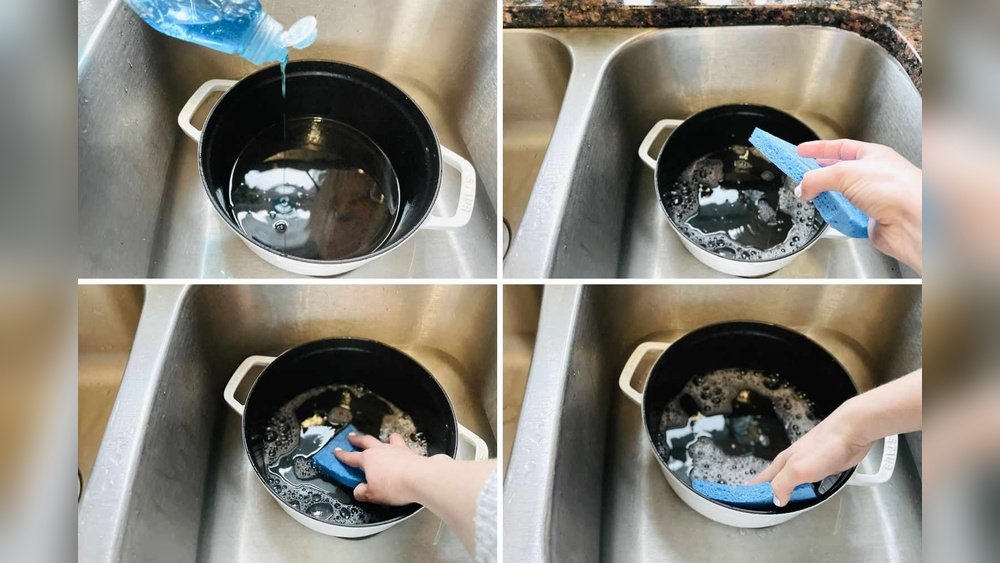
Regular cleaning after each use prevents stains from building up. Here’s what you should do:
- Let it cool first. Never add cold water to a hot Dutch oven. This can crack the enamel.
- Soak in warm water. Fill with warm soapy water and let it sit for 15-20 minutes. This loosens stuck-on food.
- Use a soft sponge. Gently clean the surface. Avoid scrubbing pads or powders.
- Rinse and dry. Rinse with clean water and dry with a soft cloth.
Tip: If food is stuck, use a plastic scraper. Never use knives or metal utensils.
Most stains can be avoided with this simple routine. But if you miss a spot or cook something especially sticky, you may need a deeper clean.
Removing Light Stains: Baking Soda Method
If you see light stains or some discoloration after cooking, baking soda is your best friend. It’s gentle, inexpensive, and safe for enamel.
Steps:
- Make a paste: Mix 2 tablespoons of baking soda with just enough water to create a thick paste.
- Apply to stains: Spread the paste over the stained area.
- Let it sit: Leave for 10–15 minutes. For very light stains, 5 minutes is enough.
- Scrub gently: Use a damp non-abrasive sponge to rub the paste in circles. Do not push too hard.
- Rinse thoroughly: Wash out all residue and dry the pot.
This method works well for yellow or brown marks that haven’t set in deeply. It’s safe enough to use as often as needed.
Non-obvious insight: Baking soda also helps remove odors, not just stains. This is useful if your Dutch oven smells after cooking curries or stews.
Lifting Stubborn Stains: Vinegar And Baking Soda Solution
Sometimes stains are more stubborn, especially after high-heat cooking or long braises. When baking soda alone doesn’t work, combine it with vinegar.
Steps:
- Sprinkle baking soda: Cover the stained area with a generous layer.
- Add vinegar: Pour enough white vinegar to cover the bottom, about half an inch deep.
- Let it fizz: The mixture will bubble. Let it sit for 10–20 minutes.
- Fill with hot water: Add enough hot (not boiling) water to cover the stains.
- Soak: Wait another 15–30 minutes.
- Scrub gently: Use a soft sponge to clean.
- Rinse and dry.
This method lifts most stubborn stains and mineral deposits. If you see no improvement, repeat the process once.
Practical tip: Never use boiling water, as the sudden temperature change can damage the enamel. Hot tap water is best.
Tackling Baked-on And Burnt Stains: Hydrogen Peroxide Boil
Burnt-on stains are common, especially after baking bread or browning meats. When other methods fail, hydrogen peroxide can help.
Steps:
- Pour hydrogen peroxide (3%): Add enough to cover the stained area. For most Dutch ovens, 1 cup is enough.
- Simmer gently: Heat on the stove at medium-low until it starts to bubble. Do not let it boil hard.
- Wait: Let the bubbles work for 5–10 minutes. The peroxide will loosen burnt stains.
- Turn off heat: Allow the pot to cool.
- Scrub gently: Use a non-abrasive sponge.
- Rinse well: Make sure no peroxide remains.
Important: Always use 3% hydrogen peroxide. Stronger solutions are unsafe and can damage enamel.
Non-obvious insight: This method not only removes stains but also disinfects the surface, which is great after cooking raw meats.
Dealing With Color Stains: Turmeric, Tomato, And Wine
Certain foods can leave colored stains, like yellow from turmeric, red from tomato sauce, or purple from wine. These stains can be stubborn but are usually only on the surface.
Steps:
- Soak in baking soda and water: Fill the Dutch oven with warm water and add 2–4 tablespoons of baking soda. Let it soak overnight.
- Scrub gently: In the morning, use a soft sponge.
- Sunlight trick: If the stain is still there, place the clean, wet Dutch oven in direct sunlight for a few hours. Sunlight naturally fades color stains.
Expert tip: The sunlight trick works because UV light breaks down the molecules that cause color stains. It’s safe and chemical-free.
Cleaning Mineral And Water Stains
Sometimes, white or gray marks appear on the enamel. These are usually mineral deposits from hard water.
Steps:
- Fill with vinegar and water: Mix equal parts white vinegar and water. Pour enough to cover the marks.
- Warm on the stove: Heat gently for 10–15 minutes.
- Cool and scrub: Let the pot cool, then clean with a soft sponge.
- Rinse well: Always rinse after using vinegar, as its smell can linger.
Common mistake: Using strong acids or bleach. These can damage enamel and should be avoided.

Credit: thehomeicreate.com
When To Use Le Creuset’s Own Cleaner
Le Creuset makes a special enamel cleaner for their cookware. It’s effective for difficult stains and gentle on enamel.
How To Use:
- Apply a small amount: Squeeze the cleaner onto a soft damp sponge.
- Rub on stains: Work in circles for 1–2 minutes.
- Rinse thoroughly: Remove all cleaner.
- Dry with a microfiber cloth.
Insight: This cleaner is good for restoring shine if your Dutch oven looks dull after years of use.
What Not To Do: Common Mistakes To Avoid
Even with the best intentions, it’s easy to damage your Dutch oven if you use the wrong method. Here are mistakes to avoid:
- No metal tools. Never use steel wool, metal spatulas, or knives on enamel.
- No harsh chemicals. Avoid bleach, oven cleaner, or strong acids.
- No sudden temperature changes. Don’t put a hot Dutch oven under cold water or in the freezer.
- Don’t soak too long. Overnight soaking is okay, but leaving the pot in water for days can loosen the enamel.
- No dishwasher for tough stains. While technically dishwasher safe, repeated cycles can dull the enamel.
Non-obvious insight: Even a small chip can become a big problem. Always inspect your Dutch oven for chips or cracks before cleaning.
Deep Cleaning Routine: Bringing Back The Shine
If your Le Creuset looks dull or has several types of stains, a deep cleaning session can help.
Steps:
- Basic wash: Clean with warm soapy water and a soft sponge.
- Vinegar soak: For mineral or chalky stains, fill with equal parts vinegar and water. Heat gently, then let cool.
- Baking soda scrub: For brown or yellow stains, use a baking soda paste.
- Hydrogen peroxide boil: For stubborn burnt marks, use the peroxide method.
- Enamel cleaner: Finish with Le Creuset’s cleaner to restore shine.
- Polish exterior: Wipe the outside with a damp cloth and a little baking soda if needed.
Pro tip: Repeat the deep cleaning process every 2–3 months, or as needed, to keep your Dutch oven looking new.
Comparing Cleaning Methods: Effectiveness And Enamel Safety
Here’s a handy table to compare the main cleaning methods for Le Creuset Dutch ovens:
| Cleaning Method | Effectiveness (1-5) | Safe for Enamel? | Best For |
|---|---|---|---|
| Soapy water & sponge | 3 | Yes | Daily cleaning, light stains |
| Baking soda paste | 4 | Yes | Light to medium stains |
| Vinegar soak | 4 | Yes | Mineral deposits, color stains |
| Hydrogen peroxide boil | 5 | Yes | Burnt-on stains |
| Le Creuset cleaner | 4 | Yes | Restoring shine, special stains |
| Steel wool/harsh chemicals | 5 | No | Never use |
This comparison helps you pick the right solution based on your stain and the condition of your Dutch oven.
Preventing Future Stains
Prevention is easier than cleaning. Here’s how you can keep your Le Creuset looking bright and stain-free:
- Use medium or low heat. High heat burns food and leaves marks.
- Add enough oil or liquid. Dry cooking is harder on enamel.
- Deglaze after cooking. Pour a little water, broth, or wine to loosen stuck bits.
- Wash soon after use. Don’t let food dry out or sit overnight.
- Store dry. Make sure the Dutch oven is completely dry before storing, and store with the lid off or a paper towel inside to prevent moisture.
Non-obvious insight: Avoid using spray oils, as they can leave a sticky residue that’s hard to clean.
How To Handle Scratches And Chips
While cleaning, you may notice scratches or small chips in the enamel. Here’s what to do:
- Small surface scratches: These are usually just cosmetic and don’t affect cooking or cleaning. You can continue using your Dutch oven.
- Large chips: If you see metal underneath, stop using the pot for food. Bare metal can rust and may react with acidic foods.
- Contact manufacturer: Le Creuset offers a warranty. For serious damage, contact them for advice or possible replacement.
Tip: Always avoid stacking heavy cookware inside your Dutch oven to prevent chips.
What About The Exterior And Lid?
Stains often show up on the outside or under the lid. The same cleaning methods apply:
- For the exterior: Use baking soda paste or Le Creuset cleaner. Avoid soaking the base if it has a black or matte finish.
- For the lid: Clean as you would the inside. The enamel is usually the same.
- For stubborn lid rim stains: Use a toothbrush and baking soda.
Insight: The black rim of the Dutch oven is often uncoated cast iron. Keep it dry and occasionally rub with a little oil to prevent rust.
When To Seek Professional Help
If stains remain after several safe cleaning attempts, or if the enamel feels rough or looks cracked, it’s better to ask for professional advice. Le Creuset customer service can often help, and some cookware stores offer cleaning or repair services.
For the most up-to-date care tips, check the official Le Creuset care guide.

Credit: carlyriordan.com
Frequently Asked Questions
How Often Should I Deep Clean My Le Creuset Dutch Oven?
Deep cleaning is needed only when you see stains or discoloration that regular washing can’t remove. For most people, every 2–3 months is enough. If you cook very often or use a lot of spices, you might need to clean more frequently.
Is It Safe To Use Bleach Or Oven Cleaner Inside My Le Creuset?
No, bleach and oven cleaner are too harsh for enamel. They can damage the surface, cause pitting, and may even void your warranty. Stick to baking soda, vinegar, and Le Creuset’s own cleaner for best results.
Why Does My Dutch Oven Have A Dull Finish After Cleaning?
A dull finish can happen if you put the pot in the dishwasher often, use too much soap, or clean with hard water. Restore shine by gently polishing with Le Creuset cleaner or a baking soda paste. Always dry with a soft cloth.
Can I Put My Le Creuset Dutch Oven In The Dishwasher?
While Le Creuset says their Dutch ovens are dishwasher safe, frequent machine washing can dull the enamel over time. Hand washing is gentler and helps your cookware last longer.
What Should I Do If Stains Still Won’t Come Off?
If you’ve tried all safe methods (baking soda, vinegar, hydrogen peroxide, Le Creuset cleaner) and stains remain, stop cleaning aggressively. Contact Le Creuset customer service for advice. Persistent stains that do not come off are usually cosmetic and won’t affect performance.
Keeping your Le Creuset Dutch oven clean inside is not just about looks—it’s about enjoying better food and protecting your investment. With these steps, you’ll be able to remove stains safely and prevent new ones from forming. A little regular care goes a long way, and your Dutch oven can stay the centerpiece of your kitchen for many years to come.