
Raspberries are one of nature’s most delicate treasures. Their soft skin, bright color, and sweet-tart flavor make them popular in smoothies, desserts, and salads. But anyone who’s bought a box of raspberries knows they spoil quickly, sometimes in just a day or two. Learning how to clean and store raspberries properly can help you keep them fresh much longer, avoid waste, and enjoy their taste at its best.
If you’ve ever wondered why your raspberries turn mushy or moldy overnight, you’re not alone. Many people make common mistakes, like washing berries too early or storing them in tightly closed containers. The right method isn’t complicated, but it does require a few careful steps.
With the guidance in this article, you’ll understand how to protect your raspberries from moisture, bacteria, and crushing—so you can enjoy every last berry.
Let’s dive into the best ways to clean, dry, and store raspberries, whether you picked them yourself or bought them from the store. You’ll find practical tips, real-life examples, and even some surprising insights that most beginners miss.
Why Raspberries Spoil So Fast
Raspberries have a short shelf life for several reasons:
- Thin skin and hollow core: This makes them very fragile and prone to damage.
- High moisture content: Excess water can encourage mold growth.
- Lots of tiny hairs: These can trap dirt and bacteria.
- No protective coating: Unlike apples or grapes, raspberries lack a waxy layer to keep bacteria out.
A study by the University of California found that raspberries can start to break down within 48 hours at room temperature, and even in the fridge, they last only about 3-5 days if not stored correctly.
The Right Way To Clean Raspberries
Cleaning raspberries is not the same as washing apples or carrots. They’re easy to damage and absorb water, which can make them mushy or moldy. Here’s how to do it the right way.
When To Wash Raspberries
Never wash raspberries as soon as you bring them home unless you plan to eat them immediately. Water left on the berries will speed up spoilage. Instead:
- Store them unwashed.
- Only rinse them right before you eat or use them.
This simple rule is the biggest reason some people’s raspberries last days longer than others.
How To Wash Raspberries Step By Step
If you’re ready to eat or cook with your raspberries, follow these steps:
- Check for spoiled berries: Pick out any mushy, moldy, or leaking berries. One bad raspberry can cause others to spoil.
- Use cool water: Fill a bowl with cool (not hot) water. Never use running water, which can crush the berries.
- Soak gently: Place the raspberries in the bowl. Swirl them gently with your hand for about 30 seconds.
- Lift, don’t pour: Use your hands or a slotted spoon to lift the berries out. Don’t pour them into a strainer, or the debris at the bottom will get back on the fruit.
- Rinse with a gentle spray: If needed, rinse the berries with a light spray from the faucet while in the strainer.
Using Vinegar To Kill Mold Spores
For longer-lasting raspberries, consider a vinegar wash. It can kill bacteria and mold spores without changing the flavor.
- Mix 1 part white vinegar with 3 parts water in a bowl.
- Soak the berries for 1-2 minutes.
- Rinse well with cool water to remove any vinegar taste.
- Dry immediately.
Studies suggest that a vinegar wash can reduce mold growth and increase shelf life by 1-2 days. Don’t skip the final rinse—raspberries can hold onto the vinegar flavor if not rinsed properly.
Drying Raspberries Properly
Drying is as important as washing. Even a little leftover water can make raspberries spoil quickly. Here’s how to dry them:
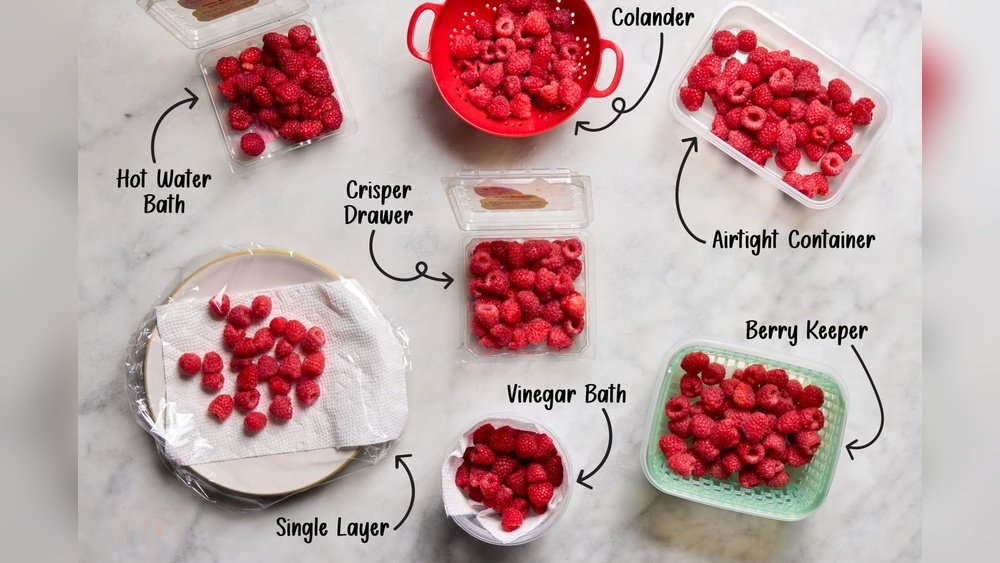
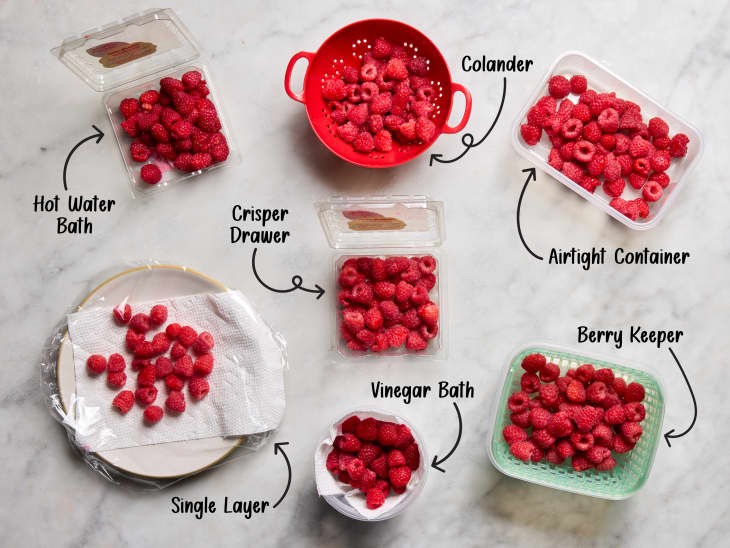
- Place berries in a single layer on a clean kitchen towel or paper towels.
- Gently pat them dry with another towel.
- Leave them out to air dry for 10-15 minutes.
- Make sure there’s no visible moisture before storing.
Avoid using a hairdryer or fan—gentle patting and air drying are safest.
How To Store Raspberries In The Fridge
Proper storage is the secret to making raspberries last. The fridge slows down bacteria and mold growth, but only if you keep moisture and air flow in mind.
Choose The Right Container
The best container for raspberries is one that:
- Allows air circulation
- Absorbs extra moisture
- Protects berries from being squashed
Let’s compare common storage options:
| Container Type | Pros | Cons | Shelf Life |
|---|---|---|---|
| Original plastic clamshell | Ventilated, easy to use | Can trap moisture, not very sturdy | 2-3 days |
| Glass container with lid | Sturdy, reusable, less odor | Poor air flow unless lid left ajar | 3-5 days |
| Punnet lined with paper towels | Good air flow, absorbs moisture | May not protect from crushing | 3-6 days |
| Produce keeper with vent | Excellent moisture control and air flow | Can be expensive | 5-7 days |
How To Store Step By Step
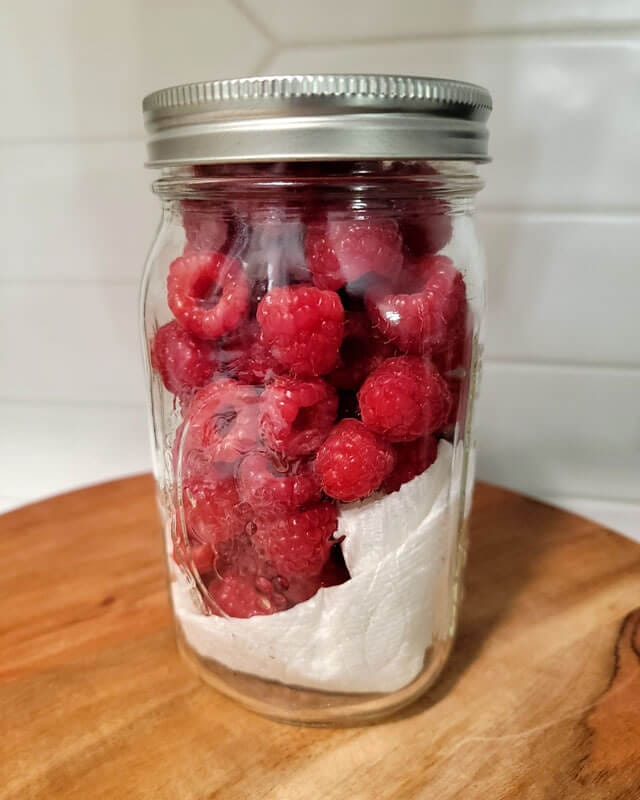
- Line the container: Place a paper towel at the bottom to absorb moisture.
- Add dry berries in a single layer: Overlapping berries increases the risk of crushing and mold.
- Cover loosely: If your container has a lid, don’t snap it on tightly. Leave a small gap for air.
- Store in the fridge’s main compartment: The crisper drawer is too humid for berries.
- Check daily: Remove any spoiled berries immediately.
Should You Use Airtight Containers?
Never use a fully airtight container for raspberries. It traps moisture and speeds up spoilage. Berries need to “breathe. ”
Position In The Fridge
The best place for raspberries is the middle or top shelf, where the temperature is more stable. The back of the fridge can be too cold and cause freezing.
How To Store Raspberries For Longer (freezing)
If you have more raspberries than you can eat in a few days, freezing is the best way to save them.
Why Freeze Raspberries?
- Preserves nutrients and flavor
- Stops spoilage
- Great for smoothies, baking, and sauces
How To Freeze Raspberries
- Wash and dry: Use the same gentle washing and drying process as for fresh berries.
- Pre-freeze in a single layer: Place berries on a baking sheet lined with parchment paper. Make sure they don’t touch.
- Freeze until solid: This usually takes 2-4 hours.
- Transfer to freezer bags or containers: Remove as much air as possible to prevent freezer burn.
- Label and date: Raspberries can be stored for up to 12 months, but best quality is within 6 months.
Whole Vs Crushed Raspberries
You can also freeze raspberries as a puree or with sugar for different uses. Here’s a quick comparison:
| Form | Best For | Texture After Thawing | Storage Life |
|---|---|---|---|
| Whole berries | Smoothies, baking, toppings | Softer, not good for salads | 6-12 months |
| Pureed with sugar | Sauces, jam, drinks | Smooth, sweet | 12 months |
| Crushed, unsweetened | Cooking, baking | Soft, no shape | 8-12 months |
Thawing Frozen Raspberries
- For best texture, use them frozen in smoothies or cooked recipes.
- If you want to thaw, place in the fridge for a few hours.
- Never microwave to thaw—this makes them mushy.
Special Tips For Cleaning And Storing Raspberries
Here are some extra tips and non-obvious insights even experienced cooks sometimes miss:
- Don’t stack too deep: More than two layers increases crushing and mold risk.
- Buy small amounts: Raspberries don’t last long. Buy only what you’ll use in 2-3 days.
- Avoid pre-cut fruit mixes: Mixed fruit containers tend to spoil faster and can cross-contaminate.
- Organic raspberries spoil faster: Without chemical preservatives, they need even more care.
- Watch for condensation: If the container gets foggy, open it to let moisture out.
- Never store near strong-smelling foods: Raspberries absorb odors easily.
- Wash hands and tools: Before handling, wash your hands and any utensils to avoid bacteria.
- Don’t store with ethylene-producing fruits: Apples, bananas, and tomatoes give off ethylene gas that speeds up ripening and spoilage.
- Use berry-specific containers: Some companies sell ventilated berry keepers designed to keep berries fresh longer.
- Check storage temperature: The ideal temperature for raspberries is 32–34°F (0–1°C).
How To Tell If Raspberries Are Spoiled
Spoiled raspberries are easy to spot, but sometimes the signs are subtle:
- Mold: White, gray, or green fuzzy spots are a clear sign.
- Soft or leaking berries: If they feel mushy or wet, they’re starting to break down.
- Off smells: A sour or fermented smell means they’re going bad.
- Color changes: Dark or dull spots show decay.
Always remove spoiled berries right away to protect the rest.
Credit: www.lemon8-app.com
Using Raspberries After Storage
Even if your raspberries aren’t perfect, you can still use them in many ways. Slightly soft or blemished berries are great for:
- Smoothies
- Baking (muffins, cakes, bread)
- Cooking into sauces or jams
- Topping oatmeal or yogurt
Only toss raspberries if they have mold or a bad smell. Otherwise, get creative.
Mistakes To Avoid When Cleaning And Storing Raspberries
Many people make the same errors that cause raspberries to spoil quickly. Here’s what to watch out for:
- Washing too early: Adds moisture that leads to mold.
- Storing wet berries: Always dry thoroughly.
- Using airtight containers: Traps moisture inside.
- Stacking too many layers: Crushed berries spoil faster.
- Keeping in the crisper drawer: Too humid for raspberries.
- Not checking daily: One bad berry can ruin the rest.
- Skipping the vinegar wash: This step can add 1-2 days to shelf life.
- Freezing in large clumps: Berries stick together and get mushy.
- Thawing with heat: Causes berries to break down.
- Leaving at room temperature: Raspberries spoil faster outside the fridge.
Raspberries In Recipes: When To Wash And Store Differently
Sometimes, your recipe may call for a different approach:
- For toppings: Wash and dry just before using. Keep cold until serving.
- For baking: Slightly soft or older berries are fine. No need for perfect shape.
- For salads: Use the freshest, firmest berries. Wash gently and dry completely to avoid soggy salads.
- For jam or sauce: Overripe berries are great. Wash and use immediately.
The Science Behind Raspberry Spoilage
You might wonder why raspberries are so tricky compared to other fruits. There’s real science behind it.
- Respiration rate: Raspberries “breathe” faster than apples or oranges, meaning they use up their sugars and spoil faster.
- Mold spores: The small hairs (called “styles”) on raspberries trap mold spores easily.
- Moisture transfer: Even the tiniest amount of leftover water is enough to start mold growth.
A study from the USDA found that proper post-harvest handling (like immediate cooling and gentle washing) can double raspberry shelf life compared to careless handling.
Credit: thecrosslegacy.com
Comparing Raspberries To Other Berries
How do raspberries compare to strawberries, blueberries, or blackberries when it comes to cleaning and storage?
| Berry Type | Fragility | Recommended Storage | Shelf Life |
|---|---|---|---|
| Raspberry | Very high | Single layer, ventilated, dry | 2-5 days |
| Strawberry | High | Single layer, can handle more moisture | 3-7 days |
| Blueberry | Medium | Loose container, less drying needed | 7-10 days |
| Blackberry | High | Single layer, ventilated, dry | 3-6 days |
As you can see, raspberries are the most delicate and need the most careful handling.
How To Store Raspberries Without A Fridge
If you don’t have access to a fridge (for example, during travel or camping):
- Keep raspberries in a cool, shaded place.
- Spread them out in a shallow box or basket lined with a clean cloth.
- Cover loosely with another cloth to protect from dust and insects.
- Eat within 24 hours.
At room temperature, raspberries spoil much faster—sometimes within hours in hot weather.
Are Store-bought Or Homegrown Raspberries Easier To Store?
Homegrown raspberries are often fresher, but they might carry more dirt or insects. Store-bought raspberries are usually cleaner but can be older due to transport time.
- Homegrown: Wash more carefully, check for bugs, but usually last longer if picked the same day.
- Store-bought: Check for hidden mold, and plan to eat sooner.
Both types benefit from the same cleaning and storage methods, but always check for debris or pests with homegrown berries.
What To Do With Lots Of Raspberries
If you suddenly have a big harvest or a great deal from the market, here are some ideas:
- Freeze most of them for later.
- Make raspberry jam, syrup, or sauce.
- Dry raspberries in a food dehydrator for snacks.
- Share with friends or neighbors.
- Add to baked goods, yogurt, or ice cream.
Planning ahead prevents waste and lets you enjoy raspberries year-round.
Food Safety And Raspberries
Raspberries have been linked to foodborne illnesses due to their delicate structure and tendency to trap bacteria. Always:
- Wash hands before and after handling.
- Use clean tools and containers.
- Discard any berries with mold or off smells.
- For babies, elderly, or those with weak immune systems, consider cooking raspberries (in jam or compote) to reduce risk.
More on food safety with berries can be found on the FDA website.
Frequently Asked Questions
How Do I Keep Raspberries From Getting Moldy?
The key is to keep raspberries dry and cool. Store them in a single layer, use a paper towel to absorb moisture, and remove any spoiled berries right away. A vinegar wash can also kill mold spores and add an extra day or two of freshness.
Should I Wash Raspberries Before Freezing Them?
Yes, but very gently. Wash in cool water or a vinegar solution, then dry completely. Any leftover moisture can cause ice crystals and mushy berries after thawing.
Can I Use A Salad Spinner To Dry Raspberries?
No, a salad spinner is usually too rough for raspberries and can crush them. Patting them dry with towels and air drying is safer.
Are Raspberries Safe To Eat If They Look A Little Soft?
If raspberries are just a bit soft, they are safe to eat or cook with. However, if you see mold, leaking, or smell something sour, it’s best to throw them out.
What’s The Best Way To Store Raspberries If I Want To Eat Them Over Several Days?
Keep raspberries in a single layer in a ventilated container lined with paper towels. Store them in the fridge, check for spoiled berries daily, and don’t wash until you’re ready to eat.
Raspberries are a treat, but their delicate nature means they need extra care. With the right cleaning and storage methods, you can make the most of every juicy berry. Enjoy your raspberries longer and reduce waste by following these simple, science-backed steps.
Credit: www.thekitchn.com