
Reheating rice is a part of daily life for millions around the world. It happens after busy workdays, during family leftovers, and whenever you cook a little more than needed. But have you ever noticed reheated rice sometimes turns out dry, hard, or even a bit rubbery? Many people think a microwave or stovetop is the only way. However, using a rice cooker can make a big difference. Most people do not realize that a rice cooker is not just for cooking fresh rice. It can also reheat rice to its soft, fluffy, and delicious state—almost as good as new.
Rice is a staple food in over half of the world’s households, especially in Asia, Africa, and Latin America. But reheating rice is not as simple as just pressing a button. If you want your rice to taste fresh and be safe to eat, there are key steps you must follow. Many beginners make mistakes, like adding too much water or not breaking up clumps, and end up with mushy or unevenly heated rice. This guide explains everything you need to know, from why reheating rice can be tricky to step-by-step instructions, along with important safety tips, smart tricks, and common pitfalls to avoid.
If you want to enjoy leftover rice that tastes freshly made, and you care about food safety and taste, this article is for you. Let’s dive in and learn how to reheat rice in a rice cooker the right way.
Why Reheating Rice Needs Special Care
Rice is more than just a simple grain. When stored and reheated, it behaves differently from other foods. One big reason is bacteria. Cooked rice can contain Bacillus cereus, a bacteria that survives cooking and can multiply if rice is kept at room temperature too long. Eating spoiled rice can lead to food poisoning. That’s why reheating rice is not only about texture and taste—it’s also about safety.
Another reason is rice’s structure. Once cooled, the starch molecules in rice tighten up, causing the grains to harden. This process is called retrogradation. When you reheat rice, the goal is to reverse this effect by adding moisture and gentle heat, making the grains soft and fluffy again.
Finally, different types of rice—like white, brown, jasmine, and basmati—react differently to reheating. Some need more water, others need less time. Understanding these differences helps you avoid soggy or dried-out rice.
Benefits Of Reheating Rice In A Rice Cooker
Using a rice cooker to reheat rice has several advantages over other methods:
- Even Heating: Rice cookers use gentle, even heat from all sides, so the rice warms up without burning.
- Moisture Control: You can add the right amount of water to keep rice moist, not soggy.
- Hands-Off: No need to stir or watch over the pot. Just set it and let the cooker do the work.
- Keeps Warm: Most rice cookers have a “keep warm” function, so rice stays at the right temperature until you’re ready.
- Better Texture: The steam basket or inner pot helps rice grains regain softness, almost like freshly cooked.
Many users overlook the fact that the “keep warm” function is not meant for reheating cold rice from the fridge. It’s for keeping just-cooked rice warm. Always use the “cook” or “reheat” setting if available.
Types Of Rice Cookers And Reheating Features
Not all rice cookers are created equal. Some have special “reheat” buttons, while basic models may only have a “cook” and “warm” switch. Here’s a comparison of common rice cooker types and their reheating options:
| Rice Cooker Type | Reheat Function | Best For | Price Range |
|---|---|---|---|
| Basic (One Switch) | No | Simple reheating with manual control | $20 – $40 |
| Digital (Multi-Function) | Yes (Dedicated Button) | Precise, hands-off reheating | $50 – $150 |
| Induction Heating | Yes (Advanced Settings) | Best texture and evenness | $100 – $300 |
| Micom (Microcomputer) | Yes (Multiple Modes) | Customizable, for rice lovers | $80 – $250 |
If your rice cooker lacks a “reheat” button, don’t worry. The following steps work for any model.
Preparing Rice For Reheating
Before you even turn on the rice cooker, how you store your leftover rice matters. Mistakes at this stage can ruin your reheating results or, worse, make your rice unsafe to eat.
Storage Tips
- Cool Quickly: After cooking, let rice cool to room temperature quickly (within an hour). Do not leave rice out for more than two hours.
- Use Airtight Containers: Store rice in airtight containers to keep out moisture and odors. This prevents drying and contamination.
- Refrigerate Promptly: Place rice in the refrigerator as soon as possible. Ideal temperature is 40°F (4°C) or lower.
- Do Not Freeze and Thaw Repeatedly: Repeated thawing and freezing damages texture and can increase bacteria risk. Freeze in small portions if needed.
- Label and Date: Write the date on the container. Eat refrigerated rice within 3–4 days for best quality and safety.
Portion Size Matters
Reheating small amounts is easier and gives better results. Large clumps of rice heat unevenly, so divide rice into smaller portions before storing. This also saves time during reheating.
Step-by-step: How To Reheat Rice In A Rice Cooker
Let’s get to the heart of this guide. Here’s how to reheat rice in a rice cooker for the best taste, texture, and safety.
1. Gather Your Ingredients And Tools
You need:
- Leftover rice (cold or room temperature)
- Water (filtered or tap)
- Rice cooker (any type)
- Fork or spoon (for breaking up clumps)
- Measuring cup (optional)
- Clean spatula (for serving)
2. Break Up The Rice
Remove rice from the fridge. Gently break up any large clumps with a fork or clean hands. This lets the steam reach all grains, so they heat evenly. If you skip this, you may end up with cold spots.
3. Add Water
Sprinkle water over the rice. The amount depends on the type and amount of rice:
- For 1 cup of rice: Add about 1–2 tablespoons of water.
- For 2–3 cups: Add 2–3 tablespoons.
- For brown or older rice: Use a bit more water.
If you add too much water, the rice can turn mushy. Too little, and it stays dry. The goal is to create gentle steam, not drown the rice.
4. Place Rice In The Cooker
Spread the rice evenly in the rice cooker’s inner pot. Do not pile it up in one spot—an even layer heats better.
5. Start The Rice Cooker
- If your rice cooker has a “reheat” or “steam” button, use that.
- If not, use the regular “cook” setting. The cooker will sense when the water is gone and switch to “warm.”
- For small amounts, 8–12 minutes is usually enough. For larger amounts, it may take up to 15–18 minutes.
6. Fluff And Check
Open the lid carefully (watch for hot steam!). Fluff the rice with a fork to check if it’s heated through. If some parts are still cold, stir, add a little more water, and run the cycle for a few more minutes.
7. Serve Or Keep Warm
Serve the rice right away, or use the “keep warm” setting for up to 1 hour. Do not leave reheated rice in the cooker for too long, as it can dry out or become unsafe.
Example: Reheating 2 Cups Of White Rice
- Break up the rice with a fork.
- Sprinkle 3 tablespoons of water evenly.
- Spread rice in the cooker.
- Press “cook.” Wait 10–12 minutes.
- Fluff and serve.
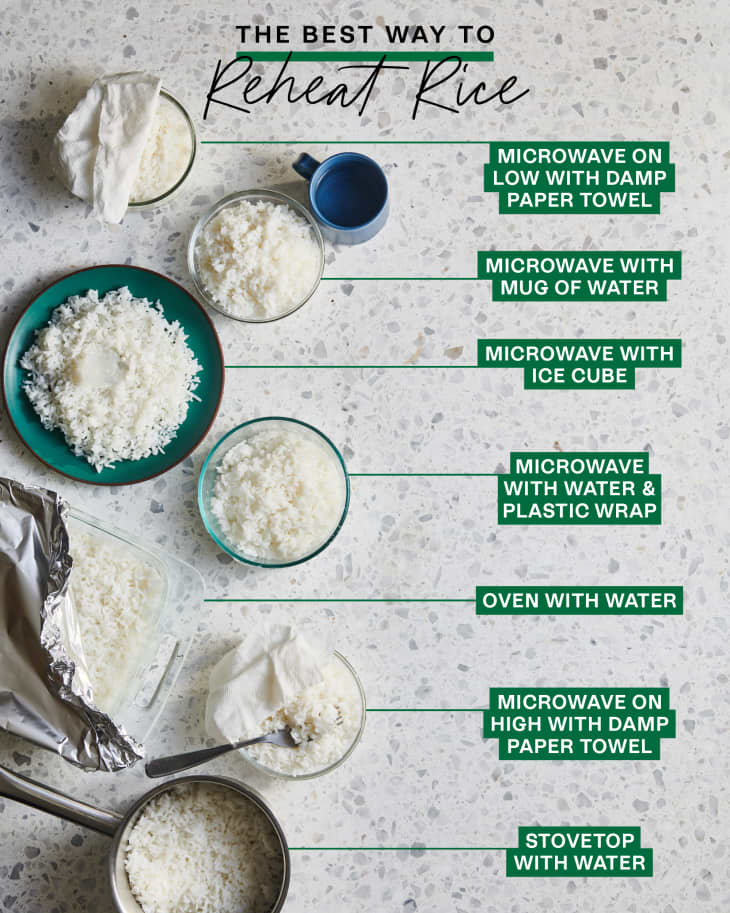
Comparing Reheating Methods: Rice Cooker Vs. Microwave Vs. Stovetop
Many people wonder if a rice cooker is really the best way to reheat rice. Here’s a side-by-side look at common methods:
| Method | Texture | Time | Effort | Risk of Dryness |
|---|---|---|---|---|
| Rice Cooker | Fluffy, moist | 8–15 min | Low (hands-off) | Low |
| Microwave | Sometimes dry or uneven | 2–5 min | Low (but must cover rice) | High |
| Stovetop | Can be sticky, uneven | 5–12 min | Medium (needs stirring) | Medium |
| Steamer Basket | Very moist | 10–15 min | Medium | Low |
The rice cooker stands out for its balance of hands-off ease and excellent texture.
Credit: www.thekitchn.com
Tips For The Best Results
Everyone wants their reheated rice to taste as good as fresh. Here are advanced tips and tricks you may not know:
- Add Flavors While Reheating: Mix in a pinch of salt, a few drops of soy sauce, or a little butter before starting. The rice absorbs these flavors better when warm.
- Use Broth Instead of Water: For extra taste, try using chicken or vegetable broth instead of water.
- Add Frozen Vegetables: Toss in peas, carrots, or corn before reheating for a simple, one-pot meal.
- Cover with a Damp Cloth: For especially dry rice, place a clean damp kitchen towel over the rice before closing the lid. This creates extra steam.
- Don’t Overcrowd the Pot: Too much rice in the cooker can heat unevenly. If you have a lot, reheat in batches.
- Let It Sit: After the cycle finishes, let the rice sit covered for 2–3 minutes. The steam finishes the job.
- Stir Halfway Through: For large batches, open the lid halfway through, give a gentle stir, then continue.
Non-obvious insight: If you frequently reheat rice, invest in a rice cooker with a “reheat” or “steam” function. It’s designed for this very purpose and prevents many problems beginners face.
Mistakes To Avoid When Reheating Rice
Many people think reheating rice is foolproof. In reality, these common mistakes lead to poor results or even foodborne illness:
- Leaving Rice at Room Temperature Too Long: As little as 2 hours can let bacteria multiply. Always refrigerate quickly.
- Adding Too Much Water: This is the fastest way to get mushy rice. Only add enough to create steam, not to soak the rice.
- Skipping the Fluff Step: Not breaking up rice means cold spots. Always fluff or stir before and after reheating.
- Reheating More Than Once: Each reheat cycle increases bacteria risk and worsens texture. Only reheat what you’ll eat.
- Using the “Keep Warm” Function for Cold Rice: This setting is not hot enough to make rice safe and can dry it out.
- Forgetting to Clean the Pot: Leftover grains stuck in the cooker can burn and change flavor. Always start with a clean pot.
- Not Checking Temperature: Rice should be steaming hot (at least 165°F/74°C) before serving.
Beginners often don’t realize that reheating rice more than once is a major safety risk. Always take only what you need from the fridge.
How Long Does Reheated Rice Last?
Reheated rice should be eaten right away. If you must store it, put it in the refrigerator within 1 hour and eat within 24 hours. Never reheat rice more than once. The more times rice is cooled and reheated, the greater the food poisoning risk. This is supported by the United States Department of Agriculture (USDA) guidelines on food safety.
Special Considerations For Different Types Of Rice
Different rice varieties need different reheating tweaks. Here’s what to keep in mind:
White Rice
The most forgiving. Needs the least water. Fluffs up nicely with 1–2 tablespoons per cup.
Brown Rice
Tends to dry out more. Needs slightly more water (up to 3 tablespoons per cup). Reheats well but may need a bit longer.
Basmati Or Jasmine Rice
These long-grain rices have delicate texture and aroma. Use only a little water and avoid stirring too much to prevent breaking the grains.
Sticky Or Sushi Rice
Prone to clumping. Use a wet spoon to break up the rice before reheating and add a bit more water for extra stickiness.
Fried Rice
Reheating fried rice in a rice cooker is possible but use minimal water (just a sprinkle) and stir halfway through. Too much water makes it soggy.
Can You Reheat Frozen Rice In A Rice Cooker?
Yes, you can. Here’s how:
- Do Not Thaw First: Place frozen rice directly into the rice cooker.
- Break Up Chunks: Use a spoon or spatula to break up large blocks.
- Add More Water: Use 3–4 tablespoons per cup, as frozen rice is drier.
- Increase Time: Reheating frozen rice takes 15–20 minutes.
- Fluff and Serve: Check for hot spots and serve immediately.
Pro tip: Freeze rice in thin, flat bags for faster reheating.
Rice Cooker Safety And Maintenance
To keep your rice cooker working well and your food safe:
- Clean After Every Use: Wash the inner pot, lid, and any accessories. Old rice can cause odors and mold.
- Check Seals and Vents: Make sure steam vents are clear and seals are in good condition.
- Avoid Metal Utensils: Use plastic or wooden spoons to prevent scratching the pot.
- Store Properly: Keep the cooker dry and unplugged when not in use.
- Read the Manual: Each model is different. Some have unique cleaning or reheating instructions.
Well-maintained rice cookers last many years and give the best results.

Credit: www.youtube.com
Creative Ways To Use Leftover Rice
Sometimes, you have more leftover rice than you can eat. Here are tasty ideas beyond plain reheating:
- Rice Porridge: Add extra water or broth, cook longer for a comforting breakfast.
- Fried Rice: Use reheated rice, vegetables, and a little oil. Best with day-old rice.
- Rice Salad: Mix cold rice with beans, vegetables, and a light dressing.
- Rice Cakes: Combine with egg, shape into patties, and pan-fry.
- Rice Soup: Stir into vegetable or chicken soup for a filling meal.
Using leftover rice in new dishes helps avoid waste and keeps meals exciting.
Nutritional Facts About Reheated Rice
Rice is mostly carbohydrates, with small amounts of protein and almost no fat. Here’s a typical nutritional breakdown for one cup (158 grams) of cooked white rice:
- Calories: 205
- Carbohydrates: 45 grams
- Protein: 4 grams
- Fat: 0.4 grams
- Fiber: 0.6 grams
Reheating rice does not change its calories or macronutrients. However, storing rice in the fridge overnight can increase its “resistant starch” content. This type of starch is digested more slowly and may be better for blood sugar control. For more information, see this Wikipedia article on resistant starch.
Common Questions About Reheating Rice
Many people have doubts or fears about reheating rice. Let’s clear up the most frequent ones.
Frequently Asked Questions
Is It Safe To Reheat Rice In A Rice Cooker?
Yes, as long as the rice was cooled and stored properly in the fridge, and you reheat it until it’s steaming hot (at least 165°F/74°C). Never reheat rice that has been left at room temperature for more than two hours.
How Much Water Should I Add When Reheating Rice?
Add 1–2 tablespoons of water per cup of rice. For brown or older rice, use a little more. The goal is to create steam without making the rice soggy.
Can I Reheat Rice More Than Once?
No, it’s not safe. Each reheating cycle increases the risk of bacteria growth. Only reheat the amount of rice you plan to eat at one time.
Why Does My Reheated Rice Turn Out Mushy?
Usually, too much water was added, or the rice was not spread evenly in the cooker. Use only a small amount of water and break up clumps before reheating.
What If My Rice Cooker Doesn’t Have A “reheat” Button?
Use the regular “cook” setting. The rice cooker will heat the rice and then switch to “warm” automatically. Just check and fluff the rice after 8–12 minutes.
Credit: www.yummy.ph
Final Thoughts
Reheating rice in a rice cooker is simple, safe, and produces the best results when you follow the right steps. It’s not just about pressing a button—proper storage, portioning, and moisture control all matter. By avoiding common mistakes and using a few smart tricks, you can enjoy fluffy, delicious rice every time, with less risk of food poisoning.
Whether you’re feeding your family, saving time, or reducing waste, mastering the rice cooker for reheating rice is a kitchen skill worth having.