
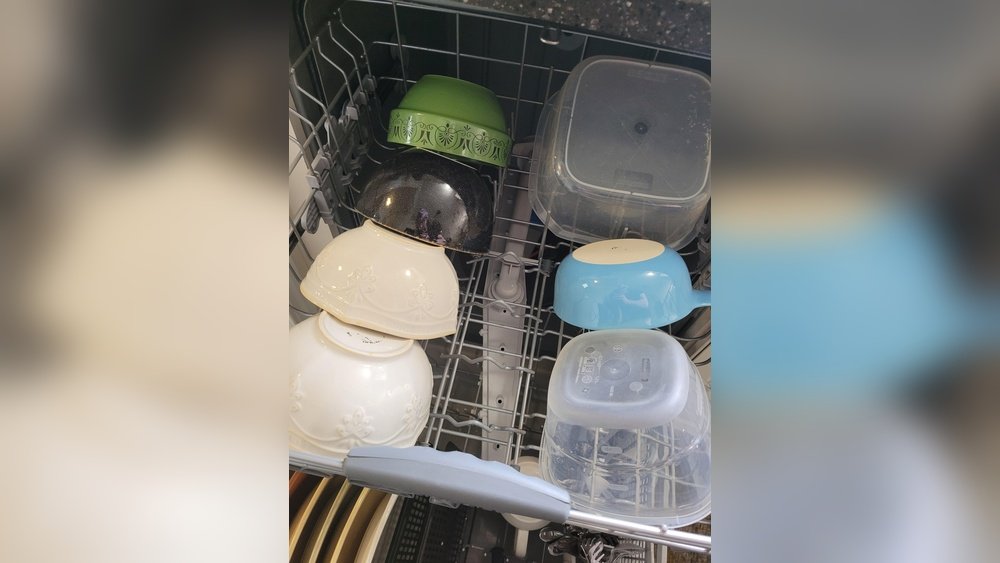
Loading the dishwasher seems simple—until you realize your bowls never come out clean, or worse, they break. Many people struggle with placing bowls in the dishwasher the right way. If you’ve ever found food stuck to your bowls, or if your dishes are chipped, you’re not alone.
Loading bowls correctly saves time, water, and energy. It also protects your dishes and helps your machine last longer. This guide will show you exactly how to put bowls in the dishwasher for spotless results, fewer problems, and less stress.
Understanding Your Dishwasher’s Layout
Every dishwasher has its own layout, but most share common parts. Knowing where things go helps you load bowls the right way.
The lower rack is designed for larger, heavier items like pots, pans, and dinner plates. The upper rack is meant for smaller and more delicate pieces such as glasses, mugs, and small bowls. Some dishwashers have a third rack at the top for utensils and very shallow bowls.
You’ll notice tines (vertical prongs) in both racks. These tines keep dishes separated and in the correct position so water can reach every surface. Some tines are adjustable; you can fold them down to make space for bigger items.
A common mistake is putting all bowls anywhere they fit. But every section of the dishwasher is built for a reason. When you understand the layout, you avoid overcrowding, poor cleaning, and breakage.
Types Of Bowls And Their Dishwasher Needs
Not all bowls are the same. How you load them depends on their size, shape, and material.
1. Cereal And Soup Bowls
These are medium-sized, round, and not too deep. They fit well in most upper racks. But if you stack them, water can’t reach inside.
2. Mixing Bowls
Mixing bowls are larger and sometimes metal or glass. They usually belong in the lower rack, upside down. If they’re too big, wash them by hand.
3. Plastic Bowls
Plastic bowls are lightweight and might flip over. Always secure them in the upper rack. High heat can warp plastic, so avoid the lower rack if your dishwasher has a heating element there.
4. Delicate Or Decorative Bowls
Fine china, hand-painted, or gold-rimmed bowls should be washed by hand. Dishwasher heat and detergent can damage them.
5. Small Bowls And Ramekins
These can fit in the upper rack, but make sure they’re not small enough to fall through or get hit by the spray arms.
Non-obvious insight: Some bowls have curved bottoms that collect water if loaded upside down but not tilted. Always check the bowl’s shape before choosing its spot.

Credit: cleanmama.com
Step-by-step Guide: How To Load Bowls In The Dishwasher
Let’s break down the process into clear, easy steps.
1. Scrape And Rinse (if Needed)
Remove large food particles with a spoon or spatula. Modern dishwashers are powerful, but sticky foods like oatmeal or dried rice can block the filter. You don’t need to pre-wash, but scraping helps.
2. Choose The Correct Rack
For most bowls, the upper rack is best. If your bowls are large or heavy, use the lower rack. Place delicate items only in the upper rack.
3. Position Bowls Correctly
Set each bowl between the tines, not on top of them. This keeps them stable and lets water reach every surface. Bowls should face downward and slightly angled toward the center for better water flow.
4. Avoid Nesting Or Overlapping
Bowls often stick together if you stack them. Water and detergent can’t reach every spot, leaving food or grease behind. Always separate bowls with tines. If you run out of space, run a second load.
5. Secure Lightweight Bowls
Plastic bowls may flip over when the spray arm moves. Place these in the upper rack and wedge them between heavier items if needed. Some dishwashers have clips for plastic pieces.
6. Check Spray Arm Movement
Spin the spray arm by hand before starting the cycle. Make sure nothing blocks it. A stuck arm means poor cleaning.
7. Leave Space Around Each Bowl
Overcrowding is a common mistake. Leave a finger-width gap between bowls for water and detergent to reach every surface.
8. Load Large And Deep Bowls At An Angle
Deep bowls can collect dirty water on top if loaded flat. Angle them so water drains off during the cycle.
9. Double-check Before Starting
Close the rack gently and check if any bowl moves or tips over. Adjust as needed.
Practical tip: If you have an adjustable upper rack, lower it to fit taller bowls. This creates more space and better cleaning.
Common Mistakes When Loading Bowls
Even experienced users make mistakes. Here are the most frequent problems to avoid:
- Nesting Bowls: This blocks water and leaves food inside.
- Overcrowding: Too many bowls prevent cleaning and can chip the edges.
- Wrong Rack: Heavy bowls in the top rack can break the rack or fall out.
- Improper Angling: Bowls facing straight up collect dirty water.
- Not Checking Spray Arm: Items blocking the spray arm mean poor results.
- Plastic in the Wrong Place: Placing plastic near the heating element can melt or warp it.
- Ignoring Dishwasher Manual: Each model has unique features—check yours for bowl-specific tips.
Non-obvious insight: Dishwasher tines are sometimes adjustable. If your bowls don’t fit well, see if you can move the tines to create custom spaces.
How Bowl Placement Affects Cleaning Performance
How you load bowls changes how well your dishwasher cleans. Placing bowls too close blocks water jets, meaning food or soap residue stays. If bowls are angled toward the center, water from the spray arms hits every surface.
Research shows that proper loading can increase cleaning efficiency by up to 30% compared to random placement. This also reduces the need for rewashing, saving water and electricity.
Here is a simple comparison to show how bowl placement affects dishwasher performance:
| Placement Style | Cleaning Result | Water Usage | Risk of Breakage |
|---|---|---|---|
| Properly spaced, angled | Very clean | Low | Low |
| Nesting/stacking | Poor (food left) | High (may need rewashing) | Medium |
| Overcrowded | Inconsistent | High | High |
If you want every bowl spotless after one cycle, focus on position and space.
Adjusting Dishwasher Racks For Better Bowl Loading
Many dishwashers have adjustable racks and fold-down tines. These help you fit bowls of different shapes and sizes.
- Upper rack height adjustment: Some models let you raise or lower the upper rack. Lower it for tall bowls or raise it for large items below.
- Fold-down tines: These tines fold flat to make space for wide or deep bowls.
- Special bowl holders: Some dishwashers include clips or holders for small or oddly-shaped bowls.
Check your manual for details. If you can’t find it, look for product support on the manufacturer’s website.
Here’s how some common rack features compare:
| Feature | Helps with | Best for |
|---|---|---|
| Adjustable upper rack | Tall bowls, large plates | Families, frequent cooks |
| Fold-down tines | Wide/large mixing bowls | Bakers, large households |
| Special clips/holders | Small/light bowls, plastics | Anyone with children |
Using these features can double your bowl capacity without reducing cleaning power.
Choosing Dishwasher-safe Bowls
Not all bowls are safe for the dishwasher. Using the wrong kind can lead to damage, fading, or even machine problems.
What Makes A Bowl Dishwasher-safe?
- Material: Most glass, ceramic, and sturdy plastics are safe. Avoid wooden, bamboo, or metal bowls with glued parts.
- Label: Look for a dishwasher-safe symbol or text on the bottom.
- Heat resistance: Bowls that can withstand high temperatures are less likely to warp or crack.
- Glaze and decoration: Some hand-painted or metallic finishes can fade or peel.
Materials To Avoid
- Wood: Cracks, warps, and absorbs detergent.
- Cheap plastics: Can melt or release chemicals.
- Metal with glued parts: Glue can soften and fall apart.
- Crystal or fine china: High heat and detergent can cause damage.
What To Do If Unsure
If you don’t know if your bowl is dishwasher-safe, wash it by hand. It’s better to spend a few extra minutes than ruin a favorite dish.
How To Load Special Types Of Bowls
Some bowls need extra care when loading.
Plastic Bowls
- Always place on the upper rack.
- Anchor with clips if available.
- Avoid putting above the heating element.
- Use a low heat or air dry setting.
Glass Bowls
- Place away from other glass to avoid chipping.
- Don’t overcrowd.
- Use a gentle cycle if available.
Mixing Bowls
- If very large, wash by hand.
- Place upside down in the lower rack, angled toward the center.
Small Bowls And Ramekins
- Use bowl holders or tuck between larger items to prevent flipping.
- Avoid placing near the edge, where water spray is weaker.
Decorative Or Hand-painted Bowls
- Wash by hand to protect color and finish.
- If using the dishwasher, use the gentlest cycle and mild detergent.
Experience-based tip: If your bowl has a sticker or label, remove it before washing. Sticky residue can gum up your dishwasher filter.
:max_bytes(150000):strip_icc()/PSX_20240731_174733-9162e7ba9ff44ee4be18c86a29adfa44.jpg)
Credit: www.seriouseats.com
How To Load Bowls For Maximum Space And Efficiency
Dishwasher space is valuable. Loading bowls efficiently means more dishes done in one cycle.
Tips For Saving Space
- Alternate directions: Face bowls in opposite directions along the rack so they fit closer without touching.
- Use adjustable tines: Fold tines to fit wide or deep bowls.
- Stagger sizes: Load larger bowls at the ends and smaller ones in the middle.
- Don’t overload: More isn’t always better—overcrowding leads to poor cleaning and possible breakage.
Example Loading Pattern
Place one large bowl at the end, followed by two medium-sized bowls, then another large bowl, and so on. This pattern keeps space between bowls and maximizes the number you can fit.
When To Run A Second Load
If you can’t load all bowls without them touching, wait and run a second cycle. It’s better for the dishwasher and your dishes.
Dishwasher Detergent And Settings For Bowls
The type of detergent and wash cycle affects how well your bowls come out.
Detergent Choice
- Powder, gel, or pods: All work, but pods are easiest to use.
- Rinse aid: Helps bowls dry without spots or streaks.
- Eco-friendly: If you use “green” detergent, check it’s strong enough for sticky foods.
Wash Cycle
- Normal/Auto: Fine for most bowls.
- Heavy/Intense: Use for heavily soiled or greasy bowls.
- Gentle/Delicate: For glass or lightly soiled decorative bowls.
- Quick: Good for lightly used bowls but may not clean dried-on food.
Drying
- Heated dry: Dries plastic and glass bowls better but uses more energy.
- Air dry: Saves energy but may leave drops on plastic.
Straight-to-the-point tip: Don’t use too much detergent. More soap doesn’t mean cleaner bowls—it can leave residue.

Credit: www.reddit.com
Cleaning And Maintaining Your Dishwasher For Best Results
A clean dishwasher means cleaner bowls. Food bits, grease, and mineral buildup can block spray arms and filters.
Regular Cleaning Steps
- Wipe the door and gasket weekly to remove grime.
- Clean the filter every month. Soak in warm, soapy water and rinse well.
- Run a cleaning cycle with dishwasher cleaner or vinegar once a month to remove scale and odors.
- Check spray arms for clogs. Remove them and rinse under running water if needed.
Signs Your Dishwasher Needs Cleaning
- Bowls come out dirty or with spots.
- Unpleasant odors.
- Water pools at the bottom after a cycle.
Practical advisor tip: If you use hard water, clean your dishwasher more often to prevent mineral buildup.
Energy And Water Saving Tips
Dishwashers use less water than hand washing, but you can save even more.
- Run full loads: Each cycle uses the same water and energy, so fill the dishwasher without overloading.
- Use eco cycles: Modern dishwashers have energy-saving options.
- Skip pre-rinsing: Scrape, but don’t rinse. This saves water and the dishwasher detergent works better with some food on dishes.
- Air dry when possible: Reduces energy use.
According to the U.S. Environmental Protection Agency, ENERGY STAR dishwashers save an average of 3,870 gallons of water over their lifetime compared to washing by hand (EPA).
Dealing With Stubborn Bowl Stains And Residue
Sometimes, bowls come out with stains or film. Here’s what to do:
Cloudy Or White Film
Usually caused by hard water minerals. Use a rinse aid or add a cup of vinegar to the bottom of the dishwasher and run a cycle.
Greasy Residue
Check detergent quality and don’t overload the dishwasher. Clean filters and spray arms to improve performance.
Food Still Stuck
Make sure bowls are angled, not nested. Use a heavier wash cycle for dried or sticky foods.
Scratches Or Chips
This means bowls are touching during washing. Load with more space between them.
Calm expert’s advice: If you try these fixes and still get bad results, check your water temperature. It should be at least 120°F (49°C) for best cleaning.
When Not To Put Bowls In The Dishwasher
There are times when hand washing is best:
- Very delicate or valuable bowls
- Bowls with glued decorations or metallic paint
- Oversized bowls that block the spray arms
- Wooden or bamboo bowls
- Any bowl labeled “hand wash only”
Hand washing takes extra effort but protects special items from damage.
Troubleshooting: If Bowls Aren’t Coming Out Clean
If you’ve followed all the steps and your bowls still aren’t clean, try these checks:
- Is the spray arm blocked? Remove and rinse it.
- Is the filter dirty? Clean it with warm soapy water.
- Are you using enough detergent? Too little soap can cause poor cleaning.
- Is your water hot enough? Run the hot water tap before starting the dishwasher.
- Are the bowls loaded correctly? Re-read earlier steps and adjust.
If you still have trouble, consult your dishwasher’s manual or call customer service.
Comparing Manual Vs. Dishwasher Bowl Cleaning
Is using the dishwasher always better than hand washing? Here’s a comparison:
| Method | Water Usage | Time Needed | Cleaning Quality | Breakage Risk |
|---|---|---|---|---|
| Dishwasher | 3-5 gallons/cycle | 5-10 min loading | Consistent (if loaded properly) | Low (if spaced well) |
| Hand washing | Up to 27 gallons/session | 15-30 min | Varies (depends on effort) | Medium (slippery dishes) |
Most families save time and water with the dishwasher, as long as they load bowls correctly.
Frequently Asked Questions
How Should I Place Bowls In The Dishwasher For Best Cleaning?
Position bowls face down and slightly angled toward the center of the rack. Make sure they are separated by tines and not nested or touching each other. This lets water spray reach every surface and avoids dirty spots.
Can All Types Of Bowls Go In The Dishwasher?
No. Only dishwasher-safe bowls should go in. Avoid putting wood, delicate china, hand-painted, or metallic-finished bowls in the machine. Always check for a dishwasher-safe label on the bottom.
Why Do My Plastic Bowls Flip Over During The Wash?
Plastic bowls are light and can be moved by water jets. Place them in the upper rack and use clips or wedge them between heavier items to keep them secure. Avoid the lower rack if your dishwasher uses a heating element there.
What Is The Best Detergent For Cleaning Bowls In The Dishwasher?
Pods, powder, and gel detergents all work well. Use a rinse aid for spot-free results, especially with glass or plastic bowls. Make sure not to overload the dishwasher, as this affects cleaning performance.
How Often Should I Clean My Dishwasher For Best Results?
Clean the filter monthly and wipe down the door and gasket weekly. Run a dishwasher cleaner or vinegar cycle once a month to remove build-up and odors. This keeps both your machine and bowls spotless.
Loading bowls in the dishwasher the right way means cleaner dishes, less breakage, and a longer-lasting machine. With these steps and practical tips, you’ll never have to rewash a bowl again. You’ll save time, water, and energy while getting the best from your dishwasher every day.