
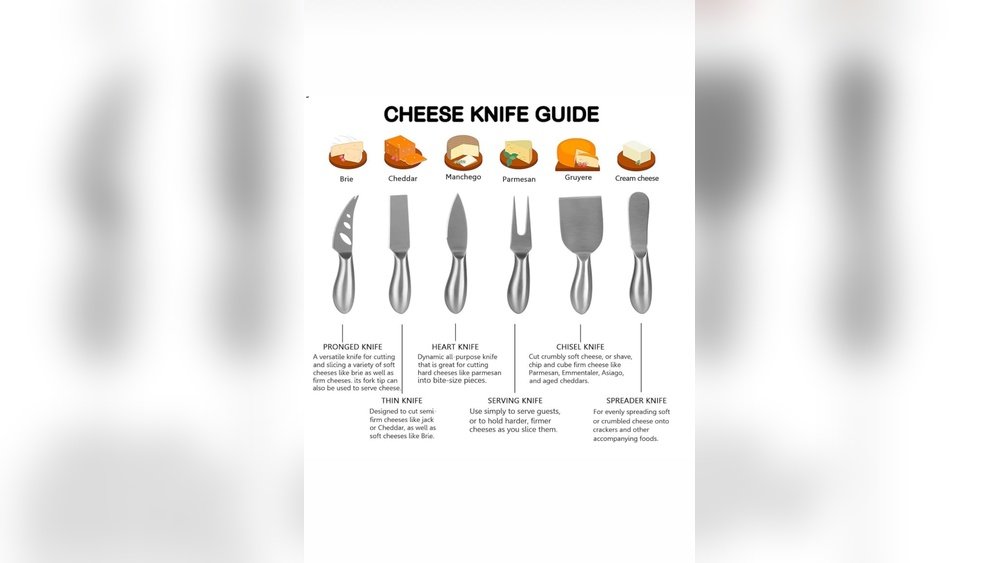
If you ever looked at a cheese platter and wondered why there are so many knives, you’re not alone. Cheese knives come in different shapes and sizes, each designed for a specific purpose. Using the right knife helps you cut, serve, and enjoy cheese the way experts do.
This guide will help you understand how to use cheese knives, why they matter, and how to make every cheese experience better. Whether you’re preparing a party spread or just enjoying a snack, knowing about cheese knives will make your cheese moments richer and easier.
What Are Cheese Knives And Why Use Them?
Cheese knives are specialized tools made for cutting, slicing, and serving cheese. Unlike regular knives, cheese knives are designed to handle the unique textures of cheese—from soft and creamy to hard and crumbly. Using the correct knife prevents cheese from sticking, breaking, or losing flavor.
When you use the right knife, you get cleaner cuts, better presentation, and a tastier bite.
The Science Behind Cheese Cutting
Cheese is more than food—it’s chemistry. Soft cheeses have high moisture, so they stick to blades. Hard cheeses can crumble or split. The shape of the knife, the holes in the blade, and the sharpness all play a role. For example, holes in blades reduce surface area, so soft cheese doesn’t stick.
A sturdy blade is needed for aged cheese to avoid cracking.
Why Not Use A Regular Knife?
Many people use regular kitchen knives for cheese, but this can ruin both the cheese and your experience. Kitchen knives are often too thick, not sharp enough, or don’t have the right edge. You risk crushing soft cheese, making a mess, or struggling with hard cheese.
Cheese knives are designed for these challenges.
Types Of Cheese Knives And Their Uses
There are many types of cheese knives. Each one fits a specific cheese texture, shape, and serving need. Let’s explore the most common types, their features, and how to use them.
1. Soft Cheese Knife
This knife is made for soft cheeses like Brie, Camembert, and Goat cheese. It usually has a narrow blade with holes. The holes stop cheese from sticking, so you get smooth slices.
How to use: Hold the cheese steady and cut gentle slices. The holes let air pass, preventing sticking. Sometimes, the tip is forked, which helps pick up slices.
Common mistake: Pressing too hard or using a knife without holes—this causes cheese to stick and tear.
2. Hard Cheese Knife
Used for cheeses like Cheddar, Parmesan, and Gruyère. The blade is thick and strong, sometimes with a flat edge.
How to use: Place the knife on the cheese block. Press down firmly and rock the blade for even cuts. For Parmesan, you may use a wedge-shaped knife to break off chunks.
Non-obvious tip: Warm hard cheese slightly before cutting. This makes slicing easier and reduces crumbling.
3. Cheese Spreader
Perfect for creamy cheeses like Cream cheese and Boursin. It has a flat, rounded blade to spread cheese smoothly.
How to use: Scoop up cheese and spread it on crackers or bread. No cutting required.
Beginner insight: Use two spreaders if serving flavored and plain cheese—this avoids mixing tastes.
4. Cheese Fork
This tool is not for cutting but for serving. It has two sharp prongs to pick up cheese pieces.
How to use: After slicing, use the fork to lift and place cheese. It’s especially useful for crumbly or aged cheeses.
Smart usage: Use the fork to hold cheese steady while slicing with another knife.
5. Parmesan Knife (spade Knife)
Designed for hard, aged cheeses like Parmesan. It has a short, thick, pointed blade.
How to use: Insert the tip into the cheese and twist. This breaks off small chunks instead of slices.
Advanced tip: Use a spade knife for other aged cheeses, like Pecorino Romano.
6. Cheese Cleaver
Looks like a mini meat cleaver. Used for semi-hard cheeses like Edam or Gouda.
How to use: Hold the cheese firmly and chop straight down. The weight helps cut dense cheese.
Beginner mistake: Trying to slice soft cheese with a cleaver—it will squash the cheese.
7. Flat Cheese Knife
Wide blade, sometimes with a slight curve. Used for cutting and lifting slices from semi-soft cheeses.
How to use: Cut downward and slide the blade under the slice to lift it.
Non-obvious insight: This knife is great for serving cheese at parties—easy to transfer slices without touching.
8. Slim Blade Knife
Long, thin blade for soft, sticky cheeses like Roquefort or Gorgonzola.
How to use: Use a gentle sawing motion. The slim blade minimizes contact, so cheese doesn’t stick.
Practical tip: Clean the blade between slices to avoid mixing flavors.
9. Cheese Plane
A flat tool with a sharp slot, used for hard cheeses like Jarlsberg and Emmental.
How to use: Slide the plane across the cheese surface. It shaves off thin slices.
Common mistake: Pushing too hard—this makes slices uneven.
10. Wire Cheese Cutter
A handle with a thin wire, perfect for soft to semi-hard cheeses like Mozzarella.
How to use: Place the cheese under the wire and press down. The wire cuts cleanly without sticking.
Beginner insight: Use a wire cutter for block cheese to make uniform slices.
11. Heart-shaped Knife
Small, pointed blade for serving soft and crumbly cheeses.
How to use: Use the point to cut and lift pieces. It’s ideal for blue cheese.
Advanced tip: Use this knife for cheese boards with mixed textures.
12. Crumbly Cheese Knife
Wide, sturdy blade for crumbly cheeses like Blue cheese and Feta.
How to use: Press down and rock gently. The blade keeps cheese intact.
Smart usage: Use the knife to break cheese into bite-sized pieces.
13. Stilton Knife
Long, narrow blade with a rounded tip. Used for English cheeses like Stilton.
How to use: Cut straight down and lift slices. The blade shape prevents sticking.
Beginner mistake: Using a short knife—this makes slices uneven.
14. Open Work Blade Knife
Blade with several holes or cutouts. Used for sticky, soft cheeses.
How to use: Saw gently through cheese. The holes reduce sticking.
Non-obvious tip: Use this knife for Brie and other soft-rind cheeses.
15. Universal Cheese Knife
A versatile knife for most cheeses. It has a medium blade and sometimes a forked tip.
How to use: Cut, slice, and serve with one tool. Ideal for mixed cheese boards.
Smart insight: Use the forked tip to pick up slices—no need for a separate fork.
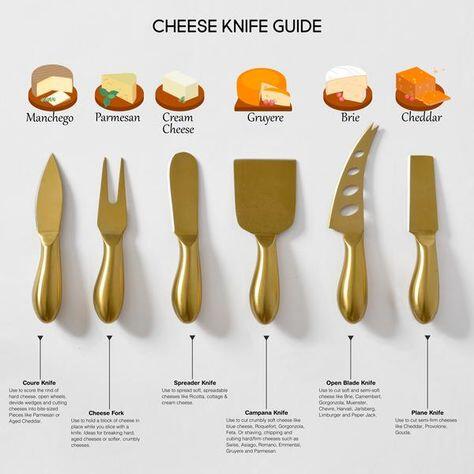
Credit: www.helloknife.com
How To Match Cheese Knives To Cheese Types
Choosing the right knife for each cheese is important. Here’s a comparison to help you decide which knife fits which cheese.
| Cheese Type | Texture | Best Knife |
|---|---|---|
| Brie | Soft, creamy | Soft Cheese Knife |
| Cheddar | Hard, firm | Hard Cheese Knife |
| Goat Cheese | Soft, crumbly | Slim Blade Knife |
| Parmesan | Very hard, aged | Parmesan Knife |
| Blue Cheese | Crumbly, moist | Crumbly Cheese Knife |
| Gouda | Semi-hard, dense | Cheese Cleaver |
| Cream Cheese | Spreadable | Cheese Spreader |
Matching knives to cheese texture improves presentation and taste. If you’re unsure, start with a universal cheese knife.
Step-by-step Guide: Using Cheese Knives Correctly
Getting perfect cheese slices is easy if you follow these steps. Let’s walk through how to use cheese knives like a pro.
Step 1: Prepare The Cheese
Take cheese out of the fridge 30–60 minutes before serving. Room temperature improves flavor and makes cutting easier. Place cheese on a clean board.
Step 2: Choose The Right Knife
Pick a knife based on cheese texture. For a mixed platter, have at least three knives: one for soft, one for hard, and one for spreading.
Step 3: Hold Cheese Steady
Grip cheese gently but firmly. For large blocks, use a fork to hold cheese in place. For round cheeses, cut from the center outward.
Step 4: Cut Properly
- For soft cheese: Use a gentle sawing motion. Don’t press hard.
- For hard cheese: Use downward pressure. Rock the blade for clean slices.
- For crumbly cheese: Press and rock gently. Avoid crushing.
Step 5: Serve Neatly
Use a fork or the knife’s tip to lift slices. Place slices on plates or crackers. Clean the knife between types to avoid mixing flavors.
Step 6: Store Knives Safely
Wash knives after use. Dry completely. Store in a knife block or drawer with blade covers.
Cheese Knife Materials: Which Is Best?
Cheese knives are made from different materials. Each has pros and cons.
| Material | Advantages | Disadvantages |
|---|---|---|
| Stainless Steel | Durable, easy to clean | Can rust if not dried |
| Ceramic | Lightweight, stays sharp | Breaks easily if dropped |
| Plastic | Affordable, lightweight | Less sharp, not for hard cheese |
| Wood Handle | Comfortable grip, stylish | Needs hand-washing, can crack |
Stainless steel is best for most users. Ceramic is good for soft cheese, but avoid plastic for hard cheese.
How To Set Up A Cheese Board With Knives
A well-set cheese board is the star of any party. Here’s how to arrange cheese and knives for easy serving and style.
- Choose a wooden or marble board. Both are stylish and easy to clean.
- Place cheeses with space between them. This avoids mixing flavors.
- Set each knife next to its matching cheese. Use tags if needed.
- Add crackers, fruit, and nuts for variety.
- Provide forks or toothpicks for easy serving.
Non-obvious tip: Use different knives for each cheese. Guests can taste without mixing flavors.
Credit: www.reddit.com
Tips For Cleaning And Caring For Cheese Knives
Proper care keeps cheese knives sharp and safe.
- Wash knives by hand with warm, soapy water.
- Dry knives completely. Water causes rust.
- Avoid dishwashers—heat and moisture damage knives.
- Sharpen blades every few months.
- Store in a dry place, preferably in a knife block.
Beginner mistake: Leaving knives wet after washing. This leads to rust and dull blades.
Common Mistakes When Using Cheese Knives
Even experienced users make errors. Here are mistakes to avoid:
- Using one knife for all cheeses. This mixes flavors and textures.
- Cutting cheese straight from the fridge. Cold cheese is harder to slice.
- Pressing too hard with soft cheese knives. This crushes cheese.
- Not cleaning knives between uses. Flavors get mixed.
- Using plastic knives for hard cheese. They bend and break.
Non-obvious tip: Always cut cheese from the center outward on round cheeses—this keeps slices uniform.
Cheese Knife Safety: What You Need To Know
Cheese knives are sharp and can cause injury if not used properly.
- Always cut on a stable board.
- Keep fingers away from the blade.
- Use a fork to hold cheese when slicing.
- Store knives with blade covers.
- Supervise children around cheese knives.
Smart safety insight: Use knives with ergonomic handles. This reduces slips and accidents.
How To Choose A Cheese Knife Set
Buying a cheese knife set is easier if you know what matters.
Key Factors To Consider
- Number of knives: Sets with 3–5 knives cover most needs.
- Material: Stainless steel is best for durability.
- Handle: Wood or ergonomic plastic for comfort.
- Blade shape: Look for knives with holes for soft cheese.
- Price: Quality sets range from $20–$50.
Comparison Table: Popular Cheese Knife Sets
| Brand | Knives Included | Material | Price (USD) |
|---|---|---|---|
| Wusthof | 4 | Stainless Steel | 45 |
| Boska | 3 | Stainless Steel/Wood | 30 |
| Norpro | 5 | Steel/Plastic | 25 |
| OXO | 4 | Steel/Ergonomic | 40 |
Non-obvious tip: Buy sets with blade covers—this protects both knives and fingers.
Cheese Knife Etiquette: Impress Guests
Cheese boards are popular at parties. Using knives properly shows class and respect for food.
- Use a separate knife for each cheese.
- Slice cheese before guests arrive—this makes serving easier.
- Provide napkins and plates.
- Don’t touch cheese with fingers—use knives or forks.
- Clean knives during the event if changing cheeses.
Smart insight: Place knives pointing outward for easy access.
Advanced Cheese Knife Techniques
If you want to impress, try these pro methods.
- Slice soft cheese with a wet blade. Dip in water and wipe—this prevents sticking.
- Use two knives for layered cheese. One for cutting, one for lifting.
- For aged cheese, break off rustic chunks instead of slices.
- Arrange cheese slices in a fan shape for presentation.
- Use a wire cutter for thin slices—perfect for sandwiches.
Beginner mistake: Trying to slice aged cheese thinly—break off chunks instead.

Credit: blog.tagltd.com
Cheese Knife Myths And Facts
Many myths surround cheese knives. Let’s clear them up.
- Myth: All cheese can be cut with one knife.
- Fact: Different textures need different blades.
- Myth: Cheese knives are only for experts.
- Fact: Anyone can use them with practice.
- Myth: Cheese knives need frequent sharpening.
- Fact: Sharpen every few months, not every week.
- Myth: Only expensive knives are good.
- Fact: Many affordable knives work well.
Non-obvious tip: Practice with different knives and cheeses to improve skill.
Where To Learn More About Cheese Knives
To dive deeper, visit Wikipedia for more history and details. You’ll find information about knife designs, origins, and expert tips.
Frequently Asked Questions
What Is The Best Cheese Knife For Beginners?
A universal cheese knife is best for beginners. It works for most cheeses, has a medium blade, and often a forked tip for serving. Start with this knife to build confidence before trying specialized tools.
Can I Use Regular Kitchen Knives For Cheese?
You can, but it’s not recommended. Regular knives often crush soft cheese and struggle with hard cheese. Cheese knives are designed for specific textures, making cutting easier and slices cleaner.
How Do I Clean Cheese Knives After Use?
Wash cheese knives by hand with warm, soapy water. Dry completely to prevent rust. Avoid dishwashers, as they can damage blades and handles. For stubborn cheese, soak briefly and scrub gently.
Why Do Some Cheese Knives Have Holes In The Blade?
Holes reduce surface area, so soft cheese doesn’t stick to the blade. This makes slicing easier and keeps slices neat. Knives with holes are ideal for sticky, creamy cheeses.
What Is The Safest Way To Store Cheese Knives?
Store cheese knives in a knife block or drawer with blade covers. This prevents injuries and keeps blades sharp. Make sure knives are dry before storing to avoid rust.
Cheese knives are simple tools with a big impact. Using them correctly makes every cheese moment more delicious and stylish. Try different knives, explore new cheeses, and soon you’ll slice like a pro.