
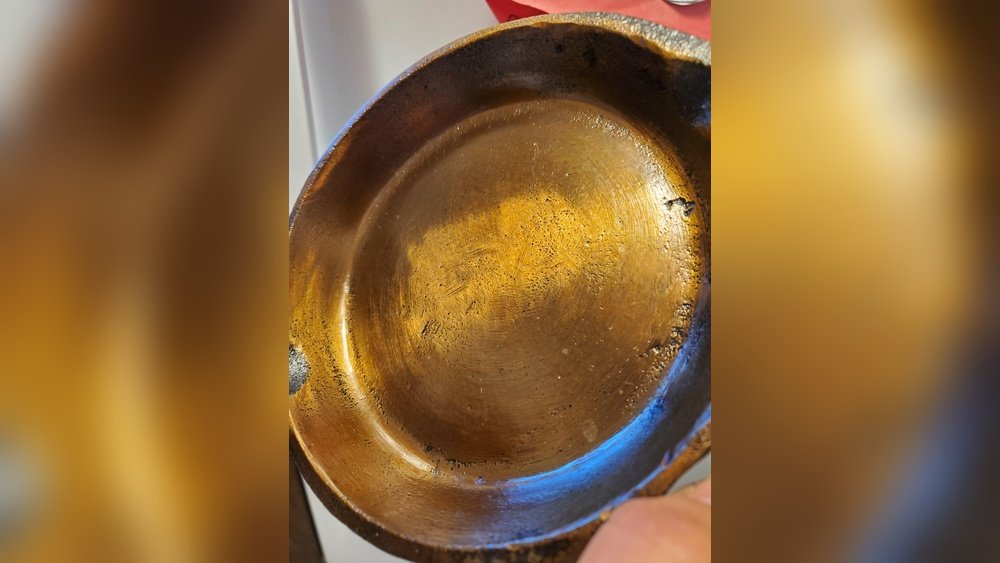
Seasoning a cast iron pan is more than just a kitchen task—it’s a way to build a non-stick surface that lasts for years. Many oils can be used, but grapeseed oil stands out as a smart choice for both beginners and experienced cooks. If you want your cast iron pan to perform at its best, learning to season it well is essential. But why choose grapeseed oil? And how do you use it the right way? This guide will walk you through everything you need to know, from the science behind seasoning to common mistakes and expert tips. By the end, you’ll have the confidence and skills to keep your cast iron in perfect shape.
Why Seasoning Matters For Cast Iron
Seasoning is what gives cast iron cookware its natural non-stick surface. Raw cast iron is rough and can easily rust. When you season a pan, you are adding a thin layer of polymerized oil to the surface. This layer fills in the pores and cracks, making the pan smooth and resistant to moisture.
A well-seasoned pan does three main things:
- Prevents rust. The oil layer blocks water and air from touching the iron.
- Creates a non-stick surface. Each layer of seasoning makes the pan smoother.
- Improves flavor. Seasoning can give food a subtle, unique taste.
Most new cast iron pans come with a factory seasoning, but it is often thin and wears off quickly. Home seasoning creates a stronger, more even layer. It is important to build up this seasoning over time for the best results.
What Makes Grapeseed Oil A Good Choice?
Many oils can be used for seasoning, but grapeseed oil offers unique benefits:
- High smoke point: Grapeseed oil can handle high heat (around 420°F/216°C) before it starts to smoke and break down. This makes it ideal for seasoning, as you need to bake the oil onto the pan at high temperatures.
- Neutral flavor: Some oils leave a strong smell or taste, but grapeseed oil is very mild. It won’t affect the flavors of your food.
- Thin texture: Grapeseed oil spreads easily, so you can apply a very thin, even layer. Thick or sticky oils can create a gummy surface.
- Availability: Grapeseed oil is sold in most supermarkets and online, and is not expensive compared to specialty oils.
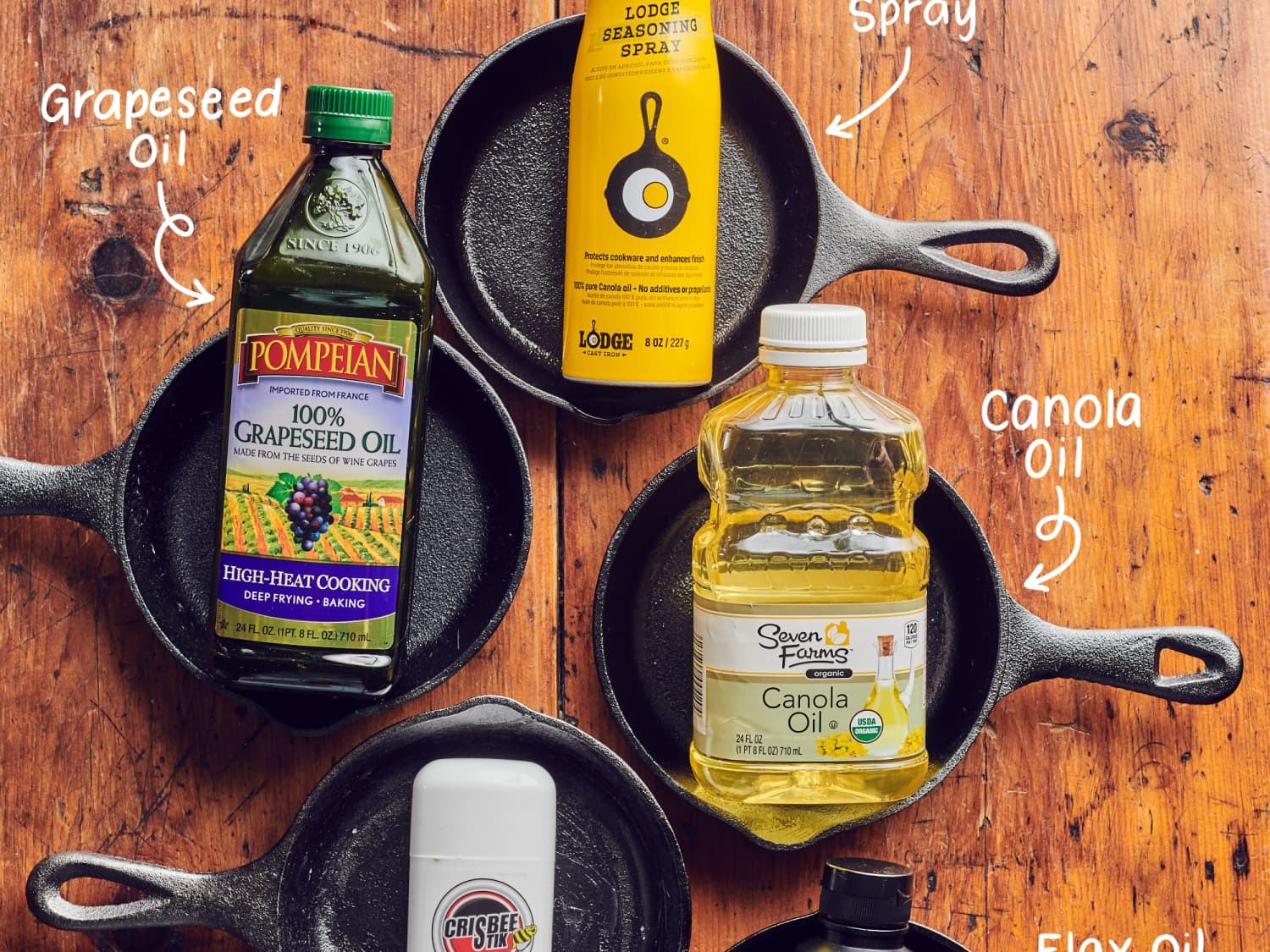
Let’s look at how grapeseed oil compares to other popular seasoning oils.
| Oil | Smoke Point (°F) | Flavor | Price Range | Best For |
|---|---|---|---|---|
| Grapeseed Oil | 420 | Neutral | Moderate | Seasoning, sautéing |
| Flaxseed Oil | 225 | Strong | High | Seasoning only |
| Vegetable Oil | 400-450 | Neutral | Low | General cooking |
| Canola Oil | 400 | Neutral | Low | Cooking, seasoning |
| Coconut Oil | 350 | Sweet | Moderate | Baking, sautéing |
Some people recommend flaxseed oil, but it can leave a sticky or flaky layer. Grapeseed oil is more stable and less likely to cause problems for beginners.
Credit: www.thekitchn.com
How Seasoning Works: The Science Behind It
When you heat oil on cast iron, it goes through a process called polymerization. This means the oil molecules join together and form a hard, plastic-like layer. For this to happen, the oil must reach its smoke point, so it changes chemically and bonds to the iron.
With each round of seasoning, you build up more layers. Over time, this creates a smooth, black surface that is both non-stick and rust-resistant. Proper seasoning also fills in tiny cracks and pores, making the pan easier to clean.
Beginners often miss that the seasoning layer is very thin. Too much oil will not polymerize well and can make the pan sticky. Applying several thin coats works much better than one thick layer.
What You Need Before You Start
To season cast iron with grapeseed oil, gather the following:
- Cast iron pan or skillet (new or old)
- Grapeseed oil (refined, food-grade)
- Paper towels or lint-free cloth
- Aluminum foil (optional, to catch drips in the oven)
- Oven (home oven with a temperature of at least 450°F/230°C)
- Tongs or oven mitts (for safety)
If your pan is rusty or dirty, you will also need:
- Steel wool or a scrub pad
- Mild dish soap
Credit: www.thekitchn.com
Preparing Your Cast Iron For Seasoning
Cleaning A New Pan
Most new cast iron pans come with a light coating of oil or wax from the factory. Wash it with warm water and a little soap to remove any residue. Dry it well with a towel and then heat it on the stove for a few minutes to evaporate any water.
Restoring An Old Or Rusty Pan
If you have an older pan with rust or stuck-on food, you must clean it thoroughly before seasoning. Scrub the surface with steel wool and a little dish soap. Remove all rust and debris. Rinse and dry completely. If you see orange spots or pitting, keep scrubbing until the metal is smooth.
After cleaning, always dry the pan over low heat to make sure all moisture is gone. Cast iron will rust quickly if left damp.
Step-by-step: How To Season Cast Iron With Grapeseed Oil
Follow these steps for a strong, even seasoning layer:
- Preheat the oven to 450°F (230°C). This is hot enough for polymerization but not so hot that it will damage the oil.
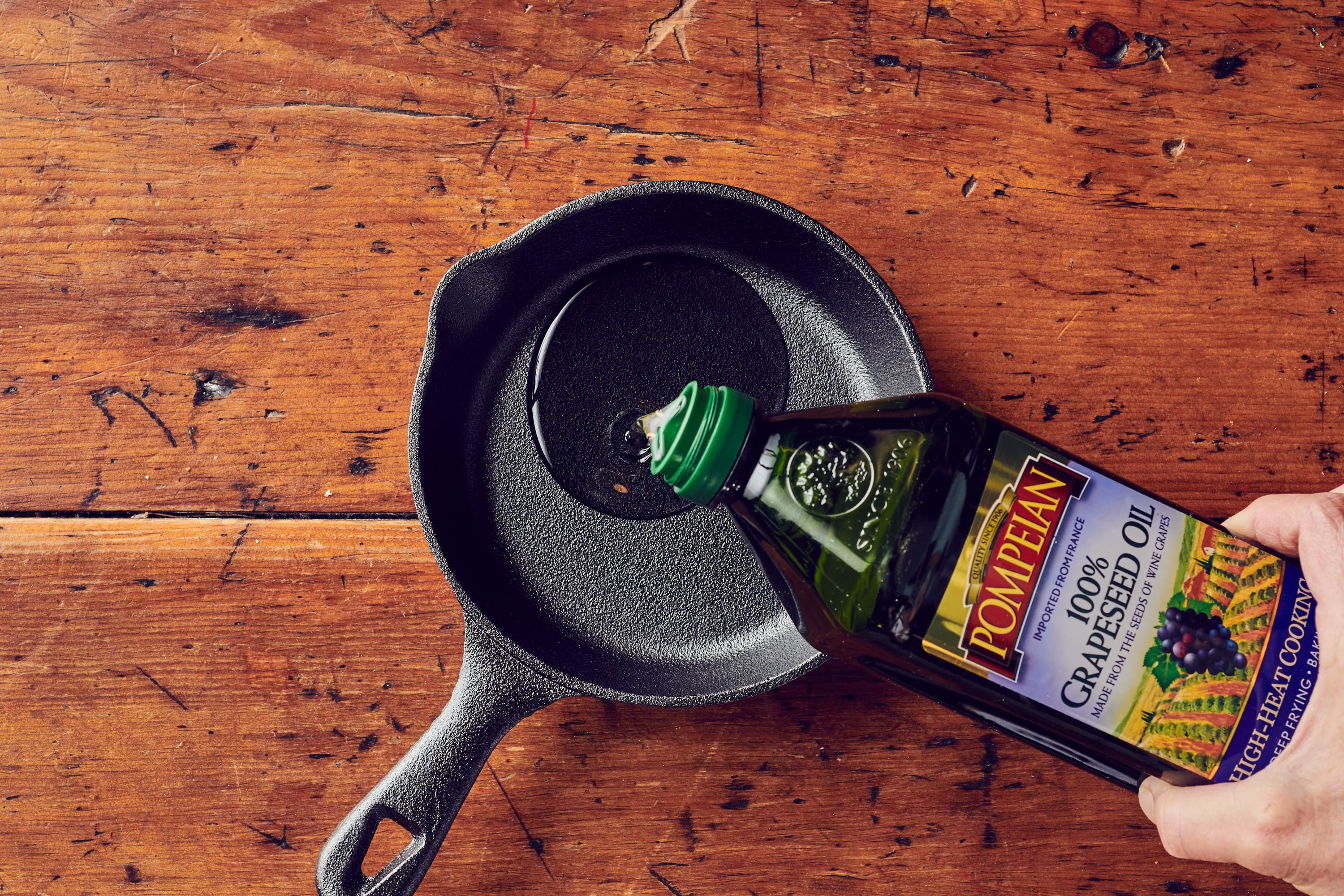
- Add a small amount of grapeseed oil (about 1 teaspoon for a 10-inch pan). Pour it into the center of the pan.
- Use a paper towel or cloth to rub the oil all over the pan, inside and out. Don’t forget the handle and edges.
- Wipe off all excess oil. The surface should look almost dry, with no shiny or wet spots. Too much oil will make a sticky coating.
- Place the pan upside down in the oven. Put a sheet of aluminum foil on the lower rack to catch drips.
- Bake for 1 hour. Leave the oven door closed the whole time.
- Turn off the oven and let the pan cool inside for at least 1 hour, or until it’s safe to touch.
- Repeat the process (steps 2–7) 2–3 more times. More coats make a stronger, more non-stick finish.
A new pan usually needs at least 3 coats for a good base. After that, regular cooking with oil will continue to improve the seasoning.
Common Mistakes To Avoid
Beginners often run into problems when seasoning cast iron. Here are some common mistakes and how to avoid them:
- Using too much oil. This is the number one mistake. Only a very thin layer is needed.
- Not cleaning off rust. Seasoning over rust will not protect the pan, and the rust can spread.
- Setting the oven too low. If the oil does not reach the smoke point, it will not bond to the metal.
- Skipping coats. One layer is not enough for lasting seasoning.
- Washing with harsh soap after seasoning. This can strip the new layer before it sets.
If you end up with a sticky or uneven surface, scrub the pan with hot water and a little salt. Dry, and then start the seasoning process again.
How Grapeseed Oil Compares To Other Oils
Grapeseed oil is not the only choice for seasoning, but it has some key advantages. To help you decide, here is a side-by-side comparison of grapeseed oil and other popular options:
| Feature | Grapeseed Oil | Flaxseed Oil | Canola Oil | Vegetable Oil |
|---|---|---|---|---|
| Smoke Point | 420°F | 225°F | 400°F | 400-450°F |
| Flavor | Neutral | Strong/Nutty | Neutral | Neutral |
| Availability | High | Low | High | High |
| Price | Moderate | High | Low | Low |
| Chance of Stickiness | Low | High | Medium | Medium |
Grapeseed oil wins in smoke point, flavor neutrality, and ease of use. Flaxseed oil can create a thicker layer, but it is easy to overdo and end up with a sticky pan.
Caring For Your Seasoned Cast Iron
Once your pan is seasoned, proper care will keep it in top shape.
- Clean after each use: Wipe with a paper towel or rinse with warm water. Avoid soaking.
- No harsh soaps: Mild soap is fine, but avoid strong cleaners or dishwasher use.
- Dry right away: Water can cause rust. Dry the pan on low heat after washing.
- Add a light oil coat: After cleaning, rub a few drops of grapeseed oil on the surface to maintain the seasoning.
- Store in a dry place: Humid kitchens can cause rust. Store with the lid off, or put a paper towel inside.
If rust appears, scrub it off and repeat the seasoning process.
How Often Should You Reseason?
There’s no fixed rule for how often to reseason your cast iron. It depends on how much you use it and what you cook. As a general guide:
- Heavy use (daily cooking): Reseason every few months.
- Light use: Reseason 2–3 times a year.
- After cooking acidic foods: Reseason, as tomatoes and vinegar can wear down the seasoning.
- When the pan looks dull or rusty: Reseason right away.
Cooking with oil-rich foods (like bacon or fried potatoes) helps maintain the seasoning naturally. If food starts to stick or the pan looks gray, it’s time for a new coat.
Troubleshooting: Fixing Sticky Or Uneven Seasoning
Sometimes, even with care, your seasoning might not come out perfect. Here’s how to fix common problems:
Sticky Surface
If the pan feels sticky or greasy, too much oil was used, or the oven was not hot enough. To fix:
- Scrub the pan with hot water and a little coarse salt.
- Dry thoroughly.
- Wipe with a very thin coat of grapeseed oil.
- Bake at 450°F (230°C) for 1 hour.
Repeat if needed until the surface is smooth and dry.
Flaking Or Peeling
This means the seasoning did not bond well, or the pan was not clean. Remove loose flakes with steel wool, wash, dry, and start the seasoning process again.
Rust Spots
Remove rust with steel wool and reseason the area. Keeping the pan dry and oiled between uses will prevent rust.
Expert Tips For Seasoning Success
Here are some tips experts use for perfect seasoning:
- Heat the pan before oiling. Warming the pan slightly helps the oil spread and bond better.
- Use lint-free cloths. Paper towels can leave fibers behind; a microfiber cloth works best.
- Let the pan cool slowly. Sudden temperature changes can crack the seasoning layer.
- Build up layers over time. The best non-stick finish comes from months or years of use.
Most beginners don’t realize that seasoning improves with use. Every time you cook with oil, you add a new micro-layer to the pan. This is why old, well-used pans are prized.
Credit: www.reddit.com
Health And Safety Notes
Grapeseed oil is safe for seasoning, but always use food-grade oil. Some hardware store oils contain additives that are not safe for cooking.
Also, always use good ventilation when seasoning in the oven. The high heat can create smoke, especially if too much oil is used.
Environmental Impact Of Seasoning Oils
Some people worry about the environmental footprint of cooking oils. Grapeseed oil is a byproduct of wine making, so it uses seeds that would otherwise go to waste. This makes it a more sustainable choice compared to palm or coconut oil, which often involve deforestation.
Cost Considerations
While grapeseed oil is not the cheapest oil, it is still affordable. You only need a small amount for each seasoning session, so a single bottle will last for months or even years.
For most home cooks, the price difference is not significant. The main benefit is the easy, reliable seasoning it provides.
Grapeseed Oil: Other Uses In The Kitchen
Besides seasoning, grapeseed oil is great for:
- High-heat frying
- Sautéing vegetables
- Salad dressings
Its neutral taste means it won’t clash with other flavors, so you can use it for almost any recipe.
Examples: Real-life Seasoning Success
Many cast iron enthusiasts report great results with grapeseed oil. For example, a 12-inch skillet used for daily cooking can develop a deep, black finish after just a few months of regular seasoning and use. Even pans with rough surfaces become smooth and non-stick over time.
One beginner shared that after struggling with sticky pans using flaxseed oil, switching to grapeseed oil gave them a perfect, dry finish on the first try.
Myths About Cast Iron Seasoning
There are many myths around seasoning. Here are a few facts:
- Soap removes seasoning: Mild soap will not ruin a well-seasoned pan. Harsh scrubbing is the real risk.
- You need animal fat: Vegetable oils like grapeseed work just as well, and are less likely to go rancid.
- Only old pans work: New pans will develop great seasoning with care and patience.
How To Test Your Seasoning
To see if your seasoning is good, try frying an egg with just a little oil. If it slides around easily, your pan is in great shape. If it sticks, add another layer of seasoning.
Another test: Pour a little water on the surface. If it beads up and rolls around, your pan is well-seasoned.
Storing Your Cast Iron
Always store your pan in a dry place. If you stack pans, put a paper towel or cloth between them to protect the seasoning. Some people like to store their pans in the oven (when not in use) to keep them dry and safe.
Grapeseed Oil For Other Types Of Cookware
While this guide focuses on cast iron, grapeseed oil is also useful for carbon steel pans, which are seasoned the same way. Avoid using it on nonstick pans, as they don’t require seasoning.
When To Start Over
If your pan is badly rusted, has a sticky, thick coating, or food always sticks, it may be time to strip the seasoning and start again. This can be done with a vinegar soak (for rust), oven cleaner (for thick coatings), or even in a self-cleaning oven (for very stubborn layers).
Clean, dry, and then repeat the grapeseed oil seasoning process.
Final Thoughts
Seasoning cast iron with grapeseed oil is simple, effective, and leads to a pan that cooks beautifully and lasts for generations. Remember to use thin layers, high heat, and patience. Over time, your pan will reward you with a natural non-stick surface that makes cooking and cleaning easy.
Take care of your cast iron, and it will become one of your favorite kitchen tools. If you ever forget a step or run into trouble, just return to the basics: clean, dry, oil, and bake.
If you want to learn more about the science of seasoning, see this detailed guide from Serious Eats.
Frequently Asked Questions
What Is The Smoke Point, And Why Does It Matter For Seasoning?
The smoke point is the temperature at which oil starts to smoke and break down. For seasoning cast iron, you want an oil with a high smoke point so it forms a hard, durable layer. Grapeseed oil’s smoke point of 420°F makes it a safe and reliable choice.
Can I Use Grapeseed Oil For Both Seasoning And Daily Cooking?
Yes, grapeseed oil is great for both. Its neutral flavor and high smoke point make it good for frying, sautéing, and seasoning your pan.
How Do I Fix A Pan That Feels Sticky After Seasoning?
A sticky pan means too much oil was used or the oven was not hot enough. Scrub off the sticky layer with hot water and salt, dry, and then apply a thinner coat of oil. Bake at a high temperature and repeat as needed.
How Long Does A Seasoned Layer Last?
A well-seasoned layer can last for months or years with regular use and care. Cooking with oil helps build up the seasoning. If you notice rust or food sticking, add another coat of seasoning.
Is Grapeseed Oil Safe And Healthy To Use For Seasoning?
Yes, grapeseed oil is considered safe and healthy for seasoning cast iron. Always choose food-grade oil and avoid oils with additives. It is low in saturated fat and contains vitamin E.
With the right steps and a little patience, you can keep your cast iron cookware in perfect shape for years to come.