
Seasoning a wok is more than just a step in preparing a new pan—it’s a tradition that builds the foundation for great stir-fries and Asian cooking. If you’ve ever wondered why food cooked in a well-seasoned wok tastes more flavorful, it’s because the process creates a natural non-stick layer and protects the metal from rust.
While many people season their woks on the stovetop, using an oven is a powerful alternative that provides even heat and thorough results. This guide will walk you through every aspect of how to season a wok in the oven, what makes this method unique, and how to ensure your wok stays in perfect condition for years.
Why Seasoning A Wok Matters
At first glance, a new carbon steel or cast iron wok may look ready for action. But if you try to cook in it straight from the box, food will stick, and flavors may taste metallic or unpleasant. Seasoning is not just a suggestion—it’s essential for several reasons:
- Prevents rust: Bare metal is very vulnerable to moisture. The seasoning process adds a protective layer.
- Non-stick surface: Over time, a well-seasoned wok develops a slick surface, making cooking and cleaning easier.
- Adds flavor: Each layer of oil and heat brings out a unique aroma and depth to your dishes.
- Builds character: The black patina you see in restaurant woks is a sign of years of good seasoning.
Most people don’t realize that seasoning a wok is not a one-time task. With each use and proper care, the surface improves, giving you better results every time you cook.
Types Of Woks: Which Ones Need Seasoning?
Not all woks require the same treatment. Understanding your wok’s material helps you follow the correct seasoning steps and avoid damage.
| Wok Material | Seasoning Needed? | Notes |
|---|---|---|
| Carbon Steel | Yes | Most common; benefits the most from oven seasoning |
| Cast Iron | Yes | Heavy, holds heat well, but needs careful seasoning |
| Nonstick (Teflon, Ceramic) | No | Do not season; oven heat can damage coating |
| Stainless Steel | No (optional) | Seasoning can help, but not essential |
For this guide, we focus on carbon steel and cast iron woks, as these are the most popular choices for home cooks who want restaurant-quality results.
Benefits Of Seasoning A Wok In The Oven
Most traditional guides recommend seasoning a wok on the stovetop. While this works, the oven offers several unique advantages that many beginners overlook:
- Even heating: The oven surrounds the wok with heat, ensuring every part gets seasoned—inside, outside, and even the handle.
- Less smoke: Stove seasoning can fill your kitchen with smoke. Oven seasoning keeps smoke inside, especially if you use a fan or open windows.
- Hands-free: Once your wok is in the oven, you don’t need to constantly turn or move it.
- Consistent results: You avoid hot and cold spots, which can cause uneven seasoning patches.
An important tip: seasoning in the oven is ideal for round-bottomed woks that don’t sit flat on the stove. It’s also safer because you’re less likely to burn yourself with splattering oil.
Tools And Materials Needed
Preparing for oven seasoning is simple, but having the right tools makes the process smoother and safer. Here’s what you’ll need:
- Wok (carbon steel or cast iron, uncoated)
- Neutral oil (such as grapeseed, flaxseed, vegetable, or canola oil)
- Paper towels or lint-free cloths
- Tongs or heat-proof gloves
- Aluminum foil (to protect your oven racks)
- Baking sheet (optional, for catching drips)
- Dish soap (for initial cleaning)
- Sponge or scrubber (no steel wool after first wash)
Not all oils are equal—choose one with a high smoke point and neutral flavor. Flaxseed oil is popular for its hard finish, but it can flake if applied too thickly. Grapeseed and canola oils are reliable and affordable choices.

Credit: mammafong.com
Preparing Your Wok Before Seasoning
You may be eager to start, but taking the right steps before seasoning will save you headaches later. Many new woks come with a factory coating (usually a thin layer of oil or wax) that prevents rust during shipping. This must be removed fully.
Removing The Factory Coating
- Wash the wok thoroughly: Use warm water and a small amount of dish soap. Scrub every surface inside and out using a sponge or soft brush.
- Rinse and repeat: You may need to wash more than once. The surface should feel slightly rough, not slippery.
- Dry the wok: Water left on the surface can cause rust spots. Use paper towels to dry, then heat the wok on the stovetop for a minute to evaporate any remaining moisture.
Non-obvious insight: If your wok has a blue or gray tint, it likely still has some coating. Keep cleaning until it’s completely gone. Skipping this step can lead to uneven seasoning and patches that peel off.
Inspecting For Residue
Hold the wok up to the light. If you see streaks or fingerprints, it needs more washing. The goal is bare, clean metal.
Choosing The Right Oil For Seasoning
Many new cooks use whatever oil is nearby, but some oils work far better for building a strong, long-lasting seasoning layer.
| Oil Type | Smoke Point (°F) | Flavor | Seasoning Quality |
|---|---|---|---|
| Flaxseed Oil | ~ 225 | Neutral | Very hard finish, but can flake if applied thickly |
| Grapeseed Oil | ~ 420 | Neutral | Excellent, reliable |
| Canola Oil | ~ 400 | Neutral | Very good |
| Vegetable Oil | ~ 400 | Neutral | Good |
| Peanut Oil | ~ 450 | Mild nutty | Good, but may trigger allergies |
| Olive Oil | ~ 350 | Strong, fruity | Poor (low smoke point) |
Practical tip: Avoid olive oil and butter—they burn quickly at oven temperatures and leave a sticky residue.
Step-by-step: How To Season A Wok In The Oven
Now, let’s get to the core process. Follow these steps carefully for a smooth, even, and long-lasting seasoning.
1. Preheat Your Oven
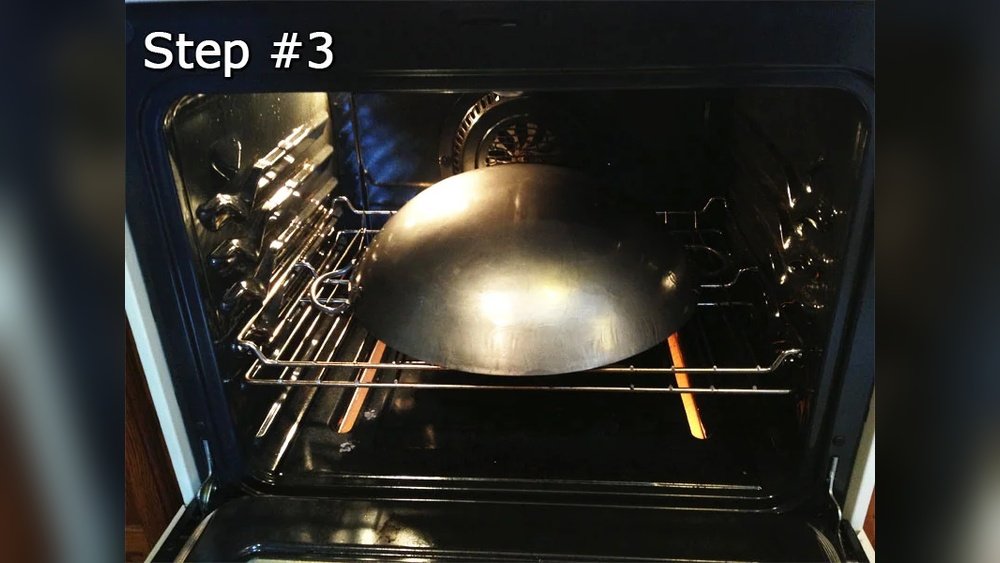
Set your oven to 450–500°F (230–260°C). High heat is critical to polymerize the oil and bond it to the metal. Make sure your oven racks are well spaced so the wok can sit comfortably, ideally upside down.
2. Protect Your Oven
Place a sheet of aluminum foil or a baking sheet on the lower rack to catch any oil drips. This prevents smoke and makes cleanup easy.
3. Apply A Thin Layer Of Oil
Pour a small amount (about one teaspoon) of your chosen oil onto a paper towel. Rub it over every surface of the wok—inside, outside, bottom, and handle. The layer should be so thin that the wok looks dry, not wet or shiny.
Beginner mistake: Using too much oil leads to sticky, uneven spots and flaking. Less is more.
4. Buff Off Excess Oil
Take a clean paper towel and wipe off as much oil as possible. You want a nearly invisible film. If you see puddles, keep wiping.
5. Place The Wok In The Oven
Turn the wok upside down on the oven rack. This lets excess oil drain away rather than pool inside. Handles can face any direction as long as the wok is stable.
6. Bake For 30–60 Minutes
Leave the wok in the oven for at least 30 minutes, up to an hour. The metal will darken and may turn brown or blue-black—this is the seasoning forming. Some smoke is normal, but if your kitchen fills with smoke, you likely used too much oil.
7. Let The Wok Cool Slowly
Turn off the oven and leave the wok inside with the door closed for 15–20 minutes. This prevents sudden temperature changes that can warp the metal.
8. Repeat For 2–4 Coats
For best results, repeat steps 3–7 two or three more times. Each layer builds a stronger, more even patina. After the final coat, the wok should look glossy and dark.
Non-obvious insight: Patience pays off. Some people stop after one coat and wonder why food sticks. Multiple thin layers create a much better surface.
What To Expect: After Seasoning
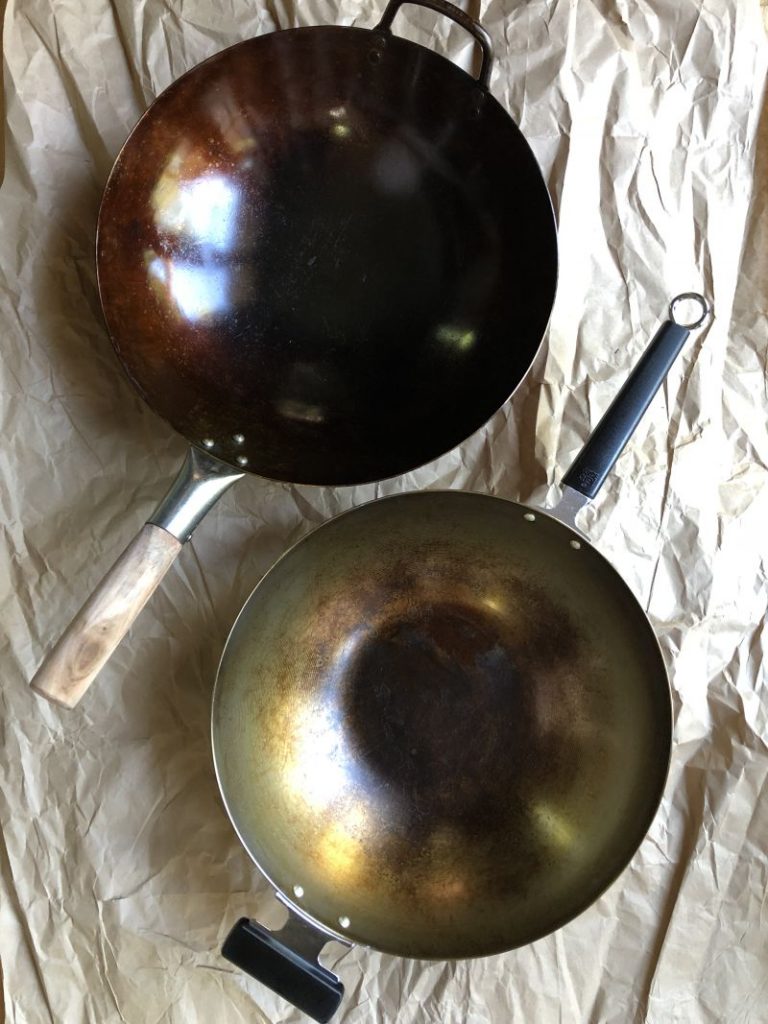
After seasoning, your wok will not be jet-black right away—this color comes with use. Instead, it may look golden, brown, or patchy. This is normal. With regular cooking, the seasoning will even out and darken.
Key signs of good seasoning:
- Smooth, not sticky surface
- No visible oil puddles or drips
- Even color (though some variation is normal)
If you find sticky spots, scrub them gently with hot water and repeat the oven seasoning step with less oil.
Maintaining Your Seasoned Wok
A well-seasoned wok is easy to care for, but it does need attention. Here’s how to keep your wok in top shape:
- Avoid dish soap: After the first cleaning, use hot water and a soft brush. Soap can strip the seasoning.
- Dry immediately: Wipe dry and heat on the stove for a minute to remove water.
- Oil lightly: After cleaning, rub a drop of oil on the surface to keep the patina strong.
- Cook often: Frequent use builds seasoning naturally.
Common mistake: Soaking your wok or letting it air-dry leads to rust. Always dry it with heat.
If rust does appear, scrub it off with a scrubber and repeat the seasoning process.
Troubleshooting Common Seasoning Problems
No process is perfect, and sometimes issues happen. Here’s how to handle the most common problems:
Sticky Or Gummy Surface
Cause: Too much oil, or oil not wiped thinly enough.
Solution: Scrub the sticky spots with hot water and a little salt, rinse, dry, and repeat the seasoning process with less oil.
Uneven Color Or Splotches
Cause: Incomplete removal of factory coating or uneven oil application.
Solution: Wash thoroughly with soap, dry, and re-season. Focus on thin, even oil coats.
Flaking Or Peeling Seasoning
Cause: Thick oil layers or sudden temperature changes.
Solution: Scrub off the flaking areas, wash, and start over with thin coats and slow cooling.
Rust Spots
Cause: Moisture left on the surface, or storing the wok damp.
Solution: Scrub rust with a steel wool pad, rinse, dry, and re-season.
Pro tip: The more you use your wok, the more resilient the seasoning becomes.
Comparing Oven Vs. Stovetop Seasoning
Some cooks ask whether seasoning in the oven is really better than on the stovetop. Here’s a side-by-side comparison to help you decide.
| Aspect | Oven Seasoning | Stovetop Seasoning |
|---|---|---|
| Heat Distribution | Very even, all surfaces | Hot spots, can miss areas |
| Smoke Production | Less, contained in oven | More, can fill kitchen |
| Effort | Hands-off after oiling | Requires frequent turning and monitoring |
| Best For | Home kitchens, round-bottomed woks | Flat-bottomed woks, quick touch-ups |
| Drawbacks | Needs oven space, not for nonstick woks | Messy, uneven for beginners |
For most home cooks, oven seasoning is more reliable and less stressful, especially if you’re new to wok care.
How Often Should You Re-season?
Your wok’s patina is always changing. The first seasoning is just the beginning—the real magic happens as you cook.
- New woks: Season in the oven 2–3 times before first use.
- Everyday use: You usually don’t need to re-season unless you notice food sticking or the surface looking dull.
- After rust or aggressive cleaning: Repeat the oven process as needed.
Insider tip: Even professional chefs re-season their woks from time to time, especially after a deep clean.
Credit: www.reddit.com
Cooking With Your Newly Seasoned Wok
After seasoning, you’re ready to cook. Start with foods that are high in oil and not too acidic—these will help build your wok’s patina.
Best foods for first use:
- Stir-fried vegetables
- Fried rice
- Egg fried rice
- Meat slices with soy sauce
Avoid at first: Tomato-based sauces, vinegar, or highly acidic foods, as these can damage the new seasoning.
With each use, your wok will get darker and more non-stick. Within a few weeks, you’ll notice a clear improvement in both cooking and cleaning.
Advanced Tips For Long-term Wok Care
Once you’re comfortable with the basics, there are a few expert tricks to keep your wok in prime condition:
- Scrambled eggs test: If eggs slide easily after cooking, your seasoning is strong. If they stick, add another seasoning layer.
- Never soak: Letting the wok sit in water breaks down the seasoning quickly.
- Store dry: Hang your wok or store upside down to keep air circulating.
- Use only wood or silicone utensils: Metal spatulas can scratch the seasoning, especially in the early weeks.
- Quick touch-ups: If you notice dull spots, heat the wok, rub with a little oil, and bake for 15 minutes at 400°F.
Unexpected insight: Some cooks use onion peels or scallions in the first stir-fries to help reduce metallic taste and build up the patina faster. It’s a traditional trick that still works today.
Safety Considerations
Oven seasoning is generally safe, but it’s important to keep a few things in mind:
- Ventilate your kitchen: Open windows or use a fan to handle any smoke.
- Use oven mitts: The wok and handles get extremely hot—never touch them with bare hands.
- Keep children and pets away: Hot oil can drip, and the wok can be a burn hazard.
- Never season nonstick or painted woks: This can release harmful fumes and ruin the coating.
If you have a smoke alarm near your kitchen, consider disabling it temporarily or being ready to fan away smoke if needed.
When To Replace Your Wok
A quality carbon steel or cast iron wok can last decades with proper care. However, there are rare cases when replacement is better:
- Cracks or deep warping: The wok is unsafe and should be replaced.
- Extensive rust-through: If rust has eaten through the metal, it’s beyond repair.
- Peeling nonstick coating: If your nonstick wok’s surface is flaking, it’s time for a new one (but remember, these do not require seasoning).
Pro insight: Even a rusty or old wok can often be saved with a deep clean and re-seasoning. Don’t throw it out unless the metal is damaged.
Credit: www.vietworldkitchen.com
Why Some Woks Never Season Well
If you follow all the steps but your wok still doesn’t season properly, check these possible reasons:
- Wrong material: Stainless steel and nonstick woks will not season like carbon steel.
- Factory coating not fully removed: This is the most common issue for beginners.
- Low oven temperature: Anything below 400°F may not polymerize oil correctly.
- Thick oil layers: Always use thin, nearly invisible coats.
- Water left on surface: Even a little moisture can prevent seasoning from bonding.
If you run into trouble, don’t give up. Start over with a deep wash and follow the steps closely.
Real-world Example: A Home Cook’s First Wok Seasoning
Samantha, a beginner cook, bought her first carbon steel wok online. She followed the instructions on the box to wash off the factory oil, but food stuck to the surface after her first stir-fry. After reading about oven seasoning, she tried again.
She preheated her oven to 475°F, wiped her wok with grapeseed oil until it looked almost dry, and baked it upside down for 45 minutes. She repeated the process three times. The wok turned a deep brown, and her next batch of fried rice slid out easily with no sticking.
Samantha’s main lesson: “Thin layers of oil and patience made all the difference. Now my wok is my favorite pan.”
Frequently Asked Questions
How Do I Know If My Wok Is Seasoned Enough?
If food no longer sticks, and the surface looks dark and smooth, your wok is well-seasoned. The color will deepen with regular use, but even a patchy brown-black finish is a good start.
Can I Use Olive Oil To Season My Wok In The Oven?
It’s best to avoid olive oil, as it has a low smoke point and can create a sticky residue. Use neutral, high-smoke-point oils like grapeseed, canola, or flaxseed for better results.
Is It Safe To Season A Wok In A Home Oven?
Yes, as long as you ventilate your kitchen and avoid nonstick or painted woks. Use oven mitts and protect your oven with foil to catch drips.
How Do I Fix A Rusty Wok?
Scrub the rust with a steel wool pad, wash with soap, rinse, dry, and repeat the oven seasoning process. Rust is common and can be fixed unless the metal is deeply pitted.
Can I Use My Wok For Deep Frying After Seasoning In The Oven?
Absolutely. A well-seasoned wok is ideal for deep frying, as the patina protects the surface and helps food release easily. Just avoid acidic foods until the seasoning is well established.
If you want to explore more about wok materials and care, check out this resource from Wikipedia.
Seasoning a wok in the oven takes a bit of time and care, but the results are worth it. With each use, your wok will become more non-stick, more flavorful, and more enjoyable to cook with. Happy cooking!