
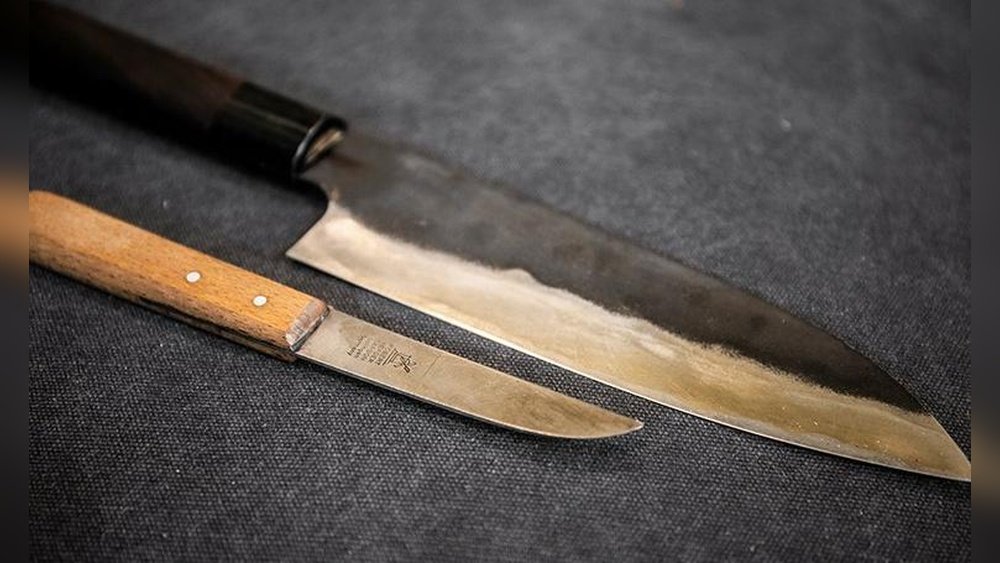
This method, study specialist guides or send your knife to a professional.
Result: Deep blue or blue-black patina, very durable and striking.
Important: Hot bluing can change the heat treatment of your knife if not done carefully. This can make the blade softer or more brittle, reducing performance. Only attempt if you truly understand the risks and have the right equipment.
Non-obvious insight: Most high-end Japanese kitchen knives are never hot blued. The heat can ruin the carefully crafted steel. It’s more common with tool steels or gun parts.
Method 7: Acid Etching (with Care)
Acid etching uses stronger acids, like ferric chloride, to create custom patterns or a very dark patina. This is considered an advanced technique and requires protective gear and careful handling.
How To Do It
- Wear gloves and eye protection. Work in a ventilated area.
- Mix ferric chloride with water (usually 1: 3 ratio) in a glass or plastic container.
- Dip the blade (handle protected) for 5–15 minutes, checking progress every few minutes.
- Remove and rinse the blade under running water.
- Neutralize the acid fully with a baking soda solution.
- Dry and oil the blade completely.
Result: Very dark, sometimes almost black, patina. You can use tape or wax to create patterns before dipping.
Common mistake: Not neutralizing the acid fully—this can leave hidden residue that continues to react, causing pitting or deep rust over days or weeks.
Non-obvious tip: Acid etching can highlight scratches and imperfections. If you want a clean look, polish the blade before etching.
How To Control Patina Patterns
Some people want a uniform patina, others love wild patterns. You can control the look in several ways:
- Masking: Use tape, wax, or oil to block acid from some areas.
- Layering: Apply one method, then another for more depth (e.g., vinegar soak, then mustard dots).
- Brush-on: Use a brush or sponge to dab acids for a mottled effect.
- Dipping vs. wiping: Dipping gives even coverage; wiping gives streaks or gradients.
Example: To make “tiger stripes,” lay strips of tape across the blade, then use mustard in between. Remove tape after patina forms.
Non-obvious insight: The finish will change slightly as you use the knife. Over time, sharp lines may blur, but deep layers remain visible.

Credit: www.tophamknifeco.com
Aftercare: Making Patina Last
Creating a patina is only step one. Keeping your knife in good shape takes some regular care:
- Wash by hand only. Never put a carbon steel knife in the dishwasher.
- Dry immediately after washing—don’t let water sit on the blade.
- Oil lightly after each use, especially if storing for a while. Use food-safe mineral oil or camellia oil.
- Store in a dry place. Use a knife block, magnetic strip, or blade guard. Avoid leather sheaths for long-term storage—they can hold moisture.
- Avoid acidic foods (like lemons) for the first few uses after patina. The finish will harden over time.
Advanced tip: If you see red rust spots, gently remove with baking soda paste, then touch up with a quick apple or mustard rub.
Non-obvious mistake: Some beginners try to “refresh” their patina too often, which can make the blade patchy or thin. Let the patina develop with use and touch up only when really needed.
Real-world Examples And Variations
Let’s look at how different methods show up in daily life, and what results you can expect.
Chef’s Knife In A Busy Kitchen
A chef uses their carbon steel knife all day, slicing onions, tomatoes, meat, and herbs. Over weeks, a natural patina forms—often uneven, with blue-gray patches where onions were cut, and darker streaks from meat juices. This “work patina” is a badge of honor and tells a story about the knife’s journey.
Home Cook’s Patterned Knife
A home cook might want a “designer” look. They use the mustard method, applying swirls and dots with toothpicks. After rinsing, their blade has a wild, speckled pattern—unique to their hand. Over time, the pattern softens but remains visible under a growing natural patina.
Vintage Knife Restoration
Someone finds an old, rusty carbon steel knife. They clean off the rust, then use the coffee bath for 8 hours. The blade comes out dark and even, hiding many old stains. This method is great for restoring beauty to old tools.
Artistic Etching
Knife makers sometimes use acid etching with stencils to write logos or make art on blades. They protect parts with tape or wax, then dip in acid. After neutralizing, the blade has bold, permanent designs.

Credit: www.youtube.com
Mistakes To Avoid When Patinating Your Knife
Even though patina is simple, there are a few traps for beginners:
- Not cleaning well before starting: Any grease or rust stops the patina from forming evenly. Always clean with soap and dry carefully.
- Using too strong an acid: Ferric chloride or strong vinegar can over-etch, making rough spots. Start mild and check progress often.
- Forgetting to neutralize: Acid left on the blade keeps working—even after it looks clean. Always use a baking soda solution after.
- Leaving the handle exposed: Acid can damage wood, micarta, or plastic handles. Wrap or protect before starting.
- Not drying fully: Any moisture left after patina can sneak under and start rust. Dry with a towel, then air dry for a few minutes.
- Skipping oiling: A fresh patina is porous and can let in moisture. Always finish by rubbing with a little oil.
Non-obvious mistake: Trying to rush the process. Especially with slow methods (potato or coffee), patience gives better results. Pulling the knife out too soon can make a blotchy or weak patina.
Questions People Often Ask About Patina
Does patina affect sharpness?
No—patina is extremely thin and does not change the edge. However, if thick rust forms first, removing it may dull the knife.
Can you remove patina?
Yes, with metal polish or fine abrasive (like Flitz or baking soda paste), you can bring the blade back to shiny steel. But repeated cleaning and polishing can slowly wear away steel.
Will patina stop all rust?
No. Patina slows rust but does not make the knife “stainless. ” Always keep your knife dry and oiled.
Can I patina a stainless steel knife?
Not really. Stainless steel resists acid reaction, so patina will not form or will wash off quickly.
Is patina safe for food?
Yes, as long as you rinse and neutralize after. All foods touch patina naturally—just avoid strong chemicals.
How often should I re-patina?
Only as needed. A well-formed patina will last months or years, softening with use. Touch up if you see shiny spots or after removing rust.

Credit: www.youtube.com
Final Tips For A Beautiful Patina
- Experiment on a cheap knife first. Each steel reacts differently.
- Combine methods for unique effects. Try a vinegar soak, then a mustard pattern.
- Document your results with photos, so you remember what worked.
- Don’t stress about perfection. Patina is personal and always changing.
If you want to learn more about steel chemistry and patinas, [this guide from Knife Steel Nerds](https://knifesteelnerds.com/2019/02/04/the-science-of-patinas-on-carbon-steel-knives/) dives much deeper.
With these steps, you can turn your carbon steel knife into a tool that’s not only sharp, but also beautiful and protected. Enjoy the process, and don’t be afraid to make your blade your own!