
A gas stove is one of the most common kitchen appliances, trusted for its fast heating and easy control. But with this convenience comes a real risk: gas leaks. Even a small leak can lead to dangerous consequences, including fire, explosion, or carbon monoxide poisoning. Learning how to detect a gas leak from your stove is not only smart—it can save your home, and even your life.
Many people think they will always smell a gas leak. But the truth is, leaks can be small, slow, or masked by cooking odors. Some gases used in stoves are naturally odorless, and the warning scent (like rotten eggs) is added for safety.
However, you cannot rely only on your nose. In this guide, you will learn multiple ways to check for gas leaks, understand the risks, and find out what to do if you suspect a problem. Let’s make your kitchen safer, step by step.
Why Gas Leaks From Stoves Are Dangerous
A gas leak is not just a bad smell—it is a serious hazard. Natural gas and propane are both highly flammable. If the gas builds up and finds a spark, it can cause an explosion. Even without a fire, breathing in leaked gas can cause headaches, dizziness, or worse. Over time, leaks can lead to carbon monoxide, a deadly, invisible gas.
Statistics show that in the United States alone, over 4,200 home fires each year are started by natural gas, causing hundreds of injuries and deaths. Many of these could have been prevented with early detection. That’s why understanding how to spot a gas leak is vital for everyone who uses a gas stove.
Common Causes Of Gas Leaks In Stoves
Knowing how leaks happen helps you prevent them. Here are the main reasons gas stoves leak:
- Loose connections – The pipes or hoses behind your stove can become loose due to movement, age, or poor installation.
- Worn-out parts – Rubber hoses, gaskets, and seals can dry out and crack over time, letting gas escape.
- Faulty burners or valves – Sometimes, the control knobs or burners do not fully close, allowing gas to leak even when the stove appears off.
- Improper installation – If the stove or gas line was not installed correctly, leaks can develop at joints or fittings.
- Accidental damage – Bumping the stove, moving it, or cleaning too roughly can damage connections.
Two insights that many beginners miss:
- Gas leaks can start inside the stove (not just at the hose or wall). Internal valves and connections can also fail over time.
- Leaks often get worse slowly, so a faint smell or small sign should never be ignored.
Signs Of A Gas Leak At The Stove
Before you test for a leak, it helps to know what to look for. Here are the most common warning signs:
- Smell of rotten eggs (sulfur): The gas company adds this scent to help you detect leaks.
- Hissing sound: Gas escaping through a small hole or crack can make a soft or loud hissing noise.
- Burners not lighting properly: If the burner flame is smaller, yellow, or doesn’t light, there may be a leak or blockage.
- Dead houseplants nearby: Gas leaks can kill plants before you notice any other sign.
- Physical symptoms: Headaches, dizziness, nausea, or tiredness in the kitchen may mean you are breathing gas.
- Visible dust or movement: Sometimes, escaping gas stirs up dust or makes curtains move near the leak.
- Unusual increase in gas bills: A sudden, unexplained rise in your gas bill can point to a leak.
Remember, some signs are easy to miss, especially if you are used to kitchen smells. Always trust your instincts—if something feels wrong, check for leaks right away.
How To Detect A Gas Leak At Your Stove
There are several ways to detect a gas leak. Use as many methods as possible for the best safety.
1. Use Your Senses
- Smell: Move close to the stove (but do not touch or turn anything on). If you smell rotten eggs, leave the area and take action.
- Listen: Turn off any music or noise. Stand quietly and listen for a hissing or whistling sound near the stove, especially behind it or near the connection.
- Look: Check for unusual movement, like curtains or dust blowing near the stove or gas line.
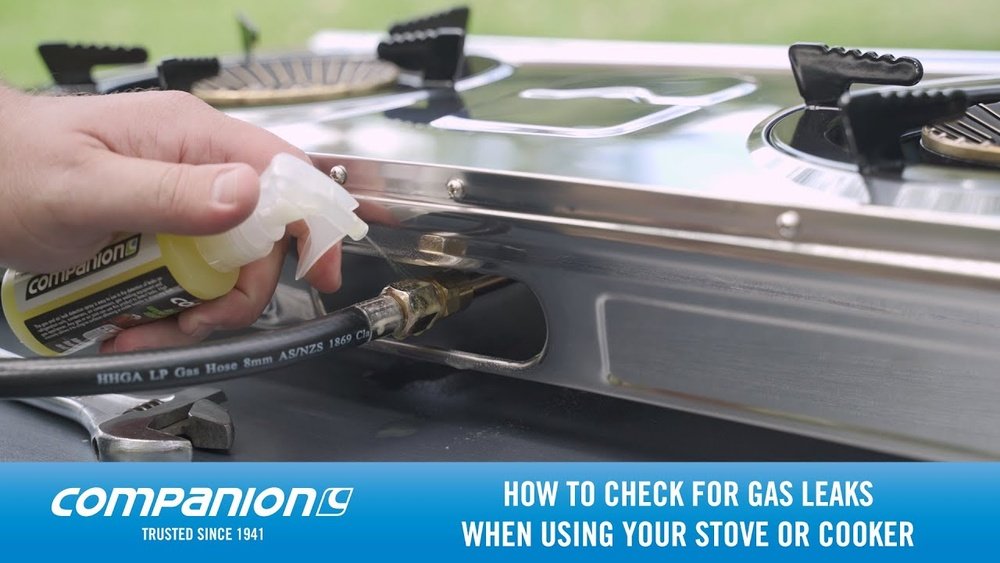
2. Soap And Water Solution
This is a simple and reliable method used by professionals. Mix a few drops of dish soap with water in a spray bottle.
Steps:
- Turn off all burners and make sure the stove is cool.
- Spray or brush the soapy water generously on all gas connections, hoses, and joints.
- Watch closely for bubbles forming.
- If you see bubbles growing, gas is leaking through that point.
This method works because escaping gas creates bubbles in soapy water, making even tiny leaks visible.
3. Use A Gas Leak Detector
A gas leak detector is a handheld device that senses gas in the air. Modern detectors are affordable and easy to use.
- Turn on the detector and slowly move it around the stove, focusing on the connections, burners, and behind the stove.
- Most detectors beep or flash when they sense gas.
- Some models display the gas concentration level.
When buying a detector, choose one rated for natural gas or propane, depending on your stove.
4. Electronic Gas Sensors (permanent Installation)
For extra safety, consider installing a fixed gas sensor in your kitchen. These plug-in or battery-powered devices give an alarm if gas is detected, like a smoke detector for gas leaks.
- Place the sensor near the stove or gas line, but not too close to windows or vents.
- Test the alarm monthly to make sure it works.
5. Professional Inspection
If you suspect a leak but cannot find it, or if you want total peace of mind, call a licensed professional. Plumbers and gas companies have specialized tools and training to find hidden leaks. They can also check inside the stove and repair any dangerous problems.
6. Checking Gas Bills And Usage
If your gas bill suddenly goes up without a clear reason, it may mean there is a leak. Compare your usage to last month or last year.
Here’s a simple comparison:
| Month | Normal Usage (Therms) | Current Usage (Therms) | Possible Leak? |
|---|---|---|---|
| January | 25 | 25 | No |
| February | 24 | 40 | Yes |
A big increase with no change in your cooking habits is a red flag.
7. Carbon Monoxide (co) Detectors
While CO detectors do not sense raw gas, they can alert you to dangerous by-products of gas leaks. Install a CO detector near the kitchen for extra protection.
Key Insight: Many people forget that a CO detector is not a gas leak detector. These are different devices. CO detectors save lives but do not warn about a gas leak until burning gas produces CO.
Credit: generaltools.com
How To Test Specific Parts Of Your Gas Stove For Leaks
A gas stove has several parts that can leak. Here’s how to check the most important ones.
Gas Hose/connection
- Pull the stove gently away from the wall (do not strain the hose).
- Inspect the hose for cracks, splits, or wear.
- Spray the soapy water solution along the length and at both ends.
- Watch for bubbles.
Burner Valves
- Turn all burners to the off position.
- Spray soapy water around the control knobs and valve stems.
- If you see bubbles, the valve may not be sealing completely.
Oven Section
- Open the oven door and remove racks if needed.
- Spray soapy water around the oven burner, especially at the connection to the gas line.
- Look for bubbles or a smell of gas.
Internal Pipes (if Possible)
- Some stoves allow you to remove a panel to check inside. If you are unsure, call a professional.
- Never open parts you are not comfortable with.
What To Do If You Detect A Gas Leak
If you find a leak or even suspect one, act quickly and safely:
- Do not turn on or off any electrical appliances, lights, or phones. Even a small spark can ignite gas.
- Open windows and doors to let fresh air in.
- Turn off the gas supply at the main valve, if safe to do so.
- Leave the building immediately if the smell is strong or you feel unwell.
- Call your gas company or emergency services from outside the building. Do not use your phone inside.
- Do not try to fix the leak yourself unless you are trained. Wait for professionals.
Important: Never ignore even a small leak. Gas can build up quickly, and the risks are too high.

Credit: diy.stackexchange.com
How To Prevent Gas Leaks In Your Kitchen
Prevention is always better than cure. Here are the best ways to keep your kitchen safe:
- Check connections every 6 months with soapy water or a detector.
- Replace old hoses every 5 years, or sooner if you see signs of wear.
- Clean burners and stove parts regularly to prevent blockages.
- Install a gas sensor near your stove.
- Schedule annual professional inspections.
- Teach all family members how to turn off the gas and what to do in an emergency.
Comparing Detection Methods
Not sure which detection method is best for you? Here’s a quick comparison:
| Method | Cost | Accuracy | Skill Needed | Best For |
|---|---|---|---|---|
| Soapy Water | Low | Good for visible leaks | Basic | All users |
| Electronic Detector | Medium | High | Easy | Quick checks |
| Professional Inspection | High | Very high | None (call pro) | Hidden leaks, peace of mind |
Using more than one method gives you the best protection.
Common Mistakes People Make When Checking For Gas Leaks
Even careful people make errors when dealing with gas leaks. Avoid these mistakes:
- Relying only on smell – Some leaks are too small to smell or may be masked by other odors.
- Ignoring faint signs – Even a small smell or tiny bubble is a warning.
- Not checking all connections – Many leaks happen behind or under the stove.
- Using open flames to test for leaks – Never use a match or lighter. This is extremely dangerous.
- Delaying repairs – Waiting to fix a leak puts you at risk.
- Not teaching others in the home – Make sure everyone knows what to do.
Professional Vs. Diy Gas Leak Detection
Some leaks are easy to find and fix; others are not. Here’s what you should know:
- DIY methods (like soapy water and detectors) are good for quick checks and obvious leaks.
- Professional inspections are needed for:
- Old stoves (over 10 years)
- Leaks you cannot find but still suspect
- After moving your stove or home renovations
- When you smell gas but cannot find the source
Professionals have sensitive tools and can check inside the stove and pipes. Their visit may cost more, but safety is worth the investment.
How Often Should You Check For Gas Leaks?
Regular checks are important. Here’s a suggested schedule:
| Task | Frequency | Who Should Do It? |
|---|---|---|
| Soapy water test | Every 6 months | Homeowner |
| Electronic detector sweep | Monthly | Homeowner |
| Professional inspection | Yearly | Licensed technician |
If you move the stove, do repairs, or smell anything unusual, check right away.
Extra Safety Tips For Gas Stove Users
- Never leave the stove on and unattended. Turn off burners if you step away.
- Keep flammable items (towels, curtains) away from the stove and gas line.
- Use the right type of gas (natural gas or propane) for your stove.
- Store emergency numbers (gas company, fire department) in your phone.
- Know where the main gas shutoff valve is and how to use it.
What To Do If You Cannot Find The Source
Sometimes, you are sure there is a leak but cannot find it. In this case:
- Do not ignore the problem. Gas can collect in walls, under floors, or inside the stove.
- Leave the area and call a professional.
- Do not use fans or open flames to “clear the air.” This can be dangerous.
Should You Repair A Leak Yourself?
Small leaks at hoses or connections can sometimes be fixed by tightening or replacing the part. However:
- If you are not sure, always call a professional.
- Never try to repair internal stove parts on your own.
- DIY fixes should only be temporary until a technician can check your stove.
When To Replace Your Gas Stove
A gas stove can last many years, but sometimes it is safer to replace than repair:
- If your stove is over 15 years old and has repeated leaks
- If the manufacturer recalls your model for safety issues
- If repairs cost more than half the price of a new stove
Modern stoves have better safety features, such as automatic shut-off valves and built-in sensors.
Real-life Example: How A Small Leak Became A Big Problem
Consider this example: A family in Texas noticed a faint gas smell in the kitchen. They ignored it, thinking it was a cooking odor. Weeks later, the smell became stronger, and their houseplants started to die. Eventually, they called a technician who found a leaking connection behind the stove. The leak had filled part of the kitchen with gas, making their home a ticking time bomb. They were lucky—no one was hurt.
This story shows why you should never ignore even a faint warning sign. Early detection is key.
Useful Resources
For more information on gas safety and emergency steps, you can visit the Centers for Disease Control and Prevention.
Frequently Asked Questions
How Do I Know If My Gas Stove Is Leaking?
The most common signs are a rotten egg smell, a hissing sound, or burner problems. Use soapy water or a gas detector for confirmation. If unsure, call a professional.
Are Gas Leak Detectors Reliable?
Most modern detectors are very reliable if used correctly and tested monthly. Choose a device rated for your type of gas and follow the instructions.
Can I Use My Phone Near A Suspected Gas Leak?
No. Using phones, light switches, or anything electrical near a gas leak can cause a spark. Leave the area before making a call.
How Much Does It Cost To Repair A Gas Leak?
Costs vary. Minor repairs (like tightening a hose) may be under $100. Major repairs or replacing parts can cost $150–$500 or more, depending on the problem.
Is It Safe To Use A Gas Stove With A Small Leak?
No. Even a tiny leak can build up gas and cause an explosion or poisoning. Stop using the stove and fix the leak before cooking again.
A gas stove is a great tool, but only if used safely. By learning how to detect gas leaks, acting quickly, and maintaining your appliance, you protect your home and family. Take gas safety seriously—every check makes a difference.

Credit: www.applewoodfixit.com