
Many people move into a new home or apartment and are unsure whether their oven is gas or electric. Sometimes, the appliance manual is missing. Sometimes, the oven looks old, or the controls seem unfamiliar. Knowing which type you have is not just about curiosity—it affects safety, cooking results, energy bills, and even home repairs.
If you’re wondering, “How can I tell if my oven is gas or electric? ”—you’re not alone.
This guide will walk you through every practical method to identify your oven type, explain why it matters, and help you avoid common mistakes. Whether you’re a new renter, a first-time homeowner, or just troubleshooting your kitchen appliances, you’ll find clear steps, real-world examples, and answers to important questions.
Let’s get started.
Why Oven Type Matters
Choosing the right settings for your oven depends on knowing if it’s gas or electric. Here’s why this matters more than most people think:
- Safety: Gas ovens use an open flame and natural gas. Electric ovens use high-voltage heating elements. Each has its own risks.
- Cooking results: Gas ovens usually heat up and cool down faster but may have hot spots. Electric ovens often give more even heat.
- Maintenance and repairs: Knowing your oven type helps when you need to replace a part or call for service.
- Energy costs: Gas and electric ovens affect your utility bills differently.
Many people guess their oven type based on how it looks or cooks, but this can be misleading. Checking with a few simple steps helps you avoid mistakes.
The Fastest Ways To Check Your Oven Type
Let’s start with the quickest and most reliable ways to know if your oven is gas or electric. Try these before you pull out tools or search for model numbers.
1. Open The Oven Door And Look Inside
With the oven turned off and cool, open the main door and look at the bottom and sides.
- Gas oven: You’ll often see a metal burner at the bottom, sometimes covered by a plate with small holes. There may be a small blue or orange pilot light or a place for a flame.
- Electric oven: You’ll see thick metal rods (heating elements) at the bottom and sometimes at the top (broiler element). These elements are usually exposed and may look slightly burned or dark.
Example: If you see a coil glowing red when the oven is on, it’s electric. If you see a steady blue flame (or a place where a flame comes out), it’s gas.
2. Check The Controls And Settings
The control panel can give you clues.
- Gas ovens: Often have a knob for the oven temperature, sometimes labeled with “Bake” and “Broil,” and a separate knob for lighting the pilot or flame. Some older gas ovens require you to push and hold a button to ignite.
- Electric ovens: Controls are usually dials or digital buttons. There is no “Ignite” or “Pilot” function.
3. Listen And Smell When You Turn It On
- Gas ovens: When you turn it on, you might hear a faint “whoosh” or “click” sound as the gas lights. Sometimes, there’s a slight smell of gas right at the start (should disappear in seconds).
- Electric ovens: These are silent except for the click of the thermostat. No gas smell.
4. Look For A Power Cord Or Gas Line
- Power cord: Electric ovens need a thick, high-voltage cord plugged into a large wall socket, usually behind the oven.
- Gas line: Gas ovens have a flexible metal or plastic gas pipe connected to the back. Sometimes, you’ll see a shut-off valve.
5. Check The Model Number And Manual
If you can find the model or serial number (often on the door frame or inside edge), search online for the manual. The manual will clearly state if the oven is gas or electric.
Non-obvious insight: Many newer ovens are “dual fuel” (gas cooktop and electric oven). If you have both gas and electric connections, read the manual closely.
Physical Differences Between Gas And Electric Ovens
Understanding the build of each oven type helps you confirm what you have. Here’s a direct comparison.
| Feature | Gas Oven | Electric Oven |
|---|---|---|
| Heat Source | Open flame burner, natural gas or propane | Metal heating element, powered by electricity |
| Visible Flame | Yes (when on) | No |
| Ignition | Pilot light or electric igniter | Electric switch or dial |
| Oven Racks | May sit over a plate covering the burner | Sit above/below heating elements |
| Power Connection | Gas line + electric for light/clock | Large electric plug only |
Practical tip: If you see both a gas line and a large power cord, you may have a dual-fuel oven.
How To Identify Your Oven Type Step By Step
If you want to be 100% sure, follow this sequence. Each step adds more confidence.
Step 1: Turn Off And Cool The Oven
For safety, never touch or inspect a hot oven. Wait until it’s fully cool.
Step 2: Pull Out The Oven (if Possible)
Carefully slide the oven forward to look at the back. You may need help for heavy appliances.
- Look for a gas pipe (metal, usually 1/2 inch thick, sometimes yellow or flexible stainless steel).
- Look for a large electrical plug (240 volts in the US, much larger than a regular plug).
Step 3: Inspect The Inside
Open the oven door. Use a flashlight if needed.
- Gas: Look for a burner plate or small holes at the oven’s base.
- Electric: Look for thick heating elements, often U-shaped.
Step 4: Try Turning It On
Set the oven to 350°F and watch what happens.
- Gas: You may hear clicking or see a flame appear at the bottom.
- Electric: The heating element will glow red-orange after a minute.
Non-obvious insight: Some modern gas ovens have hidden burners (no visible flame). In that case, the sound and smell are your best clues.
Step 5: Check The Cooktop (if It’s A Range)
Many ranges combine a cooktop and oven.
- If your cooktop uses gas burners (visible flame), it’s likely the oven is gas—but not always. Some have electric ovens with gas cooktops.
- If the cooktop is a smooth glass surface with electric coils, the oven is almost always electric.
Step 6: Find The User Manual Or Model Number
Look for stickers or plates inside the oven door, on the frame, or at the back. Enter the model number on the manufacturer’s website.
Pro tip: If you can’t find the manual, try searching online using “[brand] + [model number] + manual.”
Common Myths And Mistakes
Many people believe things about ovens that simply aren’t true. Here’s what to avoid:
- Myth: All ovens with digital controls are electric. Not true—many gas ovens now have digital displays.
- Myth: You can tell by how fast it heats up. While gas heats quickly, some electric ovens preheat fast too.
- Mistake: Assuming from the cooktop. As mentioned, a gas cooktop doesn’t always mean a gas oven.
- Mistake: Ignoring safety. Never poke around inside a hot oven or near gas connections without turning off the appliance.
Safety Tips For Checking Your Oven
While checking your oven, keep these safety rules in mind:
- Always turn off the oven before inspecting.
- Don’t touch heating elements or burner plates if they may still be hot.
- If you smell strong gas, leave the area and call your gas company immediately.
- Don’t move the oven alone if it’s heavy. Ask for help to avoid injury.
- Never try to light a pilot or fix wiring unless you are qualified.
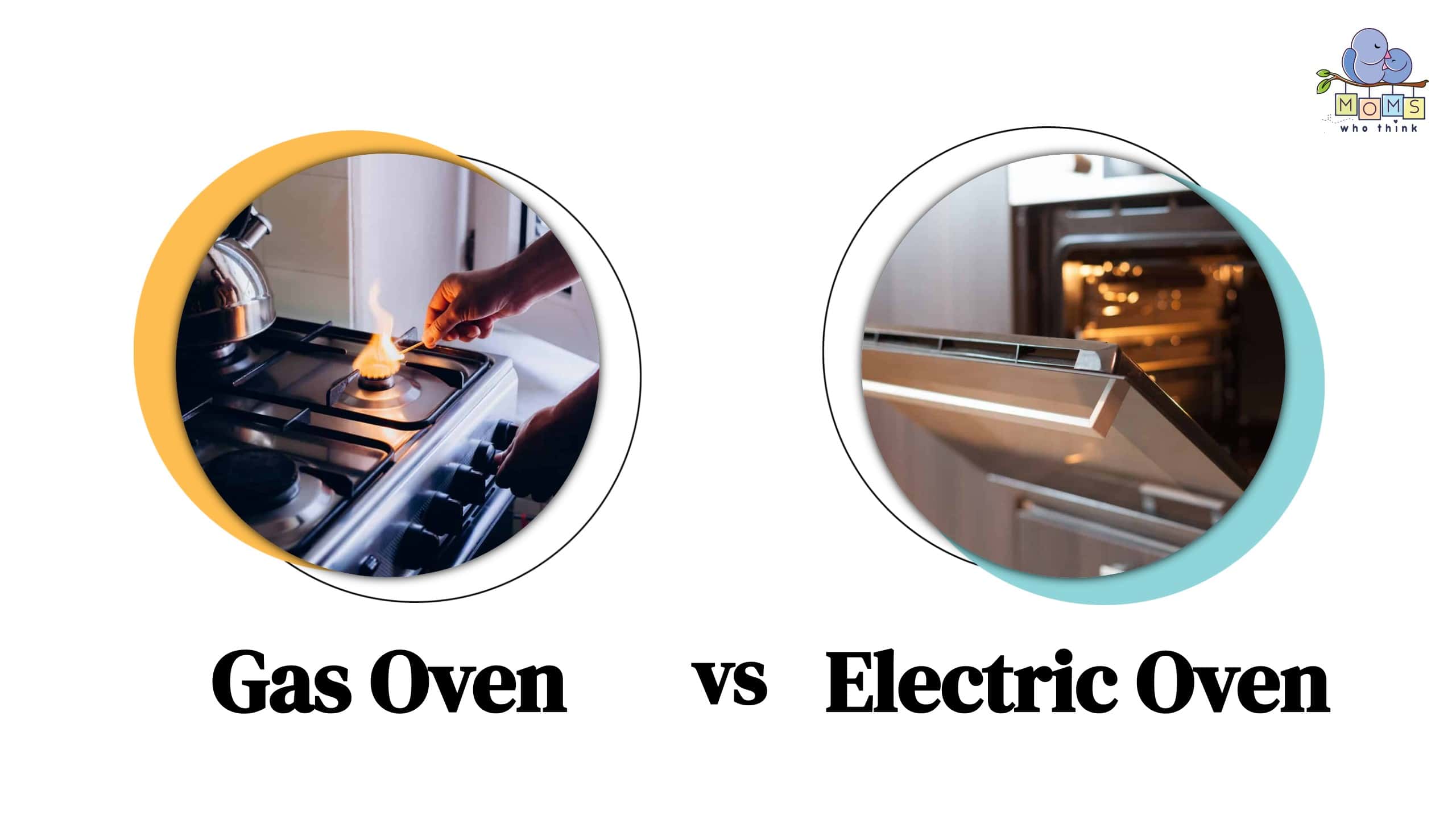
Credit: www.momswhothink.com
How Gas And Electric Ovens Work
Understanding how each oven type works can help you spot the signs.
Gas Oven
A gas oven uses a burner at the bottom. When you turn the temperature knob, gas flows to the burner, and a pilot light or electric igniter creates a flame. The flame heats the oven chamber. Most gas ovens vent hot air into the kitchen.
Some older models use a standing pilot (always lit); newer ones use an electronic spark.
Electric Oven
An electric oven uses a coil made of special metal that gets very hot when electricity passes through. This coil glows red-orange and heats the air inside the oven. Electric ovens often have both a lower and an upper (broil) element.
The heat is usually more even, and there’s no open flame.
Oven Performance: Gas Vs Electric
If you’re still not sure, think about how your oven cooks. Performance differences can provide clues.
| Cooking Feature | Gas Oven | Electric Oven |
|---|---|---|
| Preheating time | Faster | Slower |
| Moisture | Moister, some venting | Drier heat |
| Heat distribution | Can have hot spots | More even |
| Broiling | Gas flame from below | Electric coil from above |
| Self-cleaning | Less common | Very common |
Example: If your oven tends to bake bread with a crispy bottom and softer top, you may have a gas oven.

Credit: www.youtube.com
When To Call A Professional
If you’re still unsure or if you suspect a gas leak, always call a licensed technician. Never try to repair gas lines or electric wiring yourself unless you are trained. Some older ovens can be dangerous if handled the wrong way.
What About Dual Fuel Ranges?
A dual fuel range has a gas cooktop (for pots and pans) and an electric oven (for baking). These are popular among serious cooks. If you’re unsure, check both the oven and the cooktop for connections.
Key signs of a dual fuel oven:
- Gas burners on top, but no gas burner or flame in the oven.
- The oven has a large electric plug and a gas line going to the cooktop.
Energy Costs: Which Is Cheaper?
The cost to run your oven depends on local gas and electricity prices. In the US, gas is often cheaper per hour, but electric ovens can be more efficient. According to the U.S. Energy Information Administration, an average electric oven uses about 2.0 kWh per hour, while a gas oven uses about 0.112 therms per hour.
Estimated cost per hour (2023 average prices):
- Electric oven: About $0.28 per hour
- Gas oven: About $0.12 per hour
Electric ovens may cost more to run if your electricity is expensive, but they often give more even results for baking.
How To Find Your Oven’s Energy Source On Utility Bills
If you’re paying the utility bills, check what fuels your home uses:
- If you have a gas bill, you likely have at least one gas appliance.
- If you only have electric bills, your oven is probably electric.
- Rental apartments may include utilities; ask your landlord for details.
What If You Have An Older Oven?
Older ovens can be tricky. Here are clues for vintage models:
- Gas: Manual lighting of the oven burner with a match. You’ll see a small access hole and no electric plug.
- Electric: Simple knob controls, visible heating coils, and usually no gas line.
If your oven is very old, check for a UL or CSA safety sticker, which may state the power source.
Environmental Impact: Gas Vs Electric
Some people choose one oven type for environmental reasons.
- Electric ovens: Can be powered by renewable energy (if your utility offers it).
- Gas ovens: Burn fossil fuels, which can release carbon monoxide and other gases.
If you are concerned about indoor air quality or carbon footprint, an electric oven may be better.
Troubleshooting: What If The Oven Isn’t Working?
If your oven isn’t heating up, here’s how to troubleshoot based on type.
For Gas Ovens
- No flame or heat: Check if the gas valve is open. If you hear clicking but no flame, the igniter may be broken.
- Pilot won’t stay lit: Thermocouple may need replacing.
- Strong gas smell: Turn off gas and call for help.
For Electric Ovens
- No heat: Check if the oven is plugged in and the circuit breaker is on.
- One element heats, one doesn’t: A heating element may be burned out.
- No lights/power: Check the plug, fuse, or breaker.
If you’re unsure, call a professional.
Oven Features That Can Be Misleading
Some ovens come with features that can confuse you about the type:
- Convection fan: Both gas and electric ovens can have a fan for even heat.
- Digital displays: Now common on both types.
- Self-cleaning: More common in electric ovens, but not proof.
Always check the power source directly.
Example Scenarios
Here are some real-life examples to help you decide.
- You see a blue flame at the oven’s bottom when baking pizza. It’s a gas oven.
- You see red glowing coils at the top when broiling steak. Electric oven.
- You have a smooth glass cooktop and no gas smell. Electric oven.
- You find both a gas line and a thick power cord. Dual fuel or gas oven with electric ignition.
What To Do If You’re Still Unsure
If you’ve tried all the above and still can’t tell:
- Ask the previous owner or landlord.
- Take a photo and post it on a home appliance forum.
- Call a technician for a quick inspection.

Credit: www.wikihow.life
How To Switch From Gas To Electric (or Vice Versa)
Switching oven types is a big decision. It usually requires:
- Running a new gas line (for gas ovens).
- Installing a 240V outlet (for electric ovens).
- Professional installation.
Check local building codes and hire a licensed installer for safety.
Summary Table: Key Differences
Here’s a final quick reference for the main differences.
| Aspect | Gas Oven | Electric Oven |
|---|---|---|
| Power Source | Natural gas or propane | Electricity |
| Heat Appearance | Blue flame | Red/orange glowing coil |
| Connection | Gas line | Thick power cord |
| Ignition | Pilot or igniter | Switch or dial |
| Cooktop (if range) | May be gas or electric | Usually electric |
Frequently Asked Questions
How Can I Tell If My Oven Is Gas Or Electric Without Moving It?
You can usually tell by looking inside the oven. If you see a visible flame or a burner plate with small holes, it’s likely gas. If you see thick metal rods (heating elements), it’s electric. Also, listen for the sound of ignition or look for a gas smell when turning it on.
Is It Safe To Check The Gas Line Or Power Cord Myself?
Yes, if the oven is turned off and cool. Just look behind the oven for a gas pipe (for gas) or a large electric plug (for electric). Do not disconnect anything unless you are a qualified technician.
Can A Range Have Both Gas And Electric Ovens?
Yes, these are called dual fuel ranges. Often, the cooktop uses gas and the oven uses electric heat. Check both the connections and the model number to be sure.
Are Electric Ovens Better For Baking?
Many bakers prefer electric ovens because they offer more even heat. Gas ovens can have hot spots, but are good for foods that need moisture, like roasts. Your choice depends on what you cook most.
Where Can I Find More Information About Ovens?
A reliable source is the Oven Wikipedia page, which covers types, history, and safety tips.
Knowing whether your oven is gas or electric helps with cooking, repairs, and safety. Use the steps and tips in this guide, and you’ll have the answer in minutes. If you’re still not sure, ask a professional—your safety is worth it.