

Turmeric is a powerful spice known for its health benefits and rich yellow color. But if you’ve ever cooked with turmeric, you know how easily it can leave stains—especially on kitchen cabinets. These yellow stains are stubborn, and regular cleaning methods often don’t work. If you have white or light-colored cabinets, a single turmeric stain can ruin the clean look of your kitchen. But don’t worry, even if the stain is old or deep, there are proven ways to remove turmeric stains and restore your cabinets. In this guide, you’ll learn everything you need: why turmeric stains are so tough, what cleaning methods actually work, and how to prevent future stains. By the end, you’ll have the confidence to tackle any turmeric mess in your kitchen.
Why Turmeric Stains Are So Hard To Remove
Turmeric contains a compound called curcumin. This compound is responsible for its bright yellow color. Curcumin binds strongly to surfaces—especially porous ones like wood or painted cabinets. When turmeric powder or curry touches your cabinets, the color can seep into the material, making stains tough to remove.
Another reason turmeric stains are persistent is because they are both oil-soluble and water-insoluble. This means that simply wiping with water or even soap may not be enough. The stain can spread or become more visible if not treated the right way. Sometimes, heat from cooking can set the stain, making it almost permanent if you wait too long.
Assessing The Damage: What Kind Of Cabinets Do You Have?
Before you start cleaning, it’s important to know your cabinet material. The method you choose should match the type of surface:
| Cabinet Material | Porosity | Common Finish | Stain Risk |
|---|---|---|---|
| Plywood or MDF | Medium to high | Painted, laminated | High |
| Solid Wood | Medium | Varnished, oiled | Medium |
| Laminate | Low | Plastic coating | Low |
| Veneer | Medium | Thin wood over base | Medium |
| Painted Cabinets | Varies | Gloss, matte, satin | High (white paint) |
Knowing your cabinet’s material helps you pick the safest and most effective cleaning method. For example, harsh cleaners can damage painted or wood surfaces, but may be fine on laminate.
Immediate Steps: What To Do Right After A Spill
Acting quickly can make a huge difference. If you notice turmeric on your cabinet, follow these steps right away:
- Blot, Don’t Rub: Use a clean, dry paper towel to blot the stain gently. Avoid rubbing, as this pushes the color deeper into the surface.
- Remove Excess: If there is turmeric powder, carefully sweep it away with a dry cloth or soft brush.
- Dampen a Cloth: Use a damp (not wet) microfiber cloth to gently wipe the area. Microfiber is better than regular cloths because it lifts particles without spreading them.
- Mild Soap Solution: Mix a few drops of dish soap with warm water. Wipe the spot lightly, then dry with a separate clean towel.
These steps can often prevent a deep stain if you act quickly. But if you miss the spill or it’s already set, you’ll need stronger methods.
Proven Methods To Remove Turmeric Stains From Kitchen Cabinets
Different stains require different treatments. The following methods are arranged from gentle to strong. Always start with the mildest and only move to stronger options if needed.
1. Baking Soda Paste
Baking soda is a gentle abrasive and a natural deodorizer. It works well for both painted and laminate cabinets.
- Mix three parts baking soda with one part water to make a thick paste.
- Spread the paste over the stain.
- Let it sit for 10-15 minutes.
- Gently rub with a soft, damp cloth using small circular motions.
- Rinse with a clean, damp cloth, then dry.
Tip: Test on a hidden spot first if you have painted or delicate cabinets. Baking soda can sometimes dull glossy finishes.
2. Vinegar Solution
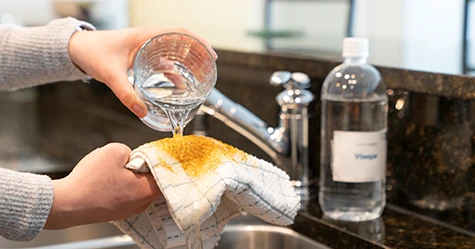
White vinegar is effective against many food stains, including turmeric.
- Mix equal parts white vinegar and water.
- Dampen a soft cloth with the solution.
- Wipe the stained area gently.
- Rinse with a clean, damp cloth and dry.
Vinegar is safe for most surfaces but should not be used on natural stone or unsealed wood, as it can damage them.
3. Dish Soap And Hydrogen Peroxide
Hydrogen peroxide is a mild bleaching agent. When mixed with dish soap, it can lift turmeric color without harsh scrubbing.
- Mix one tablespoon of hydrogen peroxide with a few drops of dish soap.
- Apply to the stain with a soft cloth.
- Let it sit for 5-10 minutes.
- Wipe gently and rinse with water.
This method works best for white or light-colored cabinets, as peroxide can lighten dark finishes.
4. Lemon Juice
Lemon juice is a natural acid that can break down turmeric stains.
- Squeeze fresh lemon juice on the stain.
- Let it sit for about 10 minutes.
- Wipe with a damp cloth.
- Dry the area thoroughly.
Lemon juice also leaves a fresh scent, but avoid using it on unsealed wood, as acid can damage the finish.
5. Commercial Cleaners
If home remedies don’t work, try a commercial kitchen cleaner designed for stubborn stains. Look for products labeled safe for your cabinet type. Follow the instructions carefully, wear gloves, and ventilate the area.
Note: Avoid cleaners with bleach on colored or wood cabinets, as they can cause fading or damage.
:max_bytes(150000):strip_icc()/how-to-remove-turmeric-stains-7503520-v1-93417aeae7804715aabaf07ece5a29f9.png)
Credit: www.thespruce.com
Deep Cleaning For Stubborn Or Old Turmeric Stains
Sometimes, turmeric stains become part of the cabinet surface. This can happen if the spill was not cleaned immediately or if the stain is old. Here’s how to tackle deep, set-in stains.
Step 1: Identify The Finish
Determine if your cabinet has a protective coating (like polyurethane, varnish, or laminate). If so, you can use stronger cleaners. If not, stick to gentle methods.
Step 2: Use A Magic Eraser
A melamine sponge (often called Magic Eraser) can remove tough stains. Wet the sponge, squeeze out extra water, and gently rub the stained area. Don’t press too hard, as this can damage paint or finish.
Step 3: Try A Baking Soda And Vinegar Combo
For very stubborn stains, make a paste with baking soda and a few drops of vinegar. Spread this over the stain, let it bubble for 2-3 minutes, then wipe away gently with a soft cloth.
Step 4: Sand And Refinish (last Resort)
If the stain is still visible, you may need to sand the area lightly. Use fine-grit sandpaper (320 grit or higher), sand gently, and clean the dust. Apply matching paint or finish to restore the look. Only use this method if you are comfortable with DIY repairs.
Comparison Of Home Remedies For Turmeric Stain Removal
Here’s a quick look at how common cleaning agents perform on turmeric stains:
| Cleaning Agent | Effectiveness | Safe For | Risks |
|---|---|---|---|
| Baking Soda | Good | Most surfaces | May dull gloss |
| Vinegar | Moderate | Painted, laminate | Damages stone |
| Hydrogen Peroxide | Very Good | Light colors | Lightens dark paint |
| Lemon Juice | Moderate | Painted, laminate | Damages unsealed wood |
| Commercial Cleaner | Excellent | Depends on product | May harm finish |
Common Mistakes When Cleaning Turmeric Stains
Many people make mistakes that make turmeric stains worse or damage their cabinets. Avoid these common errors:
- Rubbing the stain: This spreads the color and pushes it deeper.
- Using bleach: It can damage colored or wood cabinets.
- Waiting too long: The longer turmeric sits, the harder it is to remove.
- Using harsh abrasives: Steel wool or rough pads can scratch and dull the cabinet surface.
- Skipping a test spot: Always test new cleaners on a hidden part of the cabinet.
How To Protect Kitchen Cabinets From Turmeric Stains
Prevention is better than cure, especially with turmeric. Here’s how to protect your cabinets:
1. Cook Carefully
When using turmeric, try to keep your cooking area tidy. Wipe spills immediately. Use a splatter guard or cover pots and pans to avoid splashes.
2. Install A Backsplash
If you cook with turmeric often, installing a backsplash behind your stove and countertop can make cleaning easier and protect your cabinets.
3. Use Cabinet Door Covers
Temporary covers, like clear plastic or silicone sheets, can protect cabinet doors during heavy cooking sessions.
4. Regular Cleaning
Wipe your cabinets with a mild cleaner or a damp cloth every few days. Regular cleaning prevents stains from setting.
5. Apply A Protective Finish
For wood or painted cabinets, consider applying a clear protective coating. This creates a barrier, making it harder for stains to penetrate.
Credit: www.mollymaid.com
When To Call A Professional
If you’ve tried everything and the stain won’t go away, it might be time to seek professional help. Cabinet refinishers or restoration experts have special products and techniques for deep stains. This is a good choice if your cabinets are expensive or you’re worried about damaging them further.
Real-life Example: Turmeric Stain Removal On White Cabinets
Let’s look at an example. Priya, who loves making curries, noticed a yellow patch on her white kitchen cabinet. She tried scrubbing with soap and water, but the stain only faded a little. Next, she mixed baking soda and water, applied it to the spot, and let it sit for 15 minutes.
After wiping with a damp cloth, most of the stain was gone. For the faint yellow left, she used a small amount of hydrogen peroxide and let it sit for 5 minutes. The stain disappeared, and her cabinet looked new again.
Lesson: Sometimes, you need to use more than one method. Patience and gentle cleaning are key.
Credit: kitchendesainidea.com.my
How To Clean Different Cabinet Finishes
Cabinet finishes affect how you clean turmeric stains:
Painted Cabinets
- Use only mild cleaners and soft cloths.
- Avoid acidic or abrasive substances.
- Hydrogen peroxide is safe for white paint, but test on a hidden spot.
Laminated Cabinets
- Wipe quickly with a damp cloth.
- Baking soda paste is safe; avoid harsh chemicals.
Varnished Or Oiled Wood
- Use a vinegar solution or lemon juice sparingly.
- Never soak the wood.
- Dry immediately to prevent swelling.
High-gloss Cabinets
- Use a microfiber cloth and mild soap.
- Avoid abrasives and acidic cleaners to protect the shine.
Tips For Ongoing Maintenance
Preventing stains is easier than removing them. Here are some maintenance tips:
- Clean up any spill immediately.
- Make a habit of wiping cabinet doors weekly.
- Keep a spray bottle with water and a few drops of dish soap handy.
- Avoid hanging wet towels or cloths stained with turmeric on cabinet doors.
- Check cabinet edges and corners, as stains often hide there.
How Long Does It Take To Remove Turmeric Stains?
The time needed depends on the stain’s age and cabinet material:
| Stain Age | Removal Time | Best Method |
|---|---|---|
| Fresh (minutes old) | 5-10 minutes | Soap & water |
| Hours old | 15-30 minutes | Baking soda paste |
| Days old | 30-45 minutes | Hydrogen peroxide |
| Weeks old | 1-2 hours (may need repeat tries) | Commercial cleaner or sanding |
Insight: Older stains need more time and patience. Sometimes, you may need to repeat a method two or three times for complete removal.
Non-obvious Insights Beginners Often Miss
- Heat sets turmeric stains: If you use hot water or try to “steam” out the stain with a hairdryer, you might make it permanent. Always use cool or room-temperature cleaning solutions first.
- Cabinet edges are high risk: The area where you grip cabinet doors often collects more stains and is harder to clean. Pay attention to these spots even if the center looks clean.
- Sunlight can fade stains over time: If a faint stain remains after cleaning, leaving the cabinet door open to sunlight for a few hours can help lighten the color. But avoid this for wood, as it may cause uneven fading.
Natural Vs. Chemical Cleaners: What’s Safer?
People often ask whether natural cleaners like vinegar and baking soda are better than commercial chemical products. Natural cleaners are usually safer for your health and for most cabinet finishes, but they may need more time and effort. Chemical cleaners work faster but can cause damage if used incorrectly.
If you have young children or pets, natural solutions are a better choice. For very tough stains on durable surfaces, a commercial product may be the only answer. Always follow the safety instructions on any cleaner.
If you want to explore more about turmeric’s properties and why it stains so deeply, read this detailed article on Turmeric.
Frequently Asked Questions
How Do I Remove Turmeric Stains From Wooden Cabinets?
Wipe the stain quickly with a soft, damp cloth and mild soap. If it’s set, try a baking soda paste. Avoid soaking the wood with water or using strong acids like vinegar, as these can damage the finish. Always dry the area completely after cleaning.
Can I Use Bleach To Remove Turmeric Stains From Cabinets?
It’s best to avoid bleach, especially on colored, wood, or painted cabinets. Bleach can remove the color from the cabinet itself, leaving a white or faded patch. Instead, use baking soda, vinegar, or hydrogen peroxide for safe cleaning.
What If Turmeric Stains Keep Coming Back?
Repeated stains often mean the cabinet finish is not protective enough. Consider applying a clear protective coating or using removable covers while cooking. Also, check your cleaning routine—wiping cabinets more often can prevent buildup.
Are Commercial Stain Removers Safe For All Cabinet Types?
Not all commercial cleaners are safe for every cabinet surface. Always read the label and test on a hidden area first. Some products may contain harsh chemicals that can strip paint or damage wood.
Will Sunlight Help Remove Turmeric Stains From Cabinets?
Sunlight can fade some stains, especially on painted cabinets. However, too much sun can also discolor wood or paint over time. Use sunlight carefully and only for short periods if the stain is faint.
With the right knowledge and tools, turmeric stains don’t have to be a nightmare. Acting quickly, choosing the right cleaning method, and practicing good kitchen habits will keep your cabinets looking bright and clean. Next time you cook with turmeric, you’ll be ready for any spills—no stress required.