

A strange smell coming from the kitchen sink can ruin the joy of cooking and make your kitchen feel dirty, even if everything looks clean. Many people deal with this problem, but not everyone knows the best ways to fix it. Sometimes the smell is mild, like stale water. Other times, it can be strong—like rotten eggs or old food. If you want your kitchen to always smell fresh, it’s important to understand why these odors happen and how to remove them completely.
In this guide, you’ll learn everything you need to know about getting rid of kitchen sink smells. You’ll discover why they happen, how to clean them out, and even how to stop them from coming back. You’ll also find clear instructions for different types of sinks and common mistakes to avoid.
By the end, you’ll have the confidence to handle any kitchen sink smell—no matter how stubborn.
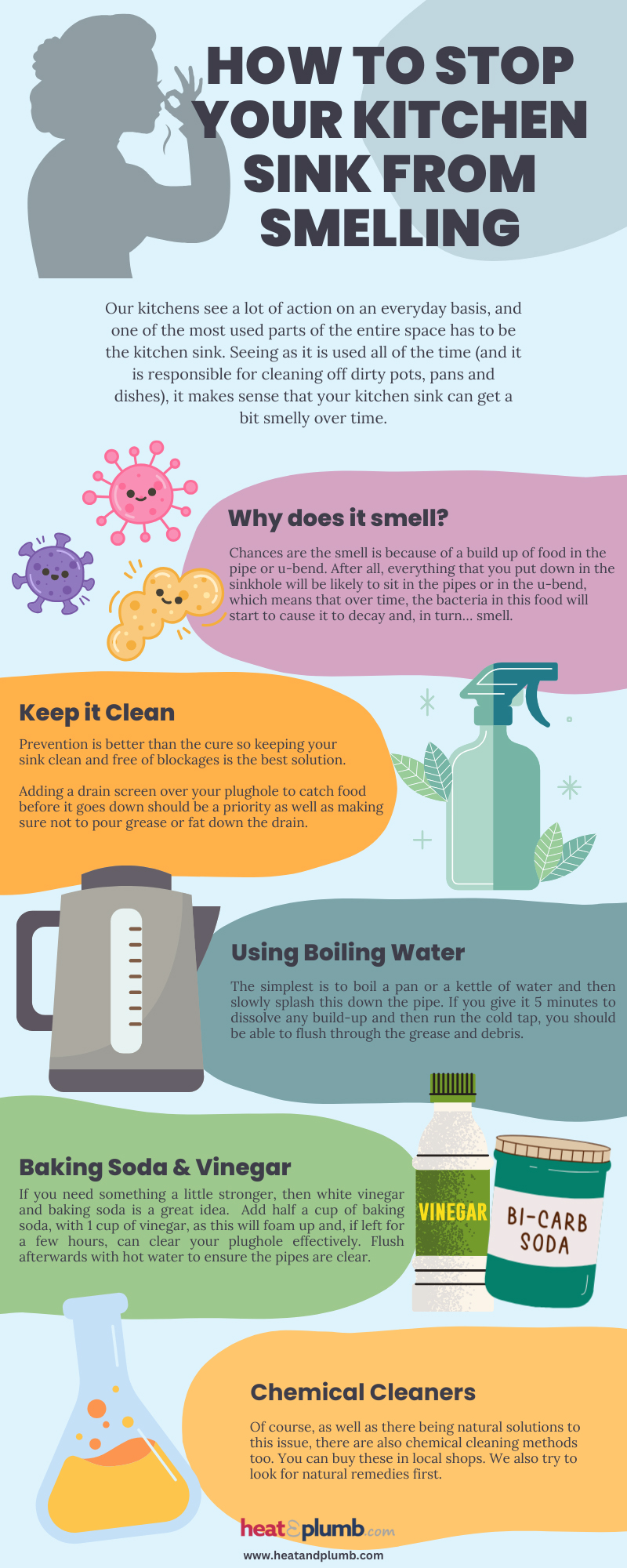
Why Does Your Kitchen Sink Smell?
Many people think bad smells in the kitchen sink mean there is a big plumbing problem. That’s not always true. Most of the time, the cause is much simpler and easier to fix.
The most common reasons for kitchen sink odors are:
- Food particles: Small pieces of food can get stuck in the drain. When they sit too long, they start to rot and smell.
- Grease build-up: When you pour oil or fat down the sink, it can stick to the pipes and trap other debris.
- Clogged drain: A slow or blocked drain can hold water and organic material, leading to bacteria growth.
- Dry P-trap: The P-trap is the U-shaped pipe under your sink. If it dries out (for example, in a rarely used sink), sewer gases can enter your kitchen.
- Garbage disposal issues: If you have a garbage disposal, old food can stick to the blades or sides and start to smell.
- Biofilm and bacteria: Slime builds up inside pipes, especially if you don’t clean them regularly.
- Sewer line problems: Rarely, a broken or blocked main sewer line can send smells up through your kitchen sink.
Not all smells are the same. A rotten egg smell usually means sulfur gas, while a sour or musty smell often means bacteria. Learning to tell the difference helps you target the right solution.
Quick Fixes For Kitchen Sink Smell
If you need a fast solution, there are a few things you can try right away.
- Flush with boiling water: Carefully pour a kettle of hot water down the drain. This melts grease and moves small food bits.
- Run the garbage disposal: Add ice cubes and a small piece of lemon, then turn on the disposal. The ice helps clean the blades, and the lemon freshens the smell.
- Use baking soda and vinegar:
- Pour half a cup of baking soda into the drain.
- Follow with one cup of vinegar.
- Wait 10-15 minutes, then rinse with hot water.
- Check the P-trap: If you haven’t used the sink in a while, run water for 30 seconds to refill the trap.
These quick actions can give you short-term relief. But if the smell comes back, you’ll need to do a deeper clean.
Credit: www.heatandplumb.com
Deep Cleaning Methods For A Fresh Kitchen Sink
Sometimes, a simple rinse isn’t enough. If your sink still smells after a quick fix, try these deeper cleaning techniques. Each method targets a different cause of odor.
1. Clean The Sink Basin And Stopper
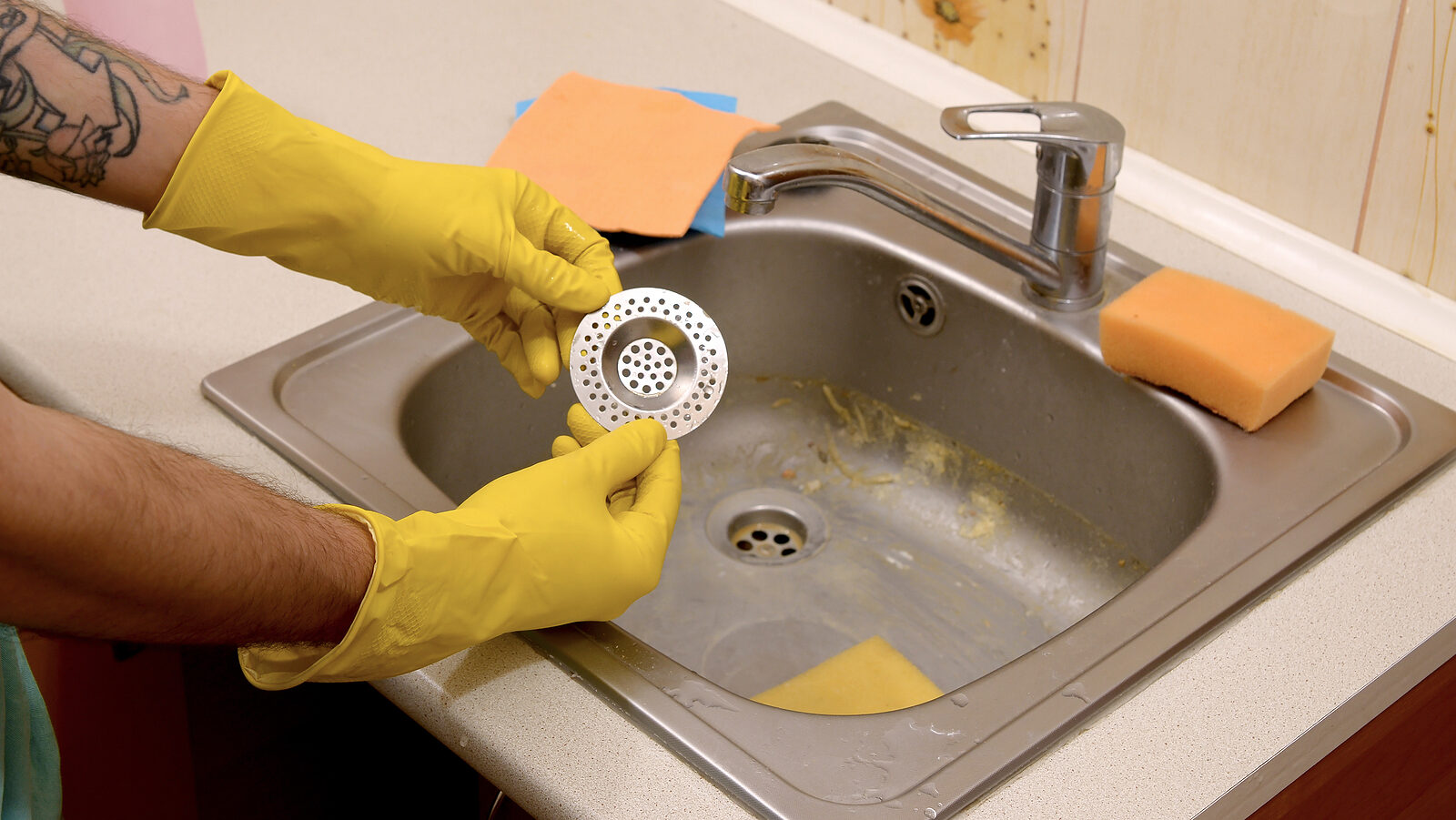
Food and grime often collect around the drain and sink stopper. Clean both parts well.
- Remove the stopper (if possible) and scrub it with dish soap and a small brush.
- Clean around the drain opening.
- Rinse everything with hot water.
This step removes the build-up that you can see and touch. Many people miss the stopper, which can trap bacteria.
2. Scrub Inside The Drain
You’ll need a bottle brush or an old toothbrush for this step.
- Wet the brush with hot, soapy water.
- Push it into the drain and scrub in circles, reaching as far down as possible.
- Rinse with hot water.
Non-obvious tip: If your drain cover is removable, take it off for better access.
3. Remove And Clean The P-trap
For stubborn smells, the source might be the P-trap. This U-shaped pipe holds water to block sewer gases. Sometimes, it fills with sludge and needs a full cleaning.
How to clean the P-trap:
- Place a bucket under the sink to catch water.
- Loosen the slip nuts on both ends of the P-trap with pliers or by hand.
- Remove the trap and pour out the water and debris.
- Scrub the inside with a bottle brush and dish soap.
- Rinse and reattach the P-trap.
Warning: If you’re not comfortable removing pipes, ask someone with experience or call a plumber.
4. Clean The Garbage Disposal Thoroughly
The garbage disposal can be a major source of smells. Bits of food, grease, and slime collect in hidden parts.
How to deep clean your disposal:
- Turn off the power to the disposal for safety.
- Use tongs or pliers to remove any large objects.
- Pour in half a cup of baking soda, then one cup of vinegar. Let it fizz for 10 minutes.
- Scrub the rubber splash guard (the black ring at the top) with an old toothbrush.
- Restore power, add ice cubes and a small amount of coarse salt, then run the disposal with cold water.
- Finish by grinding a lemon or orange peel for a fresh scent.
Beginner tip: The splash guard is often missed. It collects greasy residue and can smell very bad.
5. Use Enzyme Cleaners
Enzyme drain cleaners use natural bacteria to eat the organic matter causing the smell. They’re safer for pipes and the environment than strong chemicals.
- Pour the enzyme cleaner into the drain, following the label instructions.
- Let it sit overnight for best results.
- Rinse with hot water in the morning.
These cleaners work slowly but are excellent for long-term odor control.
6. Sanitize With Bleach (use Sparingly)
If you need a strong disinfectant, use a small amount of bleach. But don’t use bleach often, as it can damage pipes and harm septic systems.
- Mix one tablespoon of bleach with one quart of water.
- Pour slowly down the drain.
- Let it sit for 5 minutes, then flush with plenty of water.
Never mix bleach with other cleaners, especially ammonia or vinegar, because dangerous gases can form.
7. Clean Overflow Holes
Some sinks have small overflow holes near the top edge. These can collect grime and smell bad.
- Use a pipe cleaner or cotton swab dipped in vinegar.
- Insert it into the hole and twist gently.
- Rinse with water.
Most people forget to clean this spot, but it helps with overall freshness.
Natural Deodorizers And Homemade Remedies
Many people prefer natural methods over chemical cleaners. These options are safe, cheap, and often just as effective.
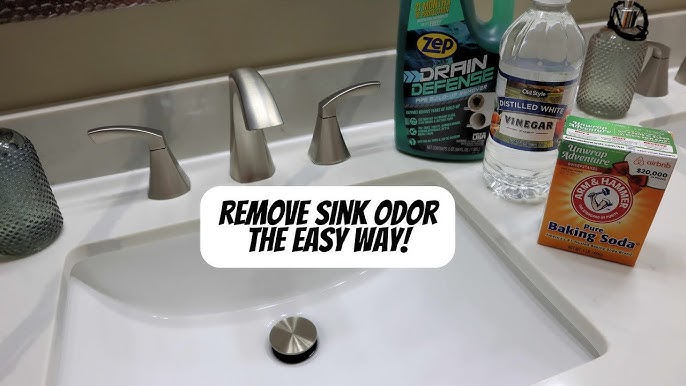
Baking Soda And Vinegar
This classic combo breaks down grime and neutralizes odors.
- Pour half a cup of baking soda down the drain.
- Add one cup of vinegar.
- Wait 10-15 minutes for fizzing to stop.
- Rinse with hot water.
Lemon Or Citrus Peels
Citrus contains natural oils that cut grease and smell fresh.
- Drop a few small lemon or orange peels into the disposal or directly into the drain.
- Run hot water and the disposal (if you have one).
- The smell will improve right away.
Salt And Ice
Ice and coarse salt scrub away residue inside the garbage disposal.
- Pour one cup of ice cubes and half a cup of salt into the disposal.
- Run cold water and turn on the disposal.
- This helps remove slime and sharpen the blades.
Boiling Water With Dish Soap
Good for simple cases, this method flushes away grease and light build-up.
- Mix a few drops of dish soap with a kettle of boiling water.
- Pour slowly down the drain.
Vinegar Ice Cubes
Freeze white vinegar in an ice tray.
- Drop several vinegar ice cubes into the disposal.
- Run cold water and the disposal.
- The cubes clean as they melt, and the vinegar deodorizes.
Insight: Natural methods are most effective for regular maintenance or mild odors. For strong smells, you may need to combine methods.
Credit: www.youtube.com
Preventing Kitchen Sink Odors
The best way to handle kitchen sink smells is to stop them before they start. Simple habits can make a huge difference.
1. Rinse After Every Use
Flush the drain with hot water for 15-30 seconds after rinsing plates, especially after oily or starchy foods.
2. Avoid Pouring Grease Down The Drain
Grease hardens and traps food bits. Pour cooled grease into a can or jar, then throw it away in the trash.
3. Use A Drain Strainer
A mesh or silicone strainer catches food scraps before they enter the pipes. Empty it into the trash daily.
4. Run Your Garbage Disposal Regularly
If you have a disposal, use it often to keep the blades clean and prevent food from sitting too long.
5. Clean The Sink Weekly
Scrub the sink, drain, and disposal splash guard with dish soap and a brush at least once a week.
6. Flush With Vinegar And Baking Soda Monthly
Make it a habit to use the baking soda and vinegar method every few weeks, even if you don’t smell anything.
7. Keep The P-trap Wet
If you have a sink that isn’t used often, run water into it every few days to keep the trap full.
8. Be Careful What You Put Down The Drain
Coffee grounds, eggshells, pasta, and rice can all cause blockages and smells. Throw them in the trash or compost instead.
9. Use Enzyme Cleaners For Maintenance
Once a month, use an enzyme cleaner to keep the pipes clear of organic build-up.
Practical insight: Many people only clean the visible parts of their sink. Regular drain maintenance prevents most odors.
Comparing Cleaning Methods: Effectiveness And Safety
To help you choose the best method for your situation, here is a comparison of common cleaning options:
| Method | Effectiveness | Safe for Pipes | Cost | Speed |
|---|---|---|---|---|
| Baking Soda & Vinegar | Good for mild odors | Yes | Low | 10-20 mins |
| Boiling Water | Good for grease | Yes | Low | 5 mins |
| Enzyme Cleaner | Very effective | Yes | Medium | Several hours |
| Bleach | Strong disinfectant | Use sparingly | Low | 5-10 mins |
| Manual Scrubbing | Very effective | Yes | Low | 10-20 mins |
How To Remove Smell From Different Types Of Kitchen Sinks
Not all sinks are the same. Some materials and designs need special care.
Stainless Steel Sinks
Stainless steel is strong but can show water spots and scratches. Use a soft brush for cleaning, and avoid harsh chemicals that can dull the finish.
Cleaning tip: After cleaning, dry the sink with a towel to prevent spots.
Porcelain Sinks
Porcelain is smooth but can chip. Avoid abrasive scrubs. Use baking soda and a soft sponge for odors.
Non-obvious tip: For tough stains, make a paste of baking soda and water, let it sit, then rinse.
Composite Sinks
Composite sinks are made from granite or quartz mixed with resin. They resist stains but can be damaged by harsh chemicals.
Care advice: Use mild dish soap and avoid bleach or strong acids.
Sinks With Garbage Disposal
Follow the deep cleaning steps for garbage disposals above. Pay attention to the splash guard and use ice and salt regularly.
Double Bowl Sinks
Food and odors can hide in the divider area. Clean both bowls and the space between them.
Beginner mistake: Forgetting to clean the non-disposal side, which can also trap food.
What If The Smell Comes From The Dishwasher Drain?
Sometimes, the odor is not the sink itself but the dishwasher. Dishwashers often connect to the sink drain. If you smell something bad when running the dishwasher:
- Check and clean the dishwasher filter.
- Run the dishwasher empty with a cup of white vinegar on the top rack.
- Clean the air gap (the small cylinder near the faucet, if present).
- Flush both the dishwasher and sink drain with hot water.
If the smell continues, there may be a clog or build-up in the shared drain pipe.
Common Mistakes That Make Kitchen Sink Smells Worse
Even with good intentions, some cleaning habits can backfire.
- Pouring grease down the drain: This creates blockages and traps food particles.
- Overusing harsh chemicals: Frequent use of bleach, drain openers, or acids can damage pipes and kill helpful bacteria in septic systems.
- Ignoring the splash guard: Most people forget to clean the disposal’s rubber guard, but it collects a lot of grime.
- Flushing coffee grounds, eggshells, or pasta: These items clump together and can block pipes over time.
- Using too little water with the disposal: Always run plenty of cold water before, during, and after using the disposal.
- Delaying repairs: If you notice slow draining or hear gurgling, fix it early to avoid bigger problems.
Non-obvious insight: Some scented drain cleaners only mask the odor instead of removing the cause. Always clean first, then deodorize.
When To Call A Professional Plumber
Most kitchen sink smells can be handled with regular cleaning. However, some problems need expert help.
- Smells that don’t go away after deep cleaning
- Frequent clogs or slow drainage
- Gurgling noises from the drain
- Smells from multiple drains in your house
- Signs of leaks or water damage under the sink
A plumber can check for broken pipes, venting issues, or sewer line problems. Fixing these yourself can be risky and may cause more damage.
Advanced Solutions: Tools And Gadgets That Help
If you deal with sink smells often, some tools can make your life easier.
Drain Cleaning Brushes
Long, flexible brushes reach deep into pipes and clear out slime that causes smells.
Sink Plungers
Small plungers made for sinks (not toilets) help clear minor clogs quickly.
Drain Maintenance Pods
These slow-release pods contain enzymes or deodorizing agents. Drop one into the drain each month for ongoing freshness.
Garbage Disposal Cleaners
Special foaming cleaners reach hidden spots inside the disposal, cleaning and deodorizing at the same time.
How Kitchen Sink Smells Affect Health And Home Value
Bad smells are more than just annoying. They can affect your health and the value of your home.
- Bacteria and mold: Odors often mean bacteria or mold is growing. These can cause allergies or illness.
- Sewer gas: If you smell rotten eggs, it may be hydrogen sulfide from sewer gas. This can be harmful if it builds up.
- Home value: Persistent kitchen smells can make it hard to sell your home or lower its price.
Fact: According to the Environmental Protection Agency, indoor air quality is an important factor in overall health. Bad odors signal poor air quality.
How Often Should You Clean Your Kitchen Sink Drain?
Regular cleaning prevents most problems. Here is a simple maintenance schedule:
| Task | How Often |
|---|---|
| Flush with hot water | Daily |
| Scrub drain and stopper | Weekly |
| Baking soda & vinegar flush | Monthly |
| Deep clean garbage disposal | Monthly |
| Clean P-trap | Every 6 months or as needed |
Insight: Sticking to a schedule is easier than fixing big problems later.
Frequently Asked Questions
Why Does My Kitchen Sink Smell Like Rotten Eggs?
A rotten egg smell usually means hydrogen sulfide gas is present. This gas forms when bacteria break down organic matter in the drain, garbage disposal, or P-trap. If the smell is strong and doesn’t go away after cleaning, you may have a sewer gas leak. In that case, call a plumber.
Can I Use Bleach To Clean My Kitchen Sink Drain?
Yes, bleach kills bacteria and removes odors, but it should only be used occasionally. Use no more than one tablespoon mixed with one quart of water. Never mix bleach with other chemicals, and avoid overuse, as it can damage pipes or harm septic systems.
What Should I Do If The Smell Comes Back Quickly After Cleaning?
If odors return soon after cleaning, food or grease may be stuck deeper in the pipes, or the P-trap could be dry. Try a deep clean, check for blockages, and make sure the trap is always filled with water. If these steps don’t work, contact a plumber.
Are Commercial Drain Cleaners Safe For Removing Smells?
Most commercial drain cleaners are safe if used as directed, but overuse can damage pipes, especially older ones. For mild odors, natural methods like baking soda and vinegar are safer. For tough blockages, enzyme cleaners are a better choice than harsh chemicals.
Where Can I Find More Information On Safe Cleaning Products For Kitchen Sinks?
You can find safety information on household cleaning products at the EPA’s Safer Choice program. This resource lists cleaners that are safe for your health and the environment.
Credit: blockbusters.co.uk
Final Thoughts
A smelly kitchen sink is not just unpleasant—it’s a sign that something needs attention. By understanding the causes, using the right cleaning methods, and building simple habits, you can keep your kitchen smelling fresh every day. Remember, regular maintenance is the easiest way to avoid tough problems in the future. If you ever face a smell you can’t remove, don’t hesitate to get professional help. With a little effort, your kitchen will be a clean, healthy, and welcoming space for everyone.