
Separating the kitchen from the living room is a popular home design challenge. Many modern homes use an open-plan layout because it feels spacious and keeps families connected. But sometimes, people want to create a clear boundary between these spaces.
Why? It can be for privacy, to control cooking smells, or simply for a more organized look. If you’re thinking about how to divide your kitchen and living room, you’re not alone. There are many creative and practical ways to do it—even if your space is small.
Let’s explore the best options, key considerations, and mistakes to avoid. Whether you want a physical wall, a stylish divider, or something flexible, you’ll find real solutions here. We’ll also look at practical advice, cost comparisons, and answer the most common questions.
By the end, you’ll have a clear idea of how to achieve the separation that fits your needs, style, and budget.
Why Separate The Kitchen From The Living Room?
Open layouts became popular because they help rooms look bigger and brighter. But not everyone likes having the kitchen and living room together. Here are some main reasons people choose to divide these spaces:
- Privacy: You might want to hide dirty dishes or messy counters when guests visit.
- Noise control: Cooking can be loud. Separating the spaces makes the living room quieter.
- Odor control: Cooking smells can spread. A divider can help keep these in the kitchen.
- Organization: Visual boundaries help keep each area tidy and functional.
- Style: Different zones let you use different decorations and colors.
Understanding your main goal makes it easier to choose the right solution.
Main Ways To Separate The Kitchen From The Living Room
There are many ways to divide these two spaces. Some are permanent, others are flexible or even temporary. Here are the most common and effective options:
1. Partial Or Full Walls
Building a partial wall or a full wall creates a strong boundary. Partial walls, also called half-walls, go halfway up and keep the space open but still divided. Full walls close off the kitchen completely.
Pros:
- Strong separation
- Good for noise and smell control
- Can be used for storage (add shelves or cabinets)
Cons:
- Expensive and needs construction
- Less light and can make rooms feel smaller
Example: In a small apartment, a half-wall can block the kitchen view but keep both rooms bright.
2. Glass Partitions
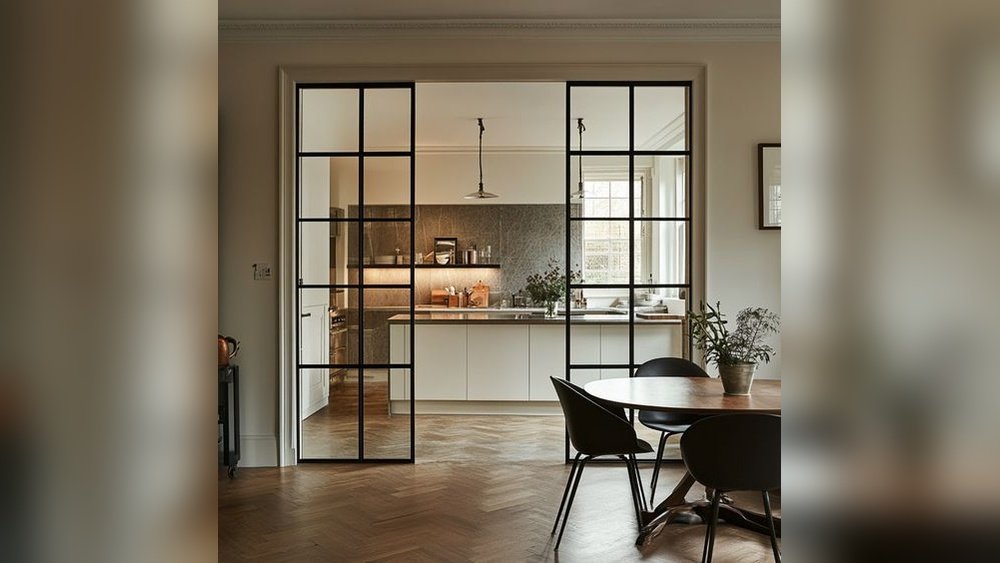
A glass partition is a modern way to separate rooms. It can be clear, frosted, or have metal frames (like a “glass wall” or Crittall style).
Pros:
- Keeps light flowing
- Reduces cooking smells and noise
- Looks stylish and modern
Cons:
- Can be costly
- Needs regular cleaning for fingerprints
Practical Tip: Frosted glass adds privacy, while clear glass keeps an open feel.
3. Sliding Doors Or Pocket Doors
Sliding doors let you open or close off the kitchen as needed. Pocket doors slide into the wall, saving space.
Pros:
- Flexible—open for parties, close for privacy
- Many styles (wood, glass, metal)
- Good for small spaces
Cons:
- Installation can be tricky
- Quality doors cost more
Insight: Choose glass sliding doors to keep light but add separation.
4. Room Dividers And Folding Screens
Room dividers or folding screens are quick ways to separate areas. They come in many materials—wood, fabric, even metal.
Pros:
- Easy to move and change
- No building work needed
- Affordable
Cons:
- Less sound and smell control
- May not look as permanent or polished
Example: Use a tall bamboo screen for a natural, boho look.
5. Kitchen Islands Or Breakfast Bars
A kitchen island or breakfast bar creates a visual border between kitchen and living spaces. It’s not a full wall, but it defines each area.
Pros:
- Adds storage and counter space
- Great for casual dining
- Keeps space open
Cons:
- Needs enough room to fit
- Doesn’t block sound or smells much
Tip: Add pendant lights above the island to highlight the separation.
6. Open Shelving Or Bookcases
Place open shelves or a bookcase between the kitchen and living room. This gives storage and acts as a divider.
Pros:
- Extra space for books, decor, or kitchen items
- Keeps rooms connected but defined
- Easy to adjust or remove
Cons:
- Needs regular organizing to avoid clutter
- Doesn’t block noise or smells
Practical Example: Use a double-sided shelf for dishes on one side, books on the other.
7. Curtains Or Fabric Panels
Curtains are a soft, flexible way to separate spaces. Use ceiling tracks for a modern look.
Pros:
- Inexpensive
- Easy to open or close
- Many colors and patterns
Cons:
- Not great for blocking sound or smells
- Needs washing to stay clean
Non-obvious tip: Use heavy, lined curtains for better sound control.
8. Change In Flooring Or Ceiling
Switching the flooring or ceiling design creates a clear visual break. For example, use tile in the kitchen and wood in the living room.
Pros:
- No need for walls
- Unique design statement
- Keeps space open
Cons:
- Only a visual divider
- Needs careful planning for smooth transitions
Insight: A ceiling beam or different paint color works as a subtle divider.
9. Raised Or Sunken Floors
Having a raised kitchen or a sunken living room gives a strong sense of separation.
Pros:
- Very clear boundary
- Adds interest to the space
Cons:
- Major renovation needed
- Not ideal for families with small kids or elderly
Example: In some homes, the kitchen is two steps higher than the living area.
10. Plants And Green Walls
Tall plants or a vertical garden act as a living, green divider.
Pros:
- Improves air quality
- Adds beauty and freshness
- Flexible arrangement
Cons:
- Needs regular care
- Some plants may not grow well indoors
Non-obvious tip: Use tall, narrow planters to save space.
11. Furniture Arrangement
Smart furniture placement can separate areas without any building work. Turn the sofa back to the kitchen, or use a console table.
Pros:
- No cost if you use existing furniture
- Quick to change
Cons:
- Only a soft visual divider
- Doesn’t block noise or smells
Tip: Use a rug to anchor the living area for a stronger sense of separation.
12. Different Colors And Lighting
Using different paint colors or lighting styles in each area can separate them visually.
Pros:
- Very flexible
- Low cost
Cons:
- Only visual, no sound or smell control
Example: Use warm lights in the living room, cool lights in the kitchen.
13. Built-in Storage Units
Custom built-in cabinets or storage units create a solid divider and offer space for appliances, dishes, or books.
Pros:
- Maximizes storage
- Looks neat and custom-made
Cons:
- Expensive
- Needs professional installation
Insight: Combine open and closed storage for both access and a tidy look.
14. Barriers With Blinds Or Shutters
Blinds or shutters can be mounted between rooms for a flexible divider.
Pros:
- Easy to open and close
- More stylish than curtains
Cons:
- Limited sound protection
Example: Wooden shutters for a farmhouse style.
15. Movable Walls (accordion Doors)
Movable walls or accordion doors fold away when not needed.
Pros:
- Maximum flexibility
- Good for multi-purpose rooms
Cons:
- Expensive for high-quality models
- May not block all sound
Tip: Choose soundproof models if privacy is important.
Cost Comparison: Popular Separation Options
To help you plan, here’s a quick comparison of estimated costs for some common solutions. Prices vary by size, material, and location.
| Separation Method | Approximate Cost (USD) | DIY-Friendly |
|---|---|---|
| Partial/Full Wall | $1,500–$5,000 | No |
| Glass Partition | $2,000–$6,000 | No |
| Sliding Door | $800–$3,500 | Sometimes |
| Room Divider/Screen | $50–$500 | Yes |
| Kitchen Island | $1,000–$5,000 | Sometimes |
| Curtains | $100–$600 | Yes |
How To Choose The Best Separation Method
It’s easy to feel lost with so many choices. Here’s how to decide what’s right for you:
- Purpose: Start with your main reason. Is it privacy, sound, smell, or just style?
- Budget: Some solutions are cheap (curtains, screens), others are costly (walls, glass).
- Space: Small rooms need flexible options like sliding doors or shelves.
- Style: Match your home’s look—modern, classic, rustic, etc.
- Light and air: Don’t block windows or airflow unless you have good lighting.
- Future plans: If you might move or change the space, pick non-permanent solutions.
Non-obvious Insight: Think about cleaning and maintenance. Glass, curtains, and plants all need different care.

Credit: andorwillow.com
Common Mistakes When Separating Kitchen And Living Room
Even with good ideas, it’s easy to make mistakes that ruin the look or function of your space. Watch out for these:
- Blocking natural light: A solid wall or dark divider can make rooms feel small and gloomy.
- Forgetting airflow: Without good ventilation, smells and moisture build up.
- Choosing the wrong size: A huge shelf or island can overcrowd a small space.
- Ignoring your lifestyle: If you love to entertain, don’t box off your kitchen completely.
- Overdecorating the divider: Too many shelves or plants can look messy.
- Poor material choices: Cheap glass, thin curtains, or weak dividers may not last.
- No soundproofing: If noise is an issue, use solid materials or sound-absorbing panels.
Practical example: One family installed a tall, heavy bookcase between the kitchen and living room, but it blocked sunlight and made both rooms feel cramped. They later replaced it with a glass partition and added open shelves, which solved both problems.
Creative Ideas For Small Spaces
If you live in a small apartment or studio, separating the kitchen and living area takes extra creativity. Here are some smart tricks:
- Use a rolling cart as a mini kitchen island and divider.
- Hang ceiling-mounted shelves for storage without blocking the view.
- Try a folding screen that can be put away when not in use.
- Use paint to mark out each zone—light colors for the kitchen, bold for the living room.
- Add a sliding barn door for a rustic look that saves space.
- Place a narrow console table behind the sofa for a soft boundary.
Non-obvious tip: Use mirrors on a divider to reflect light and make the space feel bigger.
Case Studies: Real-life Transformations
Let’s look at a few real examples to see how different solutions work in practice.
City Apartment
A young couple in a city apartment wanted to separate their kitchen from the living room without closing off the space. They installed a glass partition with black metal frames. This kept the rooms bright but blocked noise and some smells. Their guests loved the modern style, and they used the partition to display art.
Family Home
A family with young children needed more storage and less mess. They built a half-wall with built-in cabinets between the kitchen and living room. The kids could do homework at the counter, and parents could cook while keeping an eye on everyone.
Small Studio
In a tiny studio apartment, the owner used a curtain on a ceiling track to hide the kitchen when friends came over. A small breakfast bar doubled as a divider and a place to eat. This flexible setup helped the room feel like two separate zones.
Comparing Permanent Vs. Flexible Separation
It helps to see the difference between permanent and flexible solutions.
| Type | Examples | Advantages | Disadvantages |
|---|---|---|---|
| Permanent | Walls, glass partitions, built-in cabinets | Strong separation, sound and smell control | Expensive, hard to change, may reduce light |
| Flexible | Curtains, screens, sliding doors, movable shelves | Easy to change, affordable, keeps space open | Less sound/smell protection, may look less formal |
Credit: www.atlasplan.com
Safety And Practical Tips
- Electrical and plumbing: If building a wall or island, check for wires and pipes first.
- Fire safety: Don’t use flammable materials (like thin fabric) near the stove.
- Child safety: Avoid sharp corners or tall, unstable dividers.
- Accessibility: Make sure there’s enough room to walk between the spaces, especially for wheelchairs or strollers.
Non-obvious tip: If you like to host, leave enough space for people to move between the kitchen and living room easily.
How Separation Affects Home Value
Many people wonder if separating the kitchen from the living room will make their home more valuable. Here’s what the data shows:
- Open plans are still popular, especially with young buyers.
- Flexible spaces (like sliding doors or glass partitions) appeal to the most people.
- Permanent walls may lower value in small homes, but add value in large homes needing more privacy.
A survey by the National Association of Home Builders found that over 80% of buyers still want some openness, but more people now want the option to separate spaces. So, choose a divider that’s easy to remove or change if you plan to sell.
For more data on home design trends, see this NAHB report.
Step-by-step: Installing A Divider (example With Sliding Door)
If you want to install a sliding door as a divider, here’s a simplified step-by-step guide:
- Measure your space to make sure the door will fit.
- Choose your door type (solid, glass, barn style).
- Buy a door kit with all the hardware.
- Mark the wall studs where you will attach the track.
- Install the sliding track using anchors and screws.
- Hang the door and check that it slides smoothly.
- Add handles or locks if needed.
- Test for safety—the door should move easily and not wobble.
Tip: Always follow the manufacturer’s instructions for your specific door model.
When To Hire A Professional
Some separation projects are simple DIY jobs, like adding a curtain or shelf. But for these, you’ll need a pro:
- Building or removing walls
- Installing glass partitions
- Adding electrical outlets or lights
- Custom cabinets or heavy shelving
Non-obvious insight: Mistakes with walls or glass can cost more to fix than hiring a professional from the start.
Trends: What’s Popular In 2024?
Designers are combining open plans with smart, flexible dividers. The biggest trends include:
- Metal-framed glass walls (industrial chic)
- Sliding barn doors (modern rustic)
- Vertical gardens for green separation
- Built-in islands with storage and seating
- Hidden sliding panels that disappear when not in use
People want homes that can change with their needs—open for family, closed for work or privacy.
Frequently Asked Questions
How Do I Separate The Kitchen From The Living Room Without Building A Wall?
You can use room dividers, curtains, bookcases, or sliding doors. These are easy to install and don’t need building work. Open shelving, large plants, or even different rugs or lighting can help divide the space.
What Is The Cheapest Way To Separate The Kitchen And Living Room?
Curtains and folding screens are usually the cheapest options. You can also rearrange furniture or use a bookshelf as a divider. These solutions cost less and are easy to change if your needs change.
Will Separating The Kitchen And Living Room Make My Home Look Smaller?
If you use solid, dark, or heavy dividers, rooms can feel smaller and darker. To keep things bright, choose glass partitions, open shelving, or light-colored curtains. Make sure not to block windows or main walkways.
How Do I Stop Cooking Smells From Reaching The Living Room?
Solid dividers like walls or glass partitions are best for blocking smells. Also, install a good kitchen exhaust fan. Flexible dividers (like curtains) help less with odor, but can still limit how far smells travel.
Are Glass Partitions Safe For Homes With Children?
Yes, if you use tempered safety glass and avoid sharp edges. Many modern glass partitions are designed to be child-safe. Still, always check the product’s safety rating before installing.
Separating your kitchen from the living room is possible in almost any home. With the right planning and creative ideas, you can enjoy the best of both worlds—connection when you want it, privacy when you need it. Explore your options, consider your lifestyle, and create a space that works for you today and in the future.

Credit: andorwillow.com