
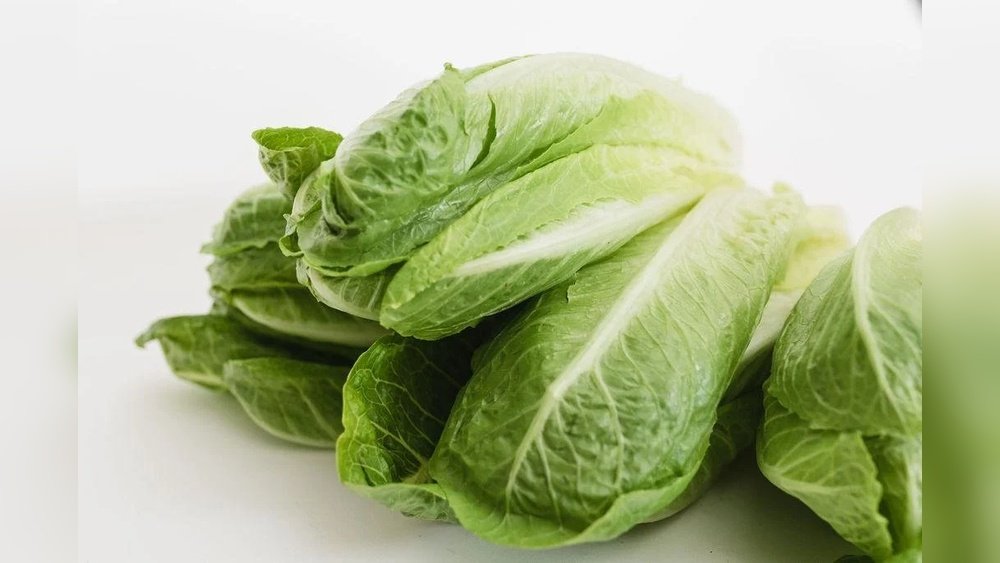
Washing And Storing Romaine Lettuce For Freshness And Safety
Romaine lettuce is a favorite in salads, wraps, and many healthy dishes. Its crisp leaves and mild taste make it a kitchen staple. But romaine is also delicate. If you wash it carelessly or store it wrong, the leaves wilt, lose crunch, and even spoil quickly.
On top of that, lettuce can sometimes carry harmful bacteria from the field. Handling romaine the right way is not just about taste—it’s about safety.
Many people think rinsing lettuce under the tap is enough. Others toss their lettuce in the fridge as soon as they get home. These habits can lead to soggy, dirty, or unsafe greens. In this guide, you’ll learn the best methods to wash and store romaine lettuce.
The steps will help you keep your romaine fresh, crisp, and safe for every meal. You’ll also find practical tips, expert insights, and solutions to common mistakes.
Let’s explore how to give your romaine lettuce the care it deserves, from the market to your plate.
Why Proper Washing Of Romaine Lettuce Matters
Romaine lettuce grows close to the soil, which means dirt and bacteria often cling to its leaves. Common contaminants can include:
- Soil particles
- Garden pests
- Pesticide residue
- Harmful bacteria like E. coli
Washing lettuce is about more than removing grit. It’s your first defense against foodborne illness. The Centers for Disease Control and Prevention (CDC) have reported several outbreaks linked to leafy greens, including romaine. While no washing method removes all bacteria, proper technique greatly reduces risk.
Many home cooks skip thorough washing, thinking pre-washed or bagged lettuce is always clean. However, even “triple-washed” lettuce can sometimes carry bacteria. Taking a few extra minutes to wash your romaine well is a smart habit.
Choosing Romaine Lettuce: What To Look For
The journey to fresh lettuce starts at the store or market. Picking good romaine will make washing and storing much easier.
Tips for selecting the best romaine:
- Look for crisp leaves: The leaves should be firm, not floppy.
- Check the color: Fresh romaine is bright green with no brown edges.
- Feel the stem: The base should be white and not slimy or mushy.
- Smell the lettuce: Fresh lettuce has a clean, neutral scent.
- Avoid damaged leaves: Pass on heads with many torn or bruised leaves.
Buying whole heads of romaine, instead of pre-cut bags, usually means longer shelf life and better taste. You also have more control over cleaning.
Preparing Romaine Lettuce For Washing
Before you wash, a little prep work helps. This is where many people make mistakes. Washing the whole head under water can leave dirt and bugs trapped in the core.
Steps to prepare romaine:
- Remove outer leaves: The outermost leaves often carry the most dirt and damage.
- Cut off the stem: Slice about half an inch from the base to loosen the leaves.
- Separate leaves: Gently pull apart the leaves for better cleaning access.
This simple prep step makes sure that every part of the lettuce gets cleaned properly.
The Best Methods To Wash Romaine Lettuce
Not all washing methods are equal. Some are quick but not thorough. Others may help save water but leave grit behind. The goal is to remove as much dirt and bacteria as possible while keeping the leaves crisp.
Method 1: Soaking In Cold Water
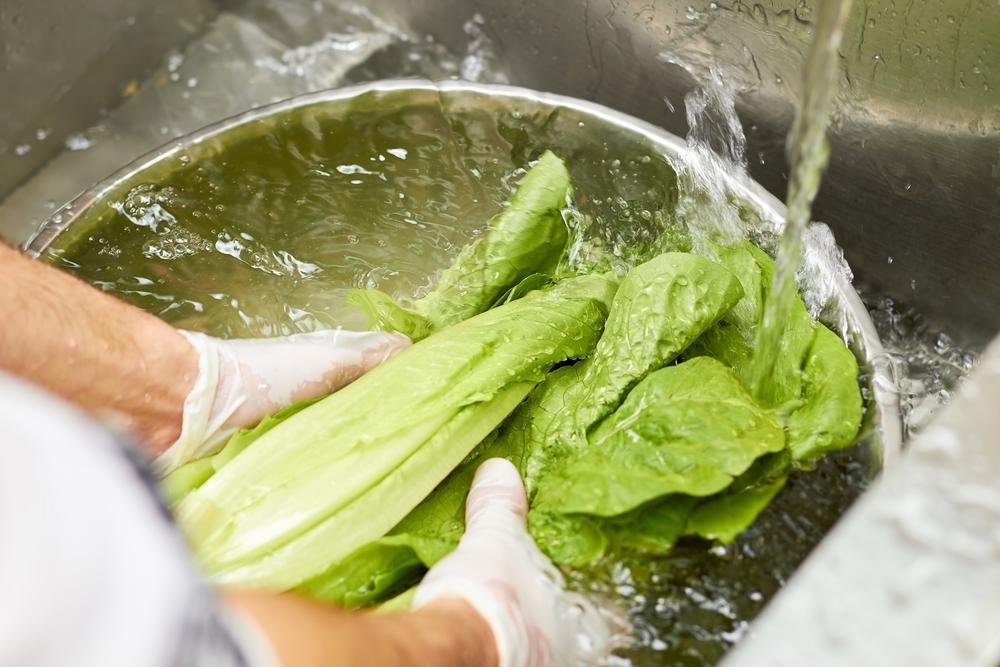
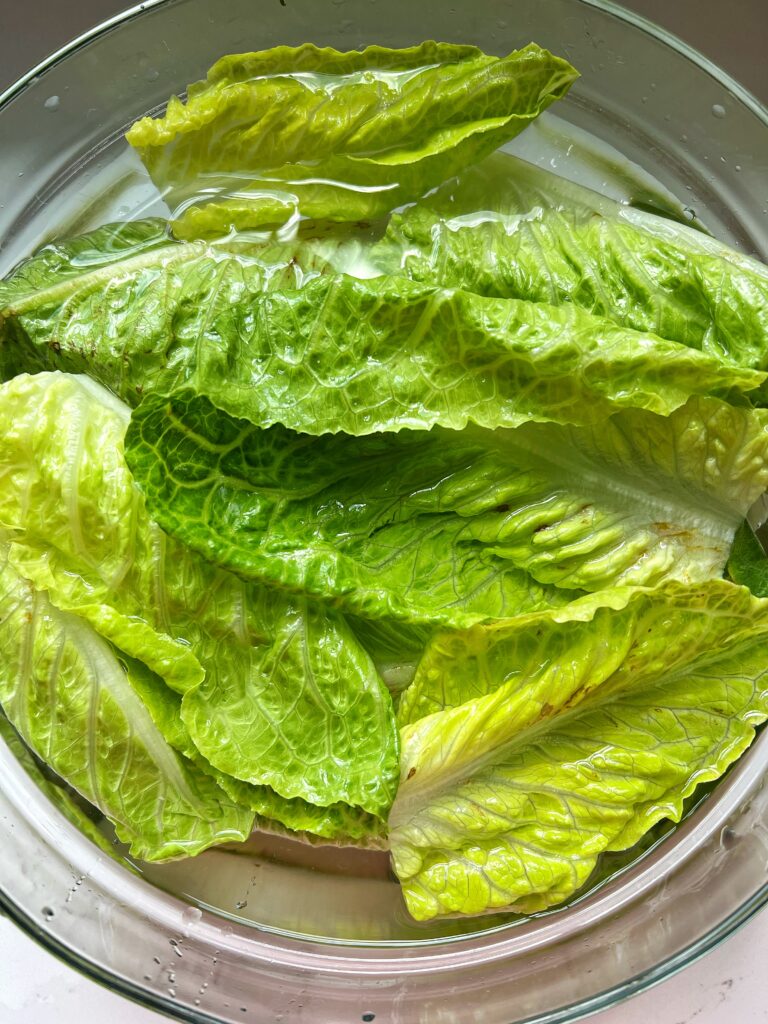
This is the most effective method for whole leaves.
Steps:
- Fill a large bowl or sink with cold water. Add enough water to submerge all the leaves.
- Add separated leaves. Swish gently with your hands to release dirt.
- Let soak for 5–10 minutes. Grit will fall to the bottom.
- Lift out, don’t pour. Scoop leaves from the water instead of dumping the bowl. This leaves grit behind.
- Repeat if needed. For very dirty lettuce, do a second soak.
Why it works: Soaking lets dirt and small bugs loosen and sink, especially from the crevices.
Method 2: Rinsing Under Running Water
If you’re short on time or washing just a few leaves, this method works.
Steps:
- Hold leaves under cold running water.
- Rub gently. Use your fingers to remove any visible dirt.
- Check for stubborn grit. Pay attention to the base of the leaves.
Note: This method may not remove all dirt as well as soaking, especially from deeply ribbed leaves.
Method 3: Using A Salad Spinner
A salad spinner is not for washing, but it helps after you rinse or soak.
Steps:
- Place washed leaves in the spinner basket.
- Spin for 10–20 seconds. This dries leaves quickly.
- Check for dryness. Wet leaves spoil faster.
Tip: A salad spinner also helps remove tiny grit particles by centrifugal force.
Comparing Washing Methods
Here’s a quick comparison of the three main washing methods:
| Method | Effectiveness | Time Needed | Best For |
|---|---|---|---|
| Soaking in Cold Water | High | 5-10 min | Whole heads, very dirty lettuce |
| Rinsing Under Water | Medium | 2-3 min | Few leaves, light dirt |
| Salad Spinner | Dries only | 1-2 min | All lettuce after washing |
Drying Romaine Lettuce Properly
After washing, drying is the key step many people rush or skip. Storing wet lettuce leads to slimy, spoiled leaves.
Drying methods:
- Salad spinner: The fastest and most effective.
- Paper towels: Lay leaves in a single layer, pat gently, or roll leaves up in a clean kitchen towel and pat.
- Air dry: Spread leaves on a clean towel and let sit for 10–15 minutes.
Pro tip: Even a few drops of water can cause rot in storage. Make sure leaves are as dry as possible before refrigerating.
How To Store Romaine Lettuce For Maximum Freshness
Once your lettuce is clean and dry, storing it well keeps it crispy and safe. Fridge humidity and air exposure both matter.
The Best Storage Containers
Not all containers keep lettuce fresh. Here’s a look at some common options:
| Container Type | Pros | Cons | Freshness (Days) |
|---|---|---|---|
| Plastic Bag with Holes | Easy, allows air flow | Can crush leaves | 5-7 |
| Sealed Plastic Box | Protects leaves, stackable | Can trap moisture | 6-8 |
| Glass Container | No odors, easy to clean | Heavy, can be expensive | 6-8 |
| Cloth or Mesh Bag | Breathable, eco-friendly | Needs washing | 5-7 |
Steps For Storing Romaine Lettuce
- Layer with paper towels: Place a dry paper towel at the bottom of your container.
- Add lettuce leaves: Spread leaves in a loose layer, not packed tight.
- Top with another towel: This absorbs moisture as the lettuce sits.
- Seal the container: Close with a lid or loosely tie the bag.
- Store in the fridge: Keep in the crisper drawer for best humidity.
Tip: Replace damp paper towels every 2–3 days to prevent sogginess.
Storing Whole Heads Vs. Loose Leaves
Whole heads last longer. If you won’t use the lettuce right away, store it whole and wash only what you need.
- Whole head: Wrap in a paper towel and place in a loose plastic bag.
- Loose leaves: Store in layers with paper towels as above.
How Long Does Romaine Lettuce Last?
Properly stored, romaine can stay fresh for up to 10 days, but this varies with temperature and handling.
Average shelf life:
- Whole head: 7–10 days
- Washed leaves: 5–7 days
If you notice a sour smell, slimy texture, or brown spots, it’s time to toss the lettuce.
Common Mistakes When Washing And Storing Romaine Lettuce
Even careful cooks make errors that ruin romaine lettuce. Here are mistakes to avoid:
- Storing wet leaves: Moisture leads to quick spoilage.
- Using airtight bags with no towels: Lettuce sweats and rots.
- Leaving at room temperature: Romaine wilts and bacteria multiply fast.
- Not removing damaged leaves: One bad leaf can spoil the whole batch.
- Washing only before use: Unwashed lettuce brings dirt into your fridge.
Non-obvious insight: Lettuce ethylene sensitivity means you should store it away from apples, tomatoes, and bananas. These fruits produce ethylene gas, which speeds up lettuce spoilage.
Washing Romaine Lettuce For Special Uses
Different dishes call for different lettuce prep. Here’s how to adjust your washing routine:
For Salads
- Wash and dry leaves fully.
- Tear or cut just before serving to prevent browning.
For Sandwiches And Wraps
- Use whole, dry leaves for best crunch.
- Pat dry with a towel right before adding to sandwiches.
For Cooking (grilled Or Sautéed Romaine)
- Wash leaves, but keep them slightly damp for grilling. The moisture helps steam the lettuce and keeps it tender.
Expert tip: If you plan to grill romaine, leave the core attached. It holds the leaves together over heat.
Credit: www.hitchcockfarms.com
Can You Freeze Romaine Lettuce?
Freezing is not recommended for romaine intended for salads. Frozen lettuce turns mushy when thawed because of its high water content.
- What happens: Ice crystals break cell walls, causing limp, watery leaves.
- Use for: If you must freeze, use thawed romaine only in cooked dishes like soups, not in salads.
Washing Romaine Lettuce: Myths Vs. Facts
Many home cooks hear advice that’s outdated or incorrect. Here’s a quick myth-busting guide:
| Myth | Fact |
|---|---|
| Vinegar or lemon soaks kill all bacteria | Soaks may lower bacteria slightly, but not enough for safety; washing with clean water is most important. |
| Bagged lettuce doesn’t need washing | Even “pre-washed” lettuce can have dirt or bacteria—rinse again at home for safety. |
| Washing with soap or detergent is safe | Never use soap or detergent—lettuce can absorb these and they are not safe to eat. |
| Drying isn’t necessary if you eat lettuce right away | Wet leaves spoil faster and don’t hold dressing well. Always dry before serving. |
Credit: rachlmansfield.com
Sustainable Washing And Storage Tips
Caring for the environment can go hand-in-hand with caring for your lettuce.
- Reuse washing water: Water your plants with leftover lettuce rinse water.
- Choose reusable towels: Cloth kitchen towels can replace paper for drying.
- Opt for glass containers: These last longer and don’t hold odors.
Practical tip: Compost damaged or outer leaves instead of sending them to landfill.
Handling Romaine Lettuce After Food Recalls
Romaine lettuce has been involved in several recalls due to E. coli outbreaks. If you hear about a recall:
- Check the source: Find out if your lettuce is affected.
- When in doubt, throw it out: Don’t risk your health.
- Wash hands and surfaces: Clean anything that touched recalled lettuce.
For more details on food recalls, you can visit the FDA Food Recall page.
Advanced Tips For Keeping Romaine Lettuce Crisp
Want your lettuce to stay crisp even longer? Try these often-overlooked tricks:
- Store upside down: Place the head with the stem up; it keeps leaves from wilting as quickly.
- Keep away from strong-smelling foods: Lettuce can absorb odors, so don’t store near onions or garlic.
- Don’t cut until ready to use: Cutting increases browning and moisture loss.
- Use a lettuce keeper: Specialized containers with vents can extend freshness.
Signs Of Spoiled Romaine Lettuce
To avoid food waste and illness, check your romaine before eating.
Watch for:
- Slimy or sticky leaves
- Sour or off smell
- Brown or black spots
- Wilted, limp texture
If you see any of these, it’s best to discard the affected leaves or the whole batch.

Credit: www.youtube.com
Using Washed Romaine Lettuce In Recipes
Fresh, clean romaine is perfect for:
- Caesar salads: The classic use for crunchy romaine.
- Taco wraps: Use large leaves as a low-carb tortilla.
- Smoothies: Add a few leaves for extra nutrients.
- Sandwiches and burgers: For crunch and freshness.
Proper prep means your lettuce will taste better and last longer in every dish.
Frequently Asked Questions
How Do I Wash Romaine Lettuce To Remove Pesticides?
Washing with cold water is usually enough to remove most pesticide residues. For extra safety, soak leaves in a mixture of cold water and a tablespoon of baking soda for 2–3 minutes, then rinse well. This can help loosen more pesticides, but thorough rinsing is still key.
Can I Wash Romaine Lettuce Ahead Of Time?
Yes, you can wash romaine ahead of time. Make sure to dry leaves fully before storing. Use paper towels in your storage container to absorb any leftover moisture. This keeps the lettuce crisp for up to a week.
Is It Safe To Eat Romaine Lettuce Raw?
Romaine lettuce is often eaten raw in salads. Washing well with cold water reduces the risk from dirt and bacteria, but no method is 100% effective. For people with weakened immune systems, cooking lettuce is a safer option.
Why Does My Lettuce Turn Brown After Washing?
Browning can happen if you bruise the leaves while washing or if the lettuce is stored wet. Dry leaves well and handle gently to prevent damage. Also, don’t cut lettuce until right before serving to avoid browning.
Can I Use Vinegar Or Lemon Juice To Disinfect Romaine Lettuce?
Soaking in vinegar or lemon water can lower bacteria slightly, but it does not make lettuce completely safe. Clean, cold water is your best option. Never use bleach or soap, as these are not safe for food.
Washing and storing romaine lettuce well is an easy habit with big rewards—your salads will be fresher, safer, and tastier. With a few simple steps and some extra care, you’ll enjoy crisp, clean lettuce every time.