
Your refrigerator is one of the most important appliances in your home. It keeps food fresh, saves you money, and helps you avoid waste. But what happens when your refrigerator keeps moving every time you open the door or when you try to clean underneath?
A rolling refrigerator can be annoying, but it can also be unsafe. It might damage your floor, disconnect from the wall, or even tip if not handled properly. In busy kitchens, especially with children or elderly people, a rolling fridge can be a real hazard.
Many people have faced this problem. You may have just installed a new fridge or moved into a new home and noticed it slides or shifts when you open the doors. Some fridges have wheels for easy moving, but these wheels can make it hard to keep the fridge steady.
Other fridges might not be level, causing them to creep across the floor over time.
If you’ve struggled with keeping your refrigerator in place, you’re not alone. This guide will help you understand why refrigerators roll, the risks involved, and, most importantly, how to stop your refrigerator from rolling. You’ll discover simple fixes, advanced solutions, and common mistakes to avoid.
Whether you rent or own your home, have a tile or wooden floor, or need a quick fix or a long-term solution, you’ll find answers here.
Why Do Refrigerators Roll?
Understanding the cause of the problem is the first step to fixing it. Several reasons can make a refrigerator roll or move on the floor.
Built-in Wheels
Many modern refrigerators come with built-in wheels or casters. These are designed to help move the appliance easily during installation or cleaning. However, after positioning the refrigerator, these wheels can make it hard for the fridge to stay in place, especially on smooth floors like tiles or hardwood.
Uneven Flooring
If your kitchen floor is not flat, gravity can pull the refrigerator toward lower areas. Even a slight slope can cause slow but steady movement over time.
Refrigerator Not Leveled
Fridges must be level side-to-side and slightly tilted back. If not, the center of gravity shifts, making it easier for the fridge to roll or slide, especially when the heavy doors are opened or closed.
Slippery Floor Surfaces
Floors made of tile, laminate, or polished wood are very smooth. When you open the fridge door, the force can cause the fridge to slide easily on these surfaces, especially if there is any moisture or dirt underneath.
Vibration From Compressor
The compressor inside the refrigerator can create small vibrations, especially in older models. Over time, these vibrations can move the fridge, particularly if it is already on wheels or an uneven surface.
Too Much Space Behind
If there’s a large gap between the fridge and the wall, the fridge can pick up more momentum when it moves, especially if it’s not properly leveled or stopped.
Overloading The Door
Putting heavy bottles or items in the door can make the fridge more likely to tip or move when the door is opened quickly.
Example
Imagine a large double-door fridge on polished kitchen tiles. When you open the freezer door, the fridge slides forward a few inches. This happens every day, and over a month, it ends up far from the wall. This scenario is common, and understanding why it happens is the key to finding a solution.
Risks Of A Rolling Refrigerator
Letting your refrigerator roll or move freely is more than just a minor annoyance. It can lead to several problems.
Damage To Flooring
Repeated sliding can scratch, dent, or even crack sensitive floor types like hardwood, laminate, or vinyl.
Electrical Hazards
A moving fridge may pull on the power cord or damage the plug. In worst cases, this can lead to electrical shorts or even fires.
Food Spoilage
If the fridge moves too far, it can disconnect from the power outlet or block its own ventilation, causing food to spoil.
Safety Risks
A rolling fridge is dangerous for children or elderly family members. It might tip, or someone might trip over it.
Water Leaks
If your fridge has an ice maker or water dispenser, moving it can twist or disconnect water lines, leading to leaks or water damage.
Appliance Damage
Constant movement can damage the fridge’s feet, wheels, or internal components, shortening its lifespan.
How To Stop Refrigerator From Rolling: Step-by-step Solutions
Now that you know the causes and risks, let’s look at the best ways to stop your refrigerator from rolling. You don’t need to be a professional to apply most of these fixes. Here’s a mix of simple, fast solutions and more permanent options.
1. Engage Or Adjust The Leveling Feet
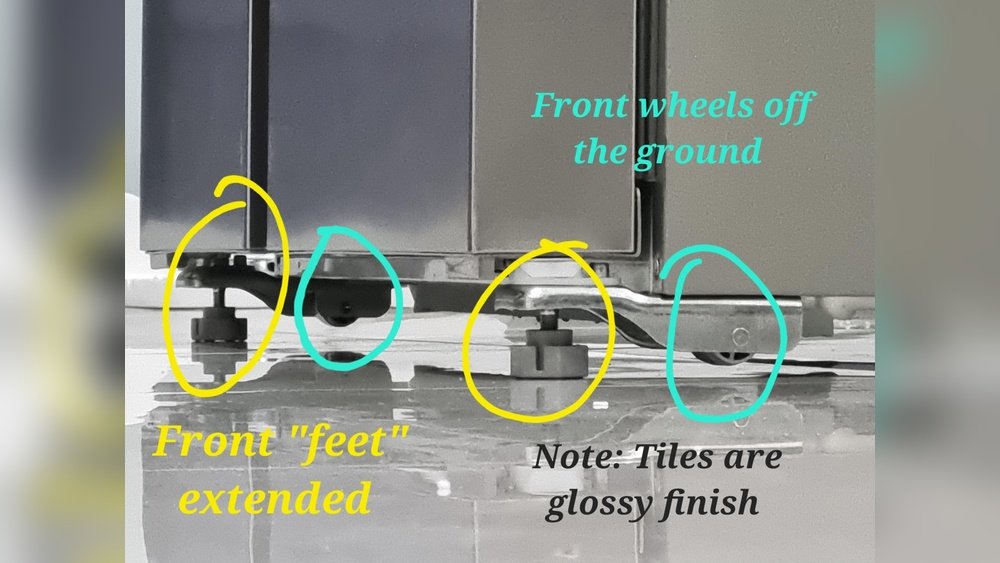
Most refrigerators with wheels also have leveling feet. These are small, adjustable legs usually found at the front corners.
How To Adjust Leveling Feet:
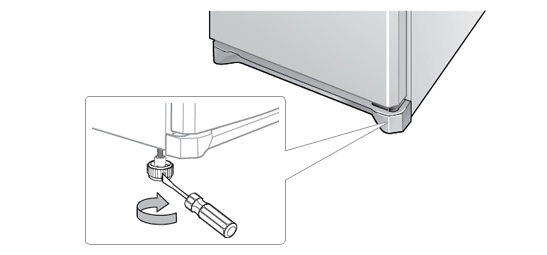
- Locate the feet at the front bottom of the fridge. You may need to remove a small plastic cover.
- Turn the feet clockwise to lower the fridge (lifting wheels off the ground), or counterclockwise to raise it.
- Adjust until the fridge sits firmly on the feet, not the wheels.
- Use a spirit level to make sure the fridge is not tilting forward or sideways.
Why This Works
Leveling feet are designed to lift the wheels off the floor during regular use. This puts the fridge’s weight on rubber or plastic pads, which grip the floor better.
Pro Tip
It’s easy to think the wheels should touch the floor for easy movement, but for daily use, the feet should bear most of the weight.
2. Use Wheel Locks (caster Locks)
If your fridge has locking wheels or caster brakes, make sure they’re engaged. These locks prevent the wheels from turning.
How To Engage Wheel Locks:
- Check each wheel for a small lever or switch.
- Press the lever down (or up, depending on the design) to lock the wheel.
- Test by gently pushing the fridge to see if it stays in place.
Common Mistake
Some people forget to check for wheel locks, thinking their fridge doesn’t have them. Check your manual or look closely under the fridge.
3. Place Non-slip Pads Or Grippers
Non-slip rubber pads or furniture grippers are a simple solution. They increase friction between the fridge and the floor.
How To Install Non-slip Pads:
- Buy heavy-duty rubber pads or grippers sized for refrigerator feet or wheels.
- Lift each corner of the fridge and slide a pad underneath.
- Lower the fridge and test for movement.
Insight
Choose grippers specifically designed for appliances. Cheaper, thin pads may compress and lose grip over time, especially under heavy fridges.
4. Install A Refrigerator Mat
A refrigerator mat is a thick, textured rubber mat placed under the entire fridge. It protects the floor and stops the fridge from sliding.
How To Use A Refrigerator Mat:
- Measure your fridge’s base.
- Buy a mat that fits or can be trimmed to size.
- Carefully tilt or lift the fridge and place the mat underneath.
- Lower the fridge back in place.
Example
This solution works well in rental apartments, as it’s non-permanent and avoids floor damage.
5. Use Furniture Cups
Furniture cups are deep rubber or plastic cups that hold the feet or wheels in place, stopping them from rolling.
How To Use Furniture Cups:
- Buy cups designed for heavy appliances.
- Place one under each foot or wheel.
- Ensure the fridge sits evenly.
Non-obvious Insight
Furniture cups with a sticky or textured bottom grip the floor better than smooth ones.
6. Block The Wheels With A Wooden Stopper
A wooden stopper can be an effective DIY solution, especially if you have basic tools.
How To Make And Use A Wooden Stopper:
- Cut a strip of wood to fit across the front or back wheels.
- Place the strip just behind or in front of the wheels.
- Secure it in place if needed with double-sided tape or a small bracket.
Pro Tip
Be careful not to block ventilation or access to the back of the fridge.
7. Adjust The Fridge’s Position
Placing your fridge against a wall or in a corner reduces the chance of rolling. Positioning it so the back or side is close to a wall adds stability.
Why This Works
Walls act as natural barriers, limiting how far the fridge can roll.
Common Mistake
Don’t push the fridge so close that you block ventilation grills or access panels.
8. Use Double-sided Tape Or Velcro Strips
Heavy-duty double-sided tape or Velcro strips can anchor the fridge’s feet to the floor.
How To Apply:
- Clean the floor and fridge feet.
- Cut strips of tape or Velcro to fit.
- Attach to the feet, then press down on the floor.
Warning
Choose tapes or strips with strong adhesive rated for heavy weights. Test on a small area first to make sure it won’t damage your floor.
9. Add Weight Inside The Fridge
A lightly loaded fridge is easier to move. If your fridge is mostly empty, consider adding weight to the bottom shelves.
How This Helps
A heavier fridge is less likely to roll, especially if the extra weight is placed low inside the fridge.
Example
Store drinks, large bottles, or sealed containers of water on the bottom shelf. This lowers the center of gravity.
10. Level The Floor
If your kitchen floor is uneven, leveling it can solve the rolling problem at its source.
How To Level The Floor:
- Use a long level to check for slopes under the fridge.
- Install shims or thin plywood under the fridge until it is level.
- For major slopes, consult a professional.
Non-obvious Insight
Small shims (thin plastic or wood pieces) can make a big difference, but make sure they are stable and can handle the fridge’s weight.
11. Replace Or Repair Worn-out Wheels
Sometimes, old or damaged wheels don’t lock or grip the floor well.
How To Check And Replace Wheels:
- Unplug and move the fridge to inspect the wheels.
- Look for cracks, flat spots, or missing parts.
- Order replacement wheels from the manufacturer if needed.
- Install new wheels or locks as per the manual.
Why This Matters
Damaged wheels make it impossible for any other solution to work well.
12. Use A Bracket Or Restraint Kit
Some companies sell special refrigerator restraint kits. These kits use brackets or straps to anchor the fridge to the wall or floor.
How To Install:
- Follow the kit instructions to attach one end to the fridge and the other to the wall or floor.
- Use only approved parts to avoid damaging your fridge or home.
Example
Restraint kits are often used in earthquake-prone areas or for built-in fridge setups.
13. Try Appliance Anti-tip Devices
Anti-tip brackets are metal pieces that prevent the fridge from tipping or rolling.
How To Use:
- Attach the bracket to the floor or wall behind the fridge.
- Slide the fridge into place so the bracket fits into the base or frame.
Pro Tip
Check your fridge’s manual for approved anti-tip devices. Using the wrong bracket can void the warranty.
14. Clean The Floor Regularly
Dust, spills, and grease can make the floor extra slippery.
How This Helps
A clean, dry floor increases friction and helps pads or feet grip better.
Practical Advice
Use a degreaser or vinegar-based cleaner for tile or wood floors. Dry completely before putting the fridge back.
15. Call A Professional
If you’ve tried everything and your fridge still rolls, it may be time to call an appliance technician. There could be a hidden problem with the fridge frame, wheels, or installation.
When To Call For Help
- The fridge keeps moving even after trying all other solutions
- The floor is severely damaged or uneven
- You hear unusual noises from the wheels or frame
Non-obvious Insight
Sometimes, new homes settle, causing floors to shift subtly. A professional can check for these issues.
Comparison Of Common Anti-roll Solutions
To help you decide, here’s a comparison of popular methods for stopping your refrigerator from rolling:
| Solution | Cost | Difficulty | Permanence | Best For |
|---|---|---|---|---|
| Leveling Feet | Free | Easy | Long-term | Most fridges |
| Wheel Locks | Free | Easy | Long-term | Fridges with casters |
| Non-slip Pads | Low | Easy | Medium | Rental homes |
| Restraint Kits | Medium | Medium | Long-term | Earthquake zones |
| Anti-tip Devices | Medium | Medium | Long-term | Families with kids |
Real-world Examples And Insights
Many homeowners have shared their experiences with rolling refrigerators. For instance, a family with kids found their fridge sliding every time their toddler pulled on the door. They tried several cheap pads, but the problem only stopped after using heavy-duty furniture cups and adjusting the leveling feet.
In another case, a landlord used a rubber refrigerator mat in every rental unit to avoid tenant complaints and floor damage.
One insight beginners often miss is that combining two or more solutions—such as leveling feet and non-slip pads—usually works better than using one alone. Another common mistake is ignoring floor cleanliness. Even the best anti-slip products will fail if the floor is dusty or greasy.
Maintenance Tips To Keep Refrigerator Stable
Once your fridge is stable, regular maintenance helps keep it that way.
- Check Leveling Feet Annually – Feet can loosen over time due to vibrations.
- Clean Under the Fridge – Sweep and mop to remove dust and grease.
- Inspect Wheels and Pads – Replace worn parts as needed.
- Monitor Fridge Position – Mark the floor and check if the fridge moves over months.
- Avoid Overloading Doors – Heavy items in the door increase movement risk.

Credit: www.reddit.com
Mistakes To Avoid
Many people make small errors when trying to stop their refrigerator from rolling. Here’s what to watch out for:
- Ignoring the user manual. Always check for special instructions for your fridge model.
- Using weak or thin pads not rated for heavy appliances.
- Blocking ventilation or access panels.
- Using permanent adhesives on rental floors.
- Forgetting to check for built-in wheel locks.
Special Considerations For Different Floors
Every floor type has its own needs when it comes to stopping a refrigerator from rolling.
Tile Floors
- Use thick rubber pads or mats to avoid cracks and chips.
- Avoid dragging the fridge, as tiles can break easily.
Hardwood Floors
- Choose pads that won’t stain or stick to the wood.
- Use furniture cups with felt bottoms for double protection.
Vinyl Or Laminate
- Use non-slip mats to prevent dents and scratches.
- Avoid using metal brackets that could cut the surface.
Concrete
- Most methods work well, but check for dust that reduces friction.

Credit: www.amazon.com
When Moving Or Replacing Your Refrigerator
If you plan to move or replace your fridge, follow these extra steps:
- Remove all food and shelves to lighten the load.
- Use a dolly for easy movement, but re-engage anti-roll devices after installation.
- Re-check the level and position after placing the fridge.
Cost Comparison Of Solutions
Here’s a look at the typical costs of common anti-roll solutions:
| Solution | Estimated Cost (USD) | Expected Lifespan |
|---|---|---|
| Non-slip pads | $10 – $20 | 2-5 years |
| Furniture cups | $15 – $30 | 5+ years |
| Refrigerator mat | $25 – $50 | 5+ years |
| Restraint kits | $20 – $40 | 10+ years |
| Professional help | $50 – $150 | Depends on service |
Best Practices For Long-term Stability
If you want your refrigerator to remain stable for years, keep these best practices in mind:
- Re-check and re-tighten all anti-roll devices every 6-12 months.
- Replace worn-out pads or cups before they fail.
- Clean the floor area during deep cleaning sessions.
- Avoid placing heavy objects on the fridge or pulling on the doors.
- If you move the fridge for cleaning, reposition all anti-roll devices afterward.
Extra Tips For Renters
If you rent your home, you may not be able to make permanent changes. Here are renter-friendly solutions:
- Use thick, non-marking pads or mats.
- Avoid adhesives that could damage the floor.
- Choose solutions you can remove without tools.
- Inform your landlord if you notice major floor problems.
Credit: www.samsung.com
Environmental Impact And Safety
Choosing safe, long-lasting solutions is good for the environment. Avoid single-use or low-quality pads that wear out quickly and end up in the trash. Many high-quality furniture cups or mats are made from recycled materials.
Also, a stable fridge is safer for kids and pets. Anti-tip brackets and restraint kits are especially recommended for families.
For more in-depth technical details about refrigerators and their components, you can visit the Wikipedia Refrigerator Page.
Frequently Asked Questions
Why Does My Refrigerator Keep Moving Every Time I Open The Door?
This usually happens because the fridge is on wheels and the leveling feet are not properly adjusted. Smooth floors like tile or wood make it easier for the fridge to slide. Adjust the feet and use non-slip pads for best results.
Can I Use Homemade Solutions To Stop My Fridge From Rolling?
Yes, you can use items like thick rubber mats, wooden stoppers, or even double-sided tape. However, make sure any material you use can handle the weight and won’t damage your floor.
Will Stopping My Fridge From Rolling Damage The Floor?
Not if you use the right products. Choose non-marking, heavy-duty pads, or mats. Avoid permanent adhesives or metal brackets on sensitive floors like hardwood or vinyl.
Do All Refrigerators Have Leveling Feet?
Most modern refrigerators have leveling feet, but not all. Check your manual or look under the front corners. If yours doesn’t have feet, use furniture cups or mats instead.
Is It Safe To Use Anti-tip Brackets In A Rental Home?
Yes, if the bracket is removable and you have permission from your landlord. For most renters, non-slip pads or mats are a better choice since they don’t require drilling.
A rolling refrigerator is more than just a small inconvenience—it’s a risk to your home and safety. By understanding the causes, using the right solutions, and following the tips in this guide, you can stop your refrigerator from rolling for good.
Whether you want a quick fix or a permanent solution, you now have the knowledge to keep your fridge stable, your food safe, and your kitchen worry-free.